3 Designer Tricks That Make a Home Look Expensive Without a Luxury Renovation
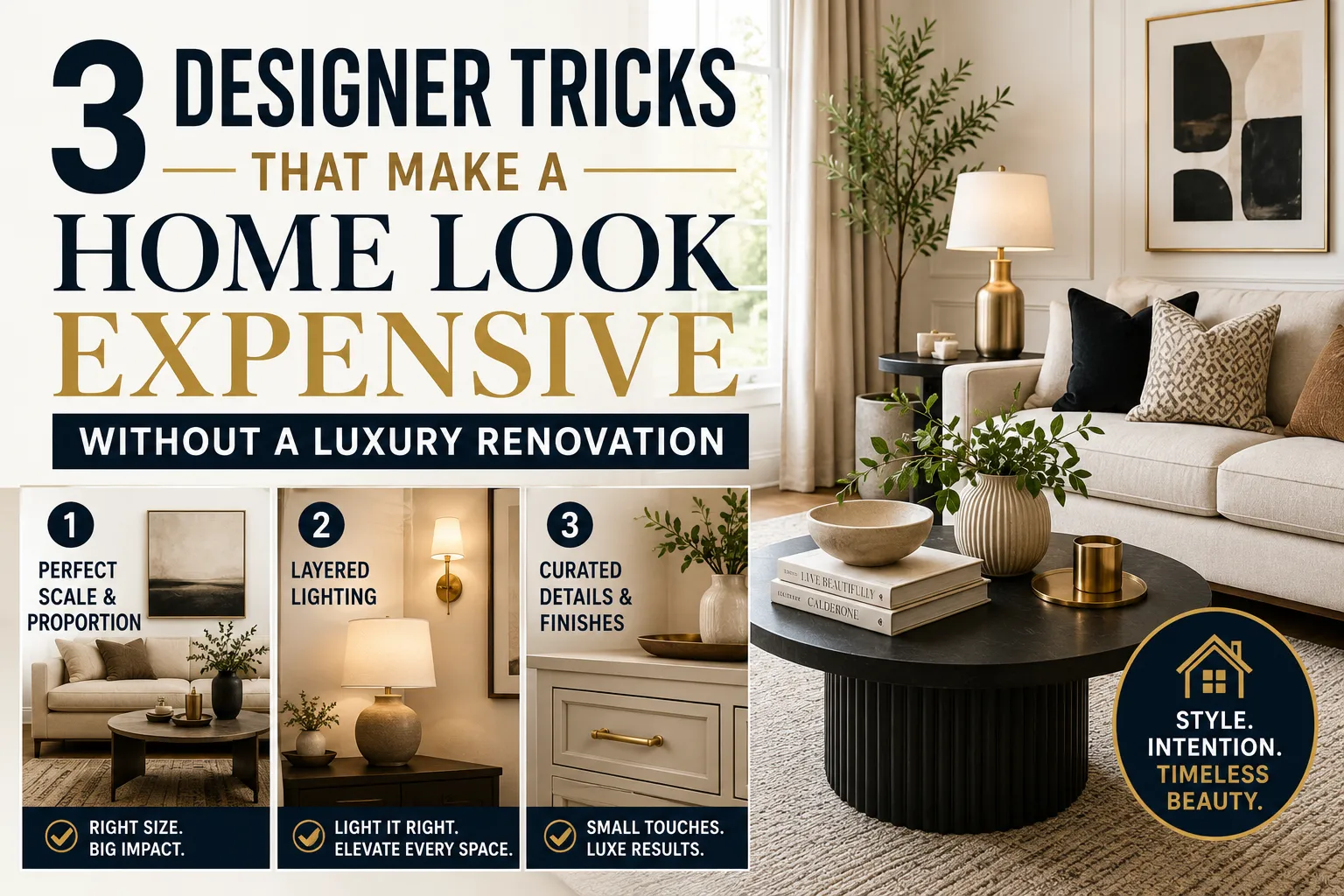
3 Designer Tricks That Make a Home Look Expensive Without a Luxury Renovation
A home doesn’t need marble floors, custom cabinetry or a six-figure renovation to look polished.
In fact, some of the most convincing high-end interiors rely on relatively simple decisions: better proportions, intentional lighting, restrained color palettes and carefully selected details. Designers often create a sense of luxury not by spending more on everything, but by making each element feel deliberate.
The good news is that many of these techniques can be applied without knocking down walls or replacing an entire kitchen.
If your home feels ordinary despite having good furniture and attractive finishes, the problem may not be what you own. It may be how the pieces work together.
Here are three designer tricks that can make a noticeable difference.
1. Make the Room Feel More Intentional With Scale and Proportion
One of the fastest ways to make a room look expensive is to get the scale of the furniture and accessories right.
High-end interiors rarely feel accidental. Furniture tends to have a clear relationship with the size of the room, while artwork, rugs, curtains and lighting fixtures are chosen to complement the architecture rather than simply fill empty spaces.
A common mistake is buying pieces based only on whether they technically fit.
A sofa may fit against a wall but still be too small for the room. A tiny rug may sit underneath a coffee table but visually disconnect the furniture. Small artwork can disappear on a large wall.
Luxury isn’t necessarily about having larger furniture.
It’s about having the right proportions.
Start With the Rug
A properly sized rug can instantly make a living room feel more cohesive.
Instead of placing a small rug in the middle of the seating area with all furniture floating around it, consider a larger rug that allows at least the front legs of major seating pieces to sit on it.
In larger rooms, an even bigger rug can accommodate the entire seating arrangement.
This creates a visual zone and makes the furniture appear deliberately arranged.
Avoid the “Everything Against the Wall” Layout
Pushing every piece of furniture against the walls can make a room feel like a waiting area.
When space allows, pull sofas and chairs slightly away from the walls and create a conversation area.
Even a small amount of breathing room can make the arrangement feel more sophisticated.
Go Bigger With Artwork
Large, well-placed artwork often has more impact than a collection of tiny pieces scattered across a wall.
If a wall feels empty, consider:
- One oversized artwork
- A large framed photograph
- A substantial mirror
- A carefully arranged gallery wall
The key is proportion.
A small picture above a large sofa can make both the artwork and furniture look undersized.
Think About Curtain Height
Window treatments are another surprisingly powerful detail.
Mounting curtain rods closer to the ceiling—or high above the window frame when appropriate—and allowing curtains to fall close to the floor can make windows appear taller.
The result is a room that feels more architectural without changing the windows themselves.
Avoid curtains that stop awkwardly above the floor. When possible, aim for a clean, intentional relationship between the fabric and the floor.
2. Upgrade the Lighting Instead of the Entire Room
Lighting can completely change how a home looks.
A room with expensive furniture can still feel cheap under a single harsh ceiling light.
Conversely, a modest room can feel warm, sophisticated and carefully designed when its lighting is layered properly.
Professional interiors rarely rely on one light source.
Instead, designers combine several types of lighting to create depth.
Use Three Layers of Light
A useful framework is:
Ambient Lighting
This provides general illumination.
Examples include:
- Ceiling fixtures
- Recessed lights
- Chandeliers
- Large pendant lights
Task Lighting
This provides focused illumination for specific activities.
Examples include:
- Reading lamps
- Desk lamps
- Kitchen counter lighting
- Bedside lights
Accent Lighting
This adds atmosphere and draws attention to architectural or decorative features.
Examples include:
- Wall sconces
- Picture lights
- Cabinet lighting
- Floor lamps
- Small decorative lamps
The combination creates a more dynamic room than a single overhead fixture.
Replace Generic Light Fixtures
One of the easiest visual upgrades is replacing builder-grade or generic lighting fixtures.
You don’t necessarily need an expensive designer chandelier.
Look for fixtures with:
- Interesting silhouettes
- Quality-looking finishes
- Appropriate proportions
- Simple, timeless shapes
- Materials that complement the room
A distinctive pendant over a dining table or a sculptural floor lamp in a living room can become a focal point.
The fixture doesn’t have to be expensive.
It needs to look intentional.
Don’t Forget the Bulbs
The wrong light bulb can undermine an otherwise beautiful room.
For living spaces, many people prefer warm or warm-neutral lighting because it creates a more inviting atmosphere.
Extremely cool, blue-looking light can make residential interiors feel harsh and clinical.
Consider the color temperature of your bulbs and try to keep lighting reasonably consistent within a room.
Dimmable lighting can take things a step further by allowing you to change the mood throughout the day.
Add Lamps at Different Heights
A room becomes more visually interesting when light comes from different levels.
For example:
- A floor lamp near a sofa
- A table lamp on a console
- A bedside lamp
- Wall sconces
- Ceiling lighting
This creates layers and prevents the ceiling fixture from doing all the work.
It also makes a room feel more comfortable in the evening.
3. Create a Restrained Palette and Spend on the Details People Notice
The third trick is perhaps the most important:
Make the room feel edited.
Expensive-looking interiors often have fewer competing visual elements.
That doesn’t mean everything needs to be beige.
It means the colors, textures, finishes and decorative objects should feel as though they belong together.
Choose a Simple Base Palette
Start with a foundation of two or three dominant colors.
For example:
- Warm white + beige + dark wood
- Cream + olive + natural oak
- Soft gray + charcoal + walnut
- Sand + terracotta + off-white
- White + black + muted green
Then introduce smaller accents.
This creates visual consistency.
A room filled with unrelated colors can feel chaotic even when every individual item is attractive.
Mix Textures Instead of Adding More Colors
One of the secrets of sophisticated interiors is texture.
A neutral room can feel rich when it combines different surfaces and materials.
Think:
- Linen
- Wool
- Wood
- Stone
- Glass
- Metal
- Bouclé
- Cotton
- Leather
- Woven materials
A cream sofa, for example, doesn’t have to be boring if it is surrounded by a textured rug, wooden furniture, linen curtains, sculptural ceramics and a few carefully chosen decorative pieces.
Texture adds depth without visual clutter.
Pay Attention to Hardware
Small hardware details can have an outsized effect.
Changing cabinet handles, drawer pulls and bathroom hardware can make an older space feel significantly more considered.
Depending on the style of your home, consider finishes such as:
- Brushed brass
- Aged brass
- Matte black
- Brushed nickel
- Chrome
The important thing is consistency.
You don’t necessarily need every metal finish in your home to match perfectly, but randomly mixing several unrelated finishes can make a room feel less cohesive.
Upgrade the Details You Touch Every Day
Some of the most noticeable details are the ones people interact with.
Consider upgrading:
- Cabinet handles
- Door hardware
- Light switches
- Faucet fixtures
- Curtain rods
- Drawer pulls
- Bathroom accessories
A simple cabinet with beautiful hardware can look far more sophisticated than an expensive cabinet with generic handles.
Decluttering Is a Design Upgrade
One of the least expensive ways to make a home look better is to remove things.
Luxury interiors often have plenty of personality, but they rarely look accidental.
Clear unnecessary items from:
- Kitchen counters
- Coffee tables
- Bathroom surfaces
- Open shelving
- Entryway consoles
- Bedside tables
Then return only the objects that contribute something.
A beautiful vase is more noticeable when it isn’t surrounded by ten other decorative objects.
Use the “One Beautiful Thing” Rule
Instead of buying lots of inexpensive decorations, consider investing in a few pieces that genuinely stand out.
This might be:
- A large mirror
- A sculptural vase
- A quality coffee table
- A statement lamp
- A framed artwork
- A distinctive chair
- A beautiful rug
One memorable piece can give a room more personality than a dozen generic accessories.
Make Your Entryway Work Harder
The entryway is the first impression of a home.
It doesn’t need to be elaborate.
A simple arrangement can include:
Mirror + console + lamp + one decorative object
or:
Artwork + bench + basket + plant
The goal is to create a sense of arrival.
Keep the area functional, but avoid allowing shoes, bags, mail and miscellaneous objects to become the dominant visual elements.
Don’t Ignore the Bedroom
A bedroom can look significantly more expensive with a few strategic changes.
Start with the bed.
Layer:
- Quality-looking bedding
- Two or more pillow sizes
- A throw or blanket
- Bedside lighting
- Curtains
- A rug where appropriate
You don’t need an enormous collection of decorative pillows.
A few well-coordinated layers can create a more polished appearance.
Make the Bed the Focal Point
If the bedroom feels flat, consider creating more visual emphasis around the headboard.
Options include:
- A large upholstered headboard
- A painted accent wall
- Large artwork
- Wall sconces
- Symmetrical bedside tables
- Architectural molding
Symmetry can be particularly effective in bedrooms because it creates a calm and orderly appearance.
Use Mirrors Strategically
Mirrors can make rooms feel brighter and more spacious.
Instead of automatically hanging a small mirror wherever there is an empty wall, consider what the mirror will reflect.
A mirror positioned opposite:
- A window
- A beautiful light fixture
- An attractive artwork
- A well-designed architectural feature
can amplify the visual impact.
Avoid positioning mirrors where they simply reflect clutter.
Bring Nature Indoors
Plants and natural materials can make an interior feel warmer and more sophisticated.
You don’t need a jungle.
A single large plant in an attractive planter can be more effective than many small plants scattered throughout the room.
Other natural elements include:
- Fresh flowers
- Branches
- Wood
- Stone
- Woven baskets
- Linen
- Natural fiber rugs
These materials help prevent neutral interiors from feeling sterile.
The Secret Is Editing, Not Excess
A common misconception about expensive-looking interiors is that they require more.
More furniture.
More artwork.
More accessories.
More expensive materials.
Often, the opposite is true.
The room may look better when you remove:
- Furniture that doesn’t serve a purpose
- Small decorative objects
- Excessive color
- Visual clutter
- Poorly proportioned pieces
- Unnecessary furniture arrangements
Think of the room like a well-designed magazine spread.
Every element should have a reason to be there.
What Not to Do When Trying to Make a Home Look Expensive
Don’t Buy Everything From One Store
Matching furniture sets can make a room feel generic.
Mix pieces from different sources while keeping the overall style cohesive.
Don’t Cover Every Surface
Empty space is part of good design.
Don’t Chase Every Trend
Trendy pieces can quickly date an interior.
Choose timeless foundations and introduce trends through inexpensive, replaceable accessories.
Don’t Use Too Many Finishes
A room with five different metals, several wood tones and multiple competing colors can become visually noisy.
Don’t Ignore Maintenance
Peeling paint, dusty surfaces, tangled cables and damaged furniture can make even expensive interiors look neglected.
A well-maintained modest home can feel more luxurious than an expensive home that isn’t cared for.
Where to Spend and Where to Save
You don’t need to spend equally on everything.
Consider Spending More On:
- A sofa you’ll use for years
- A quality mattress
- A good rug
- Lighting
- Curtains
- Frequently used hardware
- Durable dining furniture
Consider Saving On:
- Trendy decorative objects
- Seasonal accessories
- Small accent pieces
- Temporary artwork
- Decorative cushions
This approach allows you to create a premium-looking environment without turning every purchase into a major investment.
A Weekend Makeover Plan
You can apply these principles without renovating the house.
Saturday Morning: Declutter
Remove unnecessary objects from visible surfaces.
Saturday Afternoon: Rearrange
Move furniture away from walls where appropriate and create clearer conversation zones.
Saturday Evening: Improve Lighting
Replace harsh bulbs and add one or two lamps.
Sunday Morning: Style
Group decorative objects into intentional arrangements.
Sunday Afternoon: Finish the Details
Adjust curtains, straighten artwork, organize cables and replace worn hardware where practical.
The transformation can be surprisingly noticeable.
The Designer Mindset
The biggest shift isn’t buying better things.
It’s learning to look at your home differently.
Instead of asking:
“What should I buy?”
ask:
“What does this room actually need?”
Maybe the answer is a larger rug.
Maybe it’s better lighting.
Maybe it’s removing half the objects from the shelves.
Maybe it’s moving the furniture.
Maybe it’s simply painting the walls and replacing dated hardware.
Good interior design isn’t about filling every space.
It’s about making the right decisions for the space you already have.
A More Expensive-Looking Home Without the Expensive Renovation
Creating a sophisticated interior rarely requires demolishing walls or filling your home with luxury-brand furniture.
The biggest visual improvements often come from three fundamentals: better scale and proportion, layered lighting, and a restrained palette supported by thoughtful details.
From there, small changes—better curtains, upgraded hardware, fewer decorative objects, carefully chosen artwork and natural textures—can make the entire home feel more intentional.
The real luxury is not necessarily visible in the price tag.
It’s visible in the feeling that everything belongs exactly where it is.
That is what makes a home look considered, comfortable and expensive—even when the renovation budget is anything but.