Climate-Resilient Home Improvements Are Becoming a Smart Long-Term Investment
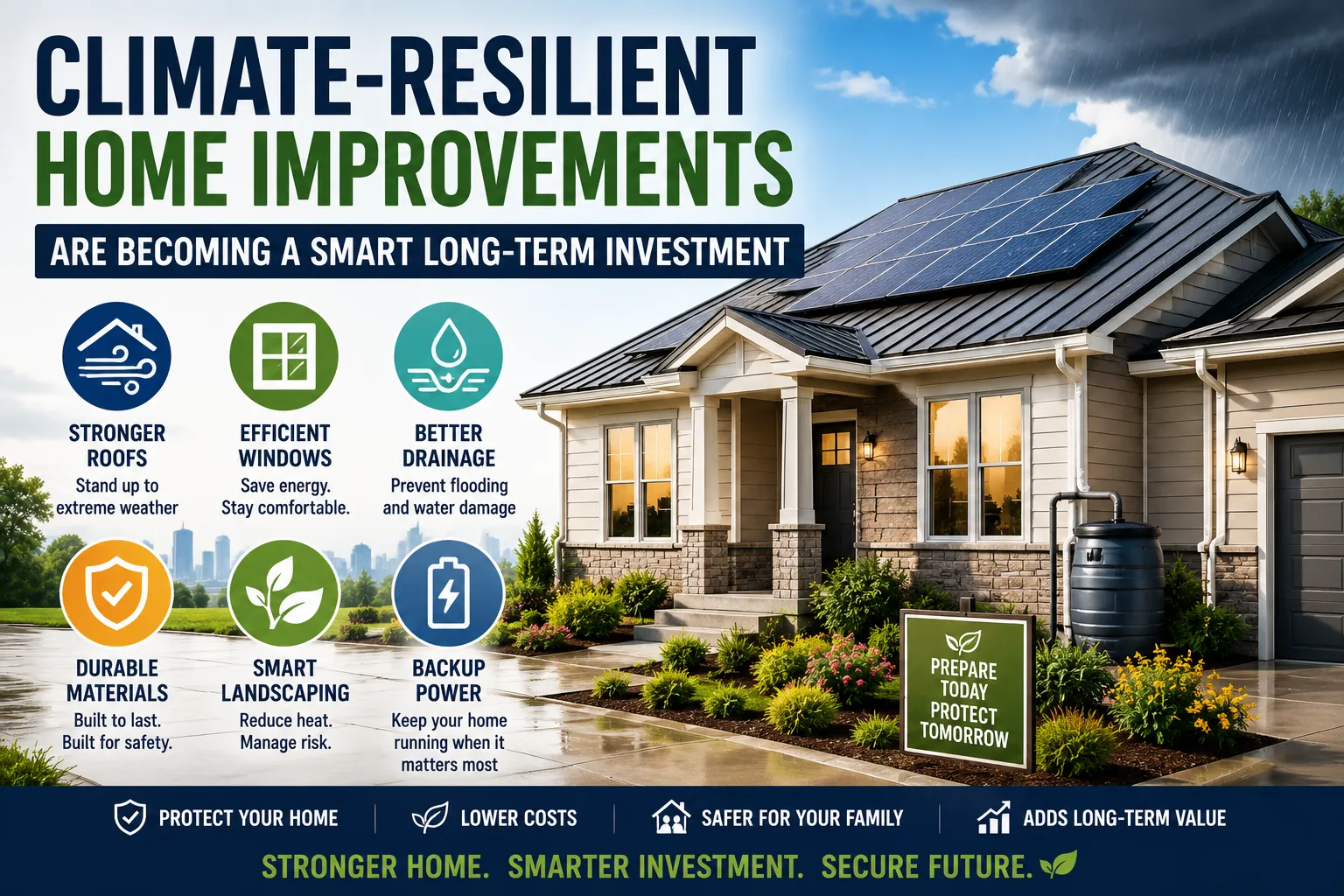
Climate-Resilient Home Improvements Are Becoming a Smart Long-Term Investment
For homeowners, home improvements have traditionally focused on comfort, appearance, energy efficiency, and resale value. But another consideration is becoming increasingly important: how well a home can withstand extreme weather and changing environmental conditions.
Climate-resilient home improvements are designed to reduce a property’s vulnerability to hazards such as extreme heat, heavy rainfall, flooding, strong winds, drought, and wildfire. Rather than treating resilience as a separate project, homeowners can incorporate it into routine renovations and regular home maintenance.
The result can be a home that is more comfortable, more durable, and potentially less expensive to maintain over the long term.
What Are Climate-Resilient Home Improvements?
Climate resilience means preparing a home to better withstand environmental stresses and recover from disruptive events.
The right improvements depend heavily on location. A coastal property may need different upgrades from a house in an area where extreme heat or wildfires are the bigger concern.
Common resilience improvements include:
-
Improving roof durability
-
Strengthening windows and exterior doors
-
Improving drainage around the property
-
Installing flood-resistant materials
-
Improving insulation and ventilation
-
Adding efficient cooling systems
-
Protecting electrical equipment from water
-
Managing vegetation around the home
-
Improving backup power capabilities
-
Sealing gaps where heat, moisture, or air can enter
-
Maintaining foundations, gutters, and drainage systems
Some of these projects can be relatively inexpensive, while others require significant investment.
Why Homeowners Are Looking Beyond Appearance
A new kitchen or bathroom can transform the appearance of a property, but resilience improvements can address something more fundamental: whether the house continues to perform well under difficult conditions.
Extreme weather can expose weaknesses that may otherwise remain unnoticed.
A poorly maintained roof can become a major problem during heavy rain or strong winds. Inadequate drainage can contribute to water intrusion. Poor insulation can make a home uncomfortable during temperature extremes. Vulnerable windows can increase the risk of damage during storms.
Addressing these weaknesses before they become emergencies can be a more practical strategy than waiting until major repairs are necessary.
Energy Efficiency and Climate Resilience Often Overlap
Many improvements designed to make a home more resilient can also make it more energy efficient.
Better insulation, air sealing, efficient windows, and improved ventilation can help stabilize indoor temperatures. During periods of extreme heat or cold, that can make the home more comfortable while reducing the amount of work required from heating and cooling equipment.
Efficient appliances and heating or cooling systems can also reduce ongoing energy consumption.
This creates a useful combination: homeowners can invest in improvements that support both everyday comfort and resilience during periods of unusual weather.
Better Insulation Can Make a Major Difference
Insulation is often associated with winter heating, but its benefits extend beyond cold weather.
A well-insulated home can slow the transfer of heat through walls, ceilings, and floors. During hot weather, this can help indoor spaces remain cooler for longer. During cold weather, it can help retain indoor heat.
Insulation works best as part of a larger building-envelope strategy that may also include:
-
Air sealing
-
Efficient windows
-
Weatherstripping
-
Proper ventilation
-
Moisture management
Simply adding insulation without addressing major air leaks or moisture problems may not deliver the expected results.
Roofing Is a Critical Resilience Investment
The roof is one of the home’s primary defenses against the elements.
Understanding how residential roofing systems work and require maintenance can help homeowners recognize why roofing materials, installation quality, drainage, flashing, and maintenance all influence how well a home handles severe weather.
Homeowners considering a roof replacement can look beyond appearance and initial price.
Important questions include:
-
How durable is the material?
-
Is it appropriate for the local climate?
-
How well does it handle wind or heavy rain?
-
How long is it expected to last?
-
Are vulnerable areas properly flashed?
-
Is the roof adequately connected to the rest of the structure?
-
Can gutters and drainage systems handle heavy rainfall?
A durable roof may have a higher upfront cost than a basic alternative, but the long-term value can come from reduced maintenance and a lower likelihood of premature replacement.
Windows Can Improve Comfort and Protection
Windows are another important part of a home’s exterior defense.
Modern high-performance windows can help reduce unwanted heat transfer and drafts. Depending on the location, homeowners may also consider products designed to provide greater resistance to wind, impact, or other environmental hazards.
Window upgrades can be particularly valuable when existing windows are:
-
Drafty
-
Damaged
-
Poorly sealed
-
Single-pane
-
Difficult to operate
-
Showing signs of moisture intrusion
However, window replacement is not always the first improvement a homeowner should make. Air sealing and insulation may sometimes provide better value, depending on the condition of the existing windows and the rest of the building envelope.
Drainage Is One of the Most Overlooked Improvements
Water management is a fundamental part of protecting a home.
Heavy rainfall can overwhelm inadequate drainage systems and allow water to collect near foundations, walls, doors, or other vulnerable areas.
Homeowners can reduce potential problems by maintaining:
-
Gutters
-
Downspouts
-
Drainage channels
-
Grading around the foundation
-
Roof drainage systems
-
Appropriate landscaping
Downspouts should direct water away from the foundation rather than allowing it to accumulate immediately beside the house.
Small drainage problems can become much more expensive when ignored.
Flood-Resistant Improvements Can Reduce Damage
For properties located in flood-prone areas, resilience may require more substantial changes.
Potential strategies can include elevating vulnerable equipment, improving drainage, using water-resistant materials in appropriate areas, and keeping electrical systems and mechanical equipment away from locations where floodwater could reach them.
The best approach depends on the property’s flood risk, local building requirements, construction type, and elevation.
Homeowners should consult qualified local professionals before undertaking major flood-resilience work.
Landscaping Can Help Protect the Property
Landscaping is not simply an aesthetic decision.
The placement of trees, shrubs, ground cover, and other vegetation can influence drainage, erosion, wind exposure, and wildfire risk.
Appropriate landscaping can help slow and direct rainwater while reducing soil erosion.
At the same time, trees and vegetation need to be managed carefully around structures. Dead branches, overgrown vegetation, and poorly positioned plants can create additional hazards during storms or fires.
The goal is not necessarily to remove vegetation but to design and maintain the landscape with the property’s environmental risks in mind.
Extreme Heat Makes Passive Cooling More Valuable
As temperatures rise, homeowners may become increasingly interested in ways to keep indoor spaces comfortable without relying entirely on mechanical cooling.
Passive strategies can include:
-
Exterior shading
-
Window shades
-
Reflective roofing
-
Appropriate insulation
-
Cross-ventilation
-
Strategic landscaping
-
Improved air sealing
-
Efficient windows
These measures can complement air-conditioning systems rather than replace them.
A home that gains less heat during the day can place less demand on its cooling equipment.
Backup Power Can Improve Household Resilience
Power interruptions can create serious problems when they last for extended periods.
A backup power system can help maintain essential household functions, depending on its design and capacity.
Options can include:
-
Portable generators
-
Standby generators
-
Battery storage systems
-
Solar-plus-storage systems
Safety is critical with backup power equipment. Generators must be installed and operated according to manufacturer instructions and applicable safety requirements, particularly because improperly used generators can create dangerous carbon monoxide exposure.
For larger systems, professional installation is generally the safest approach.
Protecting the Home From Wildfire Risk
In areas vulnerable to wildfires, resilience often focuses on reducing the opportunities for fire to reach and ignite the structure.
Potential improvements include:
-
Using appropriate fire-resistant exterior materials
-
Maintaining roofs and gutters
-
Removing combustible debris
-
Managing vegetation near the house
-
Protecting vulnerable vents and openings
-
Maintaining defensible space where appropriate
The specific recommendations vary according to local fire conditions and regulations.
Homeowners in wildfire-prone regions should consider local guidance when planning improvements rather than relying on generic advice.
Maintenance Is Part of Climate Resilience
Resilience does not always require a major renovation.
Routine maintenance can prevent small weaknesses from becoming significant vulnerabilities. A broader home repairs guide can also help homeowners understand how addressing common problems early can prevent them from becoming larger and more expensive issues.
Important maintenance tasks include:
-
Cleaning gutters
-
Checking roof damage
-
Inspecting exterior seals
-
Maintaining drainage
-
Repairing damaged siding
-
Checking plumbing for leaks
-
Maintaining heating and cooling systems
-
Trimming hazardous branches
-
Inspecting foundations
-
Addressing moisture problems promptly
A resilient home is not created by one project. It is maintained over time.
The Financial Case for Resilient Improvements
The financial value of resilience is not limited to resale.
A well-planned improvement can potentially provide several benefits at once:
-
Lower operating costs through improved efficiency.
-
Reduced maintenance needs through more durable materials.
-
Lower risk of expensive damage from certain hazards.
-
Improved comfort during extreme temperatures.
-
Longer service life for building components.
-
Potentially stronger market appeal for future buyers.
Not every resilience project will pay for itself financially, and homeowners should be cautious about claims promising guaranteed savings.
The strongest investments are generally those that solve an existing problem while also improving resilience.
Start With the Biggest Risks
Homeowners do not need to make every possible upgrade at once.
A better approach is to identify the risks that matter most for the property.
Consider:
-
What extreme weather is common in the area?
-
Has the property experienced flooding or water intrusion?
-
Is extreme heat becoming a comfort problem?
-
Is the roof nearing the end of its useful life?
-
Are windows poorly sealed?
-
Does water collect near the foundation?
-
Is the home located in a wildfire-prone area?
-
How vulnerable is the household to extended power outages?
The answers can help determine which improvements deserve priority.
A Practical Resilience Upgrade Strategy
A phased approach can make major projects easier to manage financially.
Phase One: Inspect and Maintain
Start by identifying existing vulnerabilities.
Inspect the roof, gutters, drainage, windows, doors, foundation, plumbing, electrical systems, and heating and cooling equipment.
Fix obvious maintenance problems before investing in larger upgrades.
Phase Two: Improve the Building Envelope
Next, consider improvements that help the home manage heat, cold, moisture, and air movement.
Depending on the property, this could include insulation, air sealing, weatherstripping, ventilation improvements, or window upgrades.
Phase Three: Address Local Climate Risks
Focus on the hazards most relevant to the property.
A flood-prone house may need water-management improvements. A wildfire-prone home may need exterior fire-resistant upgrades. A hot-climate property may benefit from shading, efficient cooling, and reflective roofing.
Phase Four: Add Backup Systems
Once the building itself is better protected, homeowners can consider backup power, water-management systems, or other resilience technologies.
This approach can help ensure that expensive equipment is not installed before basic vulnerabilities have been addressed.
Don’t Overlook Professional Inspections
Some resilience improvements are straightforward, but others involve structural, electrical, roofing, plumbing, or building-code considerations.
A qualified professional can identify problems that may not be obvious to a homeowner.
Professional input can be particularly important for:
-
Structural reinforcement
-
Major roofing work
-
Electrical modifications
-
Generator installation
-
Flood mitigation
-
Foundation repairs
-
Major drainage projects
-
Significant insulation or ventilation changes
Local building codes and climate conditions should also influence the design.
Resilience Can Be Built Into Ordinary Renovations
One of the easiest ways to make resilience more affordable is to incorporate it into projects that are already planned.
Replacing a roof is an opportunity to consider more durable materials.
Remodeling exterior walls can create an opportunity to improve insulation and air sealing.
Replacing windows can improve both comfort and weather resistance.
Renovating a landscape can provide an opportunity to improve drainage.
This approach avoids treating resilience as a completely separate category of spending.
Think Beyond the Initial Price Tag
The cheapest option is not always the least expensive choice over the life of a home.
A low-cost material may require more frequent replacement. An inexpensive system may consume more energy. A minor drainage problem may eventually cause costly water damage.
Homeowners should therefore consider life-cycle cost, which looks at the purchase price alongside installation, maintenance, operating costs, durability, and potential replacement.
A more expensive improvement can sometimes offer better long-term value if it performs reliably for many years.
Resilient Homes Can Be More Comfortable Too
One of the most appealing aspects of climate-resilient improvements is that their benefits are not limited to emergencies.
Better insulation can improve everyday comfort.
Efficient windows can reduce drafts.
Improved shading can make rooms more pleasant during hot weather.
Better drainage can keep yards usable after heavy rain.
A more efficient cooling system can make indoor temperatures easier to manage.
In addition, improving indoor air quality can complement resilience-focused improvements by supporting a healthier and more comfortable indoor environment.
In other words, resilience can improve the ordinary experience of living in a home, not just its ability to withstand an extreme event.
The Best Investment Depends on the Property
There is no universal checklist that makes every home climate resilient.
A house in a dry region has different needs from one in a flood-prone coastal community. A property exposed to wildfire risk requires different strategies from one primarily affected by extreme cold.
The most effective improvements are therefore location-specific.
Homeowners should consider local hazard maps, building requirements, professional inspections, and the property’s construction before making major decisions.
Building for the Future Starts With the Next Improvement
Climate resilience does not have to mean rebuilding an entire house.
It can begin with a better-maintained roof, improved drainage, stronger insulation, more efficient windows, better shading, or a carefully planned backup system.
The key is to view home improvement through a longer-term lens. Instead of asking only how an upgrade will make a property look today, homeowners can also ask how it will perform five, 10, or 20 years from now.
For homeowners already planning renovations, that mindset can turn ordinary maintenance and remodeling decisions into strategic investments in durability, comfort, efficiency, and long-term protection.