Complete Guide to Flower Gardening
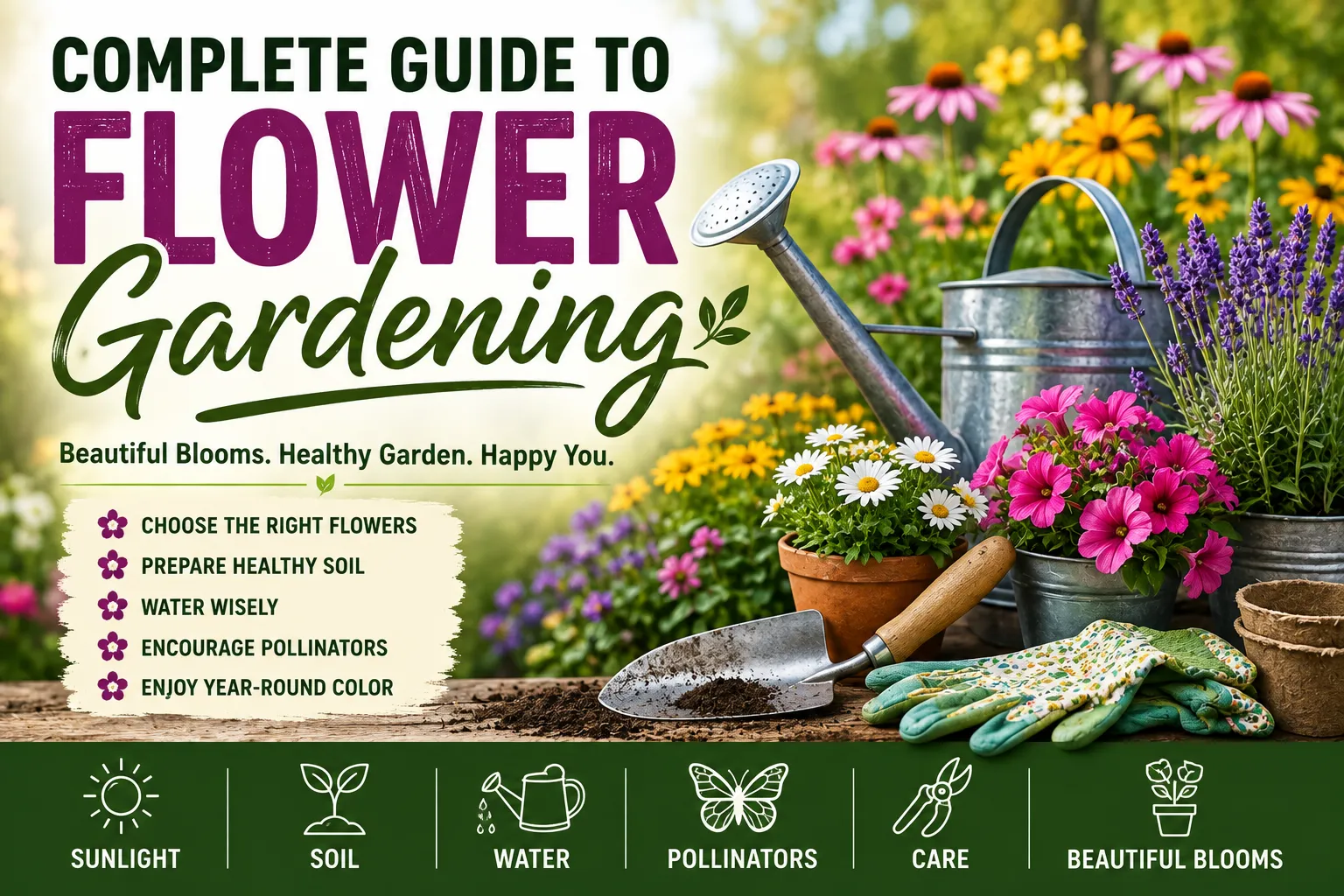
Complete Guide to Flower Gardening
Flower gardening is one of the simplest ways to make an outdoor space more colorful, welcoming, and enjoyable. Whether you have a large backyard, a small courtyard, a balcony, or a few containers near a doorway, growing flowers can transform an ordinary space into something that feels alive.
But a successful flower garden involves more than simply choosing attractive plants and putting them in the soil. The best results come from understanding sunlight, soil, watering, plant selection, planting times, maintenance, and the specific conditions of your growing space.
This complete guide to flower gardening covers the essentials for beginners and provides practical ideas for creating a healthy, attractive garden that can continue producing blooms year after year.
What Is Flower Gardening?
Flower gardening is the practice of growing flowering plants primarily for their blooms, appearance, fragrance, wildlife value, or combination of these benefits.
Flower gardens can take many forms, including:
- Traditional garden beds
- Border gardens
- Container gardens
- Raised beds
- Cottage-style gardens
- Pollinator gardens
- Cutting gardens
- Vertical gardens
- Wildflower gardens
- Small balcony or patio gardens
A flower garden does not have to follow a particular design. It can be highly structured and formal or relaxed and natural-looking.
The most important consideration is matching plants to the conditions available in your garden.
For gardeners working with limited space, a complete beginner’s guide to container gardening explains how pots and containers can provide a practical growing environment for flowers and other plants.
Why Start a Flower Garden?
Flowers offer benefits that go well beyond decoration.
They Improve Outdoor Spaces
Flowers add color, texture, height, and seasonal interest. Even a small collection of flowering plants can make a patio, entrance, balcony, or backyard feel considerably more inviting.
They Support Pollinators
Many flowering plants provide nectar and pollen for bees, butterflies, moths, hummingbirds, and other beneficial wildlife.
Choosing a variety of plants that bloom at different times can provide food for pollinators over a longer period.
They Encourage Outdoor Activity
Gardening provides a reason to spend time outside. Planting, watering, pruning, observing flowers, and maintaining beds can turn an unused outdoor area into an enjoyable part of everyday life.
They Can Provide Cut Flowers
Some flowers are particularly well suited to cutting. Growing them at home allows you to bring fresh flowers indoors without relying entirely on purchased bouquets.
They Add Biodiversity
A thoughtfully designed garden can provide shelter and food for insects and other small organisms while increasing the variety of plants around your home.
Understanding Your Garden Before Planting
One of the most common mistakes beginners make is choosing plants before understanding the growing conditions.
Before buying seeds or plants, spend some time observing your space.
1. Measure Sunlight
Different flowers require different amounts of sunlight.
A useful general classification is:
- Full sun: Around six or more hours of direct sunlight per day
- Partial sun or partial shade: Several hours of sunlight, often with protection during part of the day
- Shade: Limited direct sunlight
Observe your garden throughout the day rather than assuming that an area is sunny or shady.
A location that receives morning sun may have very different conditions from one that receives intense afternoon sun.
2. Examine the Soil
Healthy soil provides plants with water, nutrients, air, and physical support.
Look at:
- Soil texture
- Drainage
- Organic matter
- Moisture levels
- Compaction
- Existing plant growth
Heavy, compacted soil can drain poorly, while very sandy soil may allow water to move through too quickly.
Adding suitable organic matter can improve soil structure, but the best amendment depends on the existing soil and plants you intend to grow.
For a deeper look at the foundation of healthy plant growth, see The Ultimate Guide to Soil Health.
3. Consider Drainage
Poor drainage can be particularly damaging to flowers that dislike constantly wet roots.
After heavy rain or watering, observe whether water remains on the surface for extended periods.
If your garden stays waterlogged, consider:
- Improving drainage
- Building raised beds
- Growing suitable moisture-tolerant plants
- Using containers with adequate drainage holes
If raised beds are appropriate for your space, How to Build and Manage Healthy Raised Garden Beds provides additional guidance on creating and maintaining these growing areas.
4. Understand Your Climate
Climate affects which flowers can survive outdoors, when they should be planted, and how much water they may need.
Instead of choosing plants simply because they look attractive, select varieties suited to your local growing conditions.
Choosing the Right Flowers
The enormous variety of flowers can make choosing plants overwhelming. A simple strategy is to divide your choices into categories.
Annual Flowers
Annuals generally complete their life cycle within one growing season.
They are useful when you want:
- Fast color
- Flexible garden designs
- Seasonal experimentation
- Abundant blooms
Examples include marigolds, petunias, zinnias, and cosmos, depending on the climate.
Perennial Flowers
Perennials live for multiple growing seasons.
They can be excellent foundations for a garden because they don’t need to be replanted from scratch every year in suitable climates.
Examples include:
- Lavender
- Coneflowers
- Daylilies
- Salvia
- Peonies
- Black-eyed Susans
The exact suitability of each plant depends on local climate and growing conditions.
Bulbs
Bulb plants can provide distinctive seasonal displays.
Examples include:
- Tulips
- Daffodils
- Lilies
- Crocuses
- Alliums
Planting requirements vary considerably between species and climates.
Native Flowers
Native plants are adapted to the environmental conditions of their natural region.
They can be valuable choices because they may provide:
- Habitat for local wildlife
- Food for native pollinators
- Adaptation to local conditions
- Reduced dependence on intensive maintenance once established
Native does not automatically mean maintenance-free, however. Plant selection should still account for sunlight, soil, moisture, and space.
How to Design a Flower Garden
A good flower garden doesn’t happen by accident. Even informal gardens benefit from some planning.
For gardeners developing a larger landscape, Understanding Garden Design and Landscape Planning provides a broader framework for arranging plants, pathways, spaces, and visual elements.
Start With a Focal Point
A focal point gives the garden somewhere for the eye to settle.
It could be:
- A large flowering plant
- A tree
- A decorative container
- A garden structure
- A sculpture
- A particularly colorful flower bed
Not every garden needs a dramatic centerpiece, but having a visual anchor can make the overall design feel more intentional.
Combine Different Heights
Layer plants from low to high.
For example:
- Low-growing flowers at the front
- Medium-height plants in the middle
- Tall flowers toward the back
This approach helps prevent taller plants from hiding shorter ones.
Think About Color
You can create very different moods depending on your color choices.
A garden using closely related colors can feel calm and coordinated, while contrasting colors can create a more energetic appearance.
Don’t feel obligated to use every color available. A limited palette can often create a stronger visual effect.
Add Texture
Flowers are only one part of the visual composition.
Consider combining:
- Large leaves
- Fine foliage
- Upright plants
- Spreading plants
- Grasses
- Rounded flower heads
- Spiky flowers
Texture helps the garden remain interesting even when fewer plants are in bloom.
When the garden is intended to become part of a broader outdoor area, How to Design Functional Outdoor Living Spaces Around a Garden can help connect planting areas with spaces used for relaxing, dining, and everyday outdoor activities.
Planting Flowers Successfully
Once you’ve selected suitable plants, proper planting gives them the best chance of establishing strong roots.
Prepare the Planting Area
Remove weeds and debris before planting.
Loosen compacted soil where appropriate and incorporate organic matter if the soil needs improvement.
Avoid excessively disturbing the soil structure simply for the sake of digging. Good soil management should focus on creating favorable conditions for roots and soil organisms.
Give Plants Enough Space
Overcrowding may seem attractive when plants are small, but many flowers become considerably larger as they mature.
Planting too closely can lead to:
- Poor airflow
- Increased disease pressure
- Competition for water and nutrients
- Plants growing into one another
- More difficult maintenance
Follow the mature spacing recommendations for the particular plant rather than judging distance by the size of a young seedling.
Plant at the Appropriate Depth
Planting depth matters, particularly for bulbs and seeds.
Some seeds need light to germinate, while others need to be covered. Bulbs also have specific depth requirements.
Always check the instructions for the particular species rather than assuming every seed or bulb should be planted at the same depth.
Growing Flowers From Seeds
Starting flowers from seed can be inexpensive and rewarding.
Benefits of Growing From Seed
Seeds offer:
- A wider selection of varieties
- Lower cost per plant
- The opportunity to grow large numbers of plants
- A satisfying hands-on gardening experience
Basic Seed-Starting Process
- Choose suitable seeds.
- Check the recommended planting conditions.
- Prepare a clean growing medium.
- Sow seeds at the recommended depth.
- Keep the growing medium appropriately moist.
- Provide suitable light and temperature.
- Thin seedlings when necessary.
- Harden plants gradually before moving them outdoors.
Not every flower is equally easy to grow from seed. Beginners may want to start with varieties known for reliable germination and straightforward care.
Gardeners who want to produce new plants from established specimens can also explore the Complete Guide to Plant Propagation, which covers ways plants can be multiplied from seeds and other plant material.
Growing Flowers From Nursery Plants
Buying established plants is often easier for beginners who want quicker results.
Look for plants that have:
- Healthy foliage
- Strong stems
- No obvious pest infestations
- No significant disease symptoms
- Well-developed but not severely root-bound root systems
Avoid assuming that the largest plant is always the best choice. A healthy, compact plant can establish more successfully than an oversized plant that has experienced stress.
Watering a Flower Garden
Watering is essential, but more water isn’t necessarily better.
Plants need adequate moisture, but constantly saturated soil can damage roots.
For a more detailed approach to irrigation, see The Complete Guide to Watering Garden Plants Correctly.
Water the Root Zone
Whenever possible, direct water toward the soil around the plant rather than repeatedly wetting the foliage.
Deep watering can encourage roots to grow farther into the soil, although the appropriate frequency depends on the plant, soil, weather, container size, and local conditions.
Check the Soil
Don’t rely entirely on a fixed watering schedule.
Before watering, check the soil and consider:
- Recent rainfall
- Temperature
- Wind
- Plant size
- Container size
- Soil type
- Plant requirements
Container plants generally dry out faster than plants growing in the ground.
Fertilizing Flowering Plants
Flowers require nutrients for healthy growth, but fertilizer should not be treated as a substitute for healthy soil.
Common plant nutrients include:
- Nitrogen
- Phosphorus
- Potassium
Plants also require various secondary and micronutrients.
Too much fertilizer can damage plants and contribute to environmental problems through nutrient runoff.
The right approach is to understand what your soil and plants actually need and follow the directions for the fertilizer being used.
For more detailed information about nutrient requirements and fertilizer selection, see the Complete Guide to Garden Fertilizers and Plant Nutrition.
Mulching Your Flower Garden
Mulch is a layer of material placed over the soil surface.
Organic mulch can include:
- Shredded leaves
- Compost
- Wood-based materials
- Straw
- Other suitable plant materials
Mulch can help:
- Reduce evaporation
- Moderate soil temperature
- Suppress some weeds
- Add organic matter as it decomposes
Keep mulch away from direct contact with plant stems to reduce moisture-related problems and other potential issues.
Compost can also play an important role in improving garden soil and recycling organic material. How to Make Compost and Use It Effectively in a Garden explains how gardeners can produce and apply compost appropriately.
Managing Weeds Naturally
Weeds compete with flowers for resources and can quickly take over neglected beds.
Effective approaches include:
Remove Young Weeds Early
Small weeds are generally easier to remove than established plants with extensive roots.
Use Mulch
A suitable mulch layer can reduce the amount of light reaching weed seeds near the soil surface.
Avoid Bare Soil Where Possible
Dense, well-planned planting can reduce opportunities for weeds to establish.
Pull Carefully
When removing weeds by hand, try to remove the root system where practical.
Managing Garden Pests
Flower gardens can attract insects, but not every insect is harmful.
Some insects are pollinators or predators of garden pests.
Before treating a plant, identify the problem.
Possible signs include:
- Holes in leaves
- Discolored foliage
- Sticky residue
- Distorted growth
- Webbing
- Wilting
- Visible insects
For a more comprehensive approach to identifying and managing garden pests, see The Complete Guide to Garden Pest Control.
Encourage Beneficial Insects
A diverse garden can attract predators such as ladybirds, lacewings, predatory beetles, and other helpful organisms.
Avoid automatically eliminating every insect you see.
Use Chemical Controls Carefully
If a pesticide is necessary, select an appropriate product and follow its label instructions carefully.
Broad-spectrum products can affect beneficial insects as well as pests, so targeted approaches are generally preferable when practical.
Preventing Flower Diseases
Good growing conditions can reduce many disease problems.
Helpful practices include:
- Providing adequate spacing
- Avoiding unnecessary overhead watering
- Removing severely affected plant material
- Improving air circulation
- Keeping tools clean when disease is suspected
- Selecting varieties suited to local conditions
If a plant repeatedly develops the same problem, treating the symptom without addressing the underlying growing conditions may provide only temporary results.
For help identifying common plant health problems, see the Plant Diseases Guide.
Deadheading Flowers
Deadheading means removing spent flowers.
Depending on the plant, it can:
- Improve appearance
- Encourage additional flowering
- Prevent unwanted seed production
- Redirect plant energy
However, not every plant should be deadheaded in the same way.
Some plants produce attractive seed heads that provide winter interest or food for wildlife. Research the specific plant before removing every spent bloom.
Creating a Pollinator-Friendly Flower Garden
A pollinator garden can combine beauty with ecological value.
Consider providing:
- Different flower shapes
- Multiple flower colors
- Plants with different bloom periods
- Native flowering species
- Shelter
- Water sources where appropriate
- Areas free from unnecessary pesticide use
A diverse garden is generally more useful to wildlife than a landscape dominated by a single flowering species.
Flower Gardening in Containers
You don’t need a traditional garden bed to grow flowers.
Containers are ideal for:
- Balconies
- Patios
- Small yards
- Apartment entrances
- Rooftop spaces
- Areas with poor soil
Choose containers with adequate drainage and match the container size to the plant.
Container gardens typically require more frequent monitoring because they can dry out faster than garden soil.
For a broader look at growing plants without traditional in-ground beds, return to the Complete Beginner’s Guide to Container Gardening.
Growing Beyond Flower Beds
Flower gardening can be part of a larger home-growing system.
Gardeners with enough space may also grow food-producing plants alongside ornamental flowers. The Ultimate Guide to Growing Vegetables at Home explores the fundamentals of producing vegetables in a home garden.
Fruit plants can similarly add another productive layer to a garden. See How to Grow Fruit Plants Successfully at Home for guidance on growing fruit-bearing plants.
Trees and shrubs can provide structure, shade, habitat, and long-term interest around flowering areas. How to Plant and Maintain Healthy Trees and Shrubs at Home covers the fundamentals of establishing these larger plants successfully.
Growing Flowers Under Controlled Conditions
Some gardeners need greater control over temperature, moisture, wind, or the length of the growing season.
A greenhouse can provide a more controlled growing environment. How Greenhouse Gardening Creates Controlled Growing Conditions explains how greenhouse growing can be used to manage environmental conditions.
Organic Gardening Approaches
Some gardeners prefer to reduce their reliance on synthetic fertilizers and pesticides and place greater emphasis on soil health, biodiversity, composting, and preventative care.
Organic Gardening Explained provides a broader explanation of organic gardening principles and how they can be incorporated into a home garden.
Organic gardening still requires careful observation and management. Choosing appropriate plants, maintaining healthy soil, watering correctly, and identifying problems early remain important regardless of the gardening approach.
Pruning and Maintaining Garden Plants
Flower gardening involves more than planting and watering. Some plants benefit from selective pruning to maintain their shape, remove damaged growth, improve airflow, or encourage healthy development.
For detailed guidance on this aspect of garden care, see How to Prune and Maintain Garden Plants for Healthy Growth.
Pruning should always take the particular plant’s growth habit and recommended pruning time into account. Cutting at the wrong time or removing too much growth can sometimes reduce flowering or weaken a plant.
Common Flower Gardening Mistakes
Choosing Plants Without Checking Sunlight
A beautiful plant in the wrong location may struggle regardless of how carefully you care for it.
Overwatering
Watering too frequently can create unhealthy root conditions.
Planting Too Closely
Young plants often look small, but mature size should determine spacing.
Ignoring Soil Conditions
Poor soil can limit growth even when plants receive adequate sunlight and water.
Using Too Much Fertilizer
More fertilizer does not necessarily produce more flowers.
Removing Every Insect
Some insects are valuable parts of the garden ecosystem.
Forgetting Mature Plant Size
A plant that fits perfectly today may overwhelm the garden later.
Focusing Only on Flowers
Foliage, plant structure, seed heads, and texture contribute to garden beauty throughout the year.
How to Make a Flower Garden Easier to Maintain
A beautiful garden doesn’t have to become a full-time job.
Choose plants suited to your local conditions rather than trying to force unsuitable plants to survive.
Group plants according to similar requirements for:
- Sunlight
- Water
- Soil
- Maintenance
- Growing conditions
Use mulch where appropriate, keep weeds under control while they’re young, and establish a regular inspection routine.
A few minutes of observation each week can help you catch problems before they become major ones.
Caring for a Lawn Around Your Flower Garden
If flower beds are surrounded by lawn, maintaining the grass can be an important part of keeping the entire outdoor space attractive.
Lawn care involves its own considerations, including mowing, watering, soil conditions, fertilization, weed management, and seasonal maintenance.
For a dedicated guide, see The Ultimate Guide to Lawn Care.
A Simple Flower Garden Planning Checklist
Before planting, ask yourself:
- How much sunlight does the area receive?
- How well does the soil drain?
- What type of soil do I have?
- What is the local climate like?
- How large will each plant become?
- Which plants bloom at different times?
- Do I want annuals, perennials, or both?
- Do I want to attract pollinators?
- How much maintenance can I realistically provide?
- Will I grow flowers in beds, containers, or both?
- Where will taller plants go?
- What colors and textures will work together?
Answering these questions before purchasing plants can prevent many common gardening problems.
Building a Flower Garden That Lasts
The most successful flower gardens are rarely the ones with the most plants. They are the ones where the plants and growing conditions work together.
Start with the basics: understand your sunlight, improve your soil where necessary, select appropriate plants, provide adequate water, and give everything enough room to grow. From there, you can experiment with colors, textures, containers, pollinator-friendly varieties, and more ambitious garden designs.
Flower gardening is also a process of observation. Plants will teach you what works in your particular space. Over time, you’ll learn which flowers thrive, which combinations look best, and which maintenance routines fit naturally into your lifestyle.
A garden doesn’t need to be perfect to be beautiful. With thoughtful plant choices and consistent care, even a modest outdoor space can become a colorful living landscape that changes and develops with every growing season.