Complete Guide to Pasta Cooking
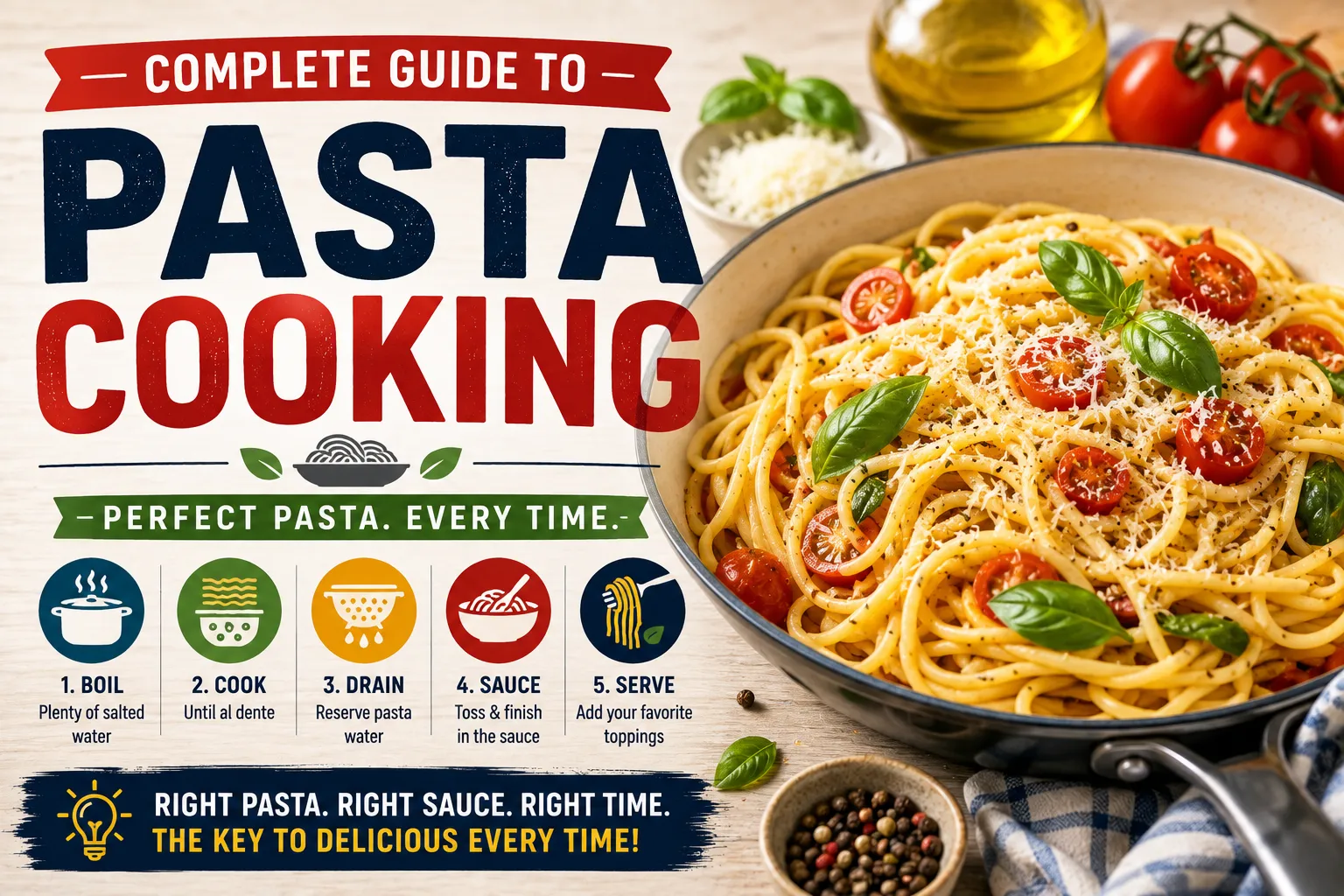
Complete Guide to Pasta Cooking
Pasta is one of the most versatile foods in the kitchen. It can become a quick weeknight dinner, a rich baked dish, a fresh summer meal or an elegant restaurant-style plate with surprisingly little effort.
Yet good pasta isn’t simply about dropping noodles into boiling water and adding sauce.
The type of pasta, cooking water, salt, timing, sauce, finishing technique and even the shape of the pasta can all affect the final result.
This complete guide to pasta cooking covers everything from choosing the right pasta and boiling it properly to achieving the ideal texture, matching sauces with shapes, avoiding common mistakes and preparing pasta dishes that taste balanced rather than heavy. If you’re building your overall cooking skills, this guide also fits naturally into our complete guide to cooking for beginners.
Why Pasta Cooking Technique Matters
Pasta is relatively simple: flour, water and sometimes eggs are transformed into noodles or other shapes.
But small differences in cooking technique can produce dramatically different results.
Overcooked pasta can become:
- Soft
- Mushy
- Sticky
- Difficult to sauce
Undercooked pasta can be:
- Hard in the center
- Unevenly cooked
- Difficult to chew
The goal is usually pasta with a firm but tender texture.
That’s where the Italian term al dente comes in.
What Does Al Dente Mean?
Al dente literally means “to the tooth.”
In cooking, it describes pasta that is cooked through but still has some firmness when bitten.
Al dente pasta shouldn’t be raw or crunchy.
Instead, it should have enough resistance to provide texture without feeling hard.
Many pasta dishes benefit from this texture because the pasta may continue cooking slightly when combined with hot sauce.
Choosing the Right Pasta
There are hundreds of pasta shapes, and they’re not interchangeable.
Different shapes are designed to work with different sauces and ingredients.
Understanding how different ingredients behave is also useful when choosing a pasta dish, particularly when considering cooking ingredients, their uses, substitutions and storage.
Common categories include:
- Long pasta
- Short pasta
- Tubular pasta
- Stuffed pasta
- Sheet pasta
- Small pasta
- Fresh pasta
- Whole-wheat pasta
- Gluten-free pasta
Choosing the right shape can make a noticeable difference to the finished dish.
Long Pasta
Long pasta includes:
- Spaghetti
- Linguine
- Fettuccine
- Bucatini
- Angel hair
- Capellini
These shapes generally work well with sauces that can coat the strands.
Examples include:
- Tomato sauces
- Olive-oil sauces
- Garlic and herb sauces
- Cream sauces
- Seafood sauces
Spaghetti
Spaghetti is probably the most recognizable pasta shape.
Its long, cylindrical strands work well with:
- Tomato sauce
- Meat sauce
- Garlic and oil
- Seafood
- Simple vegetable sauces
Its versatility makes it a useful staple for almost any kitchen.
Linguine
Linguine is slightly flatter than spaghetti.
Its shape works particularly well with:
- Seafood
- Pesto
- Cream-based sauces
- Olive-oil sauces
The wider surface gives sauces slightly more area to cling to.
Fettuccine
Fettuccine consists of relatively wide, flat ribbons.
It is commonly paired with rich sauces such as:
- Cream sauces
- Cheese sauces
- Mushroom sauces
- Meat-based sauces
Because the noodles are substantial, they work well with heavier ingredients.
Tubular Pasta
Tubular pasta includes shapes such as:
- Penne
- Rigatoni
- Ziti
- Cannelloni
- Macaroni
The hollow center can trap sauce and small pieces of food.
This makes tubular pasta particularly useful for:
- Chunky tomato sauces
- Meat sauces
- Cheese sauces
- Baked pasta dishes
Penne
Penne has diagonal-cut ends and a hollow center.
It works particularly well with:
- Tomato sauces
- Cream sauces
- Pesto
- Vegetable sauces
- Baked dishes
Its shape allows sauce to enter the tube rather than simply coating the exterior.
Rigatoni
Rigatoni is larger and wider than penne.
Its substantial shape works beautifully with:
- Rich meat sauces
- Thick tomato sauces
- Creamy sauces
- Baked dishes
The ridges on many varieties also help sauce cling to the pasta.
Spiral and Ridged Pasta
Shapes such as:
- Fusilli
- Rotini
- Cavatappi
have curves, spirals or ridges that capture sauce.
They’re excellent choices for:
- Chunky sauces
- Pasta salads
- Vegetable dishes
- Cheese sauces
Stuffed Pasta
Stuffed pasta includes:
- Ravioli
- Tortellini
- Agnolotti
These pastas already contain fillings such as:
- Cheese
- Meat
- Spinach
- Mushrooms
- Vegetables
Because the filling provides significant flavor, the sauce often works best when it complements rather than overwhelms it.
Fresh Pasta vs. Dried Pasta
Fresh and dried pasta are not simply different versions of the same product.
They have different textures, cooking times and ideal applications.
Dried Pasta
Usually made primarily from durum wheat semolina and water.
It is:
- Shelf-stable
- Firm
- Convenient
- Excellent for many sauces
Fresh Pasta
Often made with flour and eggs.
It tends to be:
- Softer
- More delicate
- Faster to cook
- Particularly good with certain rich or delicate sauces
Neither is universally better.
They simply produce different results.
How to Cook Dried Pasta
The basic process is straightforward.
Step 1: Bring Water to a Boil
Use a sufficiently large pot.
The water should reach a strong boil before the pasta goes in.
Step 2: Salt the Water
Seasoning the cooking water allows the pasta itself to absorb some salt during cooking. Learning how salt, herbs and other flavors affect food is covered in more detail in our guide to seasoning food.
Step 3: Add the Pasta
Add the pasta carefully and stir during the early stages to prevent sticking.
Step 4: Cook According to the Package
Use the package timing as a starting point.
Step 5: Taste Before Draining
Begin testing the pasta before the stated cooking time is complete.
Step 6: Reserve Pasta Water
Before draining, save some of the cooking water.
Step 7: Drain
Drain the pasta, but don’t rinse it if you’re making a hot pasta dish where you want the sauce to cling.
Step 8: Finish in the Sauce
Combine the pasta with the sauce and cook briefly together.
This final step is one of the easiest ways to improve pasta.
How Much Water Should You Use?
Traditional pasta cooking often uses plenty of water.
A large volume helps keep the temperature relatively stable when pasta is added and gives the noodles enough room to move.
However, you don’t need an enormous pot for every small serving.
The important points are:
- Use enough water to comfortably submerge the pasta.
- Choose a pot appropriate for the quantity.
- Stir early in the cooking process.
- Avoid overcrowding.
For very small portions, using somewhat less water can also create more concentrated, starchy cooking water that’s useful for finishing sauces.
When Should You Add Salt?
Salt the cooking water before adding the pasta.
The exact amount is a matter of preference and depends on the quantity of water and the rest of the dish.
The goal is to season the pasta itself without making the finished meal excessively salty.
Remember that sauces, cheese, cured meats and other ingredients may already contain significant amounts of salt.
Should You Add Oil to Pasta Water?
Generally, no.
Adding oil to the cooking water isn’t necessary to prevent pasta from sticking.
The more effective approach is to:
- Use enough water
- Stir the pasta after adding it
- Stir periodically while cooking
Oil can also coat the pasta surface and make it more difficult for some sauces to cling.
Should You Break Spaghetti Before Cooking?
There’s no cooking requirement to break spaghetti.
Breaking long pasta simply makes it shorter.
For traditional dishes, keeping long strands intact is generally preferable because the shape is part of the eating experience.
If your pot is too small, wait a few seconds after placing the spaghetti in the boiling water. The submerged portion will soften, allowing the rest to slide into the pot.
How to Prevent Pasta From Sticking
Pasta tends to stick when starch released during cooking accumulates on the surface.
To reduce sticking:
- Use sufficient water
- Stir shortly after adding pasta
- Stir occasionally during cooking
- Avoid leaving cooked pasta sitting unattended
- Toss it with sauce soon after draining
If pasta is being prepared for a cold dish, rinsing may sometimes be appropriate, but that’s different from serving hot pasta with sauce.
Why You Should Taste Pasta While It Cooks
Package cooking times are useful guidelines, but they aren’t absolute.
Variables such as:
- Pasta brand
- Shape
- Thickness
- Water temperature
- Cooking equipment
- Personal preference
can affect the result.
The most reliable test is tasting.
Start checking a couple of minutes before the package’s suggested cooking time ends.
Don’t Overcook Pasta
Overcooked pasta can become soft and lose its structure.
Once the pasta is mushy, adding sauce won’t restore its texture.
If you’re finishing pasta in a hot sauce, remove it from the cooking water slightly before it reaches your preferred final texture.
The pasta can finish cooking in the sauce.
Why Pasta Water Matters
Pasta cooking water contains dissolved starch from the noodles.
That starchy liquid can help create a smoother, more cohesive sauce.
Instead of thinking of pasta water as waste, think of it as a useful ingredient.
How to Use Pasta Water
Reserve a cup or two before draining.
You don’t necessarily need all of it.
Add a small amount to the sauce while tossing the pasta.
The water can help:
- Loosen thick sauces
- Improve emulsification
- Help sauce cling to pasta
- Add moisture without diluting flavor too quickly
Add it gradually rather than pouring everything in at once.
The Basic Pasta-Sauce Technique
One of the biggest improvements home cooks can make is to stop treating cooked pasta and sauce as two separate components.
Instead:
- Cook the pasta until just shy of your preferred texture.
- Transfer it to the sauce.
- Add a little pasta water.
- Toss vigorously.
- Continue cooking briefly.
- Adjust seasoning.
- Finish with cheese, herbs, oil or other ingredients as appropriate.
This helps the sauce coat the pasta instead of simply sitting underneath it.
Matching Pasta Shapes With Sauces
A useful general rule is:
Delicate pasta → lighter sauces.
Substantial pasta → heavier sauces.
For example:
| Pasta | Good Sauce Pairings |
|---|---|
| Spaghetti | Tomato, garlic-oil, seafood |
| Linguine | Seafood, pesto, cream |
| Fettuccine | Cream, mushroom, meat |
| Penne | Tomato, pesto, baked sauces |
| Rigatoni | Meat, rich tomato, cheese |
| Fusilli | Pesto, vegetable, chunky sauces |
| Ravioli | Brown butter, light cream, tomato |
| Lasagna sheets | Meat, cheese, vegetable layers |
These aren’t strict rules.
Cooking is flexible, and experimentation is part of the fun.
Tomato-Based Pasta Sauces
Tomato sauces are among the most versatile pasta sauces.
Common ingredients include:
- Tomatoes
- Garlic
- Onion
- Olive oil
- Herbs
- Chili
- Salt
- Pepper
The sauce can be kept simple or developed into a richer dish with meat, vegetables or cheese.
Cream-Based Pasta Sauces
Cream sauces are rich and luxurious.
Common additions include:
- Parmesan
- Garlic
- Mushrooms
- Chicken
- Spinach
- Herbs
- Black pepper
Because cream sauces can become heavy, balance them with acidity, herbs or vegetables where appropriate.
Oil-Based Pasta Sauces
Some of the simplest pasta dishes rely primarily on olive oil.
Examples include combinations of:
- Olive oil
- Garlic
- Chili
- Parsley
- Lemon
- Parmesan
These sauces can work particularly well with long pasta.
The key is not to drown the pasta in oil.
The goal is to coat it lightly while creating a balanced sauce.
Pesto
Pesto traditionally combines ingredients such as:
- Basil
- Garlic
- Pine nuts
- Hard cheese
- Olive oil
It pairs especially well with:
- Linguine
- Spaghetti
- Fusilli
- Trofie
When using pesto, avoid overheating it excessively. Tossing it with hot pasta and a little pasta water can create a smooth coating without turning the sauce harsh.
Meat Sauces
Hearty meat sauces work well with substantial pasta shapes.
Good options include:
- Rigatoni
- Tagliatelle
- Pappardelle
- Penne
The larger surfaces and ridges can carry rich sauces effectively.
Seafood Pasta
Seafood pasta often benefits from lighter sauces.
Common combinations include:
- Garlic
- Olive oil
- Tomato
- Lemon
- Chili
- White wine
- Herbs
Pasta shapes such as linguine and spaghetti are common choices.
Vegetable Pasta
Vegetables can become the main ingredient rather than simply an addition.
Good combinations include:
- Zucchini
- Bell peppers
- Mushrooms
- Spinach
- Broccoli
- Tomatoes
- Eggplant
Use the pasta shape to complement the size and texture of the vegetables.
Cheese and Pasta
Cheese can add salt, fat, richness and umami.
Common choices include:
- Parmesan
- Pecorino Romano
- Mozzarella
- Ricotta
- Gorgonzola
- Cheddar
The right cheese depends on the dish.
When adding hard cheese to a hot sauce, use gentle heat and pasta water to help create a smooth emulsion.
How to Make a Simple Pasta Sauce From Scratch
You don’t need a complicated recipe to make a good sauce.
Try this basic framework:
Base
Start with olive oil or butter.
Aromatics
Add garlic, onion or shallots.
Main Flavor
Choose tomatoes, vegetables, cream, cheese or another base.
Seasoning
Add salt, pepper, herbs and spices.
Pasta Water
Add a small amount to help bring everything together.
Finish
Add cheese, fresh herbs, lemon juice or olive oil according to the dish.
This formula can be adapted endlessly.
How to Make Pasta Creamy Without Too Much Cream
Creaminess doesn’t always require large quantities of heavy cream.
Starchy pasta water combined with:
- Parmesan
- Butter
- Olive oil
- Soft cheese
can produce a smooth sauce.
The key is emulsification.
When fat, water and starch are combined through vigorous tossing, they can form a cohesive sauce that coats the pasta.
What Is Emulsification?
An emulsion is a mixture in which ingredients that normally don’t combine easily—such as fat and water—are brought together into a stable or semi-stable sauce.
Pasta dishes can use this principle beautifully.
For example:
Pasta water + olive oil + starch + vigorous tossing = smoother sauce
This is one reason restaurant pasta can sometimes feel more cohesive than simply pouring sauce over noodles.
How to Finish Pasta in the Pan
This technique is worth learning.
After cooking the pasta:
- Move it directly into the sauce.
- Add a splash of pasta water.
- Increase the heat moderately.
- Toss continuously.
- Allow the sauce to coat the noodles.
- Add more water if needed.
- Remove from heat.
- Add finishing ingredients.
This can transform a basic pasta dish.
Should You Rinse Pasta?
For most hot pasta dishes, don’t rinse it.
Rinsing removes surface starch that can help sauce cling to the noodles.
However, rinsing can be useful for certain cold preparations, such as pasta salads, where you want to stop the cooking process and cool the pasta quickly.
What to Do With Leftover Pasta Water
You don’t need to save it after the meal.
But while cooking, it’s useful to keep some nearby.
If the sauce becomes:
- Too thick
- Too dry
- Difficult to toss
add a small amount of pasta water.
It can often bring the dish back together.
Fresh Pasta Cooking Guide
Fresh pasta usually cooks much faster than dried pasta.
Depending on thickness and shape, cooking may take only a few minutes.
Because it cooks quickly:
- Watch it closely
- Taste early
- Avoid walking away from the pot
- Transfer it to the sauce promptly
Fresh pasta can go from perfectly tender to overcooked relatively quickly.
Homemade Pasta Basics
Making pasta from scratch can be surprisingly accessible.
A basic egg pasta may use:
- Flour
- Eggs
- Salt
- Sometimes water or olive oil
The dough is kneaded, rested, rolled and cut into the desired shape.
Homemade pasta takes more time than dried pasta but provides a different texture and can be customized for different dishes.
How to Knead Pasta Dough
Kneading develops the gluten structure in wheat-based dough.
The dough should become:
- Smooth
- Elastic
- Relatively firm
After kneading, resting the dough is important.
Resting allows the gluten network to relax, making the dough easier to roll.
Rolling Homemade Pasta
You can roll pasta with:
- A rolling pin
- A manual pasta machine
- An electric pasta machine
Aim for even thickness.
Different pasta shapes require different thicknesses, so follow the requirements of the specific recipe.
How to Cook Gluten-Free Pasta
Gluten-free pasta can behave differently from traditional wheat pasta.
It may be made from:
- Rice
- Corn
- Quinoa
- Chickpeas
- Lentils
- Other grains or legumes
Follow the package instructions carefully and begin tasting early.
Some gluten-free varieties become soft more quickly than wheat pasta.
Whole-Wheat Pasta
Whole-wheat pasta generally contains more of the grain than refined pasta.
It has:
- A darker color
- More pronounced flavor
- A firmer or grainier texture
It can pair particularly well with:
- Tomato sauces
- Vegetables
- Beans
- Strong herbs
- Olive oil
Legume-Based Pasta
Pasta made from chickpeas, lentils or other legumes can provide a different nutritional profile and flavor.
It often has a more pronounced earthy taste and may cook differently from wheat pasta.
Again, package instructions are a starting point, but tasting is the best way to determine when it’s ready.
Pasta Salad
Pasta salad requires slightly different preparation.
Because it will usually be served cold or at room temperature, the pasta should have enough structure to remain pleasant after cooling.
Good shapes include:
- Fusilli
- Rotini
- Penne
- Farfalle
- Orzo
After cooking, cool the pasta according to the recipe.
Add dressing and other ingredients once the pasta is ready.
Baked Pasta
Baked pasta dishes include:
- Lasagna
- Baked ziti
- Pasta casseroles
- Stuffed shells
- Pasta bakes
The pasta often continues cooking in the oven.
For this reason, avoid fully cooking pasta before baking unless the recipe specifically calls for it.
Slightly undercooked pasta can absorb sauce while finishing in the oven.
Lasagna Cooking Tips
Lasagna is built in layers.
Typical components include:
- Pasta sheets
- Tomato or meat sauce
- Cheese
- Vegetables or meat
- Herbs
The sauce should be sufficiently moist because the pasta absorbs liquid during baking.
Allow the finished lasagna to rest before cutting.
This helps the layers set and makes cleaner slices possible.
One-Pot Pasta
One-pot pasta recipes cook the noodles and other ingredients together.
Advantages include:
- Fewer dishes
- Convenience
- Concentrated flavor
However, the amount of liquid needs to be carefully balanced.
Too much liquid can produce a watery dish.
Too little can leave the pasta undercooked.
Microwave Pasta Cooking
Microwave cooking can work for certain prepared pasta dishes and small portions, but traditional stovetop cooking offers greater control.
When reheating pasta in a microwave, add a little water or sauce and cover it loosely to help prevent drying.
How to Reheat Pasta
Pasta can dry out when reheated.
To improve the texture:
Stovetop
Add a splash of water or sauce and warm gently.
Microwave
Add a little moisture, cover loosely and heat in short intervals.
Oven
Cover the pasta and add sufficient sauce or moisture before reheating.
Avoid overheating.
How to Store Cooked Pasta
Cooked pasta should be cooled and refrigerated promptly.
Store it in an airtight container.
If you’re preparing pasta ahead of time, tossing it with a small amount of oil can help prevent excessive sticking, particularly when it will be used later in a cold dish.
For hot pasta, sauce is usually the better way to restore moisture and flavor.
How Long Does Cooked Pasta Last?
Storage time depends on food-safety conditions, refrigeration temperature and the ingredients in the dish.
As a general household practice, refrigerated leftovers should be eaten within a few days rather than kept indefinitely.
If food has been left at unsafe temperatures for an extended period, don’t rely on smell alone to determine whether it is safe.
When in doubt, discard it.
Common Pasta Cooking Mistakes
Using Too Little Water Without Adjusting Technique
A small amount of water can work, but overcrowding and inadequate stirring can cause sticking.
Not Salting the Water
Unsalted pasta can taste flat even when the sauce is well seasoned.
Adding Oil to the Cooking Water
It generally isn’t necessary and can interfere with sauce adhesion.
Cooking Only by the Package Timer
Taste the pasta instead.
Draining All the Water
Save some before draining.
Rinsing Hot Pasta
This can remove useful surface starch.
Leaving Pasta Sitting After Draining
It can become sticky and cool rapidly.
Adding Sauce Only at the Table
Finishing pasta in the sauce usually creates a more cohesive dish.
Using Too Much Sauce
Pasta should be coated, not buried.
How Much Sauce Should You Use?
There isn’t one exact measurement.
The goal is generally to coat the pasta without drowning it.
If you can barely see the pasta underneath a thick layer of sauce, you’ve probably gone too far.
If the noodles look dry and sauce collects at the bottom of the plate, you may need more sauce or pasta water.
Balancing a Pasta Dish
A great pasta dish usually has several elements working together.
Salt
Brings out flavor.
Fat
Adds richness and helps carry flavor.
Acid
Lemon juice, wine or tomato can brighten a rich dish.
Umami
Cheese, mushrooms, meat and certain seafood provide depth.
Heat
Chili or pepper can add contrast.
Freshness
Herbs, citrus and vegetables can prevent heavy sauces from becoming overwhelming.
Pasta Portioning
Portion sizes depend on whether pasta is the main course or part of a larger meal.
For dry pasta, a common starting point for an adult main course is roughly 75–100 grams per person, although appetite and the rest of the meal can change that amount.
For fresh pasta, the weight may be higher because fresh pasta contains more water.
Use your recipe and household needs as a guide rather than treating any single measurement as mandatory.
Pasta Cooking for a Crowd
When cooking for several people:
- Use a sufficiently large pot
- Bring water to a strong boil
- Salt the water
- Avoid overcrowding
- Stir early
- Taste before draining
- Reserve pasta water
- Have the sauce ready before the pasta finishes
Timing becomes particularly important when cooking large quantities.
Preparing Pasta Ahead of Time
For some dishes, components can be prepared ahead.
You can often make:
- Sauce
- Homemade pasta dough
- Vegetable toppings
- Meat sauces
- Cheese mixtures
ahead of time.
Then cook the pasta closer to serving.
This usually produces a better texture than fully cooking pasta hours in advance.
Pasta Cooking Troubleshooting
Pasta Is Too Sticky
Possible causes:
- Too little stirring
- Pasta sitting after draining
- Overcooking
- Excessive starch concentration without proper handling
Toss immediately with sauce.
Pasta Is Too Hard
Continue cooking briefly.
Sauce Is Too Thick
Add pasta water gradually.
Sauce Is Too Thin
Continue cooking gently to reduce it.
Pasta Is Bland
Season the pasta water and adjust the finished sauce.
Pasta Is Too Salty
Avoid adding more salt and balance with unsalted ingredients where appropriate.
How to Make Restaurant-Style Pasta at Home
Restaurant-quality pasta doesn’t necessarily require expensive ingredients.
Focus on technique.
1. Season the Pasta Water
The noodles should have flavor.
2. Make the Sauce Before the Pasta Finishes
Don’t leave cooked pasta waiting.
3. Undercook Slightly
Allow the pasta to finish in the sauce.
4. Use Pasta Water
It helps create a cohesive sauce.
5. Toss Aggressively
Movement helps emulsify the sauce.
6. Finish With Fresh Ingredients
Use herbs, cheese, citrus or quality olive oil as appropriate.
7. Serve Immediately
Pasta is usually at its best when hot and freshly finished.
Essential Pasta Cooking Tools
You don’t need a professional kitchen.
Useful equipment includes:
- Large pot
- Colander
- Wooden spoon or pasta fork
- Tongs
- Measuring utensils
- Sharp knife
- Large skillet or sauté pan
- Fine grater
- Pasta server
Tongs are particularly useful for transferring long pasta directly into sauce.
How to Choose a Good Pasta Pot
A large, heavy-bottomed pot is useful for cooking pasta because it provides enough space for water and noodles.
For everyday cooking, choose something:
- Large enough for your typical portions
- Easy to handle
- Comfortable to clean
- Compatible with your stovetop
You don’t need a specialized pasta cooker to make excellent pasta.
The Best Pasta Cooking Workflow
For a reliable weeknight method, use this sequence:
1. Choose the pasta.
2. Prepare the sauce first.
3. Bring water to a boil.
4. Salt the water.
5. Add pasta.
6. Stir early.
7. Taste before the package time ends.
8. Reserve pasta water.
9. Drain slightly before your desired final texture.
10. Finish the pasta in the sauce.
11. Add pasta water as needed.
12. Adjust seasoning.
13. Add finishing ingredients.
14. Serve immediately.
This simple workflow eliminates many of the most common pasta problems. It also reinforces the broader cooking methods and techniques every home cook should understand.
Easy Pasta Combinations to Try
If you’re looking for simple ideas, start with combinations such as:
Spaghetti + Tomato + Basil
Simple, bright and versatile.
Linguine + Garlic + Olive Oil + Chili
Fast and flavorful.
Penne + Tomato + Mozzarella
A straightforward combination suitable for baking.
Fusilli + Pesto + Vegetables
The spiral shape captures the pesto beautifully.
Rigatoni + Meat Sauce
A hearty pairing for a substantial meal.
Fettuccine + Mushroom + Parmesan
Rich, savory and satisfying.
Linguine + Lemon + Seafood
Fresh and light.
Frequently Asked Questions
Should I Put Salt in Pasta Water?
Yes. Salt seasons the pasta as it cooks and helps prevent the finished dish from tasting flat.
Should I Add Oil to Pasta Water?
Generally no. Proper stirring and sufficient water are more useful for preventing sticking.
How Do I Know When Pasta Is Done?
Taste it. It should generally be tender but retain some firmness if you’re aiming for al dente.
Should Pasta Be Rinsed?
Usually not for hot pasta dishes. Rinsing removes surface starch that helps sauce cling. It can be useful for certain cold pasta preparations.
Why Save Pasta Water?
Its starch content can help loosen and emulsify sauces while improving their ability to cling to pasta.
Can I Cook Pasta Directly in Sauce?
Yes, depending on the recipe. One-pot and absorption-style pasta recipes deliberately cook noodles in sauce or broth. Liquid quantities must be carefully controlled.
Can I Cook Fresh and Dried Pasta the Same Way?
Not exactly. Fresh pasta generally cooks much faster and has a different texture.
Why Is My Pasta Mushy?
It may have been cooked too long or left sitting in hot water after reaching the desired texture.
Why Does My Pasta Taste Bland?
Possible causes include insufficient seasoning of the cooking water or an under-seasoned sauce.
Should I Put Butter on Plain Pasta?
You can, particularly if you’re preparing a simple dish. But if you’re serving pasta with sauce, finishing it in the sauce usually provides better flavor and texture.
Can I Freeze Pasta?
Some cooked pasta dishes and homemade pasta freeze well. The results depend on the pasta shape, sauce and preparation method.
How Much Pasta Should I Cook Per Person?
A common starting point for dry pasta is around 75–100 grams per adult main-course serving, but appetite and the rest of the meal should influence the amount.
A Simple Pasta Cooking Checklist
Before you start cooking, make sure:
- You have chosen a pasta shape suited to the sauce.
- The sauce is prepared or nearly ready.
- You have a sufficiently large pot.
- The water is boiling before adding pasta.
- The cooking water is seasoned.
- You have a timer available.
- You plan to taste the pasta.
- You have a cup ready for pasta water.
- The sauce is hot when the pasta finishes.
- You can transfer the pasta directly into the sauce.
This preparation makes the actual cooking process much easier.
The Small Details That Make Better Pasta
Great pasta doesn’t require complicated techniques.
It requires attention to a few important details.
Season the cooking water.
Don’t overcook the noodles.
Save some pasta water.
Match the pasta shape with the sauce.
Finish the pasta in the sauce.
Taste and adjust before serving.
Once these habits become automatic, even simple ingredients can produce remarkably good results.
Making Pasta Night Better
Pasta has survived generations of changing food trends because it is adaptable, affordable and endlessly customizable.
You can make a meal with a handful of pantry ingredients, or spend an afternoon creating fresh pasta and a carefully prepared sauce. Neither approach is inherently better.
The real skill is understanding how the pieces work together.
Choose a shape that suits the sauce. Cook it until it has the texture you want. Use the starchy cooking water to bring the sauce together. Finish everything in the pan rather than simply piling sauce onto drained noodles.
From there, the possibilities are almost endless.
Good pasta cooking isn’t about following one rigid rule—it’s about learning how texture, seasoning, sauce and timing work together.