Cooking Ingredients Guide: Types, Uses, Substitutions & Storage
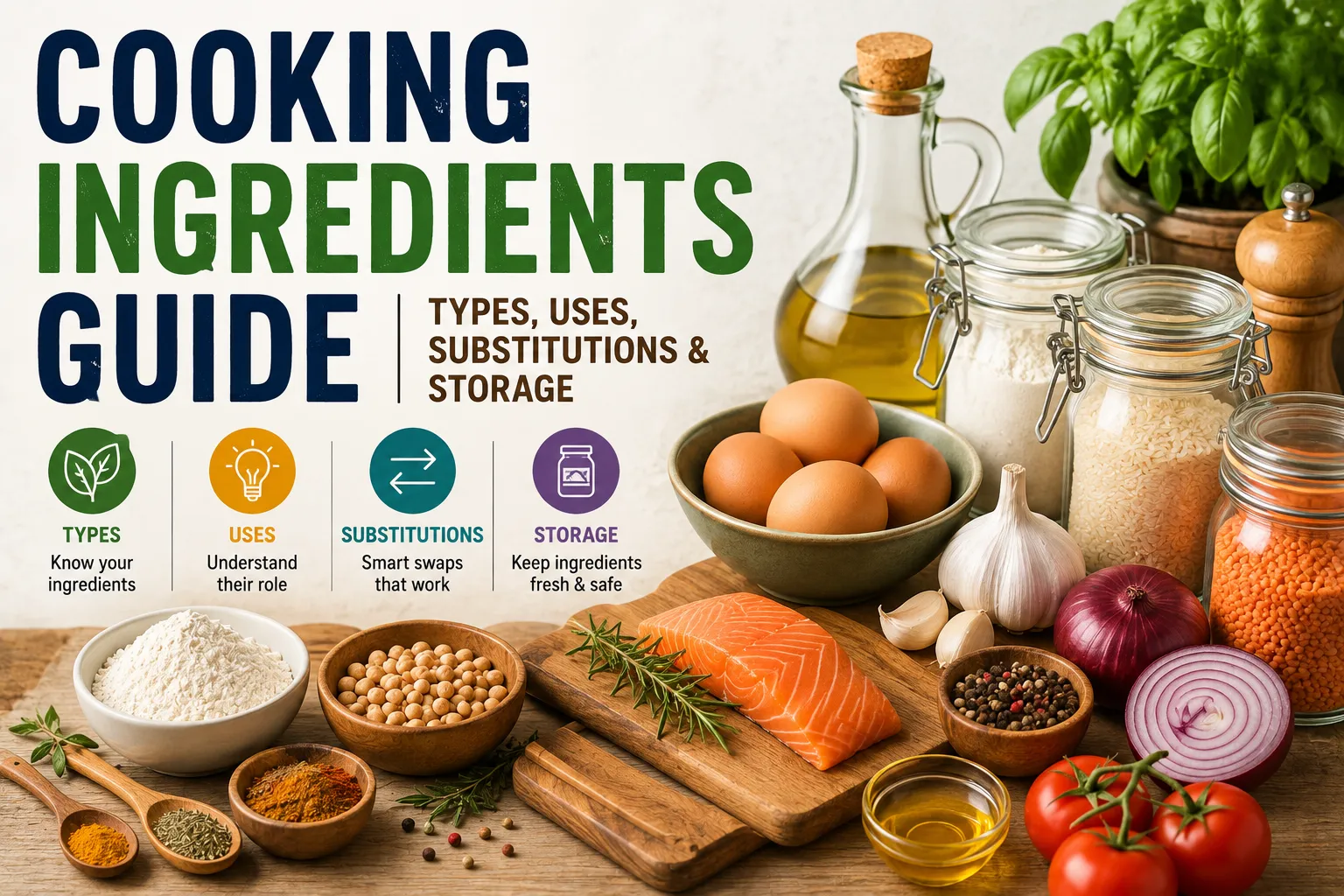
Cooking Ingredients Guide: Types, Uses, Substitutions & Storage
Good cooking starts long before a pan reaches the stove. The ingredients you choose—and how you store, prepare, and combine them—can determine the flavor, texture, aroma, nutrition, and even shelf life of a meal.
From everyday staples such as flour, rice, onions, eggs, and cooking oil to specialty ingredients such as miso, tahini, herbs, spices, and alternative flours, understanding what each ingredient does can make cooking much easier.
It can also save money. Knowing practical substitutions means you do not necessarily have to abandon a recipe because one ingredient is missing. Knowing how to store ingredients properly can reduce food waste and help preserve quality.
This guide explains the major categories of cooking ingredients, what they do, how to substitute them, and how to store them safely. For a broader introduction to kitchen skills, techniques, and food preparation, see the Complete Guide to Cooking for Beginners.
Why Understanding Ingredients Matters
Recipes provide instructions, but they do not always explain the role each ingredient plays.
An ingredient might be included to:
- Add flavor
- Provide sweetness
- Add moisture
- Create structure
- Thicken a sauce
- Help food brown
- Provide fat
- Balance acidity
- Add texture
- Improve aroma
- Preserve food
- Provide nutrients
Understanding these functions gives you more freedom in the kitchen.
If you know that baking soda provides leavening and reacts with acidic ingredients, for example, you can make a more informed substitution than simply replacing it with another white powder.
The Main Categories of Cooking Ingredients
Most ingredients can be grouped into broad categories.
Grains and Cereals
Examples include:
- Rice
- Wheat
- Oats
- Barley
- Corn
- Quinoa
- Millet
- Sorghum
They can form the foundation of meals or provide flour for baking and cooking.
Flours and Starches
Examples include:
- All-purpose flour
- Bread flour
- Whole-wheat flour
- Cornmeal
- Cornstarch
- Potato starch
- Tapioca starch
- Rice flour
These ingredients can provide structure, thickening, coating, or texture.
Proteins
Common cooking proteins include:
- Eggs
- Meat
- Poultry
- Fish
- Seafood
- Beans
- Lentils
- Peas
- Tofu
- Tempeh
Their culinary roles vary considerably. Eggs, for example, can provide structure and emulsification in addition to protein.
For more guidance on preparing animal proteins, see the guide to cooking different cuts of meat and poultry properly.
Fats and Oils
Examples include:
- Olive oil
- Vegetable oil
- Canola oil
- Coconut oil
- Butter
- Ghee
- Sesame oil
- Avocado oil
Fats contribute flavor, moisture, richness, browning, and texture.
Fruits and Vegetables
These provide flavor, color, moisture, fiber, vitamins, minerals, and other nutrients.
They can be eaten raw, roasted, steamed, sautéed, grilled, fermented, dried, or incorporated into sauces and baked dishes.
For a deeper look at preparing plant foods, see Understanding Vegetables and Plant-Based Cooking.
Herbs and Spices
Herbs and spices can transform a simple dish without adding large quantities of food.
Examples include:
- Basil
- Parsley
- Coriander
- Rosemary
- Thyme
- Oregano
- Cinnamon
- Cumin
- Paprika
- Turmeric
- Ginger
- Black pepper
Dairy and Dairy Alternatives
Common ingredients include:
- Milk
- Cream
- Yogurt
- Butter
- Cheese
- Sour cream
- Plant-based milks
- Plant-based creams
They can provide fat, moisture, acidity, richness, and structure.
Sweeteners
Examples include:
- Granulated sugar
- Brown sugar
- Honey
- Maple syrup
- Molasses
- Dates
- Fruit concentrates
Sweeteners do more than make food sweet. In baking, they can influence moisture, browning, texture, and preservation.
Acids
Common acidic ingredients include:
- Lemon juice
- Lime juice
- Vinegar
- Tamarind
- Yogurt
- Buttermilk
- Some fermented sauces
Acid can brighten flavors, balance richness, tenderize certain foods, and participate in chemical reactions during cooking.
Flour: A Kitchen Essential
Flour is one of the most versatile ingredients in cooking.
Wheat flour contains proteins that can form gluten when hydrated and mixed. Gluten contributes structure to many breads, pastries, and other baked goods.
All-Purpose Flour
All-purpose flour is a versatile choice for:
- Cakes
- Cookies
- Pancakes
- Sauces
- Pastries
- Breads
- Coatings
It is often the default flour in general recipes.
Bread Flour
Bread flour generally has a higher protein content than all-purpose flour.
That makes it useful when you want stronger gluten development and a chewier structure.
It is particularly suited to many breads and pizza doughs.
Whole-Wheat Flour
Whole-wheat flour contains more of the wheat grain than refined white flour.
It generally produces a denser texture and stronger wheat flavor.
Recipes sometimes work best when whole-wheat flour replaces only part of the refined flour rather than all of it.
Gluten-Free Flours
Gluten-free cooking can involve ingredients such as:
- Rice flour
- Oat flour
- Almond flour
- Buckwheat flour
- Sorghum flour
- Cassava flour
These flours do not necessarily behave like wheat flour.
A direct one-for-one substitution may produce very different results, especially in bread and cakes.
Rice and Other Grains
Rice is one of the world’s most widely used staple foods.
Different varieties have different textures and cooking characteristics.
Examples include:
- Long-grain rice
- Basmati
- Jasmine rice
- Short-grain rice
- Brown rice
- Arborio rice
- Wild rice
Rice can be served as a side dish, incorporated into soups and salads, used in fried rice, or transformed into desserts.
For more detail on achieving consistent results, see How to Cook Rice With Better Texture.
Other grains such as oats, barley, millet, sorghum, and quinoa offer additional textures and culinary possibilities.
Cooking Oils
Choosing an oil depends partly on the cooking method and the flavor you want.
Olive Oil
Olive oil is commonly used for:
- Dressings
- Sautéing
- Roasting
- Marinades
- Finishing dishes
Extra-virgin olive oil is particularly valued for its flavor.
Neutral Oils
Neutral-flavored oils can be useful when you do not want the oil to dominate the dish.
Examples include canola and some vegetable oils.
They can be useful for frying, baking, roasting, and general cooking.
Sesame Oil
Sesame oil is especially useful for adding distinctive flavor to many Asian-inspired dishes.
It is often used in sauces, dressings, marinades, and finishing applications.
Because toasted sesame oil can have a strong flavor, it is often used in relatively small amounts.
Butter and Ghee
Butter adds richness and dairy flavor.
Ghee is clarified butter from which most of the milk solids and water have been removed.
Both have important roles in cooking and baking.
How to Choose a Cooking Oil
Consider three things:
Flavor: Do you want a neutral or distinctive taste?
Cooking method: Will the oil be used for dressing, sautéing, roasting, or frying?
Storage: Does the oil need protection from heat, light, and air?
Keep oils tightly closed and store them according to the manufacturer’s recommendations.
Salt: More Than a Seasoning
Salt is essential to cooking because it enhances and balances flavor.
It can also influence texture and food preservation.
Common varieties include:
- Table salt
- Kosher salt
- Sea salt
- Flake salt
Different salts can vary in crystal size, meaning a spoonful of one type may contain a different amount of salt than a spoonful of another.
For this reason, volume-based substitutions should be made carefully.
Sugar and Other Sweeteners
Sugar can do much more than sweeten food.
In baking, it can influence:
- Browning
- Moisture
- Texture
- Spread
- Tenderness
Granulated Sugar
Commonly used in:
- Cakes
- Cookies
- Desserts
- Drinks
- Sauces
Brown Sugar
Brown sugar contributes sweetness and a characteristic molasses flavor.
Its moisture can also affect texture in baked goods.
Honey
Honey adds sweetness, flavor, and moisture.
Because it is liquid, replacing granulated sugar with honey can require adjustments to the rest of a recipe.
Maple Syrup
Maple syrup is another liquid sweetener with a distinctive flavor.
It can work well in sauces, desserts, breakfast foods, and marinades.
Eggs: A Multi-Purpose Ingredient
Eggs are unusually versatile.
They can:
- Bind ingredients
- Provide structure
- Thicken mixtures
- Emulsify sauces
- Add moisture
- Help baked goods rise
- Contribute richness
Because eggs perform several different functions, replacing them in recipes requires understanding what the egg is doing.
Egg Substitutions
For some recipes, alternatives may include:
- Mashed banana
- Applesauce
- Ground flaxseed mixed with water
- Chia seeds mixed with water
- Commercial egg replacers
- Aquafaba
But these substitutions are not interchangeable in every recipe.
A replacement that works in cookies may not produce the same result in a delicate cake or custard.
Dairy Ingredients
Milk
Milk adds liquid, protein, fat, and flavor.
It is common in:
- Sauces
- Pancakes
- Cakes
- Bread
- Soups
- Drinks
Cream
Cream adds richness and can help create smooth sauces, desserts, and whipped toppings.
Yogurt
Yogurt can provide acidity, creaminess, and moisture.
It can be used in:
- Marinades
- Sauces
- Breakfast dishes
- Cakes
- Dressings
Cheese
Cheese can add salt, fat, protein, umami, and texture.
Different cheeses behave differently when heated, so substitutions should consider melting characteristics as well as flavor.
Plant-Based Dairy Alternatives
Plant-based milks include:
- Soy milk
- Oat milk
- Almond milk
- Coconut milk
- Pea-protein milk
- Rice milk
They are not identical.
Some are better for coffee, some for baking, and others for sauces or savory dishes.
For baking, an unsweetened, unflavored product is often easier to substitute because added sugar or flavor can change the recipe.
Herbs: Fresh vs. Dried
Fresh and dried herbs are not always interchangeable by volume.
Dried herbs are more concentrated because their water has been removed.
As a general cooking rule, a smaller quantity of dried herb is usually needed when replacing fresh herb, although the exact ratio depends on the herb and recipe.
Fresh herbs are particularly useful when you want:
- Bright flavor
- Fresh aroma
- Garnishing
- A lighter finish
Dried herbs can be convenient for:
- Long cooking
- Soups
- Stews
- Sauces
- Marinades
Spices and How to Use Them
Spices can be used individually or in blends.
Common spices include:
- Black pepper
- Cumin
- Coriander
- Cinnamon
- Nutmeg
- Cloves
- Paprika
- Turmeric
- Cardamom
- Ginger
Spices generally provide the best flavor when they are stored properly and used while still aromatic.
Whole spices often retain their character longer than ground spices.
How to Store Herbs and Spices
Store dried herbs and spices:
- Away from heat
- Away from direct sunlight
- In tightly closed containers
- In a dry location
Avoid storing spice containers directly above a stove if possible.
Heat, light, moisture, and air can gradually reduce quality.
If a spice has lost most of its aroma, it may no longer contribute much flavor even if it is still physically present in the jar.
Aromatics: The Flavor Foundation
Many savory recipes begin with aromatic ingredients.
Common examples include:
- Onions
- Garlic
- Ginger
- Celery
- Carrots
- Shallots
- Scallions
These ingredients can build a foundation of flavor before other ingredients are added.
Aromatic combinations vary widely across cuisines.
Garlic Substitutions
Fresh garlic can sometimes be replaced with:
- Jarred minced garlic
- Garlic paste
- Garlic powder
- Granulated garlic
However, these products vary in strength and texture.
Fresh garlic generally provides a more pronounced texture and aroma.
Garlic powder is convenient for dry rubs and seasoning blends but does not behave like fresh garlic in every dish.
Onion Substitutions
Depending on the recipe, onions can sometimes be replaced with:
- Shallots
- Scallions
- Leeks
- Onion powder
The best option depends on whether the onion is contributing texture, sweetness, aroma, or all three.
Tomatoes and Tomato Products
Tomatoes can appear in cooking as:
- Fresh tomatoes
- Canned tomatoes
- Tomato paste
- Tomato sauce
- Passata
- Sun-dried tomatoes
Tomato paste is concentrated and can provide deep flavor to sauces, soups, and stews.
Fresh tomatoes contain significantly more water and behave differently during cooking.
A recipe calling for tomato paste therefore cannot always use fresh tomatoes as a direct replacement.
Acidic Ingredients
Acid helps balance flavors.
Common acidic ingredients include:
- Lemon juice
- Lime juice
- Vinegar
- Tamarind
- Yogurt
- Buttermilk
A small amount of acid can make a rich or heavy dish taste brighter.
This is why tasting near the end of cooking matters.
Sometimes a dish does not need more salt or spice—it needs acidity.
Vinegar Types
Different vinegars bring different flavors.
Examples include:
- White vinegar
- Apple cider vinegar
- Red wine vinegar
- White wine vinegar
- Rice vinegar
- Balsamic vinegar
They should not automatically be treated as identical substitutes.
Rice vinegar, for example, is generally milder than many stronger vinegars.
Balsamic vinegar can add sweetness and a distinctive flavor that may significantly change a recipe.
Stock, Broth, and Bouillon
Stocks and broths provide liquid and savory flavor.
They are useful in:
- Soups
- Stews
- Rice dishes
- Sauces
- Gravies
Bouillon products provide concentrated flavor and are often dissolved in water.
Check the salt content when substituting these ingredients because some products are significantly saltier than others.
For a deeper look at how these components contribute to dishes, see How Sauces, Stocks and Flavor Foundations Work in Cooking.
Soy Sauce and Other Savory Seasonings
Soy sauce contributes salt, umami, and fermented flavor.
Other savory ingredients include:
- Fish sauce
- Oyster sauce
- Miso
- Worcestershire sauce
- Tamari
These products are not identical, but they can sometimes provide overlapping functions.
When substituting, consider both saltiness and flavor intensity.
Understanding Umami
Umami is commonly described as a savory or deeply satisfying taste.
Ingredients that can contribute umami include:
- Mushrooms
- Tomatoes
- Parmesan
- Soy sauce
- Miso
- Fish sauce
- Meat broths
- Certain fermented foods
Adding a small amount of an umami-rich ingredient can make a dish taste more developed without simply adding more salt.
Thickening Ingredients
Thickeners can transform thin liquids into sauces, gravies, puddings, and fillings.
Common options include:
- Cornstarch
- Flour
- Arrowroot
- Tapioca starch
- Potato starch
- Gelatin
- Eggs
Each thickener behaves differently.
Cornstarch
Cornstarch is commonly used to thicken sauces and gravies.
It is generally mixed with a cool liquid before being added to a hot mixture to reduce clumping.
Flour
Flour can thicken sauces and is often incorporated through a roux.
Arrowroot
Arrowroot can provide a glossy finish and is used in some sauces and desserts.
Baking Powder vs. Baking Soda
These two ingredients are frequently confused.
Baking Soda
Baking soda is sodium bicarbonate.
It requires an appropriate acid to produce carbon dioxide, which can help baked goods rise.
Baking Powder
Baking powder contains an acid component along with a base and other ingredients, allowing it to produce gas when activated under appropriate conditions.
They are not always direct substitutes.
Replacing one with the other without adjusting the recipe can affect both texture and flavor.
Leavening Alternatives
Depending on the recipe, leavening can sometimes come from:
- Yeast
- Whipped egg whites
- Steam
- Chemical leaveners
- Fermentation
The appropriate method depends heavily on what you are making.
Bread dough, sponge cake, pancakes, and biscuits all rely on different combinations of structure and leavening.
Gelatin and Plant-Based Alternatives
Gelatin is commonly used to create structure in:
- Desserts
- Jellies
- Mousses
- Some savory preparations
Plant-based alternatives include agar-agar.
They do not behave exactly the same way, so recipes often need adjustment when switching between them.
Common Ingredient Substitutions
Knowing substitution principles can rescue a recipe when you are missing one ingredient.
Buttermilk Substitute
If a recipe requires buttermilk, an acidic ingredient such as lemon juice or vinegar can be combined with milk and allowed to stand briefly.
This can provide acidity for certain recipes.
Fresh Herbs for Dried Herbs
Fresh and dried herbs can often be exchanged with an adjusted quantity.
Use less dried herb when replacing a larger quantity of fresh herb.
Lemon Juice for Vinegar
Lemon juice can sometimes replace vinegar when the main purpose is acidity.
However, it also adds a distinctly citrus flavor.
Yogurt for Sour Cream
Plain yogurt can work in many recipes where sour cream provides acidity and creaminess.
The exact result depends on the dish.
Cornstarch for Flour
Cornstarch can replace flour as a thickener in some sauces, but it does not behave identically.
A recipe may require a smaller amount of cornstarch than flour.
Substitution Rules for Baking
Baking requires more caution than many savory dishes.
Ingredients can perform structural and chemical roles.
Before substituting, ask:
What does the ingredient do?
If it provides moisture, replacing it with a dry ingredient may disrupt the recipe.
If it provides acidity, replacing it with a neutral ingredient may prevent baking soda from reacting properly.
If it provides structure, a simple flavor-equivalent substitute may not work.
This is why baking substitutions should be based on function rather than appearance.
For beginners who want to understand the broader principles behind baked foods, the Complete Guide to Baking Fundamentals for Beginners provides a useful companion resource.
Storage: Why It Matters
Proper storage protects ingredients from:
- Moisture
- Heat
- Light
- Oxygen
- Insects
- Contamination
- Temperature abuse
It also helps maintain flavor and texture.
An ingredient can be technically edible while having lost much of its quality.
Pantry Storage
Many shelf-stable ingredients can be stored in a cool, dry, clean pantry.
These include:
- Rice
- Flour
- Dried beans
- Lentils
- Pasta
- Sugar
- Dried spices
- Canned foods
Keep containers closed tightly.
Avoid storing dry ingredients directly on the floor.
Flour Storage
Flour should be protected from moisture, pests, and heat.
For frequently used flour, a clean airtight container can make pantry organization easier.
Whole-grain flours contain more natural oils than highly refined flour and may have a shorter storage life.
For longer storage, follow the manufacturer’s recommendations.
Rice Storage
Dry rice should be kept in a dry, sealed container.
Inspect stored grains periodically for:
- Insects
- Moisture
- Unusual odors
- Signs of spoilage
Cooked rice is different.
Once cooked, it should be handled as a perishable food and refrigerated promptly rather than being left at room temperature for extended periods.
Beans and Lentils
Dried beans and lentils are convenient pantry staples.
Store them in airtight containers away from moisture.
Before cooking, inspect them and remove damaged or foreign material.
Cooked beans should be refrigerated or frozen if they will not be eaten promptly.
Canned Foods
Canned foods can have long shelf lives when stored properly.
Avoid cans that are:
- Bulging
- Leaking
- Severely damaged
- Heavily rusted
Store cans in a cool, dry place and rotate older products forward so they are used first.
Fresh Produce Storage
Not every fruit and vegetable belongs in the refrigerator.
Some produce is better stored at room temperature, while others benefit from refrigeration.
Storage requirements vary by product.
For example, leafy greens generally benefit from refrigeration, while some tropical fruits are sensitive to cold temperatures.
Avoid assuming that one storage method works for every fruit and vegetable.
Storing Fresh Herbs
Fresh herbs can be delicate.
Some herbs can be stored in the refrigerator with appropriate moisture control, while others are more sensitive to cold.
The best method depends on the herb.
Remove damaged leaves and avoid allowing herbs to sit in excessive moisture.
Storing Potatoes
Potatoes generally do best in a cool, dark, dry, well-ventilated location.
Avoid storing them in direct sunlight.
Do not automatically refrigerate potatoes unless the storage guidance for your specific product or use calls for it.
Storing Onions and Garlic
Dry onions and garlic generally prefer cool, dry, well-ventilated conditions.
Good airflow is important.
Avoid sealing them in containers that trap excessive moisture.
Refrigerating Dairy
Milk, cream, yogurt, soft cheeses, and other perishable dairy products should be refrigerated according to food-safety guidance.
Keep the refrigerator cold and avoid leaving perishable foods at room temperature for extended periods.
Storing Meat and Poultry
Raw meat and poultry should be refrigerated promptly after purchase.
Keep them securely wrapped or in leak-proof containers so juices do not contaminate other foods.
If you will not use them within an appropriate refrigerated storage period, freezing can extend their storage life.
Storing Fish and Seafood
Fish and seafood are highly perishable.
Keep them cold and use them promptly.
If you do not plan to cook them soon, freezing may be a better option.
Pay attention to smell, appearance, texture, and package condition.
When in doubt about the safety of a highly perishable food, it is safer to discard it.
Freezing Ingredients
Freezing can extend the usable life of many foods.
Useful freezer candidates include:
- Meat
- Poultry
- Fish
- Some fruits
- Some vegetables
- Bread
- Cooked meals
- Certain sauces
- Herbs
Package foods appropriately to reduce freezer burn and label them with the date.
Food Storage Labels
A simple labeling system can reduce waste.
Write:
- Name of food
- Date stored
- Quantity where useful
For frozen foods, labels become particularly valuable because containers can be difficult to identify after several weeks.
The First-In, First-Out Method
A simple pantry-management system is first in, first out.
Place newer products behind older ones.
When restocking, move older items forward.
This helps prevent forgotten ingredients from remaining at the back of a cupboard until they are no longer usable.
Understanding Best-Before and Use-By Dates
Food-date terminology varies by country and product.
Some dates relate primarily to quality, while others are more directly connected to safety.
Do not assume that every food past a printed date is automatically unsafe—or that every food is safe simply because its date has not passed.
Follow local food-safety guidance and the manufacturer’s instructions.
How to Reduce Ingredient Waste
Smart ingredient management can save money.
Plan Meals
Plan several meals around overlapping ingredients.
For example, a bunch of herbs can be used in multiple dishes rather than purchased for a single recipe.
Freeze What You Can
Freeze appropriate foods before they deteriorate.
Store Ingredients Properly
Good storage can significantly extend usable quality.
Use Leftovers Creatively
Cooked vegetables can become:
- Soups
- Omelets
- Frittatas
- Fried rice
- Pasta sauces
Leftover cooked meat can be incorporated into:
- Sandwiches
- Salads
- Wraps
- Soups
- Stir-fries
Buying Ingredients in Bulk
Bulk purchasing can save money, but only when you can use the food before quality declines.
Bulk buying makes the most sense for products that:
- You use frequently
- Store well
- Have a long shelf life
- Are cheaper in larger quantities
Buying large quantities of a rarely used ingredient may actually increase waste.
Build a Versatile Pantry
A practical pantry might include:
- Rice
- Pasta
- Flour
- Oats
- Dried beans
- Lentils
- Canned tomatoes
- Stock or bouillon
- Cooking oil
- Vinegar
- Salt
- Black pepper
- A few versatile spices
- Sugar
- Garlic
- Onions
From this foundation, fresh vegetables, proteins, herbs, and other ingredients can be added according to the meals you plan to cook.
Keep Flavor-Building Ingredients Available
Certain ingredients can make basic meals much more interesting.
Useful options include:
- Garlic
- Ginger
- Onions
- Lemon
- Vinegar
- Soy sauce
- Chili
- Herbs
- Spices
- Stock
- Tomato paste
You do not need all of them.
Choose ingredients that fit the kinds of food you actually cook.
How to Substitute Without Ruining a Recipe
Before substituting, identify the ingredient’s function.
Ask:
- Is it providing liquid?
- Is it providing fat?
- Is it providing acidity?
- Is it providing sweetness?
- Is it providing structure?
- Is it providing salt?
- Is it providing flavor?
- Is it providing leavening?
- Is it providing thickening?
Then choose a replacement that performs a similar role.
This simple method is much more reliable than substituting based solely on appearance.
When You Should Not Substitute
Some ingredients are difficult to replace successfully.
Be especially careful with:
- Specialized baking ingredients
- Gelatin-based recipes
- Delicate pastries
- Fermentation recipes
- Candy
- Custards
- Recipes requiring precise chemical reactions
If the ingredient is central to the recipe’s structure, an improvised substitute can change the entire result.
Taste as You Cook
Recipes are useful guides, but ingredients vary.
A tomato can be more acidic than another tomato.
One brand of stock may contain more salt than another.
A lemon can have more juice than expected.
Spices lose potency at different rates.
Tasting allows you to adjust:
- Salt
- Acid
- Sweetness
- Spice
- Richness
- Texture
A balanced dish rarely comes from blindly following measurements without considering the ingredients themselves.
Balance the Five Basic Tastes
Good cooking often involves balancing:
- Sweet
- Sour
- Salty
- Bitter
- Umami
If a dish tastes flat, adding more salt is not always the answer.
Sometimes a small amount of acid makes the flavors come alive.
If a sauce is too acidic, sweetness or additional richness may help balance it.
Understanding these relationships can improve cooking without requiring complicated recipes.
For a broader explanation of how cooking techniques affect texture, flavor, moisture, and other results, see Cooking Methods Explained: The Complete Guide.
Ingredient Safety Matters
Cooking ingredients should be handled with food safety in mind.
Wash produce appropriately.
Prevent cross-contamination between raw meat and ready-to-eat foods.
Keep perishable foods at appropriate temperatures.
Wash hands and clean food-contact surfaces.
Cook foods to safe internal temperatures appropriate to the food.
When storing leftovers, refrigerate them promptly and follow reliable food-safety guidance.
Watch for Allergens
Common food allergens include ingredients such as:
- Milk
- Eggs
- Peanuts
- Tree nuts
- Wheat
- Soy
- Fish
- Shellfish
- Sesame
Allergen requirements vary by country.
If you are cooking for someone with an allergy, check labels carefully and consider cross-contact as well as the presence of the allergen itself.
A food can become unsafe for an allergic person even when the allergen was not intentionally included in the recipe.
Reading Ingredient Labels
When buying packaged ingredients, look beyond the front of the package.
Check:
- Ingredient list
- Allergen information
- Storage instructions
- Date information
- Nutrition information
- Serving size
The ingredient list can also reveal whether a product contains added sugar, sodium, oils, or other ingredients you may not expect.
Fresh vs. Frozen Ingredients
Frozen ingredients are not automatically inferior to fresh ones.
Frozen fruits and vegetables can be practical because they are convenient, have long storage lives, and reduce waste.
Fresh ingredients may offer advantages in texture or flavor for particular recipes.
The best choice depends on the ingredient and the dish.
Fresh vs. Canned
Canned foods can be extremely useful pantry staples.
Canned tomatoes, beans, chickpeas, coconut milk, and other ingredients can save preparation time.
When using canned ingredients, check whether they contain added salt or sugar if that matters for your recipe.
Dried vs. Fresh Ingredients
Dried ingredients are often convenient and have long storage lives.
Examples include:
- Dried herbs
- Dried beans
- Dried mushrooms
- Dried fruit
- Powdered spices
Fresh ingredients can offer different flavors and textures.
Again, the choice depends on the dish.
A Practical Substitution Chart
| Original ingredient | Possible substitute | Important consideration |
|---|---|---|
| Buttermilk | Milk + acid | Changes acidity and texture |
| Fresh herbs | Dried herbs | Use a smaller quantity of dried herbs |
| Lemon juice | Mild vinegar | Flavor will change |
| Sour cream | Plain yogurt | Choose an appropriate consistency |
| Butter | Some cooking oils | Changes flavor and water content |
| Milk | Unsweetened plant milk | Choose a compatible flavor |
| Cornstarch | Arrowroot or potato starch | Thickening behavior differs |
| Fresh garlic | Garlic powder | Flavor and texture differ |
| Onion | Shallot or leek | Flavor intensity changes |
| Granulated sugar | Some liquid sweeteners | Recipe liquid may need adjustment |
These substitutions are starting points rather than universal one-to-one replacements.
Organizing a Kitchen Pantry
An organized pantry makes cooking easier.
Group similar ingredients together:
Baking
- Flour
- Sugar
- Baking powder
- Baking soda
- Cocoa
- Chocolate
Grains
- Rice
- Pasta
- Oats
- Quinoa
Canned Goods
- Beans
- Tomatoes
- Coconut milk
- Vegetables
Seasonings
- Salt
- Pepper
- Herbs
- Spices
- Vinegar
- Sauces
Use transparent containers where practical and label anything that is difficult to identify.
Keep Frequently Used Ingredients Within Reach
If you use garlic, onions, cooking oil, salt, and pepper every day, they should not be buried behind rarely used specialty products.
Organize the kitchen around how you actually cook.
Convenience is part of good organization.
Store Ingredients by Their Needs
Not everything belongs in the pantry.
Some ingredients require:
- Refrigeration
- Freezing
- A cool, dry pantry
- Airtight storage
- Protection from light
- Good ventilation
Always follow the product label when it provides specific storage instructions.
What to Keep in the Refrigerator
A useful refrigerator may contain:
- Fresh vegetables
- Dairy
- Eggs according to local storage guidance
- Fresh herbs
- Sauces
- Leftovers
- Fresh proteins
Avoid overcrowding the refrigerator because adequate cold-air circulation is important.
What to Keep in the Freezer
A well-managed freezer can contain:
- Frozen vegetables
- Frozen fruit
- Meat
- Poultry
- Fish
- Bread
- Prepared meals
- Stocks
- Some sauces
Label frozen items so they do not become forgotten mystery containers.
What to Keep in the Pantry
A practical pantry can hold:
- Dry grains
- Pasta
- Flour
- Sugar
- Dried beans
- Lentils
- Canned goods
- Oils
- Vinegar
- Dried herbs
- Spices
Keep moisture-sensitive foods in sealed containers.
A Smarter Way to Shop for Ingredients
Before going grocery shopping:
- Check your pantry.
- Check the refrigerator.
- Check the freezer.
- Review your planned meals.
- Write down only what you need.
- Check whether an existing ingredient can be substituted.
This reduces duplicate purchases and food waste.
Build Meals Around What You Already Have
Instead of starting every meal with a grocery list, occasionally start with the pantry.
For example:
Rice + vegetables + egg + soy sauce
can become fried rice.
Beans + tomatoes + onion + spices
can become a stew.
Flour + eggs + milk
can become pancakes.
Learning combinations is one of the most valuable cooking skills because it turns ingredients into meals without requiring a strict recipe every time.
The Most Useful Cooking Skill Is Ingredient Awareness
Recipes are instructions, but ingredients are the building blocks that make those instructions work.
Once you understand the roles of flour, fats, acids, sweeteners, proteins, starches, aromatics, herbs, spices, and other staples, cooking becomes much less dependent on following recipes word for word.
You can make informed substitutions.
You can adjust seasoning.
You can rescue a dish that tastes flat.
You can use ingredients before they go to waste.
And you can build meals from whatever is already in your kitchen.
Cook With What You Have, Store What You Need
A well-managed kitchen does not need to contain every ingredient imaginable.
It needs a practical collection of versatile staples, fresh foods that match your cooking habits, and a storage system that keeps ingredients usable.
Learn what each ingredient contributes. Store it according to its needs. Buy quantities you can realistically use. And when a recipe calls for something you do not have, think about function before substitution.
That approach turns the kitchen from a place where recipes are simply followed into a place where ingredients can be understood, adapted, and used creatively.
The result is not only better cooking—it is also less waste, more flexibility, and greater confidence every time you step in front of the stove.