The Complete Guide to Laundry Care
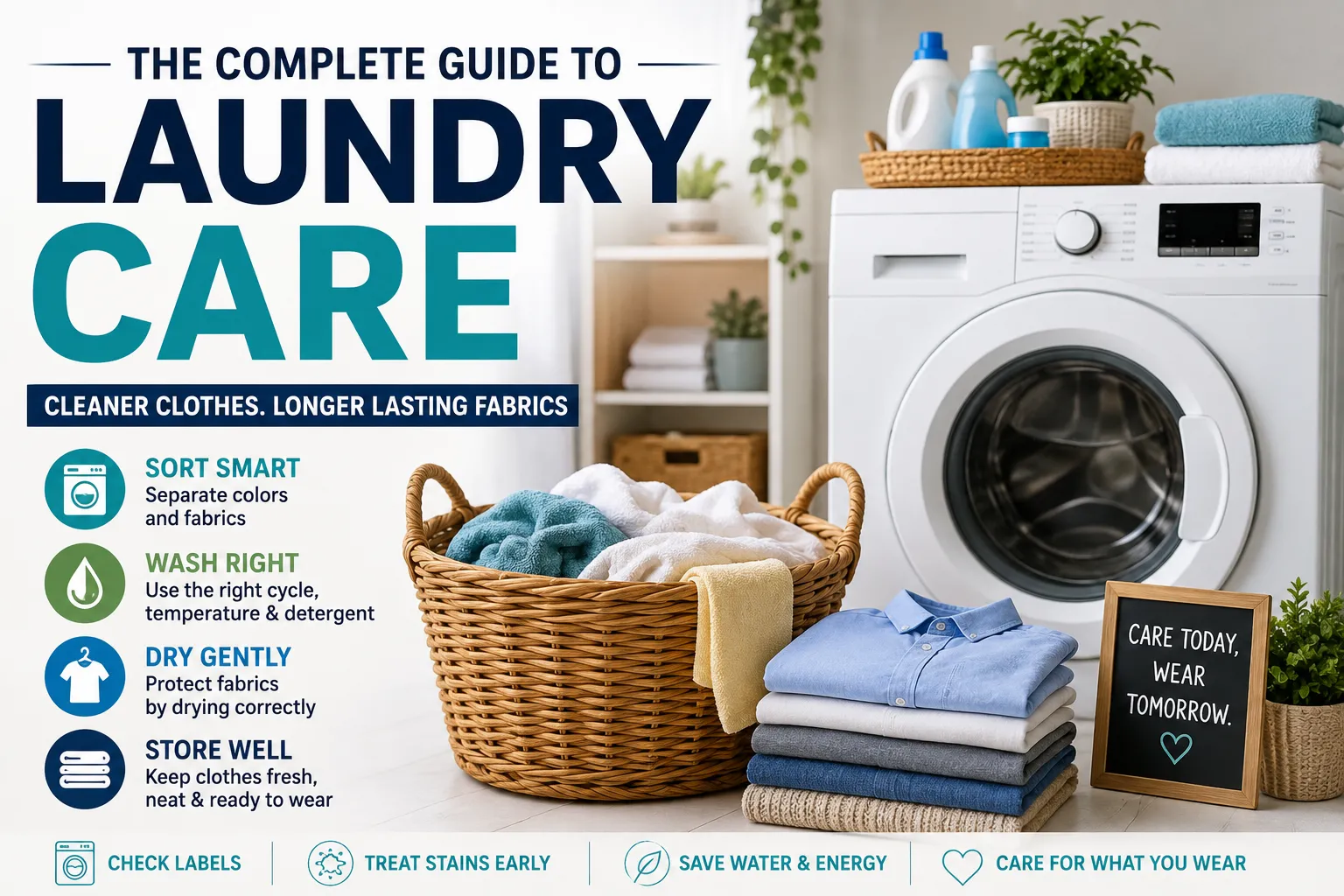
The Complete Guide to Laundry Care
Laundry may seem like one of those household chores that requires little more than a washing machine, detergent and a drying area. In reality, proper laundry care is a combination of sorting, washing, drying, stain treatment, storage and fabric-specific maintenance.
The way clothes are washed can affect how long they last, how they look and how comfortable they remain. Using too much detergent, washing delicate fabrics incorrectly, ignoring care labels or drying clothes at excessive temperatures can gradually cause fading, shrinking, stretching and fabric damage.
A good laundry routine does not have to be complicated. Once you understand the basics, you can clean clothes effectively while protecting them from unnecessary wear.
For a broader overview of household cleaning routines, see The Ultimate Guide to Cleaning Your Home.
Why Proper Laundry Care Matters
Clothing is exposed to sweat, body oils, dust, stains, bacteria, food particles and environmental pollutants during everyday use.
Washing removes much of this buildup, but improper washing can create new problems.
Common laundry mistakes include:
- Washing everything at the same temperature
- Using too much detergent
- Overloading the washing machine
- Ignoring care labels
- Mixing colors carelessly
- Leaving wet clothes in the machine
- Using excessive heat
- Rubbing stains aggressively
- Washing delicate fabrics with heavy items
- Storing clothes before they are completely dry
Good laundry care balances cleanliness with fabric preservation.
Start With the Care Label
Before washing a new garment, check its care label.
The label may provide instructions about:
- Washing temperature
- Machine or hand washing
- Bleaching
- Drying
- Ironing
- Dry cleaning
- Special handling
These instructions are particularly important for delicate or expensive garments.
A care label is not merely a suggestion about how the garment should look after washing. It provides guidance designed around the characteristics of the fabric and garment construction.
When in doubt, choose the gentler option.
Sort Laundry Before Washing
Sorting is one of the simplest ways to prevent laundry problems.
At a minimum, separate:
Whites
White clothing can become dull or discolored when washed repeatedly with strongly dyed garments.
Dark Colors
Black, navy and other dark fabrics can release dye, especially when new.
Bright Colors
Bright reds, oranges, greens and other heavily dyed garments may bleed during washing.
Delicates
Items made from delicate fabrics should generally be separated from heavy garments, towels and rough materials.
Heavily Soiled Items
Very dirty clothes may require a different wash cycle or stain treatment before going into the machine.
Sorting does not have to mean creating ten separate laundry piles. The goal is simply to prevent incompatible garments from damaging one another.
Turn Clothes Inside Out
Turning certain garments inside out before washing can help protect their outer surfaces.
This can be particularly useful for:
- Dark clothing
- Printed T-shirts
- Embroidered garments
- Jeans
- Clothes with decorative details
Turning garments inside out can reduce direct friction against other items and help preserve prints and surface finishes.
Empty the Pockets
Always check pockets before washing.
Items such as:
- Tissues
- Receipts
- Coins
- Pens
- Keys
- Lip balm
- Small electronic devices
can create problems.
A tissue can leave white pieces throughout an entire load, while a pen can cause extensive staining.
Checking pockets takes only a few seconds and can save considerable cleanup later.
Close Zippers and Fasten Buttons
Zippers, hooks and other fasteners can catch on fabrics during washing.
Close zippers before washing and fasten appropriate buttons or hooks.
However, avoid over-tightening or fastening every garment in a way that could distort its shape.
The objective is to reduce unnecessary snagging and friction.
Understanding Washing Temperatures
Water temperature affects cleaning performance, fabric care and energy consumption.
Cold Water
Cold water is often suitable for many everyday garments.
It can help reduce color fading and is generally gentler on fabrics.
Warm Water
Warm water can be useful for certain moderately soiled loads when the garment’s care instructions permit it.
Hot Water
Hot water can provide stronger cleaning in some circumstances, but it can also increase the risk of shrinking, fading and fabric damage.
Always follow the garment’s care instructions rather than assuming hotter water means cleaner clothes.
Choose the Right Washing Cycle
Modern washing machines offer numerous settings, but you do not need to use the most complicated program for every load.
Common cycles include:
- Normal
- Heavy-duty
- Delicate
- Permanent press
- Quick wash
- Wool
- Hand-wash settings
Heavy fabrics may require stronger agitation and longer washing.
Delicate garments generally benefit from gentler movement.
Using the appropriate cycle can reduce unnecessary wear.
Don’t Overload the Washing Machine
One of the most common laundry mistakes is filling the washing machine beyond its recommended capacity.
An overloaded machine may not allow clothing to move freely through the water and detergent.
This can result in:
- Poor cleaning
- Inadequate rinsing
- Increased wrinkling
- Greater fabric friction
- Uneven drying
Give garments enough room to move.
The exact capacity depends on the machine, so follow the manufacturer’s instructions.
Use the Right Amount of Detergent
More detergent does not automatically mean cleaner clothes.
Excess detergent can leave residue on fabrics and inside the washing machine.
Too little detergent, on the other hand, may not provide sufficient cleaning.
Follow the detergent manufacturer’s instructions and consider factors such as:
- Load size
- Soil level
- Water hardness
- Detergent concentration
- Washing-machine type
Highly concentrated detergents often require much smaller amounts than traditional formulas.
Liquid, Powder or Pods?
Different detergent formats can work well when used correctly.
Liquid Detergent
Liquid detergent is convenient and can be useful for treating certain stains before washing.
Powder Detergent
Powder can work particularly well for heavily soiled laundry and is often economical.
Detergent Pods
Pods are convenient because they provide a pre-measured amount of detergent.
However, they should always be kept securely away from children and pets because the concentrated contents can be dangerous if swallowed or exposed to the eyes.
The most important factor is using an appropriate product correctly rather than assuming one format is universally superior.
Treat Stains as Early as Possible
Fresh stains are often easier to manage than stains that have been allowed to dry and set.
When a spill occurs, act as soon as practical.
A basic approach is:
- Remove excess material gently.
- Blot rather than aggressively rubbing.
- Identify the type of stain.
- Apply an appropriate stain treatment.
- Allow the treatment to work according to its instructions.
- Wash according to the garment’s care label.
- Check the stain before drying.
For a more detailed approach to treating different types of marks, see this Stain Removal Guide.
Do not automatically put a stained garment into a hot dryer.
Heat can make some stains significantly harder to remove.
Avoid Aggressive Rubbing
Rubbing a stain forcefully can push it deeper into the fibers or damage the fabric.
Blotting is often a better first approach.
For delicate fabrics, even gentle treatment should be approached carefully.
If you are unsure how to treat a valuable or delicate garment, professional cleaning may be safer than experimenting with household products.
Different Stains Need Different Approaches
Not all stains behave the same way.
Common categories include:
- Grease and oil
- Blood
- Coffee and tea
- Wine
- Ink
- Makeup
- Grass
- Food
- Sweat
- Mud
A treatment that works well for one type of stain may be ineffective or damaging for another.
Always check the care instructions and the stain-treatment product’s directions before applying it.
Be Careful With Bleach
Bleach can be useful for certain laundry situations, but it is not appropriate for every fabric.
Chlorine bleach can damage or discolor some materials.
Never mix bleach with other cleaning chemicals unless the product instructions specifically state that the combination is safe.
In particular, mixing bleach with certain household chemicals can create dangerous fumes.
Use bleach only as directed and keep it safely stored.
Oxygen-Based Whitening Products
Some laundry products use oxygen-based bleaching agents rather than traditional chlorine bleach.
These products can be useful for certain fabrics and stains, but they still need to be used according to the label.
“Color-safe” does not mean universally safe for every garment.
When treating a valuable item, test the product according to its instructions before applying it broadly.
How to Care for Delicate Fabrics
Delicate garments require additional attention.
Materials such as:
- Silk
- Lace
- Cashmere
- Fine wool
- Certain embellished fabrics
- Some lingerie
- Delicate synthetics
may require special handling.
Depending on the garment, appropriate care could include hand washing, a delicate machine cycle, cold water, specialized detergent or professional cleaning.
Avoid assuming that every delicate garment should simply be washed on the shortest machine cycle.
The care label should guide the process.
Caring for Wool
Wool can shrink, stretch or become distorted when washed incorrectly.
Depending on the garment, wool may require:
- Cold water
- A specialized wool cycle
- Gentle detergent
- Minimal agitation
- Flat drying
Avoid excessive heat unless the garment’s care instructions specifically allow it.
Caring for Silk
Silk is delicate and can be affected by heat, harsh detergents and aggressive handling.
Follow the manufacturer’s instructions carefully.
Some silk garments can be hand washed, while others require professional cleaning.
Avoid experimenting with strong stain removers on valuable silk garments.
Caring for Denim
Jeans and denim garments are relatively durable, but frequent harsh washing can cause fading and wear.
When appropriate:
- Wash denim with similar colors
- Turn it inside out
- Avoid unnecessary high temperatures
- Follow the garment’s specific instructions
Some denim garments have special finishes that require particular care.
Caring for Towels
Towels require a slightly different laundry approach because they are thick, absorbent and prone to retaining moisture.
Wash towels separately from delicate clothing when possible.
Avoid using excessive fabric softener because repeated use can reduce the absorbency of some towels.
Dry towels thoroughly after washing to reduce lingering dampness and unpleasant odors.
How to Wash Bedding
Bedding can accumulate:
- Sweat
- Skin oils
- Dust
- Body fluids
- Cosmetic products
- Household dust
Sheets, pillowcases and other washable bedding should be cleaned regularly according to the manufacturer’s instructions.
Use an appropriately sized washing machine and avoid cramming bulky bedding into a machine that cannot accommodate it comfortably.
Comforters and large blankets may require commercial-sized equipment.
How Often Should Clothes Be Washed?
There is no single schedule that applies to every garment.
How often something needs washing depends on:
- How heavily it was worn
- Sweat exposure
- Weather
- Activity level
- Fabric type
- Personal preference
- Whether the garment is worn directly against the skin
Underwear, socks and heavily sweaty workout clothes generally require washing after use.
Outer layers such as jackets may not require washing after every wear unless they are visibly dirty, sweaty or contaminated.
Overwashing can also contribute to unnecessary fabric wear.
Workout Clothes Need Special Attention
Sportswear can retain sweat, body oils and odor, especially when made from synthetic materials.
After exercise, avoid leaving damp workout clothing compressed in a bag for extended periods.
Instead:
- Remove the clothing from the bag.
- Allow it to air out if it cannot be washed immediately.
- Wash according to the garment’s instructions.
- Avoid excessive detergent.
- Dry thoroughly.
A persistent odor may indicate that normal washing is not adequately removing buildup.
Don’t Leave Wet Clothes in the Machine
One of the easiest ways to create unpleasant laundry odors is to leave wet clothes sitting inside the washing machine for an extended period.
Warm, damp conditions can encourage microbial growth and create musty smells.
If clothes have been left sitting for too long and smell unpleasant, rewash them before drying.
For broader strategies for dealing with household odors, see this Odor Removal Guide.
Drying Laundry Properly
Washing is only half of laundry care.
The drying method can significantly affect the life of your clothes.
Common options include:
- Tumble drying
- Line drying
- Air drying
- Flat drying
- Professional drying
The appropriate method depends on the fabric.
Tumble Drying
Tumble dryers are convenient, but heat and mechanical movement can contribute to:
- Shrinkage
- Fabric wear
- Fading
- Elastic deterioration
- Increased wrinkling
Use the temperature recommended on the care label.
If a garment does not require high heat, a lower setting can be gentler.
Line Drying
Air drying can be an effective way to reduce heat exposure.
However, direct sunlight can fade some colors over time.
For sensitive garments, drying in shade or indirect sunlight may help preserve color.
Make sure clothing is supported appropriately to avoid stretching.
Flat Drying
Some garments, particularly certain wool and knit items, should be dried flat.
Hanging a heavy wet knit garment can cause it to stretch under its own weight.
Reshape the garment according to the manufacturer’s instructions and place it flat on a suitable drying surface.
Don’t Overdry Clothes
Leaving clothes in a hot dryer longer than necessary can increase wear.
If your dryer has moisture-sensing technology, use it when appropriate.
Remove garments promptly when the cycle finishes to reduce wrinkling.
How to Reduce Wrinkles
To minimize wrinkles:
- Avoid overloading the machine
- Remove clothes promptly after washing
- Shake garments before drying
- Use appropriate drying settings
- Fold or hang clothing soon after drying
For some garments, hanging them while slightly damp can help reduce wrinkles.
Always consider the care label.
Ironing Clothes Safely
Ironing can restore a polished appearance, but excessive heat can damage fabrics.
Check the ironing symbol on the garment label.
Use the appropriate temperature for the fabric and avoid leaving the iron stationary on one area for too long.
For delicate materials, a protective cloth may be appropriate depending on the manufacturer’s instructions.
Steaming as an Alternative
A garment steamer can be useful for removing wrinkles from many fabrics without direct contact from a hot iron.
However, steaming is not appropriate for every material.
Always check the garment’s care instructions before steaming.
How to Prevent Color Fading
Color fading is often caused by a combination of:
- Washing
- Heat
- Detergents
- Sunlight
- Friction
To help preserve colors:
- Wash dark garments inside out
- Use cooler water when appropriate
- Avoid excessive detergent
- Separate heavily dyed clothing
- Avoid unnecessary high-heat drying
- Follow garment-specific instructions
How to Keep White Clothes White
White garments can gradually become dull due to:
- Dirt
- Sweat
- Detergent residue
- Dye transfer
- Improper washing
- Overloading
Wash whites separately when practical.
Use an appropriate detergent and avoid assuming that large amounts of bleach are the best solution.
If whites repeatedly become gray or yellow, examine the entire laundry routine rather than simply adding more whitening product.
Dealing With Musty Laundry Odors
Musty smells can result from:
- Clothes remaining damp too long
- A dirty washing machine
- Insufficient drying
- Detergent buildup
- Excessive product use
- Poor ventilation
Start by identifying the source.
If the washing machine itself smells, cleaning the machine according to the manufacturer’s maintenance instructions may be necessary.
Clean the Washing Machine
The washing machine also needs care.
For guidance on maintaining household machines beyond laundry equipment, see How to Clean and Maintain Common Household Appliances.
Over time, detergent, fabric softener, lint and moisture can accumulate inside various parts of the machine.
Depending on the model, maintenance may include:
- Cleaning the detergent drawer
- Wiping the door seal
- Cleaning lint filters
- Running a manufacturer’s recommended cleaning cycle
- Leaving the door open after washing when appropriate
- Checking drainage areas
Always follow the machine manufacturer’s maintenance instructions.
Clean the Dryer Too
Dryers require regular maintenance.
Remove lint from the lint filter after each load.
A blocked or poorly maintained dryer can reduce efficiency and create a fire risk.
Periodically inspect and clean the dryer vent system according to manufacturer and local safety guidance.
Don’t Mix Every Fabric Together
Heavy items such as towels and jeans can create considerable friction.
Washing them together with delicate garments can result in:
- Snagging
- Pilling
- Stretching
- Surface wear
Separating heavy and delicate items helps protect more vulnerable fabrics.
Manage Lint and Pet Hair
If your household has pets, hair and fur can become a major laundry challenge.
Before washing heavily affected garments, remove excess hair using an appropriate lint roller, brush or other method.
Clean the washing machine’s filters and dryer lint traps regularly.
Reducing hair before washing can also help prevent buildup inside the machine.
How to Store Clean Clothes
Clean laundry should be completely dry before storage.
Storing damp clothing can encourage unpleasant odors and potentially contribute to mold growth.
Storage options include:
- Folded drawers
- Shelves
- Wardrobes
- Hangers
- Breathable garment bags
Avoid overcrowding storage spaces.
Clothing needs enough room to maintain its shape and allow air circulation.
Hanging Clothes Correctly
Not every garment should be placed on a hanger.
Hanging can be appropriate for:
- Shirts
- Blouses
- Jackets
- Dresses
- Suits
Some heavy knit garments are better folded to prevent stretching.
Use suitable hangers rather than extremely thin wire hangers for garments that need structural support.
Organizing Laundry at Home
A simple laundry system can save time.
Consider having separate containers for:
- Everyday clothes
- Towels
- Bedding
- Delicates
- Heavily soiled items
You can also sort by color when a load is large enough to justify it.
The best system is the one that makes it easy for everyone in the household to follow.
How to Save Time on Laundry
Laundry becomes easier when it is treated as a routine rather than an occasional overwhelming task.
Helpful strategies include:
- Wash smaller loads regularly
- Pre-treat stains immediately
- Keep detergent near the machine
- Use separate laundry baskets
- Fold clothes soon after drying
- Keep a simple supply of essential products
- Clean the machine regularly
Avoid allowing several weeks’ worth of laundry to accumulate if it makes the process overwhelming.
How to Make Laundry More Efficient
Efficiency does not mean washing everything as quickly as possible.
It means using the right method for each load.
For example:
Everyday clothes: normal cycle, appropriate detergent and moderate temperature.
Towels: appropriate heavy or normal cycle with thorough drying.
Delicates: gentle cycle or hand washing.
Bedding: appropriate cycle with sufficient room for movement.
Stained clothing: pre-treatment before washing.
This approach can improve cleaning while reducing unnecessary wear.
Common Laundry Mistakes to Avoid
Using Too Much Detergent
Excess detergent can leave residue and may make fabrics feel stiff.
Overloading the Machine
A full machine is not necessarily an efficient machine if clothes cannot move properly.
Washing Everything in Hot Water
High temperatures can damage fabrics and cause unnecessary fading or shrinkage.
Ignoring Care Labels
Different materials have different requirements.
Drying Everything on High Heat
Heat can shorten the life of many garments.
Leaving Wet Clothes in the Machine
This can contribute to unpleasant odors.
Mixing Heavy and Delicate Items
The friction can damage delicate fabrics.
Using Too Much Fabric Softener
Excessive softener can affect absorbency and leave buildup.
Storing Clothes While Damp
Clothing should be completely dry before being put away.
A Basic Laundry Routine
A practical laundry routine can look like this:
Before Washing
- Empty pockets
- Read care labels
- Sort clothes
- Close zippers
- Treat stains
- Turn appropriate garments inside out
During Washing
- Avoid overloading
- Select the correct cycle
- Use the recommended detergent amount
- Choose an appropriate temperature
After Washing
- Remove clothes promptly
- Shake garments out
- Check for remaining stains
- Choose the appropriate drying method
After Drying
- Fold or hang clothes
- Store them in a clean, dry place
- Clean the lint filter
- Leave the washing machine ready for its next use
When Professional Laundry Services Make Sense
Some garments and household items are difficult to care for at home.
Professional laundry or dry-cleaning services may be useful for:
- Suits
- Formalwear
- Wedding garments
- Large duvets
- Heavy blankets
- Curtains
- Delicate fabrics
- Specialized workwear
- Large quantities of laundry
Professional cleaning can also be convenient for people who have limited time, mobility challenges or large household laundry demands.
However, always tell the cleaning professional about unusual stains, previous treatments or special concerns.
How to Prepare Clothes for Professional Cleaning
Before sending clothes to a professional service:
- Check pockets
- Identify stains
- Point out delicate decorations
- Mention previous stain-treatment attempts
- Separate items requiring special care
- Keep matching pieces together where appropriate
Clear communication can help the cleaner choose the appropriate process.
Laundry Hygiene
Laundry hygiene is particularly important for certain items.
Clothing exposed to sweat, bodily fluids, illness or heavy contamination may require more careful handling.
Wash heavily soiled items according to appropriate temperature and detergent instructions.
Avoid shaking heavily contaminated laundry unnecessarily because this can spread particles into the surrounding environment.
If someone in the household has a contagious illness, follow appropriate public-health and healthcare guidance for handling their laundry.
Laundry for Babies and Young Children
Children’s clothing can become heavily soiled by food, mud, bodily fluids and other substances.
Use detergents appropriate for the child’s clothing and follow garment-care instructions.
For babies with sensitive skin, some families choose fragrance-free products to reduce exposure to potential irritants.
If a child develops persistent skin irritation associated with clothing or laundry products, discuss the issue with a healthcare professional.
Laundry and Sensitive Skin
Some people find that fragrances, dyes or detergent residues irritate their skin.
If clothing consistently causes irritation, consider:
- Using a fragrance-free detergent
- Following appropriate dosage instructions
- Running an additional rinse when necessary
- Avoiding excessive fabric softener
- Washing new clothes before wearing them
Persistent or severe skin reactions should be evaluated medically rather than automatically blamed on laundry products.
Laundry and Sustainability
Laundry can also have an environmental impact through water consumption, energy use, detergent use and clothing replacement.
Simple changes can help reduce unnecessary resource use.
Wash Full Loads When Appropriate
Running appropriately sized loads can make better use of water and energy.
Use Cooler Water When Suitable
Cold or warm washing can be adequate for many garments and may reduce energy consumption.
Avoid Unnecessary Washing
Not every garment needs to be washed after every brief wear.
Air Dry When Practical
Line drying can reduce dryer energy consumption.
Repair Rather Than Replace
A small tear, loose button or damaged seam does not necessarily mean a garment has reached the end of its useful life.
Choose Durable Clothing
Long-lasting garments can reduce the frequency with which clothes need to be replaced.
Don’t Let Laundry Become a Source of Waste
A large amount of clothing waste comes from garments being discarded prematurely.
Proper laundry care can extend the useful life of clothing.
That means:
- Washing at appropriate temperatures
- Avoiding excessive agitation
- Using suitable detergents
- Protecting delicate fabrics
- Drying appropriately
- Repairing minor damage
- Storing garments correctly
Taking care of clothes is therefore not only about cleanliness. It can also be part of responsible consumption.
A Laundry Checklist for Every Household
Before starting a load, ask:
- Have I checked the pockets?
- Have I read the care labels?
- Are the colors compatible?
- Are delicate garments separated?
- Have stains been treated?
- Is the machine overloaded?
- Am I using the right detergent amount?
- Is the temperature appropriate?
- Will these garments tolerate the chosen drying method?
A few seconds of preparation can prevent hours of troubleshooting.
Building a Laundry Routine That Works
The perfect laundry routine is not necessarily the most complicated one.
It is the routine you can consistently follow.
Start with the fundamentals:
- Sort appropriately.
- Read care labels.
- Treat stains early.
- Use the correct detergent amount.
- Avoid overloading the machine.
- Choose the appropriate wash temperature and cycle.
- Dry garments according to their fabric requirements.
- Store everything completely dry.
- Maintain your washing machine and dryer.
- Seek professional cleaning when a garment requires specialized care.
Over time, these habits become automatic.
Cleaner Clothes and Longer-Lasting Fabrics
Good laundry care is ultimately about more than getting clothes clean.
It is about preserving the fabric, maintaining color and shape, reducing unnecessary damage and making everyday household routines easier.
You do not need expensive equipment or dozens of specialized products. In most cases, better results come from simple habits: sorting correctly, using the right amount of detergent, treating stains promptly, choosing appropriate wash settings and giving garments the drying and storage conditions they need.
When you understand what different fabrics require, laundry becomes much less of a guessing game. The goal is not simply to wash clothes—it is to clean them in a way that helps them stay useful, comfortable and presentable for as long as possible.