Home Improvement Projects You Should Avoid During a Heatwave
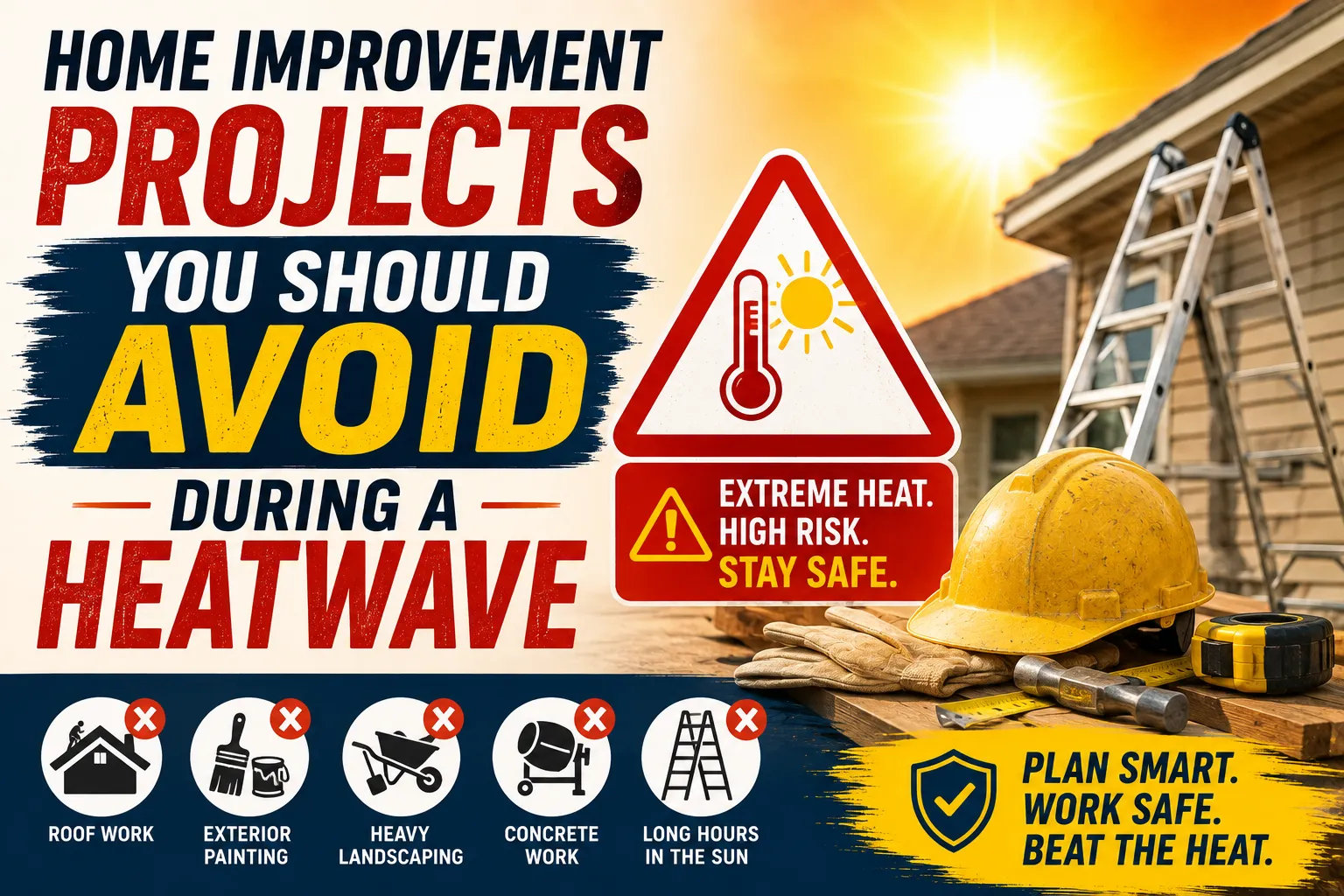
Home Improvement Projects You Should Avoid During a Heatwave
A heatwave can turn an ordinary home improvement project into a serious safety risk.
When temperatures remain unusually high for several days, the combination of heat, humidity, direct sunlight, physical exertion and hot building materials can place significant strain on the body. This is particularly important for projects that involve roofs, ladders, power tools, heavy lifting or working outdoors for long periods.
Heat-related illness is preventable, but strenuous construction and home improvement work can create dangerous levels of heat exposure. Roofing, construction, landscaping and other physically demanding outdoor work can carry elevated heat risks.
That doesn’t mean every home project has to stop during hot weather. Painting a small interior room, organizing a storage area or making minor repairs may be perfectly manageable under suitable conditions.
The key is knowing which projects should wait and which can safely be moved indoors or scheduled for cooler hours.
Why Heatwaves Change Home Improvement Safety
Working around the house can become much harder when temperatures rise.
Physical activity generates body heat, while the surrounding environment makes it harder for the body to cool itself. Direct sunlight, high humidity, limited airflow and heat-absorbing surfaces can make actual working conditions significantly hotter than the temperature reported by a weather station.
Home improvement can add several additional risk factors:
- Climbing ladders
- Carrying heavy materials
- Bending and lifting repeatedly
- Working on roofs
- Wearing protective equipment
- Operating power tools
- Working around hot surfaces
- Spending hours in direct sunlight
- Using heat-producing equipment
Roofing, heavy carpentry, landscaping, sawing, carrying loads and similar activities involve heavier physical workloads that can increase heat-stress risk.
During a heatwave, therefore, the question isn’t simply whether a project is technically possible.
It’s whether today is the right day to do it.
1. Roof Repairs and Roof Replacement
Roof work should be near the top of the list of projects to postpone during extreme heat.
Roofs can become significantly hotter than the surrounding air because they absorb direct solar radiation. Workers also face additional risks from ladders, steep surfaces, roofing materials and tools.
For homeowners planning broader home maintenance projects, roof work deserves particular attention because it combines heat exposure with fall hazards and strenuous physical activity.
Why roofing becomes particularly dangerous
A roof can expose you to:
- Direct sunlight
- Hot shingles or metal
- Radiant heat
- Limited shade
- Dehydration
- Physical exertion
- Fall hazards
Even a relatively moderate outdoor temperature can create dangerous conditions when someone is performing strenuous work on a sun-exposed roof.
Better approach
If the roof isn’t leaking badly or creating an immediate safety problem, postpone nonessential repairs until cooler weather.
For urgent roof problems, hiring an experienced professional may be safer than attempting the work yourself. Homeowners can also learn more about how residential roofing systems work and require maintenance before planning routine roof work.
2. Installing or Replacing Roof Shingles
Shingle installation deserves separate attention because the work can involve hours of repetitive physical activity in direct sunlight.
Workers may have to:
- Carry bundles of shingles
- Climb ladders
- Kneel or crouch
- Hammer repeatedly
- Move across hot surfaces
- Work while wearing protective equipment
The combination of physical workload and environmental heat is precisely what makes heat stress more likely.
If the project isn’t urgent, waiting for cooler conditions is usually the better choice.
3. Exterior Painting
Painting the outside of a house may look relatively easy, but a large exterior painting project can involve considerable exposure to heat.
You may spend hours:
- Standing in the sun
- Climbing ladders
- Carrying paint
- Moving equipment
- Reaching overhead
- Working on walls that reflect sunlight
Paint itself can also behave differently in extreme temperatures.
Very hot surfaces can affect how quickly coatings dry and may contribute to application problems depending on the product.
A safer alternative
If you need to paint during a heatwave, consider moving the project indoors or working during cooler morning or evening hours when appropriate.
Always follow the paint manufacturer’s temperature and application instructions.
4. Installing or Repairing Gutters
Gutter work often requires ladders and prolonged exposure to the sun.
That creates two problems at once.
First, heat increases the risk of dehydration and heat-related illness.
Second, heat can contribute to fatigue, dizziness and reduced concentration—exactly what you don’t want when standing several meters above the ground.
A fall from a ladder can result in serious injury.
Wait if possible
Unless damaged gutters are creating an immediate water-management problem, consider postponing major gutter work until temperatures fall.
If the repair is urgent, professional assistance may be the safer option.
5. Major Landscaping Projects
Landscaping can be deceptively strenuous.
Projects such as:
- Digging garden beds
- Moving soil
- Installing retaining walls
- Laying paving
- Removing large plants
- Moving rocks
- Installing irrigation
- Building garden structures
can involve substantial physical effort.
During a heatwave, postpone heavy landscaping where possible.
6. Tree Removal and Heavy Tree Pruning
Tree work combines several hazards.
You may be dealing with:
- Heavy equipment
- Chainsaws
- Ladders
- Falling branches
- Ropes
- Direct sunlight
- Heavy lifting
- Significant physical exertion
Heat-related fatigue can make an already dangerous task even more difficult.
Tree removal is not a good DIY project during extreme heat—or necessarily at any time if you lack the appropriate equipment and training.
For large trees, professional arborist services are generally the safer choice.
7. Building a Deck or Patio
Deck and patio construction can require days of physical labor.
Tasks may include:
- Carrying lumber
- Digging post holes
- Mixing concrete
- Operating saws
- Measuring and cutting materials
- Working outdoors for long periods
The physical workload can become substantial during a heatwave.
Instead of trying to complete the project on the hottest days, consider doing planning, measuring and material preparation indoors and scheduling heavy construction for cooler conditions.
8. Pouring Concrete
Concrete projects can be particularly demanding in hot weather.
You’re dealing with a material that needs to be placed and finished within a specific time window, while the people doing the work are simultaneously exposed to heat.
Hot weather can also change how quickly concrete loses moisture and sets, potentially affecting the finishing process.
Large pours are therefore better planned carefully around weather conditions and product specifications.
If temperatures are extreme, postponing the work can protect both the workers and the quality of the project.
9. Installing a Fence
Fence installation may seem straightforward, but a full fence project can involve considerable physical effort.
You may need to:
- Dig post holes.
- Move soil.
- Carry posts.
- Mix concrete.
- Lift panels.
- Use power tools.
- Work continuously along a large property.
A small repair may be manageable during cooler hours, but installing an entire fence during a heatwave can quickly become exhausting.
10. Driveway and Asphalt Work
Asphalt and other paving materials can become extremely hot.
Working around hot pavement combines:
- Radiant heat
- Physical exertion
- Heavy materials
- Direct sunlight
- Limited shade
with potentially hazardous surface temperatures.
This is a project best left to professionals, particularly during extreme weather.
11. Major Exterior Electrical Work
Electrical projects already require careful attention to safety.
Heat adds another layer of difficulty.
Sweaty hands, fatigue and reduced concentration aren’t ideal when working around electrical systems.
More importantly, some electrical projects require specialized knowledge and may be subject to local regulations or licensing requirements.
During a heatwave, avoid unnecessary outdoor electrical work and use a qualified electrician for significant repairs or installations.
Homeowners planning electrical improvements should also understand how residential electrical systems work and stay safe before deciding whether a project is appropriate for DIY work.
12. Installing Solar Panels
Solar panels can be an excellent home improvement investment, but installing them involves working at height, carrying equipment and spending time on a highly exposed roof.
That’s a particularly poor combination during extreme heat.
The panels themselves can also be hot after prolonged sun exposure.
For homeowners, professional installation is generally preferable to attempting a rooftop solar project during a heatwave.
13. Exterior Pressure Washing
Pressure washing doesn’t usually involve the same level of physical strain as roofing, but large properties can still require hours outdoors.
Potential problems include:
- Sun exposure
- Heat
- Dehydration
- Wet surfaces
- Electrical equipment
- Slippery walkways
If you must pressure wash, consider doing it during the coolest part of the day and taking regular breaks.
14. Digging Foundations or Drainage Trenches
Large excavation projects should be postponed when possible.
Digging is physically demanding, and trenches can also create additional safety concerns.
If a drainage problem requires immediate attention, consider hiring professionals rather than attempting major excavation yourself during extreme heat.
15. Installing an Outdoor Kitchen
Building an outdoor kitchen may involve:
- Masonry
- Electrical work
- Plumbing
- Gas connections
- Concrete
- Heavy lifting
- Roofing or shade structures
That combination can quickly turn a weekend project into a multi-day construction job.
During a heatwave, focus on planning and sourcing materials rather than doing the most physically demanding work.
16. Major Fence, Wall or Masonry Repairs
Bricklaying, block work and masonry can be strenuous.
Materials are heavy, and workers may spend hours bending, lifting and mixing materials in direct sunlight.
If a wall has an immediate structural problem, don’t simply wait because of the weather. Instead, have it assessed professionally.
For cosmetic repairs, however, cooler weather is usually preferable.
17. Attic Insulation Projects
This one is easy to underestimate.
An attic can become substantially hotter than the outdoor air, particularly when ventilation is limited and the roof is exposed to strong sunlight.
Working in such an environment can create intense heat exposure even if the rest of the house feels relatively comfortable.
Dangerous heat exposure can occur indoors as well as outdoors, particularly in areas without adequate climate control or with additional heat sources.
Better option
Postpone major attic work until cooler conditions whenever possible.
18. Garage Renovation
A garage can become extremely hot during a heatwave, especially when the doors remain closed.
Projects involving:
- Insulation
- Drywall
- Flooring
- Shelving
- Electrical work
- Heavy lifting
can become exhausting in poorly ventilated conditions.
If you’re working in a garage, improve ventilation where safe and appropriate, take frequent breaks and stop if the space becomes dangerously hot.
19. Installing New Windows
Window replacement is more complicated during a heatwave than it may appear.
Replacing a window can temporarily leave an opening in the exterior wall, potentially allowing large amounts of hot air into the home.
Installation can also involve ladders, lifting and prolonged outdoor exposure.
Professional installers can plan the work around weather conditions and minimize the amount of time openings remain exposed.
20. Replacing Exterior Doors
Door replacement has similar concerns.
Removing an exterior door can temporarily expose the interior to extreme outdoor temperatures.
The installation itself may also require lifting and precision work while working in direct sunlight.
If the existing door remains functional, waiting for cooler conditions may make the project easier.
21. Major HVAC Installation
Ironically, the middle of a heatwave can be one of the worst times to attempt a complicated DIY air-conditioning installation.
HVAC systems involve:
- Electrical components
- Refrigerants
- Heavy equipment
- Ductwork
- Roof or exterior work
- Specialized tools
Some work also requires licensed professionals depending on local regulations.
Understanding how major home systems work and what homeowners maintain can help homeowners recognize when HVAC work involves components or risks that should be handled by qualified professionals.
If your air conditioner fails during a heatwave, contact a qualified HVAC technician rather than attempting a complex repair yourself.
22. DIY Roof Vent Installation
Improving roof ventilation can be beneficial, but installing vents usually requires roof access.
That makes it another project involving both heat exposure and fall hazards.
A cooler day is a much better opportunity for this kind of project.
23. Building a Pergola or Gazebo
A pergola may eventually provide shade, but building one can require substantial outdoor work before that shade exists.
You may need to:
- Dig foundations
- Carry lumber
- Cut materials
- Climb ladders
- Pour concrete
- Assemble structural components
If you want shade immediately, use an existing shaded area rather than beginning a major construction project during peak heat.
24. Major Pool Construction or Renovation
Swimming pools can make summer more enjoyable, but major pool work is not a simple weekend activity.
Excavation, concrete work, plumbing and equipment installation require significant physical labor and specialized knowledge.
If a pool already exists, prioritize safe maintenance rather than undertaking a major renovation during extreme heat.
What Home Projects Are Better During a Heatwave?
Not every home improvement activity needs to stop.
The safest projects are generally those that:
- Take place indoors
- Require limited physical exertion
- Can be completed in a climate-controlled environment
- Don’t require ladders or roofs
- Don’t involve hot materials
- Don’t expose you to prolonged sunlight
Examples might include:
Organizing Storage
Sort closets, cabinets, garages or indoor storage areas.
Planning Future Renovations
Create measurements, budgets and material lists.
Designing a Room
Work on furniture layouts, color schemes or renovation plans.
Small Indoor Repairs
Minor repairs can be suitable if the room is adequately cooled and the work doesn’t create another hazard. For practical repair guidance, homeowners can also refer to this home repairs guide covering common problems and solutions.
Decluttering
Use the heatwave as an opportunity to clear unused belongings.
Cleaning and Maintenance
Light indoor maintenance can often be completed safely in a comfortable environment.
Use the Heatwave to Plan Instead of Build
One of the smartest strategies is to separate planning from physical execution.
During extreme heat, you can:
- Research materials
- Compare contractors
- Create a project budget
- Measure rooms
- Draw plans
- Order supplies
- Obtain permits
- Schedule inspections
- Research design options
- Prepare a project checklist
Then perform the physically demanding work once conditions improve.
This approach keeps your renovation moving without unnecessarily exposing yourself to heat.
What Time of Day Is Best for Outdoor Work?
If an outdoor project cannot wait, scheduling strenuous work during cooler periods can reduce heat exposure.
However, don’t assume that early morning or evening is automatically safe.
Check actual local conditions, including:
- Temperature
- Humidity
- Sun exposure
- Wind
- Heat index
- Duration of the task
A heatwave can keep conditions dangerous even outside the middle of the afternoon.
Why Humidity Matters
Temperature alone doesn’t tell the whole story.
High humidity reduces the body’s ability to cool itself through evaporation.
Consider temperature, humidity, sunlight, air movement and workload when evaluating heat stress.
This is particularly important in tropical or humid climates, where a temperature that doesn’t look extraordinary on paper can still produce substantial heat stress.
Don’t Rely Only on the Weather App
Weather forecasts are useful, but the conditions at your actual work location can be different.
A roof in direct sunlight, for example, can expose a worker to much more radiant heat than a shaded weather station reading suggests.
The practical lesson is simple:
If the work area feels dramatically hotter than the forecast suggests, treat it as a hotter work environment.
Signs You Should Stop Working
Don’t wait until you feel extremely sick before taking a break.
Warning signs of heat exhaustion can include:
- Headache
- Nausea
- Weakness
- Dizziness
- Heavy sweating
- Thirst
- Feeling faint
If you or someone working with you develops symptoms, stop the activity and move to a cooler environment.
Homeowners should also recognize that some seemingly ordinary household conditions can create additional risks. A broader guide to identifying and preventing common safety hazards inside a home can help when evaluating the overall safety of a project.
Heat Stroke Is a Medical Emergency
Heat stroke is much more serious.
Possible signs include:
- Confusion
- Loss of consciousness
- Seizures
- Very high body temperature
- Abnormal behavior
- Hot skin, often with reduced sweating
Heat stroke is a medical emergency that can be fatal without prompt treatment.
If heat stroke is suspected, seek emergency medical assistance immediately and begin cooling the person while waiting for help.
Don’t Work Alone on Dangerous Projects
Heat can make even familiar tasks more unpredictable.
If you’re doing a project that involves significant physical effort, make sure someone knows where you are and can check on you.
This becomes particularly important when working:
- On roofs
- On ladders
- In attics
- In confined spaces
- With heavy equipment
- In isolated areas
A second person can recognize symptoms that you may not notice yourself.
Hydration Helps—but Doesn’t Make Dangerous Work Safe
Having water available is important.
But hydration shouldn’t create a false sense of security.
Heat exposure depends on more than fluid intake.
A broader approach involves water, rest, shade, acclimatization, work scheduling and monitoring for symptoms.
In other words:
A bottle of water doesn’t make a roof safe during a heatwave.
Take More Breaks During Extreme Heat
If work absolutely has to continue, increase recovery periods and reduce physical workload where possible.
Work/rest strategies, water, shade and scheduling strenuous work during cooler periods are important parts of heat-illness prevention.
Breaks aren’t wasted time.
They are part of working safely.
Don’t Ignore Acclimatization
People who aren’t accustomed to working in hot conditions can be particularly vulnerable.
Gradually increasing workloads for people who are new to or returning to hot conditions can help them develop tolerance to heat.
This matters for homeowners as well.
If you normally work indoors in air conditioning, don’t assume you can suddenly spend eight hours doing heavy outdoor construction simply because you’ve done similar work before.
Protective Equipment Can Increase Heat Stress
Some home improvement projects require:
- Gloves
- Respirators
- Protective clothing
- Hard hats
- Eye protection
These items may be necessary for the specific hazard involved, but some clothing and equipment can reduce the body’s ability to lose heat.
Never remove required protective equipment simply to feel cooler. Instead, change the work schedule, improve cooling and use appropriate equipment designed for the task.
When Hiring a Professional Makes More Sense
A heatwave is a good time to be honest about which jobs should not be DIY projects.
Consider hiring a professional for:
- Roofing
- Large electrical work
- Gas systems
- Major plumbing
- Tree removal
- Structural repairs
- HVAC installation
- Solar installation
- Major masonry
- Large excavation projects
Professionals have equipment, experience and established safety procedures that can reduce the risks associated with difficult projects.
Emergency Repairs Are Different
Sometimes you can’t simply wait.
A damaged roof may be allowing water into the home.
A broken air conditioner may create an unsafe indoor environment.
A burst pipe may be causing significant property damage.
A structural problem may require immediate attention.
In these situations, prioritize temporary stabilization and professional assistance rather than attempting a major DIY repair in extreme heat.
A Heatwave Home Improvement Checklist
Before starting an outdoor project, ask:
Weather
- Is there a heat advisory or warning?
- What are the temperature and humidity?
- How long will the work take?
- Will I be working in direct sunlight?
Physical Demand
- Does the project involve heavy lifting?
- Will I be climbing?
- Will I be working continuously?
- Can the work be divided into smaller tasks?
Location
- Is there shade?
- Is there good airflow?
- Can I take breaks somewhere cool?
- Is the surface itself extremely hot?
Safety
- Do I need protective equipment?
- Could heat make me dizzy or fatigued?
- Will someone be available to check on me?
- Do I have a safe way to stop the project?
If several answers raise concerns, postpone the work.
Home Improvement Projects to Prioritize After the Heatwave
Once temperatures return to safer levels, you can tackle the postponed work more effectively.
A sensible order might be:
- Urgent structural repairs
- Roof and gutter maintenance
- Drainage problems
- Exterior painting
- Landscaping
- Deck and patio construction
- Fencing
- Cosmetic upgrades
The exact order depends on your home’s condition and local weather.
How to Protect Your Home During a Heatwave Without Renovating
You don’t necessarily need a major renovation to make a home more comfortable during extreme heat.
Consider simpler measures such as:
- Closing blinds or curtains during peak sunlight
- Keeping windows closed when outdoor air is hotter than indoor air
- Improving airflow when outdoor conditions permit
- Checking air-conditioning filters
- Using fans appropriately
- Reducing unnecessary indoor heat sources
- Creating shaded outdoor areas
- Checking that ventilation systems are functioning properly
These measures can improve comfort without exposing you to the risks of major construction.
The Projects That Can Wait
A heatwave can create a strange sense of urgency.
You may have planned to repaint the house, repair the deck, replace the fence or clean the roof that weekend. But a project being on your calendar doesn’t mean it has to be completed regardless of the weather.
Extreme heat changes the risk calculation.
Roofing, heavy landscaping, masonry, exterior construction, attic work and other physically demanding projects can combine strenuous activity with direct heat exposure. Heat-safety planning should take workload, environmental conditions, acclimatization, rest and scheduling into account.
Let the Weather Set the Schedule
The smartest home improvement decision during a heatwave may be to do less.
Use the hottest days for planning, measuring, researching materials, organizing tools and scheduling contractors. Save demanding outdoor work for cooler conditions whenever possible.
If a project is urgent, complicated or potentially dangerous, bring in a qualified professional rather than trying to push through extreme heat.
A home improvement project is supposed to make your home better—not leave you dealing with a preventable heat-related emergency.
When temperatures become extreme, postponing the project isn’t falling behind. It’s part of doing the job safely.