Homes & Gardens Expo Nairobi 2026: Home Improvement Trends to Watch
Homes & Gardens Expo Nairobi 2026: Home Improvement Trends to Watch
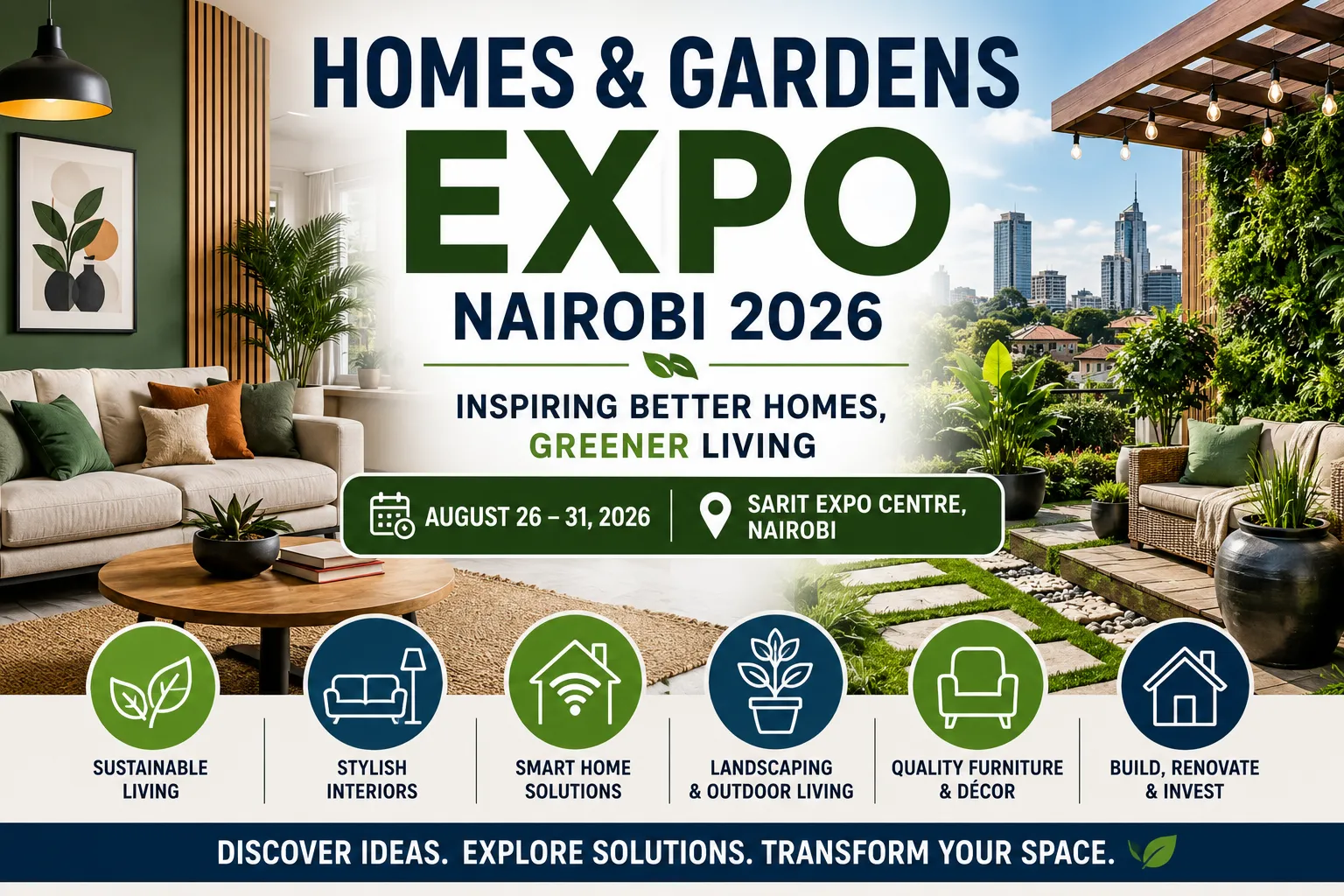
Nairobi’s home-improvement scene is getting a fresh showcase this week as the 38th edition of the Homes and Gardens Expo opens at Sarit Expo Centre in Westlands.
The exhibition is scheduled for August 26–31, 2026, bringing together businesses involved in furniture, appliances, interior design, architecture, landscaping, gardens, property and other areas of the home and outdoor living market. The official venue lists the event as a six-day exhibition in the Main Hall at Sarit Expo Centre.
The timing is significant for homeowners and property buyers looking beyond basic construction. Today’s home-improvement decisions increasingly involve energy efficiency, flexible spaces, locally made furniture, smarter technology, outdoor living and more sustainable ways of managing household resources. These considerations also fit into the broader principles covered in our guide to home maintenance projects, where long-term upkeep and improvement are treated as connected parts of responsible homeownership.
The expo is also taking place alongside the Interior Design Summit 2026, which is focused on strengthening Kenya’s interior-design economy and includes discussions around technology, innovation, responsible materials and circular-economy practices.
Here are some of the trends likely to attract attention.
Sustainable Home Improvement Is Moving Into the Mainstream
Sustainability is becoming less about a decorative label and more about how homes are designed, furnished and maintained.
The 2026 Interior Design Summit is placing particular emphasis on responsible material use, durability, reuse and recovery, pointing toward a broader shift in how the industry approaches home improvement.
For homeowners, this could translate into greater interest in:
- Durable furniture that can remain in use for years
- Locally sourced materials
- Reusable or recyclable products
- Low-waste renovations
- Energy-efficient appliances
- Water-conscious landscaping
- Household waste-management solutions
The appeal is practical as well as environmental. Products that last longer can reduce replacement costs, while energy- and resource-efficient improvements can potentially lower household operating expenses.
Homeowners considering energy-related upgrades can also benefit from understanding the energy-efficient home upgrades that can help reduce utility bills, particularly when deciding which improvements offer lasting value.
Locally Made Furniture Could Get More Attention
Kenyan craftsmanship is another area worth watching.
Recent exhibitor promotions connected to the expo have highlighted locally made furniture, including handcrafted solid-wood pieces, storage cabinets, mirrors and shelving.
This reflects a broader interest in furniture that combines functionality with distinctive design.
Instead of treating furniture simply as something to fill a room, homeowners are increasingly using pieces to establish the character of a space.
Wood, woven materials and other natural textures can add warmth while also providing opportunities to support local manufacturing and craftsmanship.
Multifunctional Furniture Fits Smaller Urban Homes
As Nairobi continues to develop higher-density residential areas, making efficient use of available space remains an important consideration.
Multifunctional furniture can help homeowners achieve more from smaller rooms.
Examples include:
- Storage beds
- Extendable dining tables
- Modular sofas
- Wall-mounted shelving
- Convertible desks
- Storage benches
- Compact home-office furniture
The underlying idea is simple: furniture should perform more than one job where possible.
This can be particularly useful in apartments where every square metre matters.
Home Offices Are Becoming More Thoughtful
Remote and hybrid work have changed the way many households think about space.
A desk placed temporarily at a dining table may work for occasional remote work, but people working from home regularly may want a more permanent setup.
That can create demand for better home-office solutions, including ergonomic furniture, improved lighting, acoustic treatments and storage.
The trend is also influencing room design.
A spare bedroom, corner of a living room or underused hallway can potentially become a functional work area without requiring a major structural renovation.
Technology Is Becoming Part of Home Design
Smart-home technology is another area likely to influence home improvement decisions.
Connected lighting, security systems, appliances, climate controls and other devices can allow homeowners to automate or remotely manage parts of their homes.
The technology focus is particularly relevant because the Interior Design Summit’s 2026 programme includes a workshop dedicated to technology and innovation.
The most useful smart-home products are likely to be those that solve recognizable problems rather than simply adding another gadget.
For example, automated lighting can improve convenience, smart security devices can provide additional monitoring options, and connected appliances can make certain household tasks easier to manage.
Better Lighting Is More Than Decoration
Lighting can dramatically change how a home looks and functions.
Instead of relying on a single ceiling fixture, modern interior schemes often combine general lighting with task and accent lighting.
This can create different environments within the same room.
A kitchen, for example, may benefit from brighter task lighting around preparation areas, while softer lighting can create a more relaxed atmosphere in dining and living spaces.
LED technology also gives homeowners more options for efficient and flexible lighting.
Outdoor Living Is Expanding Beyond the Garden
The “home” increasingly extends beyond the walls of the building.
Balconies, patios, terraces, courtyards and gardens can become additional living areas when designed appropriately.
The expo’s exhibitor mix includes landscaping, plants, outdoor products and garden-related businesses, reflecting the importance of outdoor spaces within the broader home-improvement market. This follows the wider interest in outdoor living projects that are attracting homeowners, particularly as people look for additional ways to use their available space.
Interest may include:
- Outdoor seating
- Decorative planters
- Garden lighting
- Water features
- Vertical gardens
- Compact landscaping
- Outdoor entertaining areas
For apartment residents, even a small balcony can become a useful extension of the living space.
Low-Maintenance Landscaping Could Appeal to Busy Homeowners
A beautiful garden can require significant time and resources to maintain.
That is encouraging interest in landscaping approaches that are easier to manage.
Native or well-adapted plants, efficient watering systems, durable outdoor materials and carefully planned planting can reduce ongoing maintenance requirements.
For homeowners with limited outdoor space, the focus may shift from having a large garden to creating a smaller, more intentional green area.
Climate considerations may also influence these decisions. Homeowners looking to make properties more resilient can explore climate-resilient home improvements that combine practical upgrades with longer-term environmental considerations.
Composting and Household Waste Management Are Emerging Home Trends
Sustainability is also entering the kitchen and garden through waste management.
One expo exhibitor highlighted by Sarit Expo Centre is Ecoloop Solutions Africa, which promotes household composting systems designed to turn kitchen and garden waste into organic fertilizer.
Solutions such as these connect household waste management with gardening.
Instead of viewing food and garden waste purely as something to discard, homeowners can potentially treat part of it as a resource for maintaining plants and soil.
This represents a broader movement toward circular approaches within the home.
Bedroom Comfort Is Becoming a Home-Improvement Priority
Home improvement is not only about kitchens, bathrooms and living rooms.
The bedroom is increasingly being treated as a space designed around comfort and wellbeing.
Mattresses, bedding, lighting, temperature and noise can all influence how comfortable a bedroom feels.
Expo promotions have highlighted bedding and mattress exhibitors, including products positioned around sleep comfort and support.
For homeowners, this reflects a useful shift in thinking: improving a home can involve upgrading the spaces people spend the most time using, not simply the spaces visitors see.
Natural Materials Can Add Warmth to Modern Interiors
Minimalist interiors do not necessarily have to feel cold.
Natural wood, woven textures, plants and earthy finishes can soften modern spaces.
The combination of clean architectural lines with natural materials is particularly suited to contemporary urban homes.
Locally crafted wooden furniture can also provide a way to introduce distinctive pieces without making an entire room feel overly decorated.
The result can be a more relaxed aesthetic while retaining a modern appearance.
Custom Interior Design Is Becoming More Accessible
Homeowners increasingly have access to professionals who can help them make better use of their available space.
The expo brings together interior designers, architects, furniture companies and other home-related businesses, creating opportunities for consumers to compare ideas and services in one location.
Rather than copying a design seen online exactly, homeowners can work with professionals to adapt ideas to their budget, floor plan, lifestyle and local conditions.
This can be particularly useful when renovating kitchens, bathrooms or other expensive areas where mistakes can be costly to correct.
Before committing to major work, homeowners can also benefit from understanding how to budget for home maintenance, since improvement projects often compete with routine maintenance and unexpected repair expenses.
Renovation Decisions Are Becoming More Investment-Minded
Home improvement can be both a lifestyle decision and a financial one.
Some improvements are primarily about personal comfort, while others can potentially improve a property’s appeal and long-term value.
Kitchen improvements, bathroom upgrades, quality flooring, improved lighting, landscaping and well-designed storage can all influence how a home is perceived.
However, expensive renovations do not automatically produce an equivalent increase in property value.
Homeowners should therefore distinguish between improvements they want for their own use and projects intended primarily to improve resale potential.
That distinction is important when evaluating how to protect and improve home value, because not every expensive upgrade produces the same financial benefit.
Durability Is Gaining Importance
The cheapest product is not necessarily the least expensive choice over the long term.
A low-cost item that needs frequent replacement can ultimately cost more than a durable alternative.
The growing emphasis on responsible materials and circular design at the Interior Design Summit suggests that longevity is becoming a more important consideration within the Kenyan design industry.
Homeowners may increasingly ask:
- How long will this product last?
- Can it be repaired?
- Are replacement parts available?
- What happens when it reaches the end of its useful life?
- Is the material suitable for local conditions?
These questions can lead to better purchasing decisions.
Appliances Are Becoming Part of the Design Conversation
Modern appliances do more than perform household functions.
Their size, appearance, energy consumption and integration with cabinetry can influence the overall design of a kitchen or utility area.
Consumers may increasingly look for appliances that combine functionality with efficiency and fit naturally into the space.
The presence of appliance businesses within the Homes and Gardens Expo’s exhibitor mix reinforces how closely home design and household technology have become connected.
Homeowners should also be aware that efficiency improvements can sometimes be undermined by avoidable choices. Understanding common home energy efficiency mistakes can help households make upgrades that deliver more meaningful long-term results.
Home Improvement Is Becoming More Personalized
One of the biggest changes in interior design is the movement away from a single definition of what a modern home should look like.
People have different lifestyles.
A family with young children has different priorities from a professional living alone. Someone who entertains frequently may value a large dining area, while another homeowner may prioritize a quiet workspace.
As a result, personalization is becoming increasingly important.
The best home-improvement project is not necessarily the one that looks most impressive in a photograph. It is the one that works well for the people living there.
What Visitors Can Take Away From the Expo
For homeowners attending the Homes and Gardens Expo, the biggest benefit may be the ability to compare ideas before committing to a project.
Instead of immediately purchasing a product, visitors can explore different materials, furniture styles, technologies and design approaches.
It can be useful to arrive with a clear list of priorities.
For example:
- Identify the rooms that need improvement.
- Establish a realistic budget.
- Measure available spaces.
- Research the products or services required.
- Compare quality and warranties.
- Ask about installation and maintenance costs.
- Consider long-term durability.
- Avoid making an expensive decision purely because of an exhibition discount.
A home-improvement expo can provide inspiration, but the best purchases are still those that make sense after the excitement of the event has passed.
Nairobi’s Home Market Is Moving Toward Smarter, More Sustainable Living
The Homes and Gardens Expo 2026 reflects a home-improvement market that is becoming broader than furniture and decoration.
The event’s combination of furniture, appliances, interior design, architecture, landscaping, gardens and property-related services shows how many different industries now contribute to the modern home.
At the same time, the themes surrounding the concurrent Interior Design Summit—technology, innovation, responsible materials, manufacturing and circular economy principles—point toward several of the forces likely to shape the industry in the coming years.
For Nairobi homeowners, the most interesting trend may ultimately be the convergence of all these ideas: homes that are more comfortable, more functional, easier to manage, more environmentally conscious and better adapted to the way people actually live.
As the expo gets underway at Sarit Expo Centre, those trends offer more than inspiration for a new sofa or garden makeover. They provide a glimpse into how home improvement in Nairobi could evolve from simply making homes look better toward making them work better too.