How AI Is Changing the Way People Design Their Homes
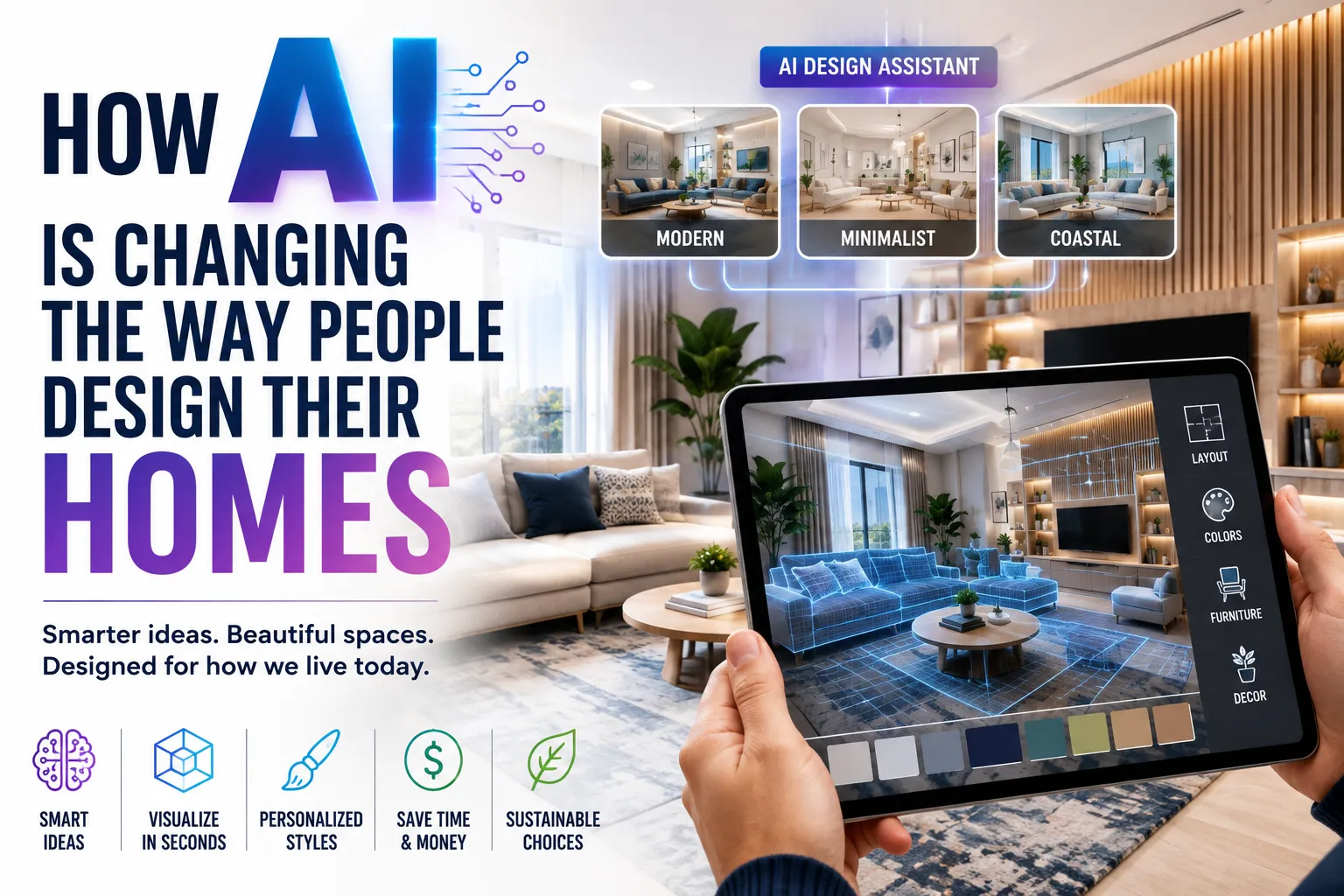
How AI Is Changing the Way People Design Their Homes
Artificial intelligence is rapidly transforming home design, making it easier than ever for homeowners, interior designers, architects, and renovators to visualize, plan, and personalize living spaces. What once required hours of sketching, multiple consultations, and expensive design software can now be accomplished in minutes with AI-powered platforms capable of generating realistic room layouts, color palettes, furniture arrangements, and renovation ideas.
As AI continues to evolve, it is becoming an essential tool rather than a replacement for human creativity. By combining data analysis, machine learning, and image generation, AI is helping people make more informed design decisions while saving time, reducing costs, and unlocking new levels of personalization.
This article explores how artificial intelligence is reshaping interior design, the technologies behind it, its benefits and limitations, and what the future may hold for smart home planning.
AI Enters the Interior Design Industry
Interior design has traditionally relied on professional expertise, physical samples, mood boards, and multiple design revisions.
Today, AI-powered applications can help users:
- Visualize room makeovers
- Experiment with different design styles
- Generate furniture layouts
- Recommend color combinations
- Create realistic 3D renderings
- Suggest décor ideas
- Optimize room functionality
- Estimate renovation concepts
These capabilities allow homeowners to explore countless possibilities before making major investments.
The growing role of technology in interior design is part of a larger shift toward more personalized and emotionally meaningful spaces, as explored in the broader movement toward layered comfort in interior design.
Personalized Design Recommendations
One of AI’s greatest strengths is personalization.
Modern AI systems can analyze factors such as:
- Room dimensions
- Lighting conditions
- Existing furniture
- Preferred colors
- Lifestyle needs
- Budget
- Design preferences
- Family size
Using this information, AI can recommend customized design solutions tailored to each household.
This can help people move beyond generic room templates and develop spaces that reflect how they actually live.
Faster Room Visualization
Traditionally, homeowners relied on imagination or static design sketches.
AI now enables users to upload a photo of a room and instantly generate multiple redesign concepts in various styles, including:
- Modern
- Scandinavian
- Minimalist
- Industrial
- Contemporary
- Traditional
- Rustic
- Coastal
- Farmhouse
- Luxury
These visualizations make it easier to compare ideas before beginning a renovation.
They can also help homeowners identify which elements they genuinely like before spending money on furniture, paint, flooring, or decorative accessories.
Smarter Furniture Placement
Furniture arrangement plays a major role in comfort and functionality.
AI tools can recommend layouts based on:
- Traffic flow
- Available space
- Window placement
- Natural lighting
- Seating requirements
- Accessibility
- Room purpose
This helps homeowners maximize usable space without sacrificing aesthetics.
However, AI-generated layouts work best as starting points rather than definitive plans. Real-world considerations such as door clearance, electrical outlets, structural elements, and the actual dimensions of furniture still need to be checked manually.
AI and Color Selection
Choosing paint colors is one of the most common design challenges.
AI-powered color tools can suggest complementary palettes by considering:
- Existing flooring
- Furniture colors
- Lighting conditions
- Desired mood
- Architectural style
- Personal preferences
Some platforms even simulate how colors appear at different times of day.
This makes experimentation easier and can reduce the uncertainty that often comes with choosing colors for an entire room.
Virtual Staging Changes Real Estate
Real estate professionals increasingly use AI-generated virtual staging to showcase empty properties.
Benefits include:
- Lower staging costs
- Faster property marketing
- Multiple décor styles
- Enhanced online listings
- Better buyer visualization
Potential buyers can more easily imagine how a space might look when furnished.
At the same time, virtual staging should be understood as visualization rather than a representation of what is physically included in a property.
AI-Assisted Renovation Planning
Home renovation projects often involve numerous decisions.
AI can assist with:
- Remodeling concepts
- Kitchen layouts
- Bathroom redesigns
- Storage solutions
- Space optimization
- Material suggestions
- Lighting plans
While professional expertise remains important for structural work, AI can simplify the early planning process.
A homeowner might use AI to compare several kitchen configurations before discussing the preferred option with a contractor or designer.
Smart Home Integration
Artificial intelligence increasingly connects interior design with smart home technology.
Examples include:
- Automated lighting
- Smart thermostats
- Voice-controlled devices
- Motorized blinds
- Smart security systems
- Energy monitoring
- Intelligent climate control
Designers now consider both aesthetics and connected technology when planning modern homes.
This means technology can become part of the overall living experience rather than simply an assortment of separate devices.
Sustainable Interior Design
AI also supports environmentally conscious design.
Some platforms recommend:
- Energy-efficient lighting
- Sustainable materials
- Low-waste renovation ideas
- Recycled furnishings
- Water-saving fixtures
- Efficient space utilization
These recommendations help homeowners balance style with sustainability.
AI can also encourage people to compare alternatives before buying, potentially reducing unnecessary purchases and helping them think more carefully about durability and long-term use.
Benefits for Professional Designers
AI is not replacing interior designers—it is becoming a powerful productivity tool.
Professionals use AI to:
- Generate concept ideas
- Speed up design iterations
- Create client presentations
- Produce realistic visualizations
- Explore multiple layouts quickly
- Reduce repetitive tasks
This allows designers to spend more time focusing on creativity and client collaboration.
AI can therefore function as an assistant that expands the number of ideas a designer can explore rather than as a substitute for professional judgment.
Benefits for Homeowners
Consumers benefit from AI in several ways:
- Faster decision-making
- Reduced design uncertainty
- More affordable planning
- Better visualization
- Personalized recommendations
- Increased design confidence
- Easier comparison of options
These tools make professional-quality design concepts accessible to a wider audience.
They can be especially useful for homeowners who have a clear idea of how they want a room to feel but struggle to translate that idea into a practical design.
Current Limitations
Despite its advantages, AI still has limitations.
Challenges include:
- Limited understanding of personal emotions
- Inaccurate room measurements if source images are poor
- Recommendations that may overlook structural constraints
- Dependence on high-quality input data
- Occasional unrealistic furniture placement
Professional advice remains important for major renovations, electrical work, plumbing, and structural modifications.
AI can suggest what a room might look like, but it cannot replace the physical inspection, technical knowledge, building-code awareness, and practical experience required for many renovation decisions.
Popular AI Features
Modern interior design platforms commonly offer:
- Room redesign generation
- Style transfer
- Furniture recommendations
- Color visualization
- Floor plan creation
- 3D rendering
- Material suggestions
- Shopping assistance
- Budget estimation
- Design inspiration galleries
These features continue to improve as AI models become more sophisticated.
The technology is also changing how people gather inspiration. Instead of simply copying a finished room, homeowners can experiment with different combinations and develop a more individualized design direction.
The Future of AI in Home Design
The next generation of AI-powered design tools is expected to become even more immersive.
Future developments may include:
- Real-time augmented reality visualization
- Fully interactive 3D home planning
- Voice-guided design assistants
- Personalized furniture manufacturing
- AI-generated custom décor
- Predictive energy optimization
- Robotics-assisted home customization
These innovations could make home design faster, more efficient, and highly personalized.
However, the future of interior design is unlikely to be purely technological. As digital tools become more powerful, homeowners may place even greater value on physical materials, craftsmanship, personal possessions, and spaces that provide a break from screens.
Tips for Using AI Design Tools
To get the best results:
- Upload high-quality room photos.
- Measure spaces accurately.
- Define your budget before designing.
- Experiment with multiple styles.
- Compare several AI-generated layouts.
- Balance AI suggestions with personal taste.
- Consult professionals for structural renovations.
- Prioritize functionality alongside appearance.
AI performs best when combined with human judgment and creativity.
It is also worth remembering that a visually impressive AI concept does not automatically make a room practical. The best results come from using AI to explore possibilities and then evaluating those possibilities against real measurements, household routines, comfort requirements, and budget.
AI Should Support Personal Design, Not Replace It
One potential danger of increasingly sophisticated design technology is that it could encourage homes to become too similar.
If thousands of homeowners rely on the same algorithms, styles, color combinations, and furniture recommendations, AI-generated interiors could begin to resemble one another.
That makes human input particularly important.
The growing preference for homes that feel personal rather than like perfect showrooms demonstrates why individuality still matters. AI can generate an impressive starting point, but personal possessions, memories, habits, imperfections, and individual preferences are what ultimately give a home its identity.
Designing for Life Beyond the Screen
AI is also creating an interesting contradiction in home design.
The technology makes it easier to design spaces digitally, while many homeowners are simultaneously seeking environments that help them disconnect from technology.
This is reflected in the growing interest in analog rooms designed to provide a break from screens.
The result may be a future in which AI helps design spaces that are deliberately more human.
A smart system might optimize lighting, energy use, and furniture placement while the finished room prioritizes reading, conversation, cooking, creativity, hobbies, and other offline experiences.
AI and the More Personalized Home
Artificial intelligence is transforming the way people approach interior design by making sophisticated planning tools accessible to homeowners and professionals alike. From generating realistic room makeovers to recommending furniture layouts, color palettes, and sustainable materials, AI is helping simplify decisions that once required significant time and expertise.
While AI cannot replace the creativity, experience, and personal insight of skilled designers, it serves as a valuable partner that enhances the design process.
The most effective use of AI may therefore be neither complete automation nor rejection of the technology. Instead, it is likely to be a combination of machine-powered visualization and human decision-making.
As technology continues to evolve, AI is likely to play an even greater role in creating homes that are beautiful, functional, energy-efficient, and tailored to the unique lifestyles of the people who live in them.