How Residential Roofing Systems Work and Require Maintenance
How Residential Roofing Systems Work and Require Maintenance
A residential roof does much more than keep rain out of a house. It is a carefully designed system that helps protect the building from water, wind, sunlight, temperature changes and other environmental conditions.
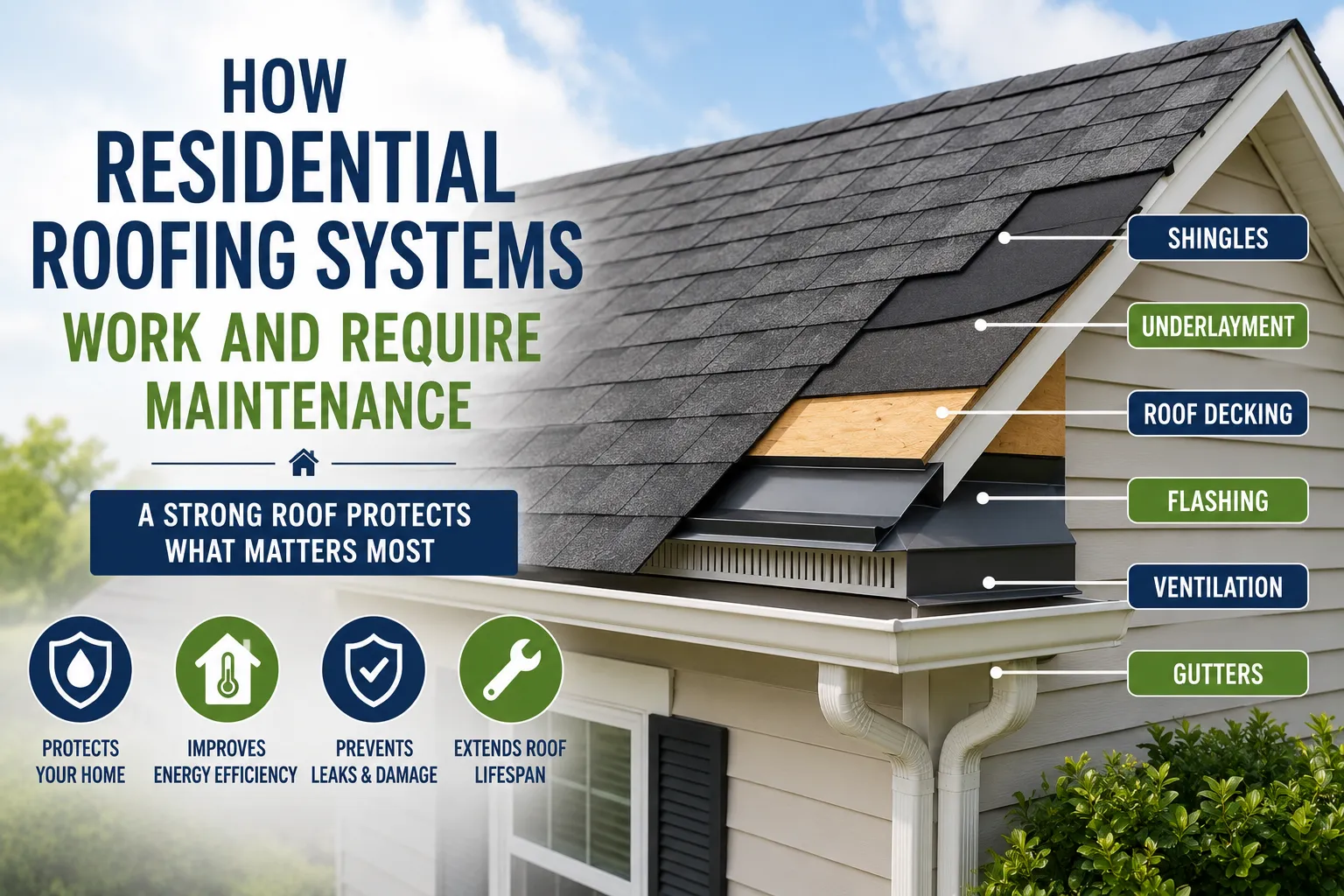
Although a roof may appear to be a single surface from the outside, it is actually made up of several components that work together. The roof covering, underlayment, flashing, ventilation, drainage system and structural components all have different jobs.
Understanding how these parts work can help homeowners recognize maintenance needs early, prevent avoidable damage and make better decisions when repairs or replacement eventually become necessary. Roofing should also be viewed as part of broader home maintenance projects that protect the property over time.
What Makes Up a Residential Roofing System?
A residential roofing system typically consists of multiple layers and components rather than just shingles or another visible covering.
Depending on the home’s design and roofing material, a system can include:
- Roof framing
- Roof decking
- Underlayment
- Shingles, tiles, metal or another roof covering
- Flashing
- Ridge and soffit ventilation
- Gutters and downspouts
- Drip edges
- Valleys
- Roof penetrations and seals
Each component contributes to the roof’s overall performance.
If one part fails, the consequences can sometimes affect several other components.
For example, damaged flashing around a chimney can allow water underneath the roof covering. Once moisture reaches the decking or framing, what began as a relatively small problem can become a much larger repair.
The Roof Structure Supports Everything Above It
Before considering the outer roofing material, it helps to understand what supports it.
Most residential roofs rely on a structural framework made from rafters, trusses or a combination of structural components.
This framework determines the shape and slope of the roof and transfers the weight of the roofing system to the walls and foundation.
The structure must also withstand environmental forces such as wind, rain and, in some climates, snow.
A roof’s structural requirements vary according to its design, materials, local climate and building codes.
Structural problems are different from ordinary surface damage and generally require evaluation by an appropriately qualified professional.
Roof Decking Creates the Base
Roof decking, sometimes called roof sheathing, is the layer installed over the roof framing.
It provides a relatively continuous surface to which the roofing materials and other components can be attached.
Common decking materials include plywood and oriented strand board.
Because the decking sits underneath the roof covering, homeowners may not see problems developing until water has already penetrated through the outer layers.
Prolonged moisture exposure can cause wood-based decking to deteriorate, swell, soften or lose structural integrity.
That is one reason seemingly minor roof leaks should not be ignored.
Underlayment Adds Another Layer of Protection
Underlayment sits between the roof decking and the primary roof covering.
Its purpose varies according to the roofing system, but it generally provides an additional barrier against moisture.
If rain gets underneath shingles or another outer covering, properly installed underlayment can provide another line of defense before water reaches the decking.
Different roofing systems use different types of underlayment, including asphalt-saturated materials and synthetic products.
Some roofs may also incorporate specialized membranes in areas particularly vulnerable to water intrusion.
The Roof Covering Takes the Brunt of the Weather
The visible roof covering is the part most homeowners associate with roofing.
Common residential materials include:
- Asphalt shingles
- Metal panels
- Clay tiles
- Concrete tiles
- Slate
- Wood shakes and shingles
- Synthetic roofing products
The covering protects the underlying structure from direct exposure to weather.
Every material has different strengths, maintenance requirements, installation methods and expected service life.
Asphalt shingles are widely used because they are relatively versatile and economical, while metal, tile, slate and other materials can offer different combinations of durability, appearance and performance.
Roof Slope Helps Control Water
The slope or pitch of a roof is an important part of its design.
A sloped roof allows rainwater to move downward toward designated drainage areas rather than remaining on the surface.
Different roofing materials have different requirements for minimum slopes.
A roof that does not drain properly can experience prolonged moisture exposure, increasing the risk of leaks and deterioration.
Flat and low-slope roofs therefore require particularly careful attention to drainage and waterproofing.
Valleys Are Vulnerable Areas
A roof valley is formed where two sloping sections meet.
These areas collect water from relatively large portions of the roof and direct it toward drainage points.
Because of this, valleys require careful installation and maintenance.
Depending on the roofing system, valleys may use specialized flashing or membrane systems to provide additional water protection.
Debris accumulation in valleys can interfere with drainage and should be addressed as part of routine roof maintenance.
Flashing Keeps Water Away From Vulnerable Joints
Flashing is used around areas where water could otherwise find a path into the structure.
Common locations include:
- Chimneys
- Skylights
- Roof-to-wall intersections
- Vents
- Pipes
- Dormers
- Valleys
- Other roof penetrations
These locations are especially important because the roof covering itself cannot always provide continuous protection around an opening or change in direction.
Damaged, loose, corroded or improperly installed flashing can become a major source of leaks.
Roof Penetrations Need Special Attention
Many homes have objects that pass through the roof.
Plumbing vents, exhaust vents, chimneys, skylights and other penetrations create openings that must be properly sealed.
Roofing systems generally use flashing and specialized components around these areas.
During inspections, these locations deserve particular attention because sealants and flashing can deteriorate over time.
A small gap around a penetration can allow water into areas that are difficult to see from inside the home.
Gutters Move Water Away From the House
A roofing system does not end at the edge of the roof.
Gutters and downspouts play an important role in managing runoff.
When rain reaches the roof, it flows toward the edges and into gutters. Downspouts then direct the water away from the building.
A properly functioning drainage system helps reduce water accumulation near the foundation and protects exterior walls and landscaping.
Blocked or damaged gutters can cause water to overflow against the house.
Why Gutter Maintenance Matters
Leaves, twigs, dirt and other debris can accumulate in gutters.
When the buildup becomes significant, water may not flow freely toward the downspouts.
Homeowners should periodically check gutters and downspouts, particularly after periods of heavy weather or when surrounding trees shed large amounts of leaves.
The exact cleaning frequency depends on the property.
Homes surrounded by mature trees may require considerably more attention than homes with little vegetation nearby.
Drip Edges Protect Roof Edges
A drip edge is a metal component installed along certain roof edges.
It helps direct water away from the fascia and other vulnerable areas while also helping protect the edge of the roofing system.
Although it is relatively small, it contributes to proper water management.
When roofs are repaired or replaced, the condition and installation of edge components should be considered rather than focusing exclusively on the visible roofing material.
Roof Ventilation Helps Manage Heat and Moisture
Ventilation is another important part of many residential roofing systems.
A properly designed attic ventilation system allows air to move through the attic space.
Common components include:
- Soffit vents
- Ridge vents
- Gable vents
- Other intake and exhaust vents
The precise ventilation arrangement depends on the roof and attic design.
Ventilation can help manage heat and moisture accumulation in the attic, although it must be designed correctly to work as intended.
Moisture in the Attic Can Cause Hidden Damage
Not all roof-related moisture comes directly through a hole in the roof.
Warm indoor air can migrate into an attic and condense when it encounters cooler surfaces.
Poor ventilation, inadequate air sealing or other building-envelope problems can contribute to moisture accumulation.
Persistent attic moisture can damage insulation and wood components and may encourage mold growth.
That means homeowners investigating a roof problem should sometimes look inside the attic as well as at the exterior roof.
Insulation and Roofing Work Together
Roof performance is connected to the rest of the building envelope.
Adequate attic insulation can help regulate heat transfer between the living space and attic.
Meanwhile, appropriate ventilation and air sealing can help manage moisture and temperature conditions.
A roofing problem should therefore not always be viewed in isolation.
If an attic consistently becomes excessively hot or humid, for example, simply replacing shingles may not address the underlying cause.
Different Roofing Materials Require Different Maintenance
There is no universal maintenance schedule that applies to every roof.
Asphalt Shingles
Asphalt shingles are common and relatively straightforward to maintain.
Homeowners should watch for:
- Missing shingles
- Cracked shingles
- Curling or buckling
- Granule loss
- Damaged flashing
- Exposed fasteners
- Algae or moss growth where relevant
Metal Roofing
Metal roofs can be durable, but homeowners should still inspect for:
- Corrosion
- Loose fasteners
- Damaged panels
- Failed seals
- Deteriorated flashing
- Problems around penetrations
Tile Roofing
Clay and concrete tiles can last for many years, but individual tiles can crack or become displaced.
Walking directly across tile roofs can also cause damage, so inspections and repairs should be approached carefully.
Slate Roofing
Natural slate can have a long service life, but it requires specialized installation and repair knowledge.
Broken or displaced slates should be addressed by professionals familiar with slate roofing systems.
Weather Is One of the Biggest Sources of Roof Damage
Roofs are constantly exposed to the elements.
Heavy rain can test flashing and drainage.
Strong winds can loosen or remove roofing materials.
Hail can damage certain roof coverings.
Extreme heat and ultraviolet exposure can accelerate material deterioration.
Repeated temperature changes can also cause materials to expand and contract.
Over many years, these stresses accumulate.
Trees Can Create Multiple Roofing Problems
Trees near a house can provide shade and improve the appearance of a property, but branches and leaves can create roofing challenges.
Overhanging branches may:
- Scratch roofing materials
- Drop debris
- Block gutters
- Rub against the roof during windy conditions
- Increase moss or algae growth in shaded areas
Dead or unstable branches can also pose a more serious risk during storms.
Keeping vegetation appropriately managed can therefore form part of a home’s broader roof-maintenance strategy.
Moss and Algae Should Be Addressed Carefully
Moss and algae can develop on roofs, particularly in damp or shaded environments.
The significance varies according to the roofing material and severity.
Moss can retain moisture and, when established, may affect some roofing materials or interfere with drainage.
Aggressive cleaning methods can cause more damage than the growth itself.
Homeowners should follow the roofing manufacturer’s recommendations or consult a qualified professional rather than pressure-washing a roof without understanding the potential consequences.
Regular Inspections Can Catch Problems Early
Roof inspections can help identify problems before they become expensive repairs.
A homeowner can perform basic visual checks from the ground, looking for obvious signs such as missing shingles, sagging areas or damaged flashing.
Professional inspections can provide a more detailed assessment, particularly when a roof is aging or after severe weather.
How frequently a roof should be professionally inspected depends on its age, material, condition and local weather exposure.
What Homeowners Can Safely Check
Routine observation does not necessarily require climbing onto the roof.
From the ground, homeowners can look for:
- Missing or visibly damaged roofing materials
- Sagging sections
- Debris accumulation
- Damaged gutters
- Downspouts that appear blocked
- Visible flashing problems
- Water stains inside the home
- Daylight visible through attic areas
- Signs of moisture or deterioration
If something appears unusual, a qualified professional can determine whether further investigation is necessary.
Warning Signs of a Roof Leak
Some leaks are obvious.
Others develop slowly and remain hidden for months.
Possible warning signs include:
- Brown or discolored ceiling stains
- Damp attic insulation
- Peeling paint
- Water marks around windows or walls
- Musty odors
- Damp roof decking
- Dripping during or after rain
A visible interior stain does not necessarily identify the exact location where water entered.
Water can travel along framing or other surfaces before becoming visible.
That is why simply covering the visible stain may not solve the underlying problem.
Don’t Ignore Small Repairs
A small roofing defect can become more expensive when left unattended.
A damaged flashing component, for example, may initially allow only a small amount of water into the system.
Over time, repeated moisture exposure can damage decking, insulation, drywall or structural components.
Addressing problems while they are still localized can potentially reduce repair complexity and cost.
Homeowners can also use a broader home repairs guide when deciding how to approach different types of property damage and maintenance problems.
Storms Can Change the Maintenance Schedule
Severe weather can justify an inspection even if a roof appeared healthy beforehand.
After strong winds, hail or other major weather events, homeowners should look for visible damage from the ground and arrange a professional assessment when appropriate.
Some problems are not immediately obvious.
A roof can sustain damage that is difficult to identify without getting close to the roofing materials or examining the attic.
Repair or Replace?
One of the most important roofing decisions is determining whether a damaged roof should be repaired or replaced.
A repair may make sense when damage is localized and the rest of the roofing system remains in good condition.
Replacement becomes more likely when a roof is approaching the end of its service life, has widespread deterioration or has experienced extensive damage.
Other factors include:
- Roof age
- Material
- Extent of damage
- Previous repairs
- Moisture damage
- Structural condition
- Local weather exposure
- Manufacturer specifications
A professional roof assessment can help homeowners make a more informed decision.
Roof Age Matters
Every roofing material has an expected service life, but actual performance varies.
Installation quality, climate, ventilation, maintenance, material quality and weather exposure can all influence longevity.
An older roof does not automatically need to be replaced.
Likewise, a relatively young roof can develop serious problems if it was poorly installed or exposed to unusual damage.
Age should therefore be considered alongside physical condition.
Proper Installation Is Just as Important as Material Choice
A high-quality roofing material cannot compensate for poor installation.
Incorrect flashing, inadequate fastening, poor ventilation, improper drainage or unsuitable installation techniques can reduce the performance of an otherwise excellent roofing product.
When replacing a roof, homeowners should therefore consider the qualifications and experience of the contractor as carefully as the roofing material itself.
Local building requirements and manufacturer installation instructions also matter.
Keep Records of Roof Maintenance
Maintaining records can make future decisions easier.
A homeowner can document:
- Installation date
- Roofing material
- Contractor information
- Repairs
- Inspections
- Storm damage
- Replacement components
- Manufacturer information
These records can be useful when determining whether a problem is new or recurring.
They may also help when selling the property or discussing the roof with a future contractor.
Keeping accurate maintenance records can also make it easier to plan and prioritize household expenses. A dedicated home maintenance budget guide can help homeowners account for routine upkeep, repairs and larger replacement costs.
Roofing Maintenance Is About Managing Water
At its core, much of residential roofing design revolves around controlling water.
Rain needs to move across the roof, through valleys and toward drainage points without penetrating the building envelope.
That is why seemingly small components such as flashing, underlayment, drip edges and gutters are so important.
A roof that looks attractive from the street can still perform poorly if its water-management system is compromised.
A Roof Is a System, Not Just a Surface
Homeowners often think about roofing in terms of shingles, tiles or metal panels because those are the components they can see.
But the real performance of a residential roof depends on how all its components work together.
The structure supports the system. Decking provides a base. Underlayment adds moisture protection. The outer covering shields the building from weather. Flashing protects vulnerable transitions. Ventilation helps manage attic conditions, while gutters and downspouts control runoff.
When these components are properly installed and maintained, they can work together for many years.
**For homeowners, the most effective roofing strategy is usually preventive rather than reactive: understand how the system works, keep drainage clear, watch for early warning signs, inspect after severe weather and address small problems before they spread. A well-maintained roof is not simply an attractive part of a home—it is one of the property’s most important defenses against water, weather and long-term structural damage.**