How to Grow Healthy Plants Indoors With Proper Light, Water and Humidity
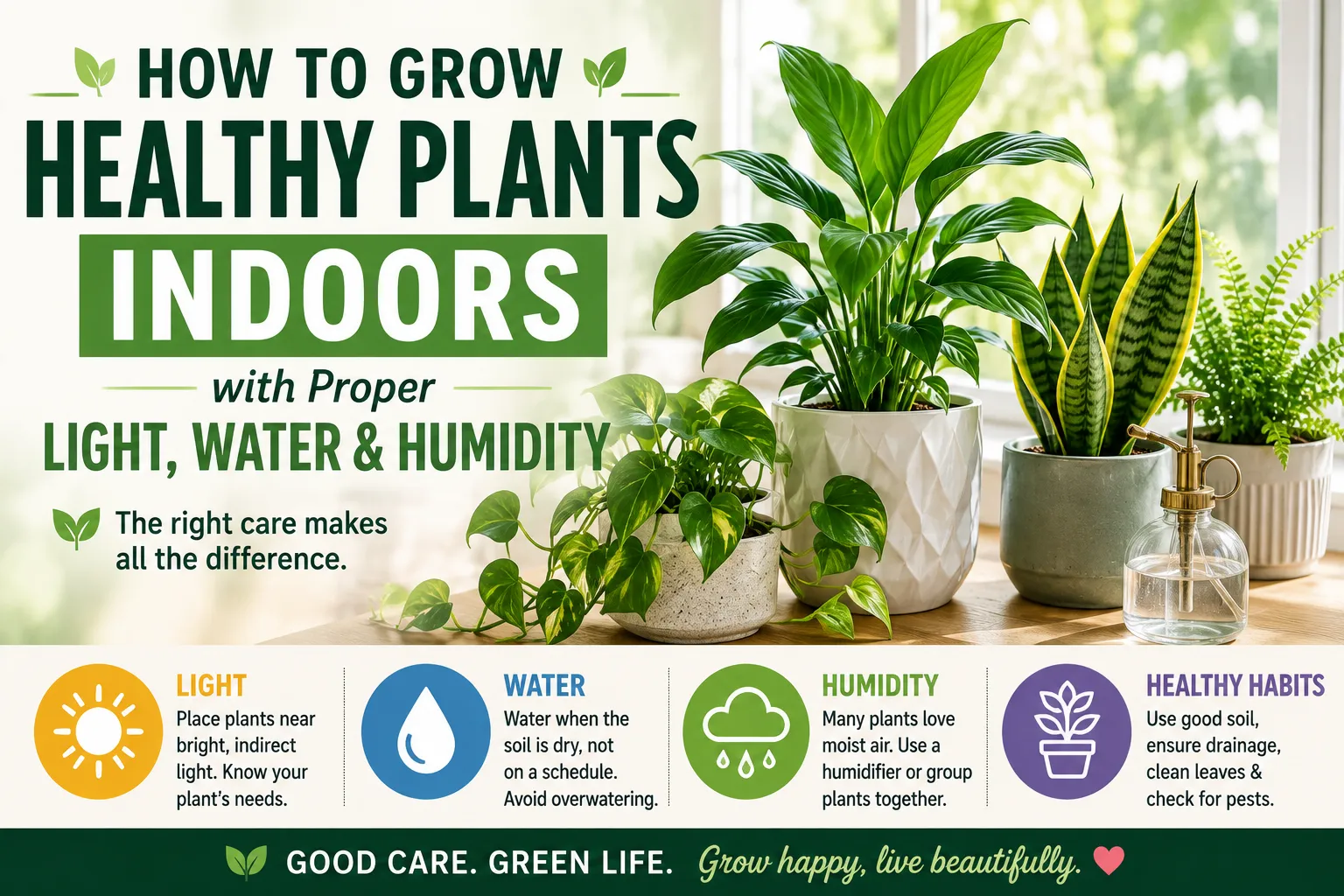
How to Grow Healthy Plants Indoors With Proper Light, Water and Humidity
Growing plants indoors can transform a room, improve its atmosphere and bring a little bit of nature into spaces without access to a garden. But indoor plants live in an environment that is very different from the outdoors.
Natural light may be limited, air can be dry, temperatures can fluctuate, and watering habits are often inconsistent. A plant that thrives outside may struggle when placed indoors without the right conditions.
The good news is that successful indoor gardening does not require complicated equipment or expert knowledge. Most houseplants need a few fundamentals: appropriate light, consistent watering, suitable humidity, good airflow and healthy growing conditions.
Understanding how these factors work together makes it much easier to keep indoor plants healthy.
Why Indoor Plants Need Different Care
Outdoor plants benefit from natural sunlight, rainfall, changing temperatures and air movement. Indoor plants depend almost entirely on the conditions created inside the home.
Several factors can affect their growth:
- Direction and intensity of available light
- Distance from windows
- Indoor temperature
- Humidity
- Pot size
- Soil composition
- Watering frequency
- Air circulation
- Seasonal changes
A plant may appear healthy immediately after being brought indoors but begin showing problems weeks later if its environment does not meet its needs.
For a broader understanding of how different plants are grown and maintained, see the Complete Guide to Flower Gardening.
Light Is the Foundation of Indoor Plant Growth
Light provides the energy plants need for photosynthesis.
During photosynthesis, plants use light energy to convert carbon dioxide and water into carbohydrates that support growth.
Without enough light, even a plant receiving appropriate water and nutrients may struggle.
Signs that a plant may not be receiving enough light can include:
- Slow growth
- Pale or yellowing leaves
- Long, thin stems
- Large spaces between leaves
- Smaller new leaves
- Leaning toward a window
However, different plants have very different light requirements.
Understand Bright, Medium and Low Light
Indoor gardening guides often describe plants as needing low, medium or bright light.
These descriptions can be useful, but they are relative.
Bright Light
Bright-light plants generally need substantial illumination.
Some may tolerate several hours of direct sunlight, while others prefer bright but indirect light.
South-facing or similarly sunny windows can provide strong light, although the intensity depends on the climate, season and window.
Medium Light
Medium-light conditions are often found near bright windows where the plant receives plenty of ambient light without prolonged intense direct sun.
Many common houseplants can adapt well to these conditions.
Low Light
Low-light plants can tolerate less illumination, but low light does not mean no light.
A plant placed in a dark corner far from windows may eventually decline even if it is considered tolerant of low-light conditions.
Watch the Distance From the Window
A plant’s light exposure can change dramatically over a short distance.
A plant sitting directly beside a window may receive substantially more usable light than one several feet away.
This is particularly important in rooms that appear bright to human eyes but provide relatively little usable light for plants.
If a plant consistently grows toward a window, rotate it periodically if appropriate.
This can encourage more balanced growth.
Direct Sunlight Is Not Always Better
It may seem logical that more sunlight will produce healthier plants.
But excessive direct sunlight can damage leaves.
Signs of excessive light can include:
- Brown patches
- Scorched leaf edges
- Bleached areas
- Curling leaves
- Excessive wilting
Plants that naturally grow beneath forest canopies, for example, may prefer filtered or indirect light rather than intense midday sun.
The ideal amount of light depends on the species.
Artificial Grow Lights Can Help
When natural light is inadequate, artificial grow lights can supplement or replace sunlight.
Modern LED grow lights are available in many forms, including:
- Bulbs
- Panels
- Bars
- Clip-on lights
- Adjustable fixtures
The appropriate setup depends on the plant and the available space.
A grow light should be positioned according to the manufacturer’s recommendations because placing it too far away may provide insufficient illumination, while placing it too close can stress or damage leaves.
Give Plants a Consistent Light Schedule
Plants respond not only to the intensity of light but also to its duration.
Leaving a grow light on continuously is generally unnecessary.
A consistent daily schedule can provide plants with periods of light and darkness that better resemble natural conditions.
A timer can make this easier, particularly for plants grown primarily under artificial lighting.
Watering Is About Balance
Water is essential for plant growth, but overwatering is one of the most common causes of indoor plant problems.
Many beginners see a drooping plant and assume it needs more water.
That is not always true.
Roots need both water and oxygen. When soil remains saturated for too long, air spaces in the growing medium become filled with water, potentially depriving roots of oxygen.
This can contribute to root problems.
For more detailed guidance on proper watering practices, see the Complete Guide to Watering Garden Plants Correctly.
Don’t Water by Calendar Alone
A common mistake is watering every plant on a fixed schedule.
For example, watering every Sunday may sound convenient, but plants do not all use water at the same rate.
Watering needs depend on:
- Plant species
- Pot size
- Soil type
- Temperature
- Humidity
- Light exposure
- Season
- Plant size
- Root development
Instead of relying entirely on a calendar, check the soil and observe the plant.
Check the Soil Before Watering
For many houseplants, inserting a finger into the growing medium can provide a simple indication of moisture.
If the upper layer feels dry and the plant’s care requirements call for watering, it may be time to water.
For plants that prefer consistently moist soil, you may need to water before the soil becomes completely dry.
For drought-tolerant plants such as many succulents, allowing the soil to dry more thoroughly between waterings may be appropriate.
The correct approach depends on the plant.
Water Thoroughly When Necessary
When a plant needs watering, giving it enough water to moisten the root zone can be more effective than repeatedly adding tiny amounts.
For many potted plants, water should be allowed to drain through the container’s drainage holes.
This helps ensure that water reaches the lower portion of the root system.
However, plants with specialized watering requirements may need a different approach.
Drainage Is Extremely Important
A container without adequate drainage can trap excess water around roots.
This is particularly risky for plants that prefer drier conditions.
When choosing pots, look for containers with suitable drainage holes unless the plant’s growing system is specifically designed otherwise.
A decorative outer pot can still be used, but excess water should not be allowed to remain around the inner container indefinitely.
Empty Excess Water
If a pot sits in a saucer or decorative cachepot, check it after watering.
Standing water should generally be removed rather than left around the pot for extended periods.
This simple habit can reduce the risk of waterlogged soil.
Different Plants Have Different Watering Needs
There is no universal watering schedule for indoor plants.
Succulents and Cacti
These plants generally store water and can be damaged by frequent watering.
Allowing the growing medium to dry appropriately between waterings is often important.
Tropical Plants
Many tropical houseplants prefer more consistent moisture, although they still need adequate drainage.
Ferns
Some ferns prefer relatively consistent moisture and may struggle when allowed to become excessively dry.
Herbs
Indoor herbs can have varied water requirements. Basil, for example, generally prefers more consistent moisture than many Mediterranean herbs such as rosemary.
Learning the natural habitat of a plant can provide useful clues about its preferred conditions.
Humidity Can Affect Plant Health
Indoor air is sometimes considerably drier than the environment in which tropical plants naturally grow.
Low humidity can contribute to:
- Brown leaf tips
- Crispy leaf edges
- Curling leaves
- Premature leaf drop
- Slow growth in sensitive species
However, not every plant requires high humidity.
Succulents and many plants adapted to dry environments can perform well at ordinary indoor humidity levels.
How to Increase Humidity Around Plants
Several approaches can increase humidity.
Group Plants Together
Placing several plants relatively close together can create a more humid microenvironment as they release water vapor through transpiration.
The plants still need adequate airflow, however.
Use a Humidifier
A humidifier can provide more consistent control than occasional misting.
This can be particularly useful during dry seasons or in rooms where heating or air conditioning significantly lowers humidity.
A hygrometer can help measure indoor humidity rather than relying on guesswork.
Use a Humidity Tray Carefully
Some gardeners place containers above trays containing water and pebbles.
The plant pot should not sit directly in standing water.
However, the effect of this method can be limited compared with a properly sized humidifier, particularly in larger rooms.
Misting Is Not a Complete Humidity Solution
Spraying water onto leaves may temporarily increase moisture on the surface, but it does not necessarily maintain higher humidity around a plant for long.
Frequent wetting of foliage can also create conditions that encourage certain leaf diseases in some plants.
If a plant genuinely requires higher humidity, controlling the surrounding environment is usually more effective than repeatedly spraying the leaves.
Temperature Matters Too
Most common houseplants prefer relatively stable indoor temperatures.
Sudden temperature changes can stress plants.
Avoid placing sensitive plants directly beside:
- Heating vents
- Air-conditioning outlets
- Cold drafts
- Frequently opened exterior doors
- Very hot windows
The ideal temperature varies by species, so plant-specific requirements should take priority.
Good Airflow Helps Indoor Plants
Indoor air can become stagnant, particularly in crowded rooms.
Gentle air movement can help leaves dry after watering and reduce excessively humid pockets around foliage.
A fan does not need to blow directly and strongly onto plants.
A low level of indirect circulation may be sufficient.
Avoid creating strong constant airflow that dries plants excessively.
Choose the Right Soil
Potting soil should provide a balance of moisture retention, drainage and air around the roots.
Different plants need different growing media.
For example:
- Succulents often benefit from fast-draining mixtures.
- Tropical foliage plants may prefer a more moisture-retentive but well-aerated medium.
- Orchids commonly require specialized bark-based growing media.
- Herbs may perform well in a suitable general-purpose potting mix.
Avoid assuming that ordinary garden soil is suitable for every indoor container.
Garden soil can become compacted in pots and may contain pests or organisms that are undesirable indoors.
Good soil management is also important for plants grown outdoors, so the Ultimate Guide to Soil Health provides useful background on how growing media affect plant health.
Choose an Appropriate Pot Size
A pot that is dramatically larger than the root system can hold more moisture than the plant can use.
This can increase the time it takes for the growing medium to dry.
A pot that is too small, however, can restrict roots and cause plants to dry out rapidly.
Signs that a plant may have outgrown its container can include:
- Roots emerging from drainage holes
- Extremely rapid drying
- Roots circling densely around the container
- Stunted growth despite otherwise appropriate care
Repotting should be based on the plant’s needs rather than performed automatically every year.
Fertilizer Supports Growth but Is Not Food for Sick Plants
Plants require nutrients in addition to light and water.
However, fertilizer should not be used to compensate for poor lighting, excessive watering or unsuitable soil.
If a plant is struggling because its roots are waterlogged, adding more fertilizer will not solve the underlying problem.
Follow the instructions for the specific fertilizer and plant.
Overfertilizing can damage roots and create excessive salt buildup in the growing medium.
For a deeper look at plant nutrition, see the Complete Guide to Garden Fertilizers and Plant Nutrition.
Watch for Signs of Stress
Plants communicate problems through changes in their appearance.
Yellow Leaves
Yellowing can have multiple causes, including:
- Overwatering
- Nutrient deficiencies
- Natural aging
- Poor light
- Root problems
The location and pattern of yellowing can provide clues.
Brown Leaf Tips
Brown tips can be associated with:
- Low humidity
- Inconsistent watering
- Salt buildup
- Excessive fertilizer
- Other environmental stresses
Wilting
Wilting can indicate underwatering, but it can also occur when roots are damaged by excessive moisture.
Checking the soil before watering is therefore important.
Leggy Growth
Long, weak stems with large gaps between leaves often indicate insufficient light.
Moving the plant closer to an appropriate light source may help.
Clean Dust From Leaves
Dust can accumulate on broad indoor plant leaves.
A layer of dust can interfere with the plant’s ability to receive light efficiently and makes it harder to spot pests.
For suitable plants, gently wiping leaves with a clean, damp cloth can help.
Avoid harsh cleaning products or commercial leaf-shine products unless specifically recommended for the plant.
Inspect Plants for Pests
Indoor plants can develop pest problems even when they never spend time outdoors.
Common pests include:
- Spider mites
- Aphids
- Fungus gnats
- Mealybugs
- Scale insects
- Whiteflies
Check leaves, stems and the surface of the growing medium regularly.
Early detection is generally easier to manage than a widespread infestation.
Isolate New Plants When Necessary
If you bring home several new plants, consider keeping them separate from established plants for a period while checking for pests or disease.
This can reduce the chance of introducing an infestation to your entire indoor collection.
Nursery plants can look healthy while still carrying small numbers of insects.
Rotate Plants for Even Growth
Plants naturally grow toward available light.
If one side of a plant receives significantly more illumination, growth may become uneven.
Rotating the pot periodically can help maintain a more balanced shape.
However, some plants have directional growth patterns and may not need frequent rotation.
Avoid Constantly Moving Plants
While rotating a plant can be useful, constantly moving it between different environments can create unnecessary stress.
A plant that is thriving should generally be left in a suitable location.
If you move it, give it time to adjust before deciding whether the new location is working.
Consider Seasonal Changes
Indoor conditions change throughout the year.
During winter, daylight hours may become shorter and indoor heating can reduce humidity.
During summer, stronger sunlight may increase heat near windows.
As seasons change, you may need to adjust:
- Watering frequency
- Plant position
- Grow-light use
- Humidity management
- Ventilation
A watering schedule that works in one season may be inappropriate in another.
Don’t Assume Every Brown Leaf Means the Plant Is Dying
Individual leaves naturally age and eventually die.
An occasional yellow or brown leaf does not necessarily indicate a serious problem.
Look for patterns instead.
If large numbers of leaves are changing at once, new growth is failing or the plant is rapidly deteriorating, investigate environmental conditions.
Create a Simple Indoor Plant Care Routine
A manageable routine can prevent many problems.
Once or Twice a Week
Check:
- Soil moisture
- Leaves
- Stems
- Signs of pests
- Overall plant appearance
Every Few Weeks
Consider:
- Rotating plants
- Cleaning dusty leaves
- Inspecting drainage
- Checking for accumulated fertilizer salts
Seasonally
Review:
- Light levels
- Watering frequency
- Humidity
- Temperature
- Need for repotting
The goal is consistency rather than constant intervention.
Match Plants to Your Home
One of the easiest ways to succeed with indoor gardening is to choose plants that naturally fit the conditions you already have.
If your home has limited natural light, select plants known to tolerate lower-light environments.
If your space receives strong sunlight, choose species that can tolerate those conditions or provide filtered light.
If your home is dry, plants adapted to lower humidity may be easier to maintain.
Instead of forcing a plant into an unsuitable environment, choose plants that match your environment whenever possible.
Avoid Buying Plants Based Only on Appearance
A plant may look beautiful in a store but require conditions that your home cannot provide.
Before purchasing, consider:
- How much light it needs
- How large it will become
- Its watering requirements
- Humidity preferences
- Toxicity concerns if pets or children are present
- Whether it needs specialized soil
- How much maintenance you are willing to provide
A plant that fits your lifestyle is more likely to thrive than one chosen purely for its appearance.
The Three Fundamentals Work Together
Light, water and humidity should not be considered independently.
A plant receiving intense light may use water more quickly.
A plant in high humidity may dry more slowly.
A plant receiving little light may use less water.
That means changing one environmental factor can affect the others.
For example, moving a plant into a brighter location may increase its water requirements. Increasing humidity may reduce the rate at which moisture leaves the leaves and soil.
Successful indoor gardening is therefore about finding a balance, not maximizing one individual factor.
Healthy Indoor Plants Start With the Right Environment
Growing healthy plants indoors does not require turning your home into a greenhouse.
It starts with understanding what each plant actually needs and providing reasonably consistent conditions.
Give plants appropriate light. Check the soil before watering rather than relying blindly on a schedule. Provide adequate drainage. Maintain suitable humidity for the species. Keep temperatures reasonably stable and watch for early signs of pests or stress.
Most importantly, learn to observe your plants.
Healthy indoor gardening is less about following a perfect routine and more about responding to what your plants are telling you. Once light, water, humidity and growing conditions are working together, even a small indoor space can support a surprisingly healthy collection of plants.