How to Improve Personal Organization Skills
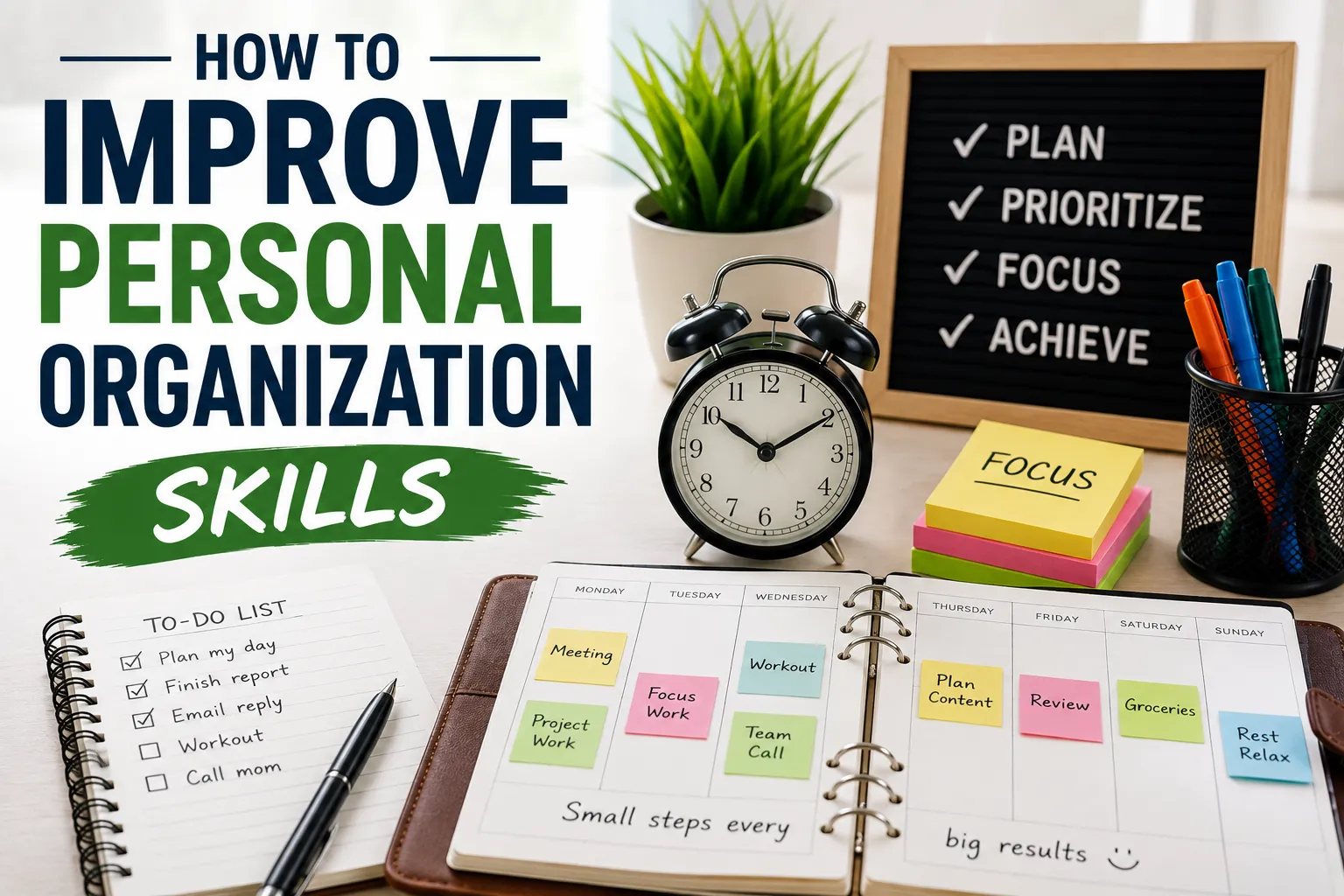
How to Improve Personal Organization Skills
Personal organization is less about having a perfectly tidy desk or a color-coded calendar and more about creating systems that make everyday life easier to manage.
When responsibilities begin to pile up, even simple tasks can feel overwhelming. Missed appointments, forgotten errands, cluttered spaces and unfinished to-do lists can all create unnecessary stress. The good news is that organization is a skill that can be developed rather than a personality trait that people either have or lack.
With practical routines, realistic planning and a system for keeping track of commitments, it is possible to become more organized without turning every part of life into a rigid schedule.
For a broader understanding of how reducing unnecessary possessions supports better organization, see the Decluttering Explained: The Complete Guide.
Understand What Is Making You Disorganized
Before changing your habits, identify where the biggest problems occur.
For some people, the main challenge is forgetting appointments. For others, it may be clutter, procrastination, poor time management or taking on too many commitments.
Common sources of disorganization include:
- Keeping too many tasks in your head
- Having no consistent place for important items
- Creating unrealistic schedules
- Frequently changing priorities
- Allowing clutter to accumulate
- Delaying small tasks until they become bigger problems
- Using too many planning systems at once
- Failing to review upcoming commitments
Identifying the underlying problem makes it easier to choose a solution.
Start With One Organization System
Using a calendar, notebook, task app, sticky notes and several reminder systems simultaneously can sometimes make organization more complicated.
Choose one primary system for managing commitments.
It could be:
- A paper planner
- A digital calendar
- A task-management application
- A simple notebook
- A combination of a calendar and task list
The specific tool matters less than using it consistently.
If important information is scattered across several systems, it becomes easier for something to be overlooked.
Write Things Down
Trying to remember every responsibility mentally requires unnecessary effort.
When a task, appointment or idea comes to mind, record it in your chosen system.
This creates an external memory that you can review instead of repeatedly asking yourself what you might be forgetting.
Writing things down is particularly useful for:
- Appointments
- Deadlines
- Shopping needs
- Bills
- Household tasks
- Work assignments
- Personal goals
- Important follow-ups
The purpose is not to document every second of the day. It is to make sure important information has a reliable place to go.
Separate Tasks From Appointments
A calendar and a task list serve different purposes.
An appointment generally needs to happen at a specific time.
A task may simply need to be completed by a certain date.
For example:
Appointment: Dentist at 10:00 a.m.
Task: Buy replacement light bulbs.
Putting every task into a calendar can make the schedule unnecessarily crowded.
Using a calendar for time-specific commitments and a task list for flexible work can create a clearer picture of the day.
Prioritize What Actually Matters
An enormous to-do list can create the illusion of productivity while making it difficult to determine where to begin.
Instead, identify the tasks that genuinely matter.
A simple approach is to divide tasks into categories such as:
- Important and urgent
- Important but not urgent
- Useful but low priority
- Optional or unnecessary
This helps prevent minor tasks from consuming the time needed for more important responsibilities.
Choose a Few Daily Priorities
A daily list does not need to contain twenty items.
Selecting three to five meaningful priorities can create a more manageable plan.
For example:
- Finish an important work assignment
- Pay a bill
- Exercise
- Buy groceries
- Organize one household area
Additional tasks can be completed if time allows.
The goal is to create a plan that reflects what you can realistically accomplish rather than what you wish you could accomplish under ideal conditions.
Break Large Tasks Into Smaller Steps
Large projects are often difficult to start because the desired outcome feels distant.
Instead of writing:
Organize the house
break the project into smaller actions:
- Sort the entryway
- Clear the kitchen counter
- Organize one cabinet
- Sort paperwork
- Donate unused clothing
Small tasks are easier to start and easier to measure.
Completing several small steps can also create momentum toward a larger goal.
Estimate How Long Tasks Actually Take
People frequently underestimate how long everyday tasks require.
A task that looks like a 15-minute job may involve preparation, interruptions and cleanup.
Begin paying attention to how long common activities actually take.
After a few weeks, you will have a more realistic understanding of your available time.
This makes scheduling more accurate and reduces the temptation to pack too many activities into one day.
Leave Space Between Commitments
A schedule with every minute occupied is fragile.
If one meeting runs late, traffic becomes heavier than expected or an unexpected task appears, the entire plan can fall behind.
Instead, leave reasonable gaps between major commitments.
Buffer time can be used for:
- Travel
- Preparation
- Unexpected delays
- Short breaks
- Administrative tasks
A little unused time can make an otherwise busy schedule much more manageable.
Create a Morning Routine
A consistent morning routine can provide structure at the beginning of the day.
It does not need to be complicated.
A practical routine might include:
- Reviewing the day’s schedule
- Checking the most important priorities
- Preparing necessary items
- Tidying a small area
- Eating breakfast
- Getting ready for work or other responsibilities
The objective is to begin the day knowing what needs attention rather than immediately reacting to whatever appears first.
Create an Evening Reset
An evening reset can make the following morning easier.
Spend a few minutes:
- Returning items to their usual places
- Checking tomorrow’s calendar
- Preparing clothing or necessary equipment
- Reviewing unfinished tasks
- Clearing obvious clutter
- Making a short plan for the next day
This prevents tomorrow’s responsibilities from becoming tonight’s source of uncertainty.
Give Everything a Home
Physical organization becomes much easier when frequently used items have designated locations.
Keys, wallets, documents, chargers and household tools should have obvious places to return to.
A simple rule can help:
If an item does not have a home, decide where it belongs.
The exact location does not matter as much as consistency.
When something is always returned to the same place, finding it becomes much easier.
Reduce Visual Clutter
A cluttered environment can make it harder to focus on the task at hand.
You do not need a minimalist home to improve organization.
Instead, focus on reducing unnecessary visual noise.
Clear surfaces that are used frequently.
Put away items that have already served their purpose.
Keep frequently used objects accessible and less frequently used possessions out of the way.
Even small improvements can make a space feel easier to manage.
For practical strategies for organizing different areas of the home, the Room by Room Home Organization Guide provides a useful framework.
Use the One-Minute Rule Carefully
Some small tasks can be completed immediately rather than added to a growing list.
If something genuinely takes only a moment—such as putting an item away or responding to a very simple message—doing it immediately may prevent unnecessary accumulation.
However, the rule should not become an excuse to interrupt important work constantly.
If completing a “quick” task would disrupt concentration, record it and return to it later.
Develop a Filing System
Important paperwork can quickly become difficult to manage without a system.
Create categories that make sense for your circumstances, such as:
- Financial documents
- Home records
- Insurance
- Education
- Employment
- Receipts
- Personal records
Digital documents can follow a similar structure.
Use descriptive filenames rather than vague labels such as “document1” or “scan.”
A good filing system should allow you to find something months later without remembering exactly when or where you saved it.
Organize Digital Files Too
Personal organization is no longer limited to physical spaces.
Digital clutter can be just as frustrating.
Review your:
- Computer desktop
- Downloads folder
- Email inbox
- Cloud storage
- Smartphone photos
- Notes
- Digital documents
Create a small number of logical folders and use them consistently.
Delete files you no longer need and archive important material rather than allowing everything to remain in the same location.
Control Your Email Inbox
An overflowing inbox can become a constant source of distraction.
Rather than treating email as an endless to-do list, process messages according to their importance.
Possible actions include:
- Respond
- Archive
- Delete
- Delegate
- Schedule a response
- Save for later
Unsubscribe from newsletters and promotional messages you no longer read.
Reducing incoming clutter can be more effective than repeatedly organizing an enormous inbox.
Use Reminders for Things You Might Forget
Calendars and reminders are particularly useful for recurring responsibilities.
Examples include:
- Renewals
- Bill payments
- Appointments
- Household maintenance
- Birthdays
- Subscription reviews
- Important deadlines
Using reminders is not a sign of poor memory.
It is a practical way of reducing the number of things you have to remember unaided.
Build Routines Around Recurring Tasks
If you repeatedly have to decide when to perform the same task, consider turning it into a routine.
For example:
- Review finances every week
- Grocery shop on a consistent day
- Do laundry according to a regular schedule
- Review upcoming appointments each evening
- Tidy key areas before bed
Routines reduce decision-making and make responsibilities more predictable.
Avoid Multitasking When Possible
Trying to manage several tasks simultaneously can create the impression of efficiency while making it easier to lose track of details.
When something requires concentration, give it your attention.
Close unrelated browser tabs.
Put your phone aside when appropriate.
Work on one meaningful task for a defined period before moving to something else.
Focused work can make organization easier because fewer unfinished threads are competing for attention.
Manage Your Notifications
Constant notifications can undermine even a carefully planned schedule.
Review which applications are allowed to interrupt you.
Turn off notifications that are not genuinely useful.
For nonurgent messages, consider checking them at designated times rather than responding whenever a notification appears.
This gives you greater control over your attention.
Learn to Say No
Organization is not only about arranging existing responsibilities.
It is also about controlling how many responsibilities you accept.
If your schedule is already full, adding another commitment can create problems elsewhere.
Before agreeing to something new, consider:
- How much time will it require?
- Is it genuinely important?
- What existing commitment might it displace?
- Is the deadline realistic?
- Can someone else handle it?
Saying no to unnecessary commitments can create more room for the responsibilities that matter.
Avoid Overplanning
Planning can become counterproductive when it consumes more time than the work itself.
A complicated productivity system is not necessarily a better one.
If you spend an hour rearranging your task list instead of completing a task, the system needs simplifying.
Good organization should support action rather than become another form of procrastination.
Expect Plans to Change
Even the best-organized person will encounter unexpected problems.
A meeting may be moved.
A family responsibility may appear.
A project may take longer than expected.
A useful organization system should be flexible enough to accommodate change.
When plans shift, review your priorities and adjust rather than treating the original schedule as something that must be followed at all costs.
Review Your Week
A short weekly review can prevent small problems from becoming larger ones.
Set aside some time to look at:
- Upcoming appointments
- Deadlines
- Unfinished tasks
- Financial responsibilities
- Household needs
- Personal goals
- Important messages
Then decide what needs attention during the coming week.
This creates a bridge between daily organization and longer-term planning.
Don’t Try to Change Everything at Once
Attempting to completely redesign your life in one weekend can create a burst of motivation followed by exhaustion.
Instead, choose one organizational problem.
For example, start with your calendar.
Once that system becomes habitual, improve your physical storage.
Then develop a weekly review.
Small changes that become permanent are generally more useful than ambitious systems that disappear after a few days.
Make Organization Automatic
The most effective organizational habits eventually require little conscious effort.
If keys always go in the same place, you do not need to think about where they are.
If appointments always go into the same calendar, you do not need to remember where you recorded them.
If unfinished tasks are always captured in one task list, you do not need to keep mentally rehearsing them.
The objective is to build systems that handle routine decisions automatically.
Measure Progress by Reduced Friction
Being organized does not mean having a perfectly clean house, an empty inbox or a schedule with no free time.
A better measure is whether everyday responsibilities have become easier to manage.
Ask yourself:
- Can I find important things quickly?
- Do I know what I need to do today?
- Am I missing fewer deadlines?
- Do I spend less time searching for information?
- Is my schedule realistic?
- Can I adjust when plans change?
- Do I have fewer unfinished tasks occupying my thoughts?
If the answer is increasingly yes, your organization system is working.
Make Organization Work for Your Life
There is no single organizational method that works for everyone.
Some people prefer paper planners. Others rely almost entirely on digital tools. Some need detailed schedules, while others function better with a short list of priorities.
The best system is the one that you will actually use.
Personal organization ultimately comes down to a few dependable principles: capture important information, prioritize meaningful work, create realistic routines, reduce unnecessary clutter and regularly review what needs attention.
You do not need to become a completely different person to become more organized. By making small adjustments and repeating them consistently, organization can gradually become part of the way you live rather than another task on your to-do list.
For households that need to create practical places for belongings as part of that process, How Home Storage Systems Organize Household Belongings Efficiently offers additional guidance on building storage systems around everyday habits.