How to Plant and Maintain Healthy Trees and Shrubs at Home
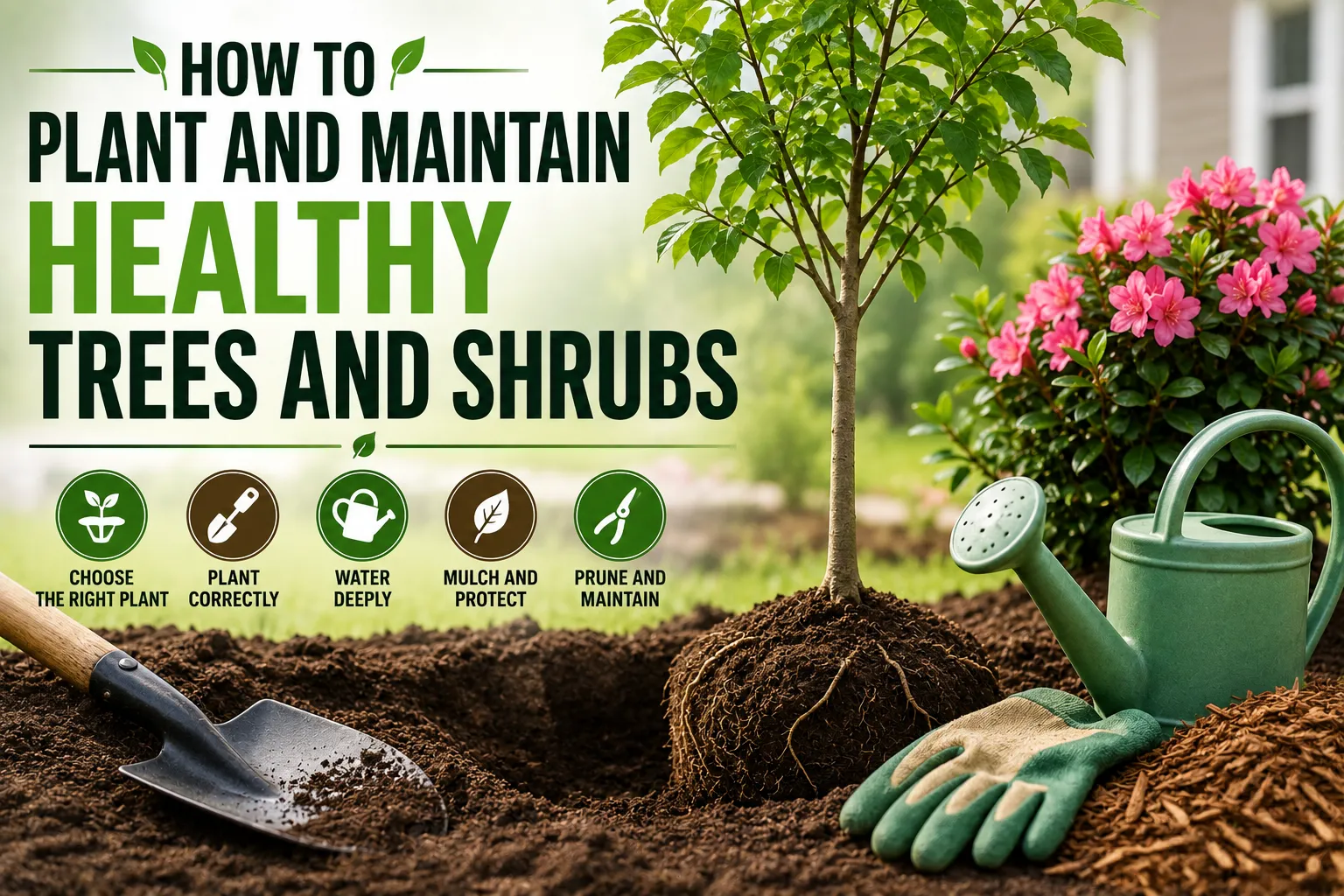
How to Plant and Maintain Healthy Trees and Shrubs at Home
Trees and shrubs can transform a home’s outdoor space, adding shade, privacy, color and habitat for wildlife. They can also provide long-term value when planted in the right location and cared for properly.
But healthy landscaping does not begin with pruning or fertilizing. It starts with choosing suitable plants, preparing the site correctly and giving new trees and shrubs the right conditions to establish strong root systems.
Whether you’re planting a single ornamental shrub or adding several trees to your yard, a few basic principles can make the difference between plants that struggle and ones that thrive for years.
For a broader look at growing and maintaining flowering and landscape plants, see the Complete Guide to Flower Gardening.
Choose Plants That Fit Your Location
The best tree or shrub for a yard is not necessarily the one that looks most attractive at the garden center.
Plants have different requirements for sunlight, soil, water, temperature and available space.
Before buying a plant, consider:
- How much direct sunlight the location receives
- Typical rainfall and temperature conditions
- Soil type and drainage
- Available growing space
- Mature plant size
- Exposure to wind
- Nearby buildings and structures
- Existing trees and other vegetation
- Local pests and diseases
Choosing plants suited to local growing conditions generally reduces maintenance and gives them a better chance of establishing successfully.
Think About Mature Size
One of the most common landscaping mistakes is planting according to the size of a young tree or shrub rather than its eventual dimensions.
A small tree at a nursery can eventually develop a broad canopy and extensive root system.
Before planting, determine how tall and wide the plant is expected to become.
Also consider its distance from:
- Houses
- Driveways
- Sidewalks
- Fences
- Utility lines
- Septic systems
- Drainage infrastructure
- Other large plants
Providing enough space from the beginning can prevent expensive problems later.
Choose a Healthy Plant
Inspect plants carefully before purchasing them.
A healthy tree or shrub should generally have vigorous growth and foliage appropriate for the season.
Avoid plants with obvious signs of:
- Major insect infestations
- Extensive disease damage
- Broken branches
- Severe trunk injuries
- Dead or decaying roots
- Extremely dry root balls
- Poorly developed or damaged root systems
For container-grown plants, look at the roots if possible. Roots that are tightly circling the inside of a container may require attention before planting.
Select the Right Planting Time
Planting at the appropriate time can make establishment easier.
The ideal planting season depends on the plant species and local climate.
In many regions, planting during periods of moderate temperatures can reduce stress because the plant is not simultaneously dealing with extreme heat or cold.
Avoid planting when the soil is extremely wet, frozen or unusually dry unless the particular plant and conditions make it appropriate.
Local nurseries, horticultural services and extension resources can provide useful guidance about planting windows for specific species.
Prepare the Soil Before Planting
Healthy roots require suitable soil conditions.
Before digging, examine the soil.
Is it compacted? Does water drain properly? Is it extremely sandy or heavy with clay?
Poor soil structure can restrict root growth and create problems with water availability.
If the soil is heavily compacted, loosening the planting area can help roots establish.
However, avoid creating a small pocket of heavily amended soil surrounded by poor native soil. Roots need to be able to expand beyond the original planting hole.
Understanding the fundamentals of soil structure and organic matter can also help when preparing planting sites. The Ultimate Guide to Soil Health explores these principles in greater detail.
Dig a Wide Planting Hole
A common mistake is digging a hole that is deep and narrow.
For most trees and shrubs, a wider hole is preferable because young roots primarily need access to loose soil around the root ball.
The planting hole should generally be wide enough to provide loosened soil around the roots while remaining no deeper than necessary.
The top of the root system should be positioned correctly rather than buried excessively deep.
Avoid Planting Too Deep
Planting depth is particularly important for trees.
The trunk should not disappear into the soil.
The root flare—the area where the trunk begins to spread into major roots—should generally remain visible or be positioned appropriately near the soil surface according to the species and planting conditions.
A tree planted too deeply can develop problems with oxygen availability around the roots, trunk health and long-term stability.
When in doubt, inspect the root flare carefully before positioning the tree.
Handle Roots Carefully
Roots can be damaged surprisingly easily during planting.
Avoid dropping or throwing root balls.
For container-grown plants, carefully remove the container without unnecessarily disturbing the root system.
If roots are tightly circling, they may need to be gently loosened or corrected according to the plant’s condition.
Bare-root plants require particularly careful handling because their roots can dry out quickly.
Do not allow exposed roots to sit in direct sun or dry wind for extended periods.
Backfill With the Right Material
After positioning the plant, return the excavated soil around the root ball.
Avoid packing the soil excessively hard.
The objective is to eliminate large air pockets while maintaining enough soil structure for water and oxygen to reach the roots.
In most situations, using the native soil removed from the planting hole is appropriate unless a soil professional has identified a specific problem requiring amendment.
Water Immediately After Planting
Newly planted trees and shrubs need consistent access to moisture while their roots establish.
Water the planting area thoroughly after installation.
The frequency of subsequent watering depends on:
- Plant species
- Soil type
- Weather
- Rainfall
- Temperature
- Plant size
- Time since planting
The goal is to keep the root zone adequately moist without leaving the soil permanently saturated.
For additional guidance on judging moisture and avoiding both underwatering and overwatering, see the Complete Guide to Watering Garden Plants Correctly.
Water Deeply Rather Than Constantly
Frequent shallow watering can encourage roots to remain close to the soil surface.
When appropriate, deeper watering can encourage roots to explore a larger volume of soil.
However, watering should always account for the soil’s drainage characteristics.
Clay soils can remain wet for long periods, while sandy soils may drain quickly.
Rather than following a rigid calendar, check the soil and consider recent rainfall and weather conditions.
Pay Extra Attention During the First Years
Newly planted trees and shrubs generally require more attention than established plants.
Their root systems have not yet spread widely enough to access moisture throughout the surrounding soil.
During periods of hot, dry or windy weather, monitor new plantings more frequently.
A plant can show signs of drought stress before obvious permanent damage occurs.
Apply Mulch Correctly
Mulch can be useful around trees and shrubs.
It can help conserve soil moisture, moderate soil temperatures and reduce competition from weeds.
Organic materials such as wood chips, bark or other suitable mulch can be effective.
Apply mulch in a broad layer around the plant while keeping it away from direct contact with the trunk or stems.
Avoid the “Mulch Volcano”
Piling mulch directly against a tree trunk is a common landscaping mistake.
A thick mound of mulch around the trunk can keep the bark excessively moist and create conditions that contribute to pest and disease problems.
Instead, create a broad, relatively even layer around the tree while leaving the trunk itself uncovered.
The same principle applies to shrubs: mulch the root zone without burying the stems.
Control Weeds Around Young Plants
Weeds compete with young trees and shrubs for water, nutrients and growing space.
Keeping the immediate root zone relatively free of aggressive weeds can help newly planted vegetation establish.
Mulch can reduce weed pressure, while hand removal or other appropriate methods can deal with persistent growth.
Take care when using herbicides around young plants. Follow product labels carefully and avoid damaging the plant you are trying to protect.
Prune With a Purpose
Pruning is not simply about making a tree or shrub look smaller.
Good pruning can help remove damaged growth, improve structure and maintain clearance around buildings or pathways.
Before cutting a branch, identify why it needs to be removed.
Reasons may include:
- Removing dead wood
- Removing damaged branches
- Correcting structural problems
- Improving clearance
- Managing certain growth patterns
- Maintaining the intended shape of an ornamental shrub
Avoid removing large amounts of healthy growth unnecessarily.
For more detailed guidance on pruning different types of garden plants, see the guide to pruning and maintaining garden plants for healthy growth.
Don’t Top Trees
Tree topping involves cutting major branches back indiscriminately, often leaving large stubs.
It can create weakly attached regrowth and increase the risk of decay and structural problems.
If a mature tree has become too large for its location, topping is generally not a good long-term solution.
Professional tree assessment and appropriate pruning may provide safer alternatives.
Remove Damaged and Dead Branches
Dead branches can become entry points for decay and may eventually fall.
Inspect trees periodically for dead, broken or damaged limbs.
Small branches can often be removed using appropriate pruning tools.
Large branches, branches near utility lines or structurally compromised trees can present significant hazards and may require a qualified arborist.
Use Clean, Sharp Pruning Tools
Sharp pruning tools generally produce cleaner cuts than dull equipment.
Clean tools can also reduce the possibility of transferring certain plant pathogens between plants.
For routine pruning, appropriate tools may include:
- Hand pruners
- Loppers
- Pruning saws
Choose the tool according to branch size rather than forcing a small tool to cut material it cannot handle safely.
Fertilize Only When Necessary
More fertilizer does not automatically mean faster or healthier growth.
Trees and shrubs can suffer when excessive nutrients are applied.
Before fertilizing, consider whether the plant actually shows evidence of a nutrient deficiency.
A soil test can provide more useful information than guessing.
If fertilizer is needed, select a product appropriate for the plant and follow the application instructions carefully.
The Complete Guide to Garden Fertilizers and Plant Nutrition provides additional information about plant nutrients and responsible fertilizer use.
Watch for Signs of Stress
Regular observation makes it easier to catch problems early.
Potential warning signs include:
- Wilting
- Unusual leaf discoloration
- Premature leaf drop
- Stunted growth
- Dieback
- Cracked bark
- Abnormal swelling
- Excessive insect activity
- Discolored or damaged stems
- Mushrooms or other signs of decay
One unusual leaf does not necessarily mean a plant is seriously ill.
Look for patterns and changes over time.
Learn to Recognize Pest Problems
Insects are part of every outdoor ecosystem, and their presence does not always mean treatment is necessary.
Some insects cause little meaningful damage.
Others can seriously affect young trees and shrubs.
Look for evidence such as:
- Holes in leaves
- Distorted new growth
- Sticky residue
- Webbing
- Bark damage
- Sudden decline
- Visible insects or larvae
Identify the pest before choosing a treatment.
Using a pesticide without knowing the problem can harm beneficial insects while failing to address the actual cause.
For broader guidance on identifying and managing garden pests, see the Complete Guide to Garden Pest Control.
Encourage Beneficial Wildlife
Healthy landscapes can support birds, pollinators and other beneficial organisms.
Choosing a variety of plants can provide:
- Nectar
- Pollen
- Seeds
- Fruit
- Shelter
- Nesting habitat
Native or locally adapted plants can be particularly valuable for supporting regional wildlife.
A diverse landscape can also be more resilient than one dominated by a single plant species.
Avoid Planting Too Many of the Same Species
A landscape containing dozens of identical trees or shrubs can look uniform and attractive, but it can also create vulnerability.
If a pest or disease specifically targets that species, a large portion of the landscape may be affected simultaneously.
Plant diversity can reduce this risk and create a more varied outdoor environment.
Protect Young Trees From Physical Damage
Lawn equipment can cause serious injuries to young trees.
String trimmers and lawnmowers can damage bark, particularly when grass grows right up to the trunk.
Creating a mulched area around the base can provide a physical buffer.
Avoid hitting trunks with equipment or attaching anything tightly around them.
Use Tree Supports Only When Needed
Newly planted trees sometimes need temporary support, particularly in exposed or windy locations.
But staking every newly planted tree is not always necessary.
If support is required, it should allow some natural movement while preventing the tree from repeatedly bending or being uprooted.
Remove temporary supports once the tree has established sufficient stability.
Protect Plants During Extreme Weather
Young trees and shrubs are particularly vulnerable to unusual weather.
During extended heat or drought, monitor soil moisture carefully.
During severe cold, frost or strong winds, vulnerable plants may require appropriate protection depending on the species and local conditions.
The best defense, however, is often selecting plants that are naturally suited to the local climate.
Give Shrubs Enough Space
Shrubs can become overcrowded when planted according to their current nursery size.
Spacing should account for mature width.
Overcrowding can reduce airflow and increase competition for water and nutrients.
It can also make pruning and maintenance more difficult.
Planting with mature dimensions in mind usually creates a healthier landscape with less long-term maintenance.
Keep Trees Away From Infrastructure
Roots need room to grow, while branches need room to spread.
Planting a large tree immediately beside a building, sidewalk or underground infrastructure can create problems as it matures.
Consider both the mature canopy and root system when choosing a planting location.
For trees near power lines, professional advice may be especially important.
Don’t Automatically Blame Poor Growth on Water
A struggling plant does not necessarily need more water.
Poor growth can result from:
- Root damage
- Compacted soil
- Poor drainage
- Planting too deeply
- Nutrient deficiencies
- Pests
- Diseases
- Excessive competition
- Insufficient sunlight
Adding more water to an already waterlogged root zone can make the problem worse.
Diagnosing the cause before changing the care routine is usually more effective.
Create a Seasonal Maintenance Routine
A simple maintenance schedule can keep trees and shrubs healthy without requiring constant work.
Spring
Inspect plants for winter damage, monitor new growth and address weeds.
Summer
Pay attention to watering, drought stress, pests and signs of heat damage.
Autumn
Remove problematic fallen material when appropriate, monitor plant health and prepare vulnerable plants for seasonal changes.
Winter
Inspect branches and structures, monitor weather damage and plan future pruning or planting.
The exact timing will depend on the local climate and plant species.
Know When to Call a Professional
Not every tree problem should be handled as a DIY project.
Professional help may be appropriate when dealing with:
- Large or mature trees
- Trees near power lines
- Large damaged branches
- Major structural defects
- Dangerous leaning trees
- Suspected serious diseases
- Difficult pest infestations
- Tree removal
- Significant storm damage
Working at height with chainsaws and large branches can be extremely dangerous.
Think Long Term When Planting
Trees and shrubs are not temporary decorations.
A plant that looks small today may occupy a substantial portion of the yard years from now.
Before planting, ask:
Will this plant still be appropriate for this location when it reaches full size?
That one question can prevent many future problems.
A carefully selected tree can provide shade and beauty for decades, while a poorly positioned one can eventually interfere with buildings, utilities or other plants.
Building a Healthier Yard Starts Underground
Healthy trees and shrubs depend heavily on what happens below the surface.
Strong roots need adequate space, oxygen, moisture and suitable soil conditions.
That is why proper planting often matters more than frequent pruning or fertilizing.
Choose plants suited to the site, prepare the soil, position the root system correctly, water appropriately and protect the plant while it establishes.
Once trees and shrubs become established, routine observation and sensible maintenance can keep them healthy with relatively little intervention.
The most successful home landscape is rarely the one that receives the most attention—it is the one designed from the beginning to give each plant the space, soil, sunlight and care it needs to thrive.