How to Prepare and Cook Different Fruits for Desserts, Meals and Preserves
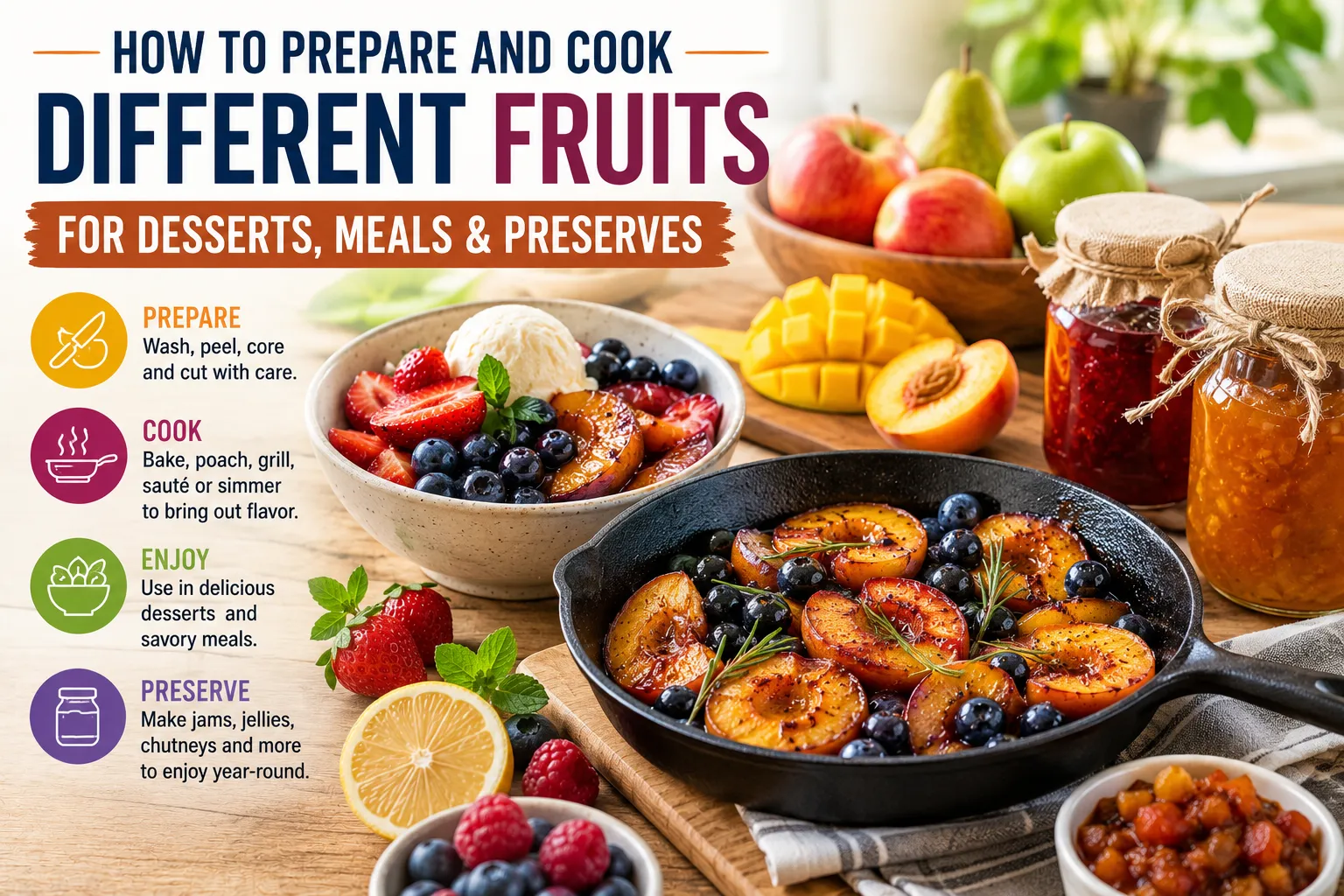
How to Prepare and Cook Different Fruits for Desserts, Meals and Preserves
Fruit is often associated with eating fresh, but many varieties become even more versatile when they are cooked, baked, grilled, poached, roasted, or preserved. Apples can become a filling for pies, mangoes can add sweetness to savory dishes, and berries can be transformed into sauces, jams, and desserts.
Understanding how different fruits respond to heat and preparation can help home cooks make better use of what they have available. Some fruits soften quickly, while others hold their shape. Some become sweeter when roasted, whereas delicate fruits are better suited to gentle cooking or serving raw.
Whether the goal is a dessert, a savory meal, breakfast dish, sauce, chutney, or homemade preserve, the right preparation method can bring out the fruit’s natural flavor and texture. These fundamentals are also part of the broader skills covered in the Complete Guide to Cooking for Beginners.
Why Different Fruits Need Different Cooking Methods
Fruits vary considerably in their water content, acidity, sugar concentration, firmness, and structure. These differences determine how they behave during cooking.
An apple, for example, contains enough structure to remain intact during baking, while a ripe peach can become soft after only a short period of heat.
Cooking fruit can:
- Soften firm flesh
- Concentrate natural sweetness
- Reduce excess moisture
- Create caramelized flavors
- Develop new textures
- Blend fruit into sauces and fillings
- Make some fruits easier to incorporate into savory dishes
- Extend usability through preservation
The best cooking method therefore depends on the fruit and the intended result. Understanding how different cooking techniques affect ingredients is useful across many types of food, as explained in Cooking Methods Explained: The Complete Guide.
Preparing Fruit Before Cooking
Good results usually begin with proper preparation.
Wash Fruit Thoroughly
Fresh fruit should be washed under clean running water before preparation, even when the peel will eventually be removed. Washing helps remove dirt and other surface contaminants.
Avoid washing fruit with soap or household cleaning products.
Inspect the Fruit
Remove fruit that is moldy or badly spoiled. Small bruises can sometimes be trimmed away when the rest of the fruit remains sound, but moldy soft fruits should generally be discarded because contamination can extend beyond what is visible.
Peel When Necessary
Peeling is a matter of both texture and preference.
Fruit such as apples, pears, peaches, and plums can be cooked with their skins when appropriate. Removing the skin can produce a smoother texture in sauces, purees, and some desserts.
The peel can also contribute color, flavor, and nutrients, so it is not always necessary to remove it.
Remove Seeds, Stones and Cores
Depending on the fruit, preparation may involve removing:
- Apple and pear cores
- Peach, plum, and mango stones
- Citrus seeds
- Strawberry stems
- Pineapple skin and central core
- Melon seeds
- Tough membranes
Cut fruit into relatively consistent pieces when cooking several pieces together. Similar-sized pieces tend to cook at a more similar rate.
Learning how ingredients differ in structure, storage, preparation and use can also make fruit preparation easier, particularly when working with a wide range of fresh ingredients. The Cooking Ingredients Guide: Types, Uses, Substitutions & Storage provides broader guidance on working with ingredients in the kitchen.
Cooking Apples for Desserts and Meals
Apples are among the most adaptable cooking fruits. Their natural sweetness and firm structure make them suitable for both sweet and savory dishes.
Baked Apples
Whole or halved apples can be baked until tender. They can be filled with ingredients such as oats, nuts, spices, or dried fruit.
Firm varieties generally work better for baking because they are less likely to completely collapse.
Stewed Apples
Chopped apples can be cooked gently with a small amount of water until soft.
Stewed apples can be used as:
- Dessert toppings
- Breakfast additions
- Pie fillings
- Pancake toppings
- Compotes
- Sauces for pork or other savory foods
Cinnamon, ginger, nutmeg, and citrus zest can complement their flavor.
Sautéed Apples
Apple slices can be cooked in a pan until lightly browned and tender. They can accompany oatmeal, pancakes, roasted meats, or desserts.
A small amount of butter or cooking oil can help with browning, while spices provide additional flavor.
Preparing and Cooking Pears
Pears have a delicate texture and naturally sweet flavor. Many are excellent eaten raw, but cooking can make firm pears particularly tender and aromatic.
Poached Pears
Poaching involves gently cooking pears in a flavored liquid.
The liquid might contain water, fruit juice, spices, or other flavorings. The pears are cooked over relatively gentle heat until tender.
Poached pears can be served with:
- Yogurt
- Ice cream
- Custard
- Oatmeal
- Cake
- Nuts
Roasted Pears
Halved pears can be roasted until softened and lightly caramelized. Their natural sweetness becomes more pronounced as moisture evaporates.
They can work equally well in desserts and savory dishes, particularly when paired with ingredients such as cheese, nuts, leafy greens, or grains.
Cooking Peaches, Plums and Nectarines
Stone fruits are particularly useful during cooking because heat intensifies their aroma and sweetness.
Peaches, nectarines, and plums can be:
- Grilled
- Roasted
- Baked
- Poached
- Stewed
- Used in sauces
- Turned into preserves
Grilling Stone Fruits
Firm peach or nectarine halves can be placed on a hot grill for a short period.
The heat creates browned surfaces while the interior becomes softer.
Grilled peaches can be served with yogurt, cheese, nuts, or a simple dessert topping.
Plums can also be grilled, although their softer texture means they may require more careful handling.
Cooking Bananas
Bananas become softer and sweeter when heated, making them especially useful in desserts.
Baked Bananas
Bananas can be baked whole or sliced and combined with oats, nuts, spices, or other fruit.
Pan-Cooked Bananas
Slices can be briefly cooked in a pan until the surface becomes golden.
Cooked bananas work well with:
- Pancakes
- French toast
- Porridge
- Rice dishes
- Cakes
- Ice cream
Very ripe bananas can also be mashed and incorporated into baked goods, where their moisture and sweetness can contribute to the finished texture.
For a broader understanding of how ingredients such as flour, fruit, fats, eggs and leavening agents interact in baked foods, see the Complete Guide to Baking Fundamentals for Beginners.
Preparing Pineapple for Cooking
Pineapple has a firm, fibrous texture and pronounced acidity.
After removing the outer skin and tough central core, the flesh can be cut into chunks, rings, or smaller pieces.
Pineapple can be:
- Grilled
- Roasted
- Stir-fried
- Added to sauces
- Cooked into chutneys
- Used in preserves
Grilled Pineapple
Grilling pineapple concentrates its sweetness and creates browned edges.
It can be served as a dessert or paired with savory foods.
Fresh pineapple can also be added to cooked dishes, but its acidity and strong flavor should be balanced carefully with other ingredients.
Cooking Mangoes in Sweet and Savory Dishes
Ripe mangoes are usually enjoyed fresh, but they can also be incorporated into sauces, chutneys, desserts, and savory meals.
Because very ripe mango flesh is soft, it is generally better suited to short cooking or blending than prolonged cooking.
Mango can be used in:
- Fruit sauces
- Chutneys
- Desserts
- Salsas
- Smoothies
- Glazes
- Rice and grain dishes
Less-ripe mangoes are firmer and more acidic, making them useful for salads, pickles, chutneys, and some savory preparations.
Preparing Berries for Desserts and Sauces
Strawberries, blueberries, raspberries, blackberries, and similar fruits require relatively gentle handling.
They can be eaten raw, baked into desserts, or cooked into sauces and preserves.
Cooking Berry Sauces
Berries can be heated gently until they release their juices.
The resulting mixture can be used as a topping for:
- Pancakes
- Cheesecake
- Yogurt
- Ice cream
- Porridge
- Cakes
Some berries break down quickly, while others retain more of their shape. Combining different varieties can create a more complex texture.
Baking With Berries
Fresh or frozen berries can be added to muffins, cakes, pies, crumbles, and other baked dishes.
When using frozen berries, consider the additional moisture they can release during cooking and adjust the recipe when necessary.
Cooking Citrus Fruits
Oranges, lemons, limes, grapefruit, and related fruits are usually used fresh, but different parts of the fruit can contribute to cooked dishes.
Using Citrus Juice
Juice can provide acidity and brightness to sauces, marinades, desserts, drinks, and savory meals.
Using Citrus Zest
The colored outer layer of citrus peel contains aromatic oils that can add strong flavor without adding much liquid.
Zest can be added to:
- Cakes
- Cookies
- Sauces
- Rice dishes
- Roasted vegetables
- Seafood
- Fruit desserts
Avoid taking large amounts of the white pith underneath the colored peel because it can have a noticeably bitter flavor.
Preparing Melons
Watermelon, cantaloupe, and honeydew are generally served raw because their high water content makes them less suited to conventional cooking.
However, they can still be incorporated into more elaborate dishes.
Watermelon can be:
- Grilled briefly
- Added to salads
- Blended into drinks
- Used in chilled desserts
- Paired with salty or savory ingredients
Melons generally benefit from short preparation rather than prolonged cooking.
Cooking Dried Fruits
Dried fruits such as raisins, dates, apricots, prunes, and figs are particularly useful in cooked meals because their flavors are concentrated.
They can be added directly to:
- Oatmeal
- Rice dishes
- Stews
- Baked goods
- Stuffings
- Sauces
- Salads
Some dried fruits benefit from soaking in water or another liquid before cooking. This softens them and restores some moisture.
Dates, for example, can be blended into pastes or sauces and used as a natural sweetening ingredient.
Making Fruit Compotes
A compote is one of the simplest ways to turn fresh or frozen fruit into a versatile cooked topping.
Almost any combination of suitable fruit can work.
A basic approach is to:
- Prepare and cut the fruit.
- Place it in a saucepan.
- Add a small amount of water or fruit juice.
- Heat gently.
- Stir occasionally.
- Cook until the fruit reaches the desired texture.
- Adjust the flavor with spices, citrus, or other ingredients.
Compote can be served warm or chilled with breakfast foods, desserts, or savory dishes.
Turning Fruit Into Preserves
Preservation allows fruit to remain useful beyond its fresh-life window.
Common fruit-preserving methods include:
- Jams
- Jellies
- Fruit butters
- Chutneys
- Canned fruit
- Pickled fruit
- Dried fruit
- Frozen fruit
Jams and Jellies
Jam is generally made from crushed or chopped fruit, while jelly is typically made using fruit juice.
Sugar plays an important role in traditional preservation, while pectin helps create the characteristic gel structure in many fruit spreads.
The exact method varies depending on the fruit, acidity, pectin content, and recipe.
For shelf-stable canning, it is important to use a tested preservation recipe and follow the recommended processing method rather than improvising ingredient ratios.
Making Fruit Chutneys
Chutneys combine fruit with ingredients such as vinegar, spices, sugar, and sometimes vegetables or aromatics.
Mango chutney is one familiar example, but apples, pears, plums, peaches, and other fruits can also be used.
The combination of sweetness, acidity, and spice makes chutney particularly useful with savory foods.
It can accompany:
- Grilled meats
- Roasted vegetables
- Cheese
- Rice dishes
- Sandwiches
- Curries
Preserving Fruit Through Freezing
Freezing is one of the simplest ways to extend the usefulness of many fruits.
Fruit should generally be prepared appropriately before freezing. Depending on the variety, this may mean washing, peeling, removing stones, cutting into pieces, or treating the fruit to minimize quality loss.
Frozen fruit can later be used for:
- Smoothies
- Sauces
- Baking
- Cooked desserts
- Compotes
- Breakfast dishes
Because freezing can change the texture of some fruits after thawing, fruits that are normally eaten fresh may be better suited to cooked applications after freezing.
Drying Fruit for Long-Term Use
Drying removes much of the water from fruit, concentrating its flavor and changing its texture.
Common dried fruits include:
- Apples
- Bananas
- Mangoes
- Pineapple
- Apricots
- Figs
- Dates
- Grapes
Fruit can be dried using appropriate food dehydrators or other suitable methods.
Proper drying, storage, and handling are important because insufficiently dried fruit can spoil.
Pairing Fruit With Savory Foods
Fruit does not have to be limited to desserts.
Its sweetness and acidity can provide balance in savory dishes.
Examples include:
- Apple with pork
- Pear with cheese
- Mango with grilled foods
- Pineapple with savory stir-fries
- Orange with poultry
- Dates with grains and roasted vegetables
- Dried apricots with rice dishes
- Berries with salads
The key is balance. Very sweet fruit can overwhelm delicate ingredients, while acidic fruit can brighten rich or fatty foods.
Common Mistakes When Cooking Fruit
Using Overripe Fruit for Firm Preparations
Very ripe fruit may collapse quickly during cooking. Choose firmer fruit when the recipe requires distinct pieces.
Adding Too Much Liquid
Fruit already contains water. Excess liquid can produce watery sauces, fillings, or compotes.
Overcooking Delicate Fruit
Berries, ripe peaches, and other soft fruits can lose their structure rapidly.
Ignoring Acidity
Acid affects both flavor and preservation. Citrus juice, vinegar, and naturally acidic fruits can dramatically change the balance of a dish.
Using Unverified Preservation Methods
Improvised canning recipes can create food-safety risks. Shelf-stable preservation should follow tested methods designed for the specific food and process.
How to Choose the Best Cooking Method
A useful way to select a preparation method is to consider the fruit’s firmness and the desired final texture.
| Fruit characteristic | Suitable methods |
|---|---|
| Firm apples | Baking, stewing, sautéing |
| Firm pears | Poaching, roasting, baking |
| Soft berries | Sauces, baking, preserves |
| Firm pineapple | Grilling, roasting, stir-frying |
| Ripe mango | Sauces, chutneys, short cooking |
| Bananas | Baking, pan-cooking, mashing |
| Stone fruits | Grilling, roasting, baking, poaching |
| High-water melons | Mostly fresh, brief grilling |
| Dried fruits | Stewing, baking, sauces, savory dishes |
| Citrus | Juicing, zesting, sauces, desserts |
The best method ultimately depends on what you want the finished dish to accomplish.
Making More From Every Piece of Fruit
Cooking fruit successfully is less about complicated techniques and more about understanding how each variety behaves.
Firm fruits can withstand longer cooking and are often excellent for baking, roasting, and stewing. Softer fruits usually benefit from gentler treatment. Highly acidic fruits can brighten rich dishes, while naturally sweet varieties can add balance to savory recipes.
Once those characteristics become familiar, fruit becomes much more than a snack or dessert ingredient. It can serve as a sauce, filling, topping, side dish, preserve, seasoning component, or central ingredient in a meal.
The kitchen becomes especially versatile when cooks learn to match the fruit, its ripeness, and the cooking method to the result they want.