Room by Room Home Organization Guide
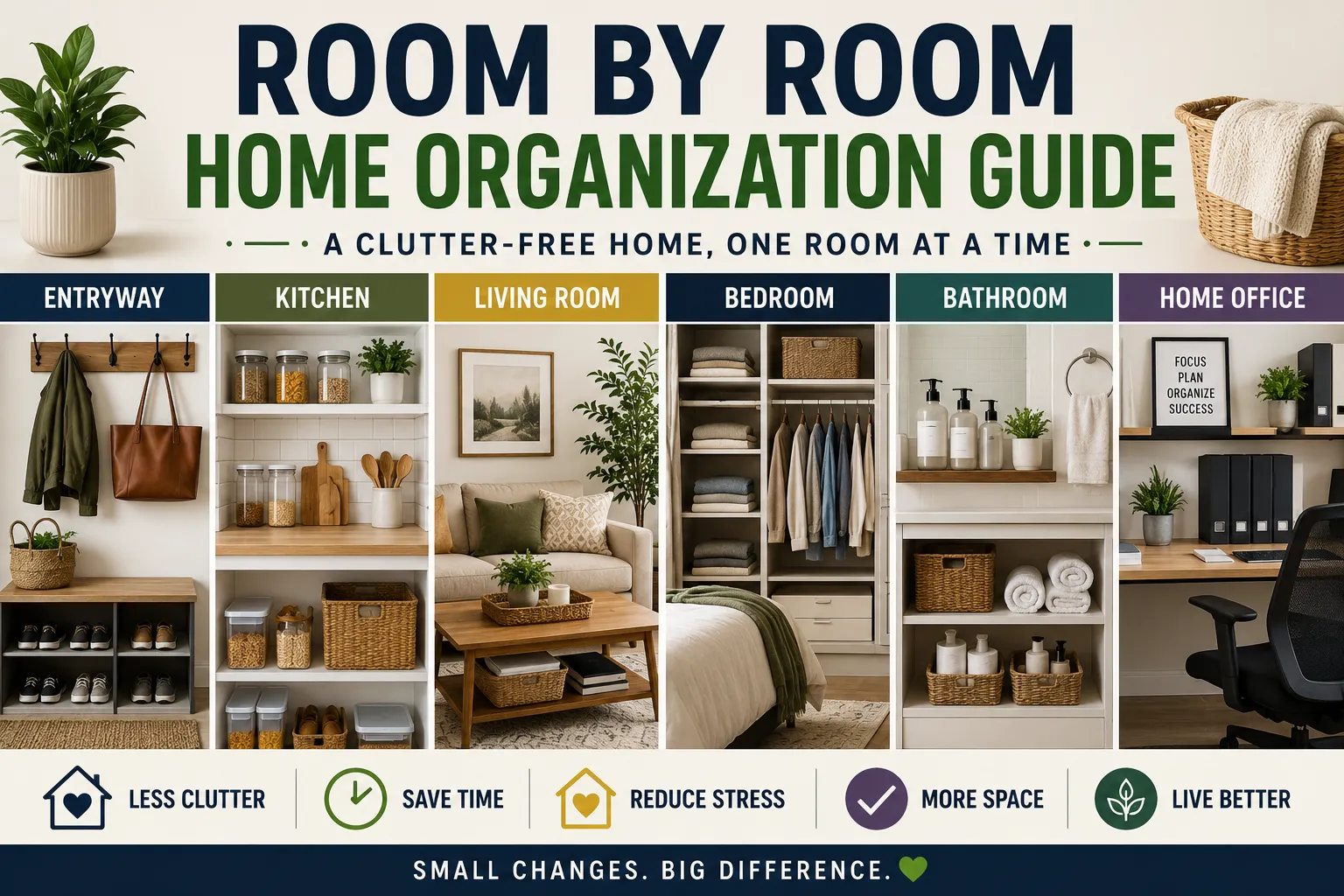
Room by Room Home Organization Guide
A well-organized home is not necessarily a home with the fewest possessions. It is a home where everything has a sensible place, everyday tasks are easier to manage, and the spaces work for the people who use them.
The challenge is that different rooms serve completely different purposes. The kitchen needs food and cooking supplies organized for efficiency. The bedroom needs to support rest and clothing storage. The bathroom has to accommodate personal-care products without becoming cluttered.
Instead of trying to organize the entire house in one weekend, a room-by-room approach makes the process more manageable. It also helps create systems that are easier to maintain. For a broader look at the principles behind reducing clutter and creating practical systems, see the Decluttering Explained: The Complete Guide.
Why Room-by-Room Organization Works
Home organization becomes overwhelming when every space is treated as one enormous project.
Breaking the work into individual rooms creates smaller, achievable goals. It also allows you to design an organization system around how each room is actually used.
Before buying storage containers or rearranging furniture, consider three basic questions:
- What activities happen in this room?
- What items are used most frequently?
- What currently makes the space difficult to use?
The answers should determine the organization system rather than the other way around.
Start With Decluttering
Organization is easier when you are not trying to find homes for things you no longer use.
For each room, separate belongings into practical categories such as:
- Keep
- Donate
- Sell
- Recycle
- Dispose
- Relocate
Avoid creating a large “maybe” pile that simply moves from room to room.
If you are uncertain about an item, consider whether you have used it recently, whether it serves a genuine purpose, and whether you would replace it if it disappeared.
The goal is not to get rid of as much as possible. It is to make the remaining possessions easier to access and maintain.
Organizing the Entryway
The entryway is the first area people encounter when they enter a home, and it can quickly become a collection point for everyday clutter.
Shoes, coats, bags, keys, mail, umbrellas, and other frequently used items often accumulate here.
Create Dedicated Drop Zones
Give commonly used items a specific location.
Consider creating separate areas for:
- Shoes
- Coats
- Bags
- Keys
- Umbrellas
- Pet accessories
Hooks can make frequently used bags and coats easier to access than a crowded closet.
A small tray or wall-mounted organizer can provide a dedicated place for keys and other small items.
Keep Everyday Items Accessible
The entryway should prioritize convenience.
Items used every day should be within easy reach, while seasonal or rarely used belongings can be stored elsewhere.
Control Shoe Clutter
Instead of allowing shoes to accumulate near the door, establish a defined storage area.
A bench with storage, shoe rack, cabinet, or series of baskets can work depending on the available space.
Organizing the Living Room
Living rooms often serve multiple purposes, including relaxing, entertaining, reading, watching television, and sometimes working.
That makes organization particularly important.
Identify the Room’s Main Activities
Start by deciding what the living room needs to accommodate.
If the room is primarily for relaxing, storage can focus on books, blankets, remote controls, and entertainment equipment.
If children regularly use the room, toys and games may require dedicated storage.
Use Furniture With Storage
Storage ottomans, cabinets, shelving units, and baskets can provide practical storage without making the room feel like a storage area.
Closed storage is particularly useful for items that need to remain accessible but do not need to be visible.
For a broader look at choosing and using storage solutions throughout the home, see How Home Storage Systems Organize Household Belongings Efficiently.
Organize Entertainment Equipment
Keep remote controls, game controllers, cables, and accessories together.
Cable management can make a noticeable difference to the appearance of the room.
Avoid keeping unnecessary cables simply because you might use them someday. Labeling important cables can also save time later.
Create a Home for Blankets
A basket beside the sofa can provide an easy place for blankets when they are not being used.
The best storage solution is usually one that requires minimal effort to maintain.
Organizing the Kitchen
The kitchen benefits enormously from organization because it is a high-use space.
A good system should make cooking, cleaning, and putting things away easier.
Organize Cabinets by Function
Instead of organizing cabinets randomly, group items according to how they are used.
For example:
- Cooking equipment near the cooking area
- Plates near the dishwasher or dining area
- Drinking glasses near the refrigerator
- Food-storage containers near preparation areas
- Frequently used utensils within easy reach
This reduces unnecessary movement around the kitchen.
Make Frequently Used Items Easy to Reach
The items you use every day should occupy the easiest-to-access locations.
Rarely used appliances can be stored in less convenient cabinets or pantry areas.
If an appliance occupies valuable counter space but is rarely used, consider whether it needs to remain there permanently.
Control Food Storage Containers
Food containers can quickly create cabinet chaos.
Keep matching containers and lids together where possible.
Discard containers that are damaged, badly stained, or missing their matching components.
Stack containers according to size and keep lids in a dedicated area.
Organize the Pantry
Group similar foods together.
Useful categories may include:
- Grains
- Pasta
- Canned foods
- Baking supplies
- Snacks
- Breakfast foods
- Spices
- Cooking ingredients
Place frequently used items where they are easy to see.
Use older food first and regularly check expiration dates.
Don’t Overfill Kitchen Drawers
A drawer that is technically capable of holding dozens of utensils may become difficult to use when packed too tightly.
Drawer dividers can help separate:
- Cooking utensils
- Cutlery
- Measuring tools
- Kitchen gadgets
- Food-storage accessories
The objective is quick access rather than maximum storage density.
Organizing the Bedroom
Bedrooms should feel calm rather than crowded.
The organization system should prioritize clothing, personal items, bedding, and the things you need at the beginning and end of the day.
Simplify Clothing Storage
Begin by reviewing clothing you no longer wear.
Look for:
- Items that no longer fit
- Damaged clothing
- Duplicates
- Uncomfortable pieces
- Items you have not worn for a long time
Organize remaining clothes according to the way you naturally choose outfits.
You might group them by:
- Clothing type
- Season
- Color
- Frequency of use
The best system is the one that makes getting dressed easier.
For a more detailed approach to wardrobes and clothing storage, see How to Organize Clothes and Closet Storage for Easier Everyday Use.
Organize the Closet by Accessibility
Place frequently worn clothing in the easiest-to-reach areas.
Less frequently used clothing can go higher or toward the back.
Use shelf dividers, drawer organizers, and suitable hangers where they genuinely improve access.
Avoid adding storage accessories simply because they look organized. Every item should solve a real problem.
Create a Simple Nightstand System
Nightstands can become clutter magnets.
Keep only essential items nearby, such as:
- A lamp
- Book or reading device
- Alarm clock
- Water
- Necessary personal items
Everything else can be relocated.
Store Bedding Together
Keep sheets, pillowcases, and other bedding grouped together.
One practical approach is to fold matching pieces together so that an entire set can be retrieved at once.
Organizing the Bathroom
Bathrooms typically contain many small products, which makes clutter easy to accumulate.
Group Products by Purpose
Create categories such as:
- Hair care
- Skin care
- Dental care
- First-aid supplies
- Cleaning products
- Bath products
- Personal grooming
Keep everyday products in the most accessible locations.
Review Expired Products
Regularly check cosmetics, medications, toiletries, and other products for expiration dates or changes in condition.
Dispose of products according to applicable local disposal guidance, particularly medications and chemicals.
Use Vertical Space
Shelves, wall-mounted storage, and narrow organizers can make use of vertical space without occupying much floor area.
This can be especially useful in smaller bathrooms.
Keep Cleaning Supplies Separate
If cleaning products are stored in the bathroom, keep them away from personal-care products and follow product safety instructions.
Never mix household cleaning chemicals unless the product instructions specifically allow it.
Organizing the Home Office
A home office needs to support concentration as well as storage.
Separate Current Work From Archived Material
Do not allow every document you have ever received to remain on your desk.
Create separate systems for:
- Current projects
- Important records
- Reference materials
- Archived documents
- Items requiring action
Digital files should receive similar attention.
Organize Cables and Chargers
Technology accessories can quickly become tangled.
Use cable ties, clips, or labeled storage bags to keep important cables together.
Dispose of broken or unidentified accessories appropriately rather than allowing them to accumulate indefinitely.
Keep the Desk Clear
A clear working surface makes it easier to start a task.
Keep frequently used tools nearby and move everything else into drawers, cabinets, or shelves.
At the end of the workday, spend a few minutes returning items to their designated locations.
Organizing the Laundry Room
Laundry rooms often become storage areas for unrelated household items.
Keeping the room organized can make laundry considerably easier.
Create Separate Areas
If space allows, separate:
- Dirty laundry
- Clean laundry
- Detergent
- Cleaning supplies
- Ironing equipment
- Household maintenance products
Clearly defined zones prevent unrelated items from taking over the room.
Store Products Safely
Laundry detergents, stain removers, and other chemicals should be stored according to their labels and kept away from children and pets.
Do not transfer cleaning products into unlabeled containers.
Make Folding Easier
A dedicated folding surface can reduce the tendency for clean laundry to pile up.
If space is limited, a folding surface can sometimes be created over a suitable appliance or compact countertop.
Organizing Children’s Rooms
Children’s rooms need systems that are simple enough for children to participate in maintaining.
Use Accessible Storage
Storage should be appropriate for the child’s age and abilities.
Low shelves, open baskets, and clearly defined containers can make it easier for children to put toys away themselves.
Group Toys by Type
Possible categories include:
- Building toys
- Dolls
- Cars
- Puzzles
- Art supplies
- Books
- Games
- Outdoor toys
Avoid creating so many categories that putting toys away becomes complicated.
Rotate Toys
If a child has more toys than the room can comfortably accommodate, consider rotating some of them.
Store less frequently used toys and bring them back periodically.
This can reduce visible clutter while keeping the available selection manageable.
Organizing the Dining Room
Dining areas often collect paperwork, bags, shopping items, and other objects that do not belong there.
The dining table should ideally remain available for meals and gatherings.
Establish a Clear-Table Rule
Before leaving the dining area, return unrelated objects to their proper locations.
A nearby cabinet or sideboard can provide storage for items that genuinely belong in the dining area, such as:
- Table linens
- Serving dishes
- Glassware
- Entertaining supplies
Organizing the Garage
Garages can become difficult to manage because they often store tools, equipment, seasonal belongings, sports gear, and household supplies.
Use Vertical Storage
Wall-mounted systems, shelving, and overhead storage can help keep floor space available.
Keep heavy items at accessible heights where possible and make sure storage systems are installed securely.
Create Functional Zones
Separate belongings according to purpose.
For example:
- Gardening
- Automotive
- Tools
- Sports
- Household maintenance
- Outdoor recreation
Clearly labeled zones make finding and returning items easier.
Keep Frequently Used Tools Accessible
Tools used regularly should not be buried behind boxes.
A pegboard, tool cabinet, or dedicated shelving system can help.
Organizing the Utility and Storage Areas
Utility spaces are often forgotten until they become completely full.
Start by identifying what is actually being stored there.
Group items by function and remove belongings that no longer serve a purpose.
Use transparent or clearly labeled containers when appropriate, particularly for items that are not used frequently.
Avoid placing important belongings in locations vulnerable to moisture, excessive heat, or other environmental conditions.
Organizing Digital Clutter
Home organization increasingly extends beyond physical belongings.
Digital clutter can make everyday life harder too.
Consider organizing:
- Photos
- Documents
- Downloads
- Passwords
- Household records
- Digital receipts
Use consistent folder names and remove duplicate files where practical.
Important documents should be backed up appropriately rather than stored in only one location.
The One-In, One-Out Approach
Once a home is organized, preventing clutter from returning becomes the next challenge.
One simple strategy is the “one-in, one-out” approach.
When you purchase a new item in a category that is already full, consider whether an older or unused item should leave.
This does not need to be applied rigidly to everything in the home.
It works best for categories that tend to accumulate quickly, such as clothing, kitchen equipment, books, and children’s toys.
Don’t Buy Storage Before Decluttering
One of the most common organization mistakes is buying containers before deciding what actually needs to be stored.
Storage products can make clutter look more orderly without reducing it.
Declutter first.
Then determine what remains.
Only after that should you decide whether additional storage is necessary.
Make Organization Easy to Maintain
A complicated system rarely survives long-term use.
The best organization systems require minimal effort.
A basket beside the sofa is more practical than a complicated filing system if the goal is simply to store blankets.
An open shelf may work better than a cabinet for items used several times a day.
The key is to match the system to real behavior.
Create Small Reset Routines
Instead of waiting until the house becomes chaotic, build short reset periods into everyday life.
A five- or ten-minute reset can include:
- Returning items to their places
- Clearing countertops
- Putting away clothes
- Washing or loading dishes
- Removing obvious trash
- Preparing frequently used spaces for the next day
Small routines can prevent large organization projects from becoming necessary. Developing practical routines and habits is closely connected to How to Improve Personal Organization Skills.
Organize According to How You Live
There is no single organization system that works for every household.
A family with young children will have different requirements from a couple living in a small apartment.
Someone who works from home may need significantly more office storage than someone who rarely uses a desk.
A frequent cook may need a completely different kitchen setup from someone who mostly eats prepared meals.
The most successful organization system is therefore not necessarily the one that looks best in photographs.
It is the one that makes everyday life easier.
A More Organized Home Starts With Better Habits
Room-by-room organization is ultimately less about buying clever storage products and more about making thoughtful decisions about what belongs in your home and where it should live.
Start with one room. Remove what you no longer need, group similar belongings, create practical homes for frequently used items, and make the system easy enough to maintain.
If you are preparing for a move, the Moving Into a New Home: Complete Homeowners Checklist can also help you think through belongings, spaces, and organization before and after moving.
Once one room works better, move to the next.
Over time, these small improvements can transform the entire home into a space that feels easier to navigate, easier to clean, and better suited to everyday life.