Smart Home Energy Saving Guide
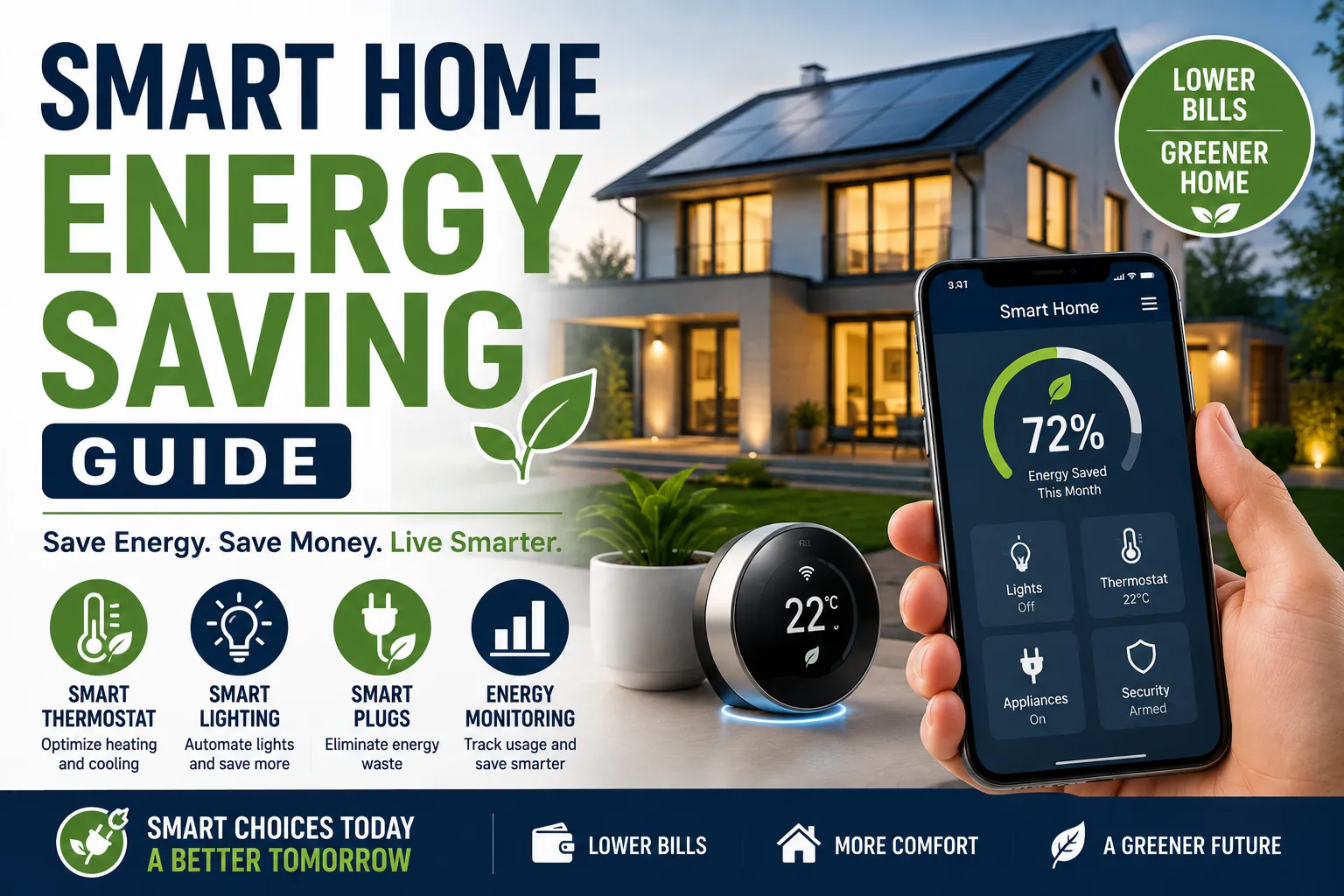
Smart Home Energy Saving Guide
Smart home technology is changing the way people manage energy consumption, making homes more efficient, comfortable, and environmentally friendly. From intelligent thermostats and automated lighting to smart appliances and energy-monitoring systems, connected devices are helping homeowners reduce utility bills while minimizing unnecessary energy use.
As electricity costs continue to fluctuate and sustainability becomes a greater priority, more households are adopting smart home solutions that provide real-time insights and automated energy management. Whether you’re upgrading a single room or building a fully connected home, smart technology offers practical ways to improve efficiency without sacrificing convenience.
This guide explains how smart home energy-saving systems work, their benefits, the most effective devices, and practical tips for lowering household energy consumption.
What Is a Smart Home?
A smart home uses internet-connected devices that communicate with one another to automate and optimize everyday household functions.
Common smart home systems include:
- Smart thermostats
- Smart lighting
- Smart plugs
- Smart appliances
- Smart security systems
- Voice assistants
- Energy monitoring devices
- Automated window coverings
Many of these technologies can be controlled remotely through smartphone apps or voice commands.
For a broader introduction to connected-home technology and the ways different systems work together, see the Complete Guide to Smart Homes.
Why Energy Efficiency Matters
Improving household energy efficiency benefits both homeowners and the environment.
Potential advantages include:
- Lower electricity bills
- Reduced energy waste
- Increased home comfort
- Smaller environmental footprint
- Better appliance performance
- Longer equipment lifespan
- Greater convenience
- Improved home value
Even small efficiency improvements can produce noticeable savings over time.
Smart Thermostats
Smart thermostats are among the most effective energy-saving devices available.
They can:
- Learn household routines
- Automatically adjust temperatures
- Reduce heating and cooling when nobody is home
- Optimize comfort throughout the day
- Provide energy usage reports
- Allow remote control through mobile apps
Heating and cooling typically account for a significant portion of household energy use, making thermostat optimization especially valuable.
Homeowners interested in the broader role of connected heating and cooling can also explore How Smart Heating and Cooling Systems Improve Home Comfort.
Smart Lighting
Lighting automation helps reduce unnecessary electricity consumption.
Popular features include:
- Motion sensors
- Scheduled lighting
- Sunrise and sunset automation
- Dimming controls
- Smartphone operation
- Voice control
- Room-based lighting scenes
Replacing traditional bulbs with LED smart bulbs can further improve efficiency.
For a deeper look at connected lighting systems, controls, automation, and practical applications, see The Complete Guide to Smart Home Lighting.
Smart Plugs
Many electronics continue consuming electricity even while turned off.
Smart plugs help reduce standby power by allowing homeowners to:
- Schedule devices
- Turn appliances off remotely
- Monitor electricity usage
- Automate power management
These inexpensive devices can improve efficiency without replacing existing appliances.
Energy Monitoring Systems
Home energy monitors provide detailed information about electricity usage.
They may display:
- Total household consumption
- Individual device usage
- Daily trends
- Monthly trends
- Peak usage periods
- Estimated operating costs
Understanding where energy is being used makes it easier to identify opportunities for savings.
Smart Appliances
Modern appliances increasingly include energy-saving features.
Examples include:
- Smart refrigerators
- Washing machines
- Dishwashers
- Ovens
- Water heaters
- Air conditioners
Many automatically optimize operating cycles based on efficiency settings or utility pricing.
Automated Window Coverings
Motorized blinds and shades contribute to indoor comfort by helping regulate sunlight.
Benefits include:
- Reduced cooling demand during hot weather
- Better insulation during colder months
- Increased natural lighting
- Improved comfort
- Scheduled operation
Automation helps maintain consistent indoor temperatures throughout the day.
Smart Irrigation Systems
Outdoor water use can also become more efficient with smart technology.
Features often include:
- Weather-based scheduling
- Soil moisture monitoring
- Remote control
- Leak detection
- Seasonal adjustments
These systems help reduce unnecessary water consumption while supporting healthy landscaping.
Voice Assistants
Voice-controlled smart assistants simplify energy management by allowing users to control connected devices without using physical switches.
Common functions include:
- Turning lights on or off
- Adjusting thermostats
- Controlling smart plugs
- Managing schedules
- Activating energy-saving routines
Automation makes energy-efficient habits easier to maintain.
For more information about using voice assistants to control connected devices, see How Smart Speakers and Voice Assistants Control Connected Home Devices.
Creating Energy-Saving Routines
One of the greatest strengths of smart homes is automation.
Examples of useful routines include:
- Turning off lights when everyone leaves
- Lowering thermostat settings overnight
- Powering down entertainment systems automatically
- Closing blinds during hot afternoons
- Scheduling appliances during off-peak hours
Automated routines reduce the need for manual adjustments while improving efficiency.
Additional Ways to Save Energy
Smart technology works best alongside traditional energy-saving habits.
Helpful practices include:
- Using LED lighting
- Sealing air leaks
- Improving insulation
- Maintaining HVAC systems
- Unplugging unused electronics
- Washing clothes with appropriate settings
- Using natural daylight when possible
- Keeping appliances well maintained
Combining technology with everyday habits maximizes savings.
Choosing Smart Home Devices
Before purchasing smart home equipment, consider:
- Compatibility with existing devices
- Ease of installation
- Mobile app quality
- Security features
- Automation capabilities
- Energy monitoring functions
- Warranty coverage
- Long-term software support
Selecting devices that work together creates a more seamless smart home experience.
Compatibility is particularly important when combining products from different manufacturers. Understanding Smart Home Integration and Compatibility explains how different devices and platforms can communicate effectively.
Security and Privacy Considerations
Connected devices collect and transmit data.
To improve security:
- Use strong, unique passwords.
- Enable multi-factor authentication when available.
- Keep device software updated.
- Secure your home Wi-Fi network.
- Purchase products from reputable manufacturers.
- Review privacy settings regularly.
Good cybersecurity practices help protect connected households.
Common Misconceptions
Myth: Smart Homes Are Only for Luxury Properties
Many affordable devices allow homeowners and renters to build smart home systems gradually.
Myth: Smart Devices Always Reduce Energy Use Automatically
Savings depend on proper setup, thoughtful automation, and consistent use.
Myth: Installation Is Complicated
Many smart products are designed for simple, do-it-yourself installation.
Myth: You Need to Replace Every Appliance
Smart plugs, lighting, and thermostats can improve efficiency without replacing major household equipment.
The Future of Smart Home Energy Management
Artificial intelligence and connected technologies are making homes even more efficient.
Emerging innovations include:
- AI-powered energy optimization
- Predictive heating and cooling
- Solar energy integration
- Home battery management
- Smart electric vehicle charging
- Appliance coordination
- Advanced occupancy detection
- Grid-responsive energy systems
These developments are expected to further reduce household energy consumption while improving convenience.
Tips for Maximizing Energy Savings
To get the most from a smart home:
- Automate daily routines.
- Monitor energy usage regularly.
- Upgrade to LED lighting.
- Use smart thermostats efficiently.
- Schedule high-energy appliances wisely.
- Keep devices updated.
- Review utility bills periodically.
- Combine technology with good energy habits.
- Replace inefficient appliances when practical.
- Continue evaluating new efficiency opportunities.
Small improvements made consistently can lead to meaningful long-term savings.
Making Smart Energy Management Part of Everyday Life
Smart home technology is making energy efficiency more accessible than ever. By combining automation, intelligent monitoring, and connected devices, homeowners can reduce unnecessary energy use while improving comfort and convenience. From smart thermostats and lighting to energy monitors and automated appliances, today’s technology provides practical tools for managing household energy more effectively.
Although smart devices alone cannot eliminate energy costs, they work best when paired with thoughtful daily habits and regular home maintenance. As artificial intelligence, renewable energy integration, and connected home systems continue to evolve, smart homes are expected to play an increasingly important role in helping households save energy, reduce expenses, and build a more sustainable future.