Smart Home Upgrades Remain One of the Fastest-Growing Home Improvement Investments
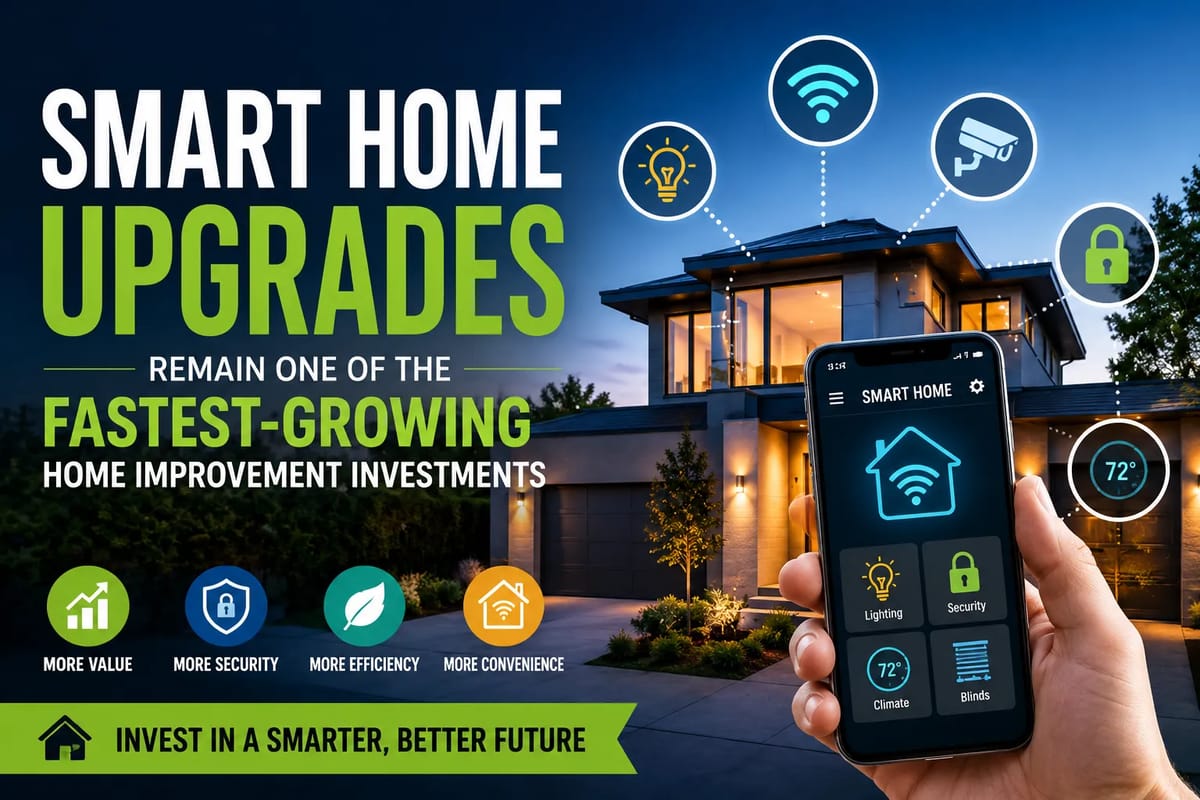
Smart Home Upgrades Remain One of the Fastest-Growing Home Improvement Investments
Smart home technology has evolved from a luxury feature into a practical investment for homeowners seeking greater convenience, energy efficiency, security, and property value. As connected devices become more affordable and easier to install, smart home upgrades continue to rank among the fastest-growing home improvement projects worldwide. From intelligent lighting and smart thermostats to connected security systems and voice-controlled appliances, homeowners are embracing technology that makes everyday living more comfortable while helping reduce energy consumption and improve home management.
Unlike purely cosmetic renovations, many smart home improvements provide ongoing functional benefits. They can automate routine tasks, enhance safety, monitor energy use, and even increase a home’s appeal to potential buyers. As advances in artificial intelligence (AI), the Internet of Things (IoT), and home automation continue, smart technology is becoming an increasingly important part of modern homeownership.
This article explores why smart home upgrades are gaining popularity, the most valuable technologies available today, potential benefits, considerations before investing, and what the future may hold.
Why Smart Home Improvements Are Growing in Popularity
Several factors are driving increased investment in smart home technology.
Homeowners are looking for ways to:
- Improve convenience
- Reduce energy costs
- Increase home security
- Enhance comfort
- Simplify daily routines
- Support remote work lifestyles
- Future-proof their homes
At the same time, manufacturers continue introducing devices that are easier to install, more compatible with one another, and more affordable than earlier generations.
For homeowners who want to understand how these technologies fit together as a broader system, the Complete Guide to Smart Homes provides a useful overview of connected-home technology and automation.
What Is a Smart Home?
A smart home uses internet-connected devices that communicate with one another and can often be monitored or controlled remotely using smartphones, tablets, voice assistants, or automated routines.
These devices may include:
- Smart lighting
- Smart thermostats
- Security cameras
- Video doorbells
- Smart locks
- Smart speakers
- Connected appliances
- Smart plugs
- Motion sensors
- Automated blinds
Many systems can also work together through centralized smart home platforms.
Smart Thermostats Continue to Lead
Smart thermostats remain one of the most popular home technology upgrades.
Benefits include:
- Automatic temperature adjustments
- Personalized schedules
- Remote control
- Energy usage insights
- Improved comfort
By optimizing heating and cooling schedules, smart thermostats may help reduce unnecessary energy consumption while maintaining comfortable indoor temperatures.
Homeowners interested specifically in the energy-saving potential of connected technology can explore the Smart Home Energy-Saving Guide for a closer look at how smart systems can help manage household energy use.
Home Security Drives Adoption
Security is one of the strongest reasons homeowners invest in smart technology.
Popular devices include:
- Video doorbells
- Outdoor security cameras
- Indoor cameras
- Smart locks
- Motion detectors
- Window and door sensors
Many systems provide instant alerts, live video feeds, and remote monitoring, allowing homeowners to stay informed about activity around their property.
For a more detailed look at connected security technologies and how homeowners can use them, the Smart Home Security Guide covers cameras, sensors, locks, monitoring, and other important considerations.
Smart Lighting Offers Convenience and Efficiency
Smart lighting systems allow users to control lights remotely or automate them based on schedules, occupancy, or natural daylight.
Advantages include:
- Lower electricity usage
- Personalized lighting scenes
- Voice control
- Motion activation
- Vacation lighting schedules
Modern LED smart bulbs also have significantly longer lifespans than traditional incandescent lighting.
Homeowners looking to explore lighting systems in greater detail can read the Complete Guide to Smart Home Lighting for more information about connected lighting, automation, controls, and energy considerations.
Connected Appliances Are Becoming More Common
Kitchen and laundry appliances increasingly include smart features.
Examples include:
- Refrigerators that monitor temperatures
- Smart ovens with remote controls
- Connected washing machines
- Robotic vacuum cleaners
- Smart coffee makers
While not essential for every household, these appliances offer additional convenience and automation.
Voice Assistants Bring Everything Together
Voice-controlled smart assistants act as central control hubs for many connected devices.
Homeowners can use simple voice commands to:
- Adjust lighting
- Lock doors
- Play music
- Check weather forecasts
- Set reminders
- Control entertainment systems
Voice assistants continue expanding their capabilities as artificial intelligence improves.
As more devices are added to a home, making different products communicate reliably becomes increasingly important. Homeowners can learn more about this challenge in How to Make Different Smart Home Devices Work Together.
Energy Efficiency Remains a Key Selling Point
Many homeowners prioritize smart upgrades because they may help improve household energy efficiency.
Common energy-saving technologies include:
- Smart thermostats
- Smart plugs
- Automated lighting
- Smart irrigation systems
- Energy monitoring devices
Monitoring electricity usage allows homeowners to identify opportunities to reduce waste.
Home Automation Simplifies Daily Life
Automation allows devices to perform actions automatically without requiring manual control.
Examples include:
- Lights turning on at sunset
- Doors locking automatically at bedtime
- Thermostats adjusting when occupants leave
- Blinds opening in the morning
- Robot vacuums cleaning while residents are away
These routines improve convenience and reduce repetitive tasks.
Potential Impact on Property Value
While resale value depends on many factors, well-integrated smart home features may increase a property’s appeal to prospective buyers.
Buyers often appreciate:
- Modern security systems
- Energy-efficient upgrades
- Smart lighting
- Connected climate control
- Reliable home automation
Smart technology may also help distinguish a home in competitive housing markets.
Things to Consider Before Investing
Not every smart home upgrade offers the same value.
Before purchasing devices, consider:
- Compatibility with existing systems
- Ease of installation
- Long-term software support
- Security updates
- Internet reliability
- Privacy settings
- Future expandability
Choosing products that support widely adopted smart home standards can improve long-term flexibility.
Privacy and Cybersecurity Matter
Because smart devices connect to the internet, protecting personal information is important.
Homeowners should:
- Use strong passwords
- Enable multi-factor authentication when available
- Keep device software updated
- Secure home Wi-Fi networks
- Review privacy settings regularly
Good cybersecurity practices help reduce potential risks associated with connected technology.
Are Smart Home Upgrades Worth the Investment?
The answer depends on individual priorities.
For many households, smart home technology offers:
- Greater convenience
- Improved comfort
- Enhanced home security
- Better energy management
- Increased automation
- Modernized living spaces
Rather than upgrading everything at once, many homeowners choose to begin with a few practical devices and gradually expand their systems over time.
The Future of Smart Homes
Smart homes are expected to become increasingly intelligent as artificial intelligence, machine learning, and improved interoperability continue to evolve.
Future developments may include:
- More personalized automation
- Better energy optimization
- Predictive maintenance alerts
- Improved voice interaction
- Greater device compatibility
- Enhanced home health monitoring
As technology matures, connected homes are likely to become even more efficient, secure, and user-friendly.
Common Myths About Smart Home Technology
| Myth | Reality |
|---|---|
| Smart homes are only for luxury properties. | Many affordable smart devices are available for homes of all sizes. |
| Smart homes are difficult to install. | Many devices are designed for simple DIY installation. |
| Smart technology always saves money immediately. | Savings vary depending on the device, usage habits, and local energy costs. |
| All smart devices work together automatically. | Compatibility depends on platforms, standards, and supported ecosystems. |
| Smart homes eliminate the need for maintenance. | Connected devices still require updates, maintenance, and occasional replacement. |
Frequently Asked Questions
What is a smart home?
A smart home uses internet-connected devices that automate or remotely control household functions such as lighting, climate, security, and appliances.
Which smart home upgrade provides the best value?
For many homeowners, smart thermostats, smart lighting, and home security systems offer some of the most practical everyday benefits.
Can smart homes improve energy efficiency?
Many smart devices help homeowners monitor and manage energy use more effectively, potentially reducing unnecessary electricity consumption.
Are smart home devices secure?
Most devices include built-in security features, but homeowners should also use strong passwords, update software regularly, and secure their home networks.
Should I upgrade my entire home at once?
Not necessarily. Many homeowners begin with one or two devices—such as a smart thermostat or video doorbell—and gradually expand their systems over time.
Building a Smarter Home One Upgrade at a Time
Smart home upgrades continue to reshape the way people interact with their living spaces, offering practical improvements in convenience, energy efficiency, security, and comfort. As connected devices become more affordable and easier to integrate, homeowners increasingly view smart technology as a worthwhile investment rather than a luxury.
While every household has different needs and budgets, starting with high-impact upgrades such as smart thermostats, lighting, or security systems can provide immediate everyday benefits and create a strong foundation for future automation. By choosing reliable products, prioritizing cybersecurity, and expanding systems thoughtfully, homeowners can enjoy a more connected, efficient, and future-ready home.