The Complete Guide to Food Safety
Food Safety Explained
Every meal begins with trust, the trust that the food we prepare is safe to eat. Whether you’re cooking a quick family dinner, meal-prepping for the week, or hosting guests, practicing proper food safety is one of the most important ways to protect yourself and others from foodborne illness.
Food safety isn’t complicated, but it does require consistent habits. Washing hands, storing foods correctly, cooking to appropriate temperatures, and preventing cross-contamination all help reduce the risk of harmful bacteria, viruses, and other contaminants.
This guide explains the fundamentals of food safety, common kitchen mistakes, and practical steps for creating a safer cooking environment.
What Is Food Safety?
Food safety refers to the practices used to prevent food from becoming contaminated and causing illness.
It involves every stage of food handling, including:
- Purchasing
- Transporting
- Storing
- Preparing
- Cooking
- Serving
- Handling leftovers
Safe food practices help reduce the risk of foodborne diseases while maintaining food quality.
Why Food Safety Matters
Millions of people worldwide experience foodborne illnesses every year.
Following proper food safety practices can help:
- Reduce food poisoning risks
- Protect vulnerable individuals
- Prevent cross-contamination
- Reduce food waste
- Improve kitchen hygiene
- Preserve food quality
Simple precautions can make a significant difference.
Common Causes of Foodborne Illness
Food contamination may occur through:
- Harmful bacteria
- Viruses
- Parasites
- Mold
- Improper food storage
- Poor hygiene
- Cross-contamination
- Inadequate cooking
Foodborne illness can affect anyone, although young children, older adults, pregnant individuals, and people with weakened immune systems may face greater risks.
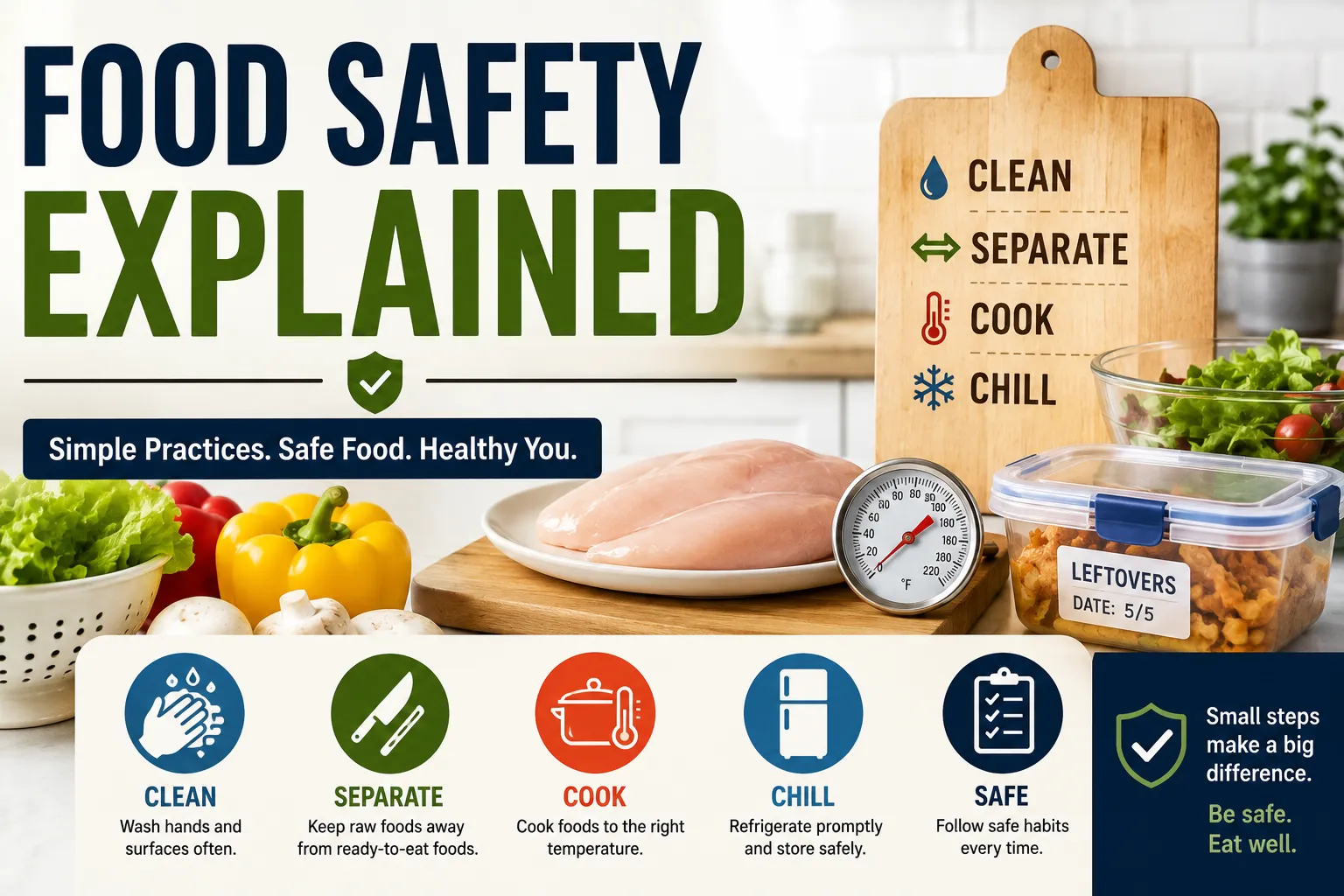
The Four Core Principles of Food Safety
Food safety organizations commonly emphasize four key practices:
- Clean
- Separate
- Cook
- Chill
Together, these principles form the foundation of safe food preparation.
Clean: Maintain Good Kitchen Hygiene
Cleanliness is the first step toward safer meals.
Always:
- Wash hands thoroughly before handling food.
- Clean countertops regularly.
- Wash cutting boards after each use.
- Keep kitchen towels clean.
- Wash utensils with hot, soapy water.
- Rinse fresh produce under running water.
Handwashing is especially important after handling raw meat, poultry, seafood, eggs, or garbage.
Separate: Prevent Cross-Contamination
Cross-contamination occurs when harmful microorganisms spread from one food or surface to another.
For a more detailed look at keeping raw and ready-to-eat foods, utensils, and preparation surfaces apart, see How to Prevent Cross-Contamination in the Kitchen.
Reduce the risk by:
- Using separate cutting boards for raw meat and fresh produce.
- Keeping raw foods away from ready-to-eat foods.
- Using clean utensils during cooking.
- Storing raw meat below other foods in the refrigerator.
- Cleaning surfaces immediately after preparing raw animal products.
Preventing cross-contamination is one of the most effective food safety habits.
Cook: Prepare Foods Thoroughly
Cooking food properly helps destroy many harmful microorganisms.
Different foods require different safe internal temperatures.
Foods commonly requiring careful cooking include:
- Poultry
- Ground meats
- Seafood
- Eggs
Using a food thermometer provides the most reliable way to verify doneness.
Chill: Store Food Safely
Proper refrigeration slows bacterial growth.
General food storage habits include:
- Refrigerating perishable foods promptly.
- Avoiding prolonged storage at room temperature.
- Keeping refrigerators clean.
- Organizing foods by expiration date.
- Freezing foods when appropriate.
Cold storage helps preserve both food quality and safety.
Safe Food Storage
Organizing your refrigerator properly can reduce contamination risks.
A common arrangement includes:
Top shelves
- Leftovers
- Ready-to-eat foods
- Dairy products
Middle shelves
- Prepared meals
- Beverages
Bottom shelves
- Raw meat
- Poultry
- Seafood (stored in leak-proof containers)
Drawers
- Fruits
- Vegetables
This arrangement helps prevent raw juices from contaminating other foods.
Safe Grocery Shopping
Food safety begins before you reach home.
Helpful shopping practices include:
- Purchasing refrigerated items last.
- Separating raw meats from fresh produce.
- Checking expiration dates.
- Choosing undamaged packaging.
- Using insulated bags for long trips home.
Prompt refrigeration after shopping helps maintain food safety.
Food Preparation Tips
During meal preparation:
- Wash hands frequently.
- Keep work surfaces clean.
- Avoid tasting undercooked foods.
- Use clean utensils.
- Wash produce thoroughly.
- Replace dirty dishcloths regularly.
A clean workspace contributes to safer cooking.
Understanding Expiration Labels
Food labels may include terms such as:
- Best Before
- Best If Used By
- Sell By
- Use By
These labels often relate to quality rather than food safety, although highly perishable foods should always be handled carefully.
When in doubt, avoid consuming food that shows signs of spoilage.
Leftover Safety
Proper handling of leftovers helps reduce food waste while maintaining safety.
Best practices include:
- Cooling leftovers promptly.
- Storing them in shallow containers.
- Labeling storage dates.
- Reheating thoroughly.
- Discarding food that appears spoiled or has been left out too long.
When uncertain about a food’s safety, it’s generally safer not to eat it.
Kitchen Cleaning Essentials
A clean kitchen supports safe food preparation.
Remember to clean:
- Countertops
- Cutting boards
- Refrigerators
- Microwaves
- Sink areas
- Cabinet handles
- Appliance handles
- Reusable shopping bags
Regular cleaning reduces the buildup of harmful microorganisms.
Food Safety for Outdoor Cooking
Barbecues and picnics require extra attention.
Helpful tips include:
- Keep cold foods chilled.
- Cook foods thoroughly.
- Use separate serving plates for cooked foods.
- Keep raw meats isolated.
- Avoid leaving perishable foods outdoors for extended periods.
Outdoor temperatures can increase the risk of bacterial growth.
Food Allergies and Kitchen Safety
Food safety also includes preventing accidental allergen exposure.
Important precautions include:
- Reading ingredient labels carefully.
- Using separate utensils when needed.
- Cleaning surfaces thoroughly.
- Communicating dietary restrictions.
- Avoiding cross-contact with allergenic foods.
For individuals with severe food allergies, even small amounts of certain foods can cause serious reactions.
Common Food Safety Mistakes
Many foodborne illnesses result from avoidable errors.
Examples include:
- Skipping handwashing
- Reusing contaminated cutting boards
- Improper refrigeration
- Thawing food on countertops
- Undercooking meat
- Ignoring signs of spoilage
- Leaving leftovers out too long
Awareness helps reduce these risks.
Technology and Food Safety
Modern kitchens increasingly use technology to improve food safety.
Examples include:
- Smart refrigerators
- Wireless food thermometers
- Food inventory apps
- Expiration reminders
- Temperature-monitoring sensors
- AI-powered kitchen assistants
These tools can support—not replace—safe food handling habits.
Sustainability and Food Safety
Reducing food waste and maintaining food safety can work together.
Helpful practices include:
- Planning meals
- Storing foods correctly
- Rotating pantry items
- Freezing excess food
- Composting appropriate food scraps
- Buying only what you need
Responsible food management benefits both households and the environment.
Looking Ahead
Food safety is one of the most important aspects of home cooking. By following simple habits—keeping hands and surfaces clean, preventing cross-contamination, cooking foods thoroughly, and storing them properly—you can greatly reduce the risk of foodborne illness while preserving the quality of your meals.
Whether you’re an experienced home cook or just learning your way around the kitchen, consistent food safety practices help protect your family, reduce waste, and build confidence in every meal you prepare.
Frequently Asked Questions
What is food safety?
Food safety refers to practices that reduce the risk of food contamination during purchasing, storage, preparation, cooking, and serving.
Why is handwashing important?
Proper handwashing helps prevent harmful microorganisms from spreading to food, utensils, and kitchen surfaces.
What is cross-contamination?
Cross-contamination occurs when harmful microorganisms transfer from one food or surface to another, often through shared utensils, cutting boards, or improper storage.
Why should I use a food thermometer?
A food thermometer provides the most reliable way to confirm that foods have reached a safe internal temperature.
How can I reduce food waste safely?
Store foods properly, rotate older items to the front, freeze foods before they spoil, and handle leftovers according to recommended food safety practices.
Key Takeaways
- Food safety begins with clean hands, clean surfaces, and good kitchen hygiene.
- Preventing cross-contamination is essential during food preparation.
- Proper cooking and refrigeration help reduce the risk of foodborne illness.
- Safe grocery shopping and food storage are important parts of overall food safety.
- Kitchen technology can support safer food handling practices.
- Consistent food safety habits protect both your health and the quality of the meals you prepare.