Warm Earth Tones Continue to Dominate Interior Design
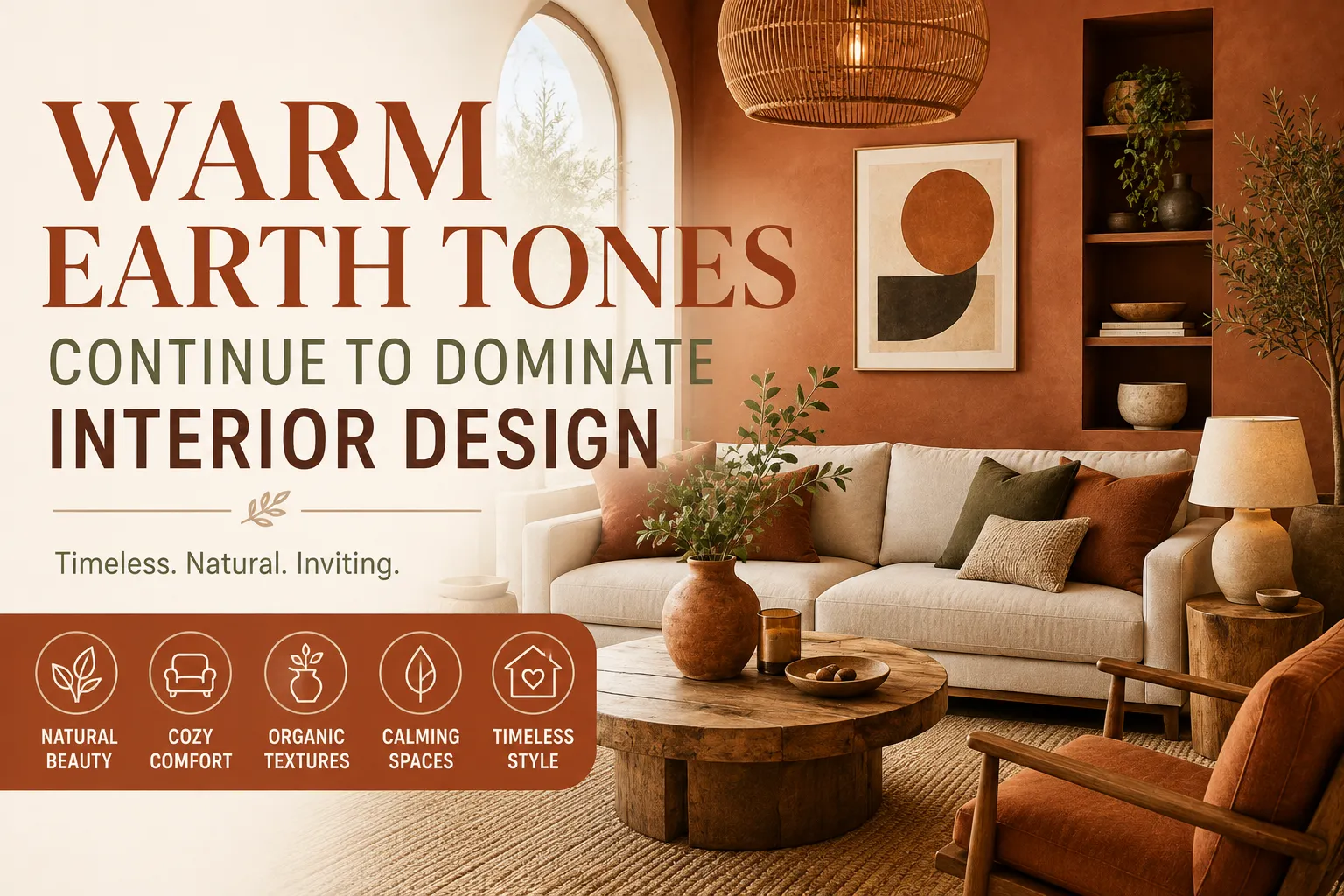
Warm Earth Tones Continue to Dominate Interior Design
Warm, nature-inspired color palettes continue to shape interior design, with homeowners increasingly choosing earthy shades that create inviting, comfortable, and timeless living spaces. Rich browns, terracotta, olive greens, sandy beiges, warm taupes, and muted clay colors are replacing cooler minimalist palettes as designers emphasize warmth, texture, and a stronger connection to nature.
Industry experts say the trend reflects a broader desire for homes that feel calm, welcoming, and functional. Rather than following short-lived decorating fads, many homeowners are investing in versatile color schemes that can evolve over time while maintaining long-term appeal.
For a broader look at how comfort, personality, and layered materials are reshaping contemporary interiors, see Layered Comfort Is Taking Over: Why Designers Are Moving Beyond Minimalist Interiors.
A Shift Toward Natural Living
Interior design has increasingly moved away from stark, ultra-modern spaces toward environments inspired by the natural world.
Popular characteristics include:
- Warm neutral colors
- Organic textures
- Natural wood
- Stone finishes
- Linen fabrics
- Indoor plants
- Handmade décor
- Soft lighting
These elements create interiors that feel relaxed and comfortable without sacrificing sophistication.
The move toward more personal spaces is also influencing how homeowners use these natural elements. Rather than reproducing a perfectly coordinated showroom, many are combining materials, colours, and objects that reflect their individual preferences, as explored in Interior Designers Move Away From Perfect Showrooms Toward More Personal Homes.
Why Earth Tones Are So Popular
Warm earth tones offer remarkable flexibility across a variety of decorating styles.
They work well in:
- Modern homes
- Traditional interiors
- Scandinavian designs
- Rustic spaces
- Farmhouse décor
- Contemporary apartments
Their versatility makes it easier for homeowners to update accessories without completely redesigning a room.
The Colors Leading the Trend
Some of today’s most popular earth-inspired shades include:
- Terracotta
- Clay
- Warm beige
- Camel
- Taupe
- Olive green
- Sage
- Sand
- Caramel
- Chocolate brown
These colors add warmth while remaining neutral enough to complement many furniture styles.
Creating Cozy Living Spaces
Many homeowners now prioritize comfort as much as aesthetics.
Earth-tone interiors often feature:
- Oversized sofas
- Textured throws
- Natural fiber rugs
- Wooden furniture
- Layered lighting
- Soft cushions
- Woven baskets
Together, these details create rooms that feel welcoming throughout the year.
Natural Materials Complement the Palette
Warm colors are frequently paired with sustainable and natural materials.
Popular choices include:
- Solid wood
- Rattan
- Bamboo
- Linen
- Cotton
- Wool
- Marble
- Ceramic
- Cork
These materials introduce texture while reinforcing the connection to nature.
Sustainability Influences Design Choices
Environmental awareness continues to shape interior design decisions.
Many homeowners now seek:
- Durable furniture
- Sustainable materials
- Vintage décor
- Reclaimed wood
- Energy-efficient lighting
- Long-lasting finishes
Designers note that timeless color palettes often reduce the need for frequent redecorating.
Earth Tones in Every Room
These colors can be incorporated throughout the home.
Living Rooms
Warm neutrals create inviting gathering spaces through painted walls, upholstered furniture, textured rugs, and wood accents.
Bedrooms
Soft browns, muted greens, and warm creams help create restful environments that encourage relaxation.
Kitchens
Natural wood cabinetry, stone countertops, terracotta accessories, and warm lighting add character while maintaining a clean, timeless appearance.
Bathrooms
Earth-inspired tiles, wood vanities, and natural stone finishes help create spa-like retreats.
Accent Colors Add Balance
While earth tones dominate, carefully selected accent colors provide visual interest.
Popular pairings include:
- Deep navy
- Charcoal
- Forest green
- Burnt orange
- Soft black
- Brass
- Matte gold
These accents add depth without overwhelming the natural palette.
Lighting Plays an Important Role
Color appearance changes significantly depending on lighting.
Designers often recommend:
- Warm LED lighting
- Layered lighting plans
- Table lamps
- Wall sconces
- Large windows
- Natural daylight
Good lighting enhances the richness of earth-tone interiors throughout the day.
Texture Is Just as Important as Color
Modern interiors rely on texture to create visual warmth.
Popular textured elements include:
- Bouclé fabrics
- Woven baskets
- Natural stone
- Textured wallpaper
- Ribbed glass
- Handmade pottery
- Linen curtains
Mixing textures helps prevent neutral spaces from feeling flat.
Indoor Plants Complete the Look
Houseplants continue to complement warm earth-tone interiors.
Popular options include:
- Snake plants
- Monstera
- Rubber plants
- ZZ plants
- Peace lilies
- Pothos
Greenery introduces color while reinforcing the connection between indoor and outdoor living.
Smart Homes Meet Natural Design
Technology is increasingly integrated into these warm interiors.
Examples include:
- Smart lighting
- Hidden speakers
- Automated blinds
- Smart thermostats
- Wireless charging furniture
Modern technology can be incorporated discreetly without disrupting natural aesthetics.
Tips for Decorating with Earth Tones
Homeowners looking to adopt the trend can start gradually.
Simple ideas include:
- Painting one accent wall
- Adding linen cushions
- Replacing cool-toned décor
- Introducing wooden furniture
- Using woven baskets
- Displaying ceramic accessories
- Layering natural fabrics
Small changes can significantly alter the feel of a room.
Looking Ahead
Design professionals expect warm earth tones to remain popular because they offer timeless appeal rather than relying on short-lived trends. As homeowners continue prioritizing comfort, sustainability, and flexible living spaces, natural color palettes are likely to remain central to modern interior design.
Future innovations in eco-friendly materials, smart home integration, and sustainable manufacturing are expected to further strengthen the popularity of nature-inspired interiors that balance beauty with functionality.
Frequently Asked Questions
What are earth tones?
Earth tones are colors inspired by nature, including shades of brown, beige, clay, terracotta, olive green, sand, taupe, and muted warm neutrals.
Why are earth tones popular in interior design?
They create warm, inviting spaces, complement many decorating styles, and provide a timeless appearance that remains stylish for years.
Which materials work best with earth tones?
Natural materials such as wood, stone, linen, cotton, rattan, bamboo, wool, and ceramics pair especially well with earth-inspired color palettes.
Can earth tones work in modern homes?
Yes. Earth tones complement contemporary, Scandinavian, minimalist, farmhouse, rustic, and traditional interiors alike.
How can I introduce earth tones without redecorating?
Start with accessories such as cushions, rugs, artwork, throws, planters, or accent furniture before making larger changes like painting walls or replacing major furniture pieces.
Key Takeaways
- Warm earth tones continue to dominate modern interior design.
- Natural colors help create comfortable, welcoming, and timeless living spaces.
- Sustainable materials and organic textures complement earth-inspired palettes.
- Layered lighting, indoor plants, and textured décor enhance the overall aesthetic.
- Earth tones work across a wide variety of architectural and decorating styles.
- Their versatility and long-term appeal make them one of today’s most enduring interior design trends.