Why Vintage Furniture Is Becoming the Centerpiece of Modern Homes
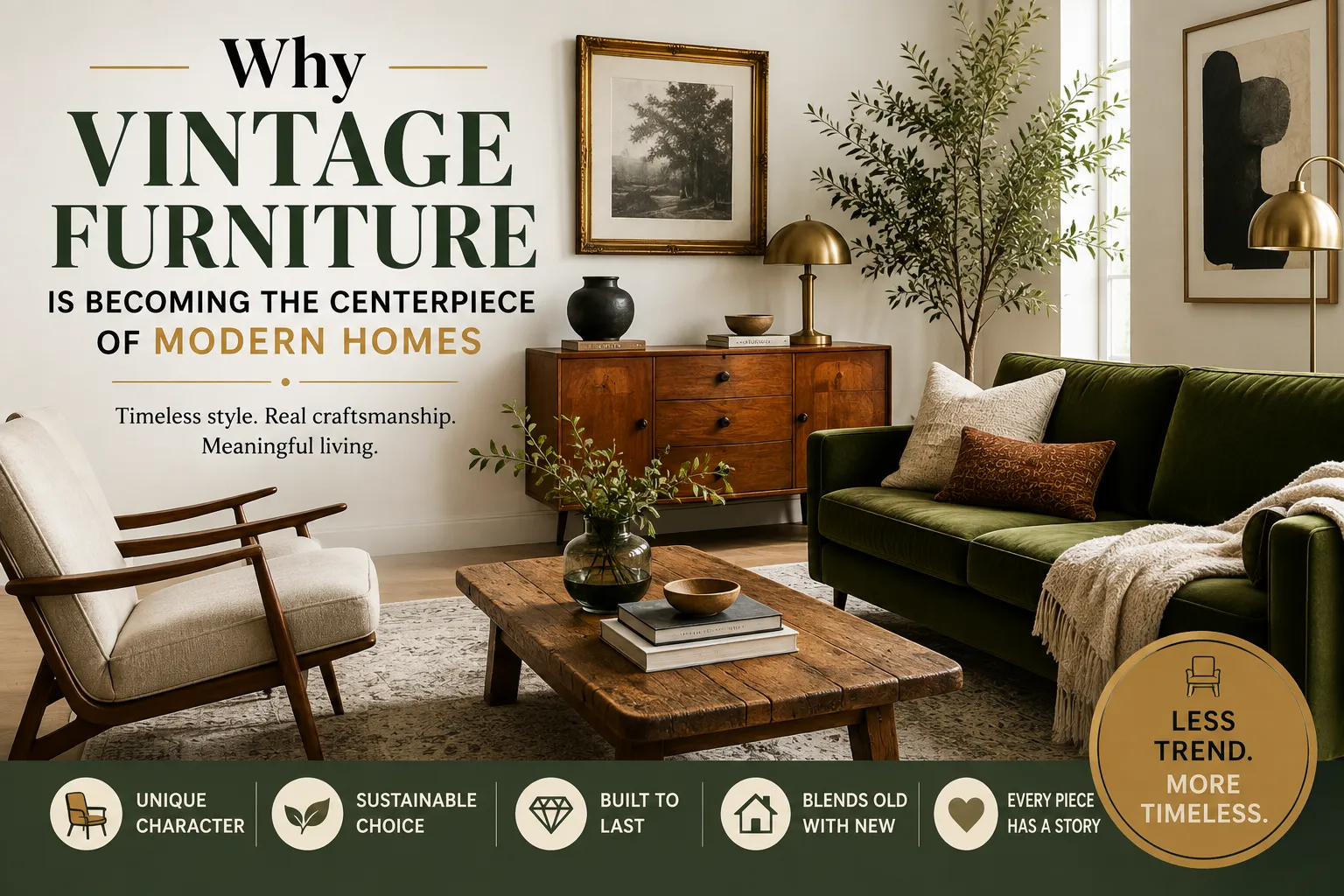
Why Vintage Furniture Is Becoming the Centerpiece of Modern Homes
Modern interiors have long been associated with clean lines, neutral colors, minimalist furniture, and carefully coordinated spaces. But increasingly, homeowners are looking for something that feels less predictable.
That is where vintage furniture comes in.
An old wooden cabinet, sculptural armchair, antique dining table, or mid-century sideboard can completely change the character of a room. Rather than making a home feel dated, the right vintage piece can give a contemporary interior warmth, personality, and a sense of history.
The appeal is not simply about owning something old. Vintage furniture offers qualities that can be difficult to reproduce with mass-produced pieces: distinctive craftsmanship, unusual materials, visible character, and a story that develops over time.
What Makes Vintage Furniture Different?
Vintage furniture generally refers to pieces from a previous era that have become desirable for their design, craftsmanship, materials, or historical character.
The term can cover a wide range of styles, including:
- Mid-century modern
- Art Deco
- Victorian
- Scandinavian furniture
- Traditional European designs
- Industrial furniture
- Retro pieces
- Early modernist designs
- Handcrafted wooden furniture
Each period has its own visual language.
A vintage piece can therefore become much more than something functional. It can serve as a design statement that gives an otherwise contemporary room a recognizable identity.
Vintage Furniture Adds Personality to Minimalist Spaces
Minimalist interiors can be attractive because of their simplicity. However, an overly coordinated room can sometimes feel impersonal.
Vintage furniture introduces visual contrast.
A modern white living room might gain warmth from an aged wooden coffee table. A contemporary bedroom can feel more distinctive with a vintage dresser. A simple dining space can become more interesting when paired with an older table featuring natural wood grain and visible signs of craftsmanship.
The contrast is often what makes the room work.
Instead of filling an interior with vintage objects, designers can use one or two carefully selected pieces as focal points.
The Rise of the Statement Piece
One of the strongest ways to incorporate vintage furniture is to choose a single piece that immediately attracts attention.
This might be:
- A sculptural lounge chair
- An oversized wooden dining table
- A beautifully aged cabinet
- An antique mirror
- A distinctive writing desk
- A vintage sideboard
- A dramatic headboard
The rest of the room can remain relatively restrained.
This approach prevents vintage furniture from overwhelming the space while allowing the selected piece to become its visual centerpiece.
Imperfections Can Make Furniture More Appealing
New furniture is often designed to look flawless.
Vintage furniture tells a different story.
Small scratches, variations in wood color, worn edges, repaired surfaces, and natural patina can contribute to a piece’s character.
These imperfections can make an object feel authentic rather than manufactured.
That does not mean damaged furniture is automatically valuable or desirable. Structural problems, severe moisture damage, unstable joints, woodworm, or other serious defects can make restoration expensive.
The appeal lies in the difference between character and deterioration.
Craftsmanship Matters
Many older pieces were constructed using techniques and materials that give them a distinctive sense of solidity.
Traditional joinery, hardwood construction, hand-finished surfaces, and carefully made hardware can contribute to a piece’s durability and visual appeal.
This does not mean every vintage item is better constructed than every modern product.
Quality varies enormously between periods, manufacturers, and individual pieces.
The important lesson for buyers is to evaluate the furniture itself rather than assuming that age automatically equals quality.
Vintage Furniture Creates Contrast With Modern Materials
Contemporary homes often feature materials such as:
- Glass
- Steel
- Concrete
- Polished stone
- Smooth cabinetry
- Engineered wood
- Modern fabrics
Vintage furniture can soften these materials.
A weathered wooden cabinet can bring warmth to a room dominated by stone and metal. An upholstered vintage chair can make a sleek modern kitchen feel more inviting. A traditional table can prevent an open-plan space from feeling overly uniform.
The result is often a more layered interior.
Mixing Old and New Creates a More Timeless Look
Decorating an entire room in one historical style can make the space feel like a period recreation.
Mixing vintage and contemporary furniture tends to create a more flexible result.
For example, a modern sofa can sit comfortably beside a vintage wooden coffee table. Contemporary lighting can illuminate an antique dining table. A minimalist kitchen can incorporate a vintage stool or cabinet.
The goal is not to make every item match.
Instead, designers can connect different pieces through color, proportion, material, or shape.
Vintage Furniture Can Tell a Story
One of the qualities that distinguishes vintage furniture from many mass-produced products is its sense of history.
A piece may have been made decades ago, used by another family, restored by a craftsman, or discovered in a completely different setting.
That history can become part of the home’s identity.
Furniture does not necessarily need an extraordinary historical background to have meaning. Even a simple vintage table can become significant through years of use and association with the people who own it.
Sustainability Is Another Consideration
Choosing previously owned furniture can also reduce the demand for newly manufactured products.
Instead of replacing an older piece with a newly produced alternative, restoring and reusing furniture keeps an existing object in circulation.
This can be particularly appealing to homeowners who want to think more carefully about consumption.
However, sustainability is not as simple as labeling every vintage purchase environmentally friendly.
Transportation, restoration materials, refinishing products, and the quality of the original furniture all matter.
The strongest sustainability argument is often straightforward: a durable piece that already exists does not need to be manufactured from scratch.
Vintage Furniture Can Be More Individual
Mass-produced furniture is widely available, which makes it easy to create attractive interiors quickly.
The downside is that the same designs can appear in thousands of homes.
Vintage furniture offers greater individuality.
Even when several people own furniture from the same historical period, differences in condition, materials, finishes, and proportions can make individual pieces feel distinctive.
For homeowners who want their interiors to feel personal rather than showroom-like, this can be a major advantage.
How to Choose the Right Vintage Piece
Buying vintage furniture requires a little more attention than purchasing new furniture.
Before buying, consider several factors.
Measure the Space
A beautiful piece can still be wrong for a room if its proportions are unsuitable.
Measure:
- Width
- Height
- Depth
- Doorways
- Hallways
- Staircases
- Available floor space
Remember to account for the route the furniture will take when it is delivered.
Examine the Construction
Look closely at joints, legs, drawers, doors, hinges, and structural connections.
Furniture that feels stable and well constructed is generally a safer investment than something that looks attractive but requires extensive structural repair.
Inspect the Materials
Natural wood, veneers, metal, upholstery, glass, and other materials can age differently.
Look for warping, cracks, corrosion, water damage, stains, or repairs.
Check for Repairs
Repairs are not necessarily a problem.
A professionally restored piece can be excellent.
The important question is whether the restoration has preserved the furniture’s structural integrity and character.
Don’t Confuse Age With Value
An old piece of furniture is not automatically valuable.
Value can depend on:
- Designer or maker
- Rarity
- Historical significance
- Materials
- Craftsmanship
- Condition
- Provenance
- Demand
- Authenticity
Some inexpensive vintage pieces can be excellent additions to a home, while certain highly sought-after designs can command substantial prices.
For ordinary interior decorating, however, historical value is not always the most important consideration.
A piece should first work for the room and the people living in it.
Restoration Should Be Approached Carefully
Restoration can transform tired furniture, but excessive restoration can sometimes remove the very qualities that make a vintage piece interesting.
Before refinishing a piece, consider whether its existing finish contributes to its character.
A professional restorer may be able to repair structural problems while preserving much of the original appearance.
For valuable or historically significant furniture, aggressive sanding, painting, replacing original hardware, or altering the construction can reduce its authenticity and potentially its value.
Vintage Furniture Works in Almost Every Room
The trend is not limited to living rooms.
Living Room
A vintage coffee table, armchair, sideboard, or cabinet can provide a strong focal point.
Dining Room
An older wooden dining table can bring warmth and texture to an otherwise contemporary space.
Bedroom
Vintage dressers, nightstands, benches, and mirrors can make bedrooms feel more layered and personal.
Home Office
A vintage desk or bookcase can create a more distinctive working environment.
Entryway
A vintage console table, mirror, or bench can give a home’s entrance immediate character.
Kitchen
Older stools, freestanding cabinets, and wooden tables can soften highly modern kitchens.
Color Can Connect Vintage and Contemporary Pieces
One of the easiest ways to make different furniture styles work together is through color.
A vintage chair can echo the color of a modern rug. A wooden cabinet can complement warm flooring. Brass hardware can connect an older sideboard with contemporary lighting.
The furniture does not need to match exactly.
Repeating related tones throughout the room can create enough visual connection to make different eras feel intentional.
Texture Is Just as Important as Color
Texture can also help unify a mixed interior.
Consider combining:
- Aged wood
- Linen
- Wool
- Leather
- Stone
- Metal
- Glass
- Ceramic
Vintage furniture often brings natural texture that can make modern interiors feel less flat.
This is particularly useful in spaces dominated by smooth, polished surfaces.
Avoid Turning the Room Into a Museum
The goal of incorporating vintage furniture is usually to create a home, not a historical exhibition.
Too many pieces from the same era can make an interior feel overly themed.
A more balanced approach is to allow vintage furniture to interact with contemporary objects.
Modern artwork, simple lighting, contemporary rugs, and clean architectural lines can keep older furniture feeling fresh.
Vintage Does Not Have to Mean Traditional
Some homeowners associate vintage furniture with ornate wooden cabinets and formal interiors.
But vintage design includes many minimalist styles.
Mid-century modern furniture, for example, is known for clean forms and functional design. Industrial pieces can introduce raw materials and strong silhouettes. Scandinavian designs can work naturally within contemporary interiors.
This makes it possible to incorporate vintage furniture without abandoning a modern aesthetic.
The Importance of Proportion
Even beautiful furniture can look awkward when its scale does not suit the room.
A large vintage cabinet may overwhelm a small apartment. A delicate chair may disappear in a large open-plan room.
Proportion should therefore be considered alongside style.
A successful vintage centerpiece should feel visually important without making the rest of the room feel crowded.
Buying Vintage Furniture Online
Online marketplaces have made vintage furniture easier to find, but buying remotely requires additional caution.
Before purchasing, ask for:
- Multiple photographs
- Exact dimensions
- Close-ups of damage
- Photos of the underside
- Details about repairs
- Information about materials
- Delivery arrangements
If authenticity matters, ask about provenance or documentation where appropriate.
Do not rely solely on phrases such as “rare,” “antique,” or “designer.” Sellers may use these terms loosely.
Local Shops Can Offer an Advantage
Physical vintage stores, antique dealers, estate sales, auctions, and secondhand furniture shops allow buyers to inspect pieces directly.
Being able to sit in a chair, open drawers, test stability, and examine surfaces can reveal details that photographs cannot.
It can also make the buying process more enjoyable.
For many homeowners, part of the appeal of vintage furniture is the discovery process itself.
Vintage Furniture Can Adapt as Your Style Changes
Another advantage is flexibility.
A well-designed vintage piece does not necessarily depend on one particular decorating trend.
A solid wooden table, classic cabinet, or sculptural chair can work with different colors and surroundings as a home’s style evolves.
That can make vintage furniture a useful long-term design investment even when the rest of the interior changes.
How to Make Vintage Furniture Feel Fresh
A vintage piece does not always need extensive restoration to look contemporary.
Simple changes can make a significant difference:
- Pair it with modern lighting
- Use contemporary artwork nearby
- Introduce simple textiles
- Keep surrounding furniture visually restrained
- Use modern colors
- Give the piece enough space
- Combine it with contemporary materials
Sometimes the best approach is simply to leave the furniture alone and let its natural character provide the contrast.
The Centerpiece Does Not Have to Be Expensive
A common misconception is that creating an impressive vintage interior requires expensive collectible furniture.
It does not.
A relatively inexpensive secondhand table can become a centerpiece if it has the right shape, material, scale, and character.
The design impact of a piece is not always proportional to its price.
Patience can be more valuable than a large budget.
Why the Trend Has Staying Power
The renewed interest in vintage furniture reflects a broader desire for interiors that feel personal, durable, and less disposable.
People are increasingly interested in spaces that combine different periods rather than following one rigid design formula.
Vintage furniture fits naturally into that approach.
It offers contrast, texture, individuality, and history while allowing modern homes to retain contemporary functionality.
Let the Furniture Have a Story
The strongest interiors are rarely the ones where every object looks as though it came from the same catalog.
A vintage table beside a modern sofa, an older cabinet beneath contemporary artwork, or a classic chair in a minimalist room can create the kind of tension that makes a space memorable.
Vintage furniture is becoming a centerpiece not because old automatically means better, but because homes are increasingly being designed to reflect the people who live in them.
A well-chosen vintage piece can provide something that perfectly new furniture often cannot: a sense that the room already has a story—and that you are now adding the next chapter.