Cooking Methods Explained: The Complete Guide
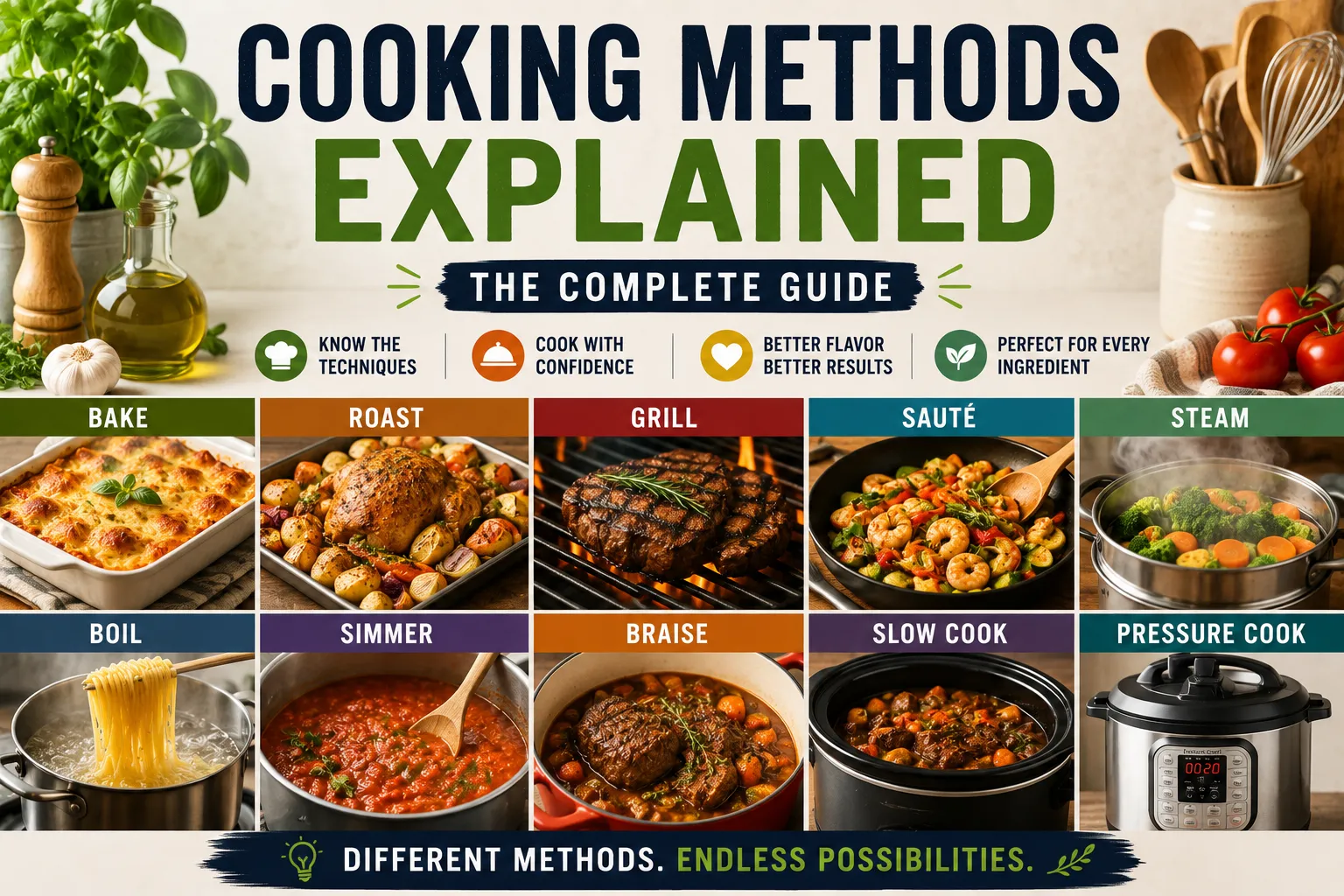
Cooking Methods Explained: The Complete Guide
Cooking is more than following a recipe. The method used to prepare food can influence its flavor, texture, appearance, moisture, and nutritional characteristics.
From roasting and grilling to steaming, simmering, sautéing, and slow cooking, each technique works differently. Understanding those differences makes it easier to choose the right method for the ingredients you have and the result you want.
Whether you’re learning to cook for the first time or simply want to become more confident in the kitchen, understanding basic cooking methods provides a foundation that can be applied to countless recipes.
For beginners building their overall kitchen skills, The Complete Guide to Cooking for Beginners provides a broader foundation covering equipment, food safety, seasoning, meal planning, and essential techniques.
What Are Cooking Methods?
Cooking methods are techniques used to apply heat to food or, in some cases, prepare food without traditional heat.
They can generally be divided into three broad categories:
-
Dry-heat methods, such as roasting, baking, grilling, and sautéing
-
Moist-heat methods, such as boiling, steaming, and poaching
-
Combination methods, which use both dry and moist heat, such as braising and stewing
Some preparations also rely on specialized techniques, including pressure cooking, slow cooking, smoking, and cooking with little or no added heat.
The best method depends on the ingredient, its structure, the desired texture, and the final flavor.
Dry-Heat Cooking Methods
Dry-heat cooking uses hot air, a hot cooking surface, fat, or direct radiant heat rather than water as the primary cooking medium.
These methods are especially useful for developing browning, crispness, and concentrated flavors.
Baking
Baking generally involves cooking food with surrounding hot air inside an oven.
It is commonly used for:
-
Bread
-
Cakes
-
Cookies
-
Pastries
-
Casseroles
-
Some vegetables
-
Certain fish and meat dishes
Baking provides relatively even heat, although the exact result depends on the oven, pan, temperature, and food being prepared.
For baked goods, accurate measurements and appropriate oven temperature are particularly important because chemical and physical changes during cooking affect structure.
Roasting
Roasting uses dry oven heat to cook food, often at relatively higher temperatures than some forms of baking.
Common roasting ingredients include:
-
Potatoes
-
Carrots
-
Squash
-
Chicken
-
Beef
-
Pork
-
Turkey
Roasting can encourage browning on the exterior while allowing the interior to remain tender.
Coating vegetables lightly with oil and spreading them in a single layer can help promote browning rather than steaming.
Grilling
Grilling cooks food using direct heat, typically from below or above.
It is commonly associated with:
-
Meat
-
Fish
-
Chicken
-
Vegetables
-
Sandwiches
-
Some fruits
Grilling can produce characteristic browning and charred flavors.
Because food is exposed to intense heat, timing matters. Thin ingredients can cook quickly, while thicker foods may require lower heat or indirect cooking to prevent the exterior from burning before the center is properly cooked.
Broiling
Broiling uses intense heat from above the food.
It can be useful for:
-
Browning the surface of casseroles
-
Finishing dishes
-
Cooking thin cuts of meat
-
Melting and browning cheese
-
Charring vegetables
Because the heat can be intense, food should be monitored closely.
A few extra minutes can make a significant difference under a broiler.
Sautéing
Sautéing involves cooking relatively small pieces of food quickly in a pan, usually with a small amount of fat.
It works particularly well for:
-
Vegetables
-
Mushrooms
-
Garlic
-
Onions
-
Thin pieces of meat
-
Seafood
The pan needs to be appropriately heated before food is added.
Overcrowding the pan can lower its temperature and cause ingredients to release moisture, making them steam rather than brown.
Stir-Frying
Stir-frying is a fast cooking technique traditionally associated with high heat and frequent movement of relatively small pieces of food.
It is commonly used for combinations of:
-
Vegetables
-
Meat
-
Poultry
-
Tofu
-
Noodles
-
Aromatic ingredients
Because cooking happens quickly, preparation is important.
Have ingredients chopped and sauces measured before starting.
Pan-Frying
Pan-frying uses more oil than sautéing but generally less oil than deep-frying.
Food is cooked in a pan, often with enough oil to partially cover its surface.
It can be used for:
-
Fish
-
Chicken
-
Vegetables
-
Potatoes
-
Fritters
-
Breaded foods
Maintaining appropriate oil temperature helps food brown without absorbing excessive oil or burning on the outside.
Deep-Frying
Deep-frying involves completely or substantially immersing food in hot cooking oil.
It can produce a crisp exterior and tender interior.
Common examples include:
-
French fries
-
Fried chicken
-
Doughnuts
-
Fritters
-
Fried vegetables
Deep-frying requires careful temperature control and safe handling of hot oil.
Never leave heating oil unattended, and keep water away from hot oil because sudden contact can cause dangerous splattering.
Moist-Heat Cooking Methods
Moist-heat methods use water, steam, broth, or another liquid as the primary heat-transfer medium.
They are particularly useful for foods that benefit from gentle cooking or prolonged exposure to moisture.
Boiling
Boiling cooks food in liquid at a vigorous simmering temperature.
It is commonly used for:
-
Pasta
-
Potatoes
-
Some vegetables
-
Eggs
-
Grains
Boiling can be convenient, but it is not always the best method for every ingredient.
Delicate vegetables, for example, can become overcooked when boiled for too long.
Simmering
Simmering uses lower, gentler heat than a full boil.
Small bubbles form in the liquid rather than the vigorous bubbling associated with boiling.
Simmering is particularly useful for:
-
Soups
-
Sauces
-
Stocks
-
Beans
-
Stews
-
Poached preparations
It allows ingredients to cook gradually while flavors have time to develop.
Poaching
Poaching cooks food gently in liquid that is kept below a full boil.
It is often used for delicate foods such as:
-
Fish
-
Chicken
-
Eggs
-
Fruit
Because poaching uses relatively gentle heat, it can help preserve delicate textures.
The cooking liquid can also contribute flavor to the food.
Steaming
Steaming cooks food through hot steam rather than immersing it directly in water.
It can be used for:
-
Vegetables
-
Fish
-
Dumplings
-
Poultry
-
Grains
-
Certain breads
Steaming can be a useful way to cook vegetables without requiring them to be submerged in water.
Avoid overcooking. Vegetables are often most appealing when they retain some texture rather than becoming excessively soft.
Blanching
Blanching involves briefly cooking food in boiling water or another hot medium and then, in many cases, cooling it rapidly.
It is commonly used for vegetables.
Blanching can:
-
Soften vegetables slightly
-
Brighten certain colors
-
Prepare vegetables for freezing
-
Make some foods easier to peel
-
Partially cook ingredients before another preparation
The cooling step can help stop the cooking process.
Combination Cooking Methods
Combination methods use both dry and moist heat.
They are particularly useful for tougher cuts of meat and ingredients that benefit from long, gentle cooking.
Braising
Braising generally involves first browning food and then cooking it slowly with a relatively small amount of liquid.
It is often used for:
-
Tough cuts of beef
-
Pork
-
Lamb
-
Chicken
-
Root vegetables
The initial browning develops flavor, while the subsequent moist cooking helps tenderize the food.
Braising can turn relatively tough ingredients into tender, deeply flavored dishes.
Stewing
Stewing involves cooking smaller pieces of food slowly in liquid.
Common examples include:
-
Beef stew
-
Vegetable stew
-
Chicken stew
-
Bean-based dishes
Because the ingredients cook together for an extended period, the cooking liquid can become an important part of the final dish.
Slow Cooking
Slow cooking uses relatively low temperatures over an extended period.
Slow cookers are commonly used for:
-
Stews
-
Soups
-
Beans
-
Pulled meats
-
Braised dishes
-
Large cuts of meat
The advantage is convenience.
Ingredients can often be prepared in advance and cooked gradually.
However, slow cooking does not mean every ingredient should be added at the same time. Delicate vegetables, dairy products, fresh herbs, and other ingredients may require different timing depending on the recipe.
Pressure Cooking
Pressure cooking uses a sealed cooking environment to raise the pressure inside the vessel, allowing food to cook at a higher temperature than it would under ordinary atmospheric conditions.
This can significantly reduce cooking times for foods such as:
-
Dried beans
-
Tough meats
-
Grains
-
Stews
-
Stocks
Electric pressure cookers have made the technique more accessible for home cooks.
Always follow the manufacturer’s instructions and safety procedures when using a pressure cooker.
Smoking
Smoking exposes food to smoke produced by burning or smoldering suitable wood.
It can add distinctive flavor while also contributing to the cooking process, depending on the technique.
Smoking is commonly associated with:
-
Meat
-
Fish
-
Poultry
-
Cheese
-
Certain vegetables
There is a distinction between hot smoking, which cooks food while exposing it to smoke, and cold smoking, which uses lower temperatures and does not necessarily cook the food.
Food-safety requirements are especially important when smoking meat, poultry, seafood, and other perishable foods.
Cooking With Little or No Added Heat
Not every food preparation technique depends on traditional cooking.
Some dishes rely on mechanical preparation, acidity, fermentation, or other processes.
Examples include:
-
Salads
-
Cured preparations
-
Fermented foods
-
Some marinated dishes
-
Certain raw-food preparations
However, ingredients that are not cooked can present different food-safety considerations.
Proper ingredient handling, refrigeration, cleanliness, and food sourcing remain important.
How Heat Changes Food
Understanding what heat does to food can make cooking much more intuitive.
Heat can cause:
-
Proteins to change structure
-
Water to evaporate
-
Fats to melt
-
Starches to soften and gelatinize
-
Sugars to caramelize
-
Food surfaces to brown
These changes influence texture, aroma, color, and flavor.
Why Browning Matters
Browning is one reason roasted, grilled, and sautéed foods can taste so different from boiled foods.
High surface temperatures can produce complex flavor compounds through reactions involving proteins and sugars.
This is one reason drying the surface of ingredients before searing can help promote browning.
Moisture on the surface can initially keep temperatures lower because water must evaporate before the surface can become hot enough for substantial browning.
Choosing the Right Cooking Method
Instead of memorizing every technique, start by asking what you want the final food to be like.
Want Crispness?
Consider:
-
Roasting
-
Baking
-
Grilling
-
Pan-frying
-
Deep-frying
Want Tenderness?
Consider:
-
Braising
-
Stewing
-
Slow cooking
-
Pressure cooking
-
Poaching
Want Fresh Texture?
Consider:
-
Steaming
-
Quick sautéing
-
Stir-frying
-
Blanching
Want Strong Roasted Flavor?
Consider:
-
Roasting
-
Grilling
-
Broiling
-
Searing
The ingredient itself should also influence the decision.
Matching Cooking Methods to Ingredients
Different ingredients respond differently to heat.
Vegetables
Vegetables can be roasted, steamed, sautéed, grilled, boiled, stir-fried, or blanched.
Firm vegetables such as carrots and potatoes often tolerate longer cooking times.
Delicate leafy vegetables may require much less time.
For a broader look at preparing different vegetables and plant-based ingredients, see Understanding Vegetables and Plant-Based Cooking.
Meat
The appropriate method depends heavily on the cut.
Tender cuts can often be cooked quickly with dry heat.
Tougher cuts can benefit from longer, slower cooking that breaks down connective tissue.
This is why a tender steak and a tough beef shoulder should not necessarily be cooked using the same technique.
For more detailed guidance on matching cooking approaches to different cuts, see How to Cook Different Cuts of Meat and Poultry Properly.
Fish
Fish is generally delicate and can be baked, grilled, steamed, poached, pan-cooked, or roasted.
Because fish can overcook relatively quickly, temperature and timing are particularly important.
Eggs
Eggs demonstrate how different cooking methods can create dramatically different results.
They can be:
-
Boiled
-
Poached
-
Scrambled
-
Fried
-
Baked
-
Steamed
Small changes in heat and timing can significantly affect texture.
Grains
Rice, quinoa, oats, and other grains are often cooked using moist heat.
The amount of liquid and cooking time depend on the grain.
Following the recommended ratio and adjusting based on the specific product can help produce consistent results.
Cooking Method and Nutrition
Cooking can change the nutritional characteristics of food.
Heat can make some nutrients more available while reducing others, particularly when food is exposed to high temperatures or water for extended periods.
Water-soluble vitamins can be lost into cooking water.
For vegetables where nutrient retention is a priority, methods that use relatively little water and shorter cooking times can sometimes be advantageous.
However, nutritional quality depends on the entire diet, not one cooking method.
A balanced diet can include foods prepared in many different ways.
The Importance of Cooking Temperature
Temperature affects both food quality and safety.
Too little heat can leave some foods inadequately cooked.
Too much heat can produce burnt surfaces, dry interiors, or undesirable textures.
For meat, poultry, seafood, eggs, and other foods where food safety is particularly important, use a reliable food thermometer when appropriate rather than judging doneness entirely by appearance.
The safe internal temperature varies by food, so follow guidance from a reputable food-safety authority.
For a deeper explanation of how temperature influences texture, doneness, and overall cooking results, see How Cooking Temperature Affects Food and Cooking Results.
Common Cooking Mistakes
Understanding cooking methods also means knowing what can go wrong.
Overcrowding the Pan
Adding too much food at once can reduce the pan temperature and encourage steaming rather than browning.
Starting With a Cold Pan
Some cooking techniques benefit from preheating the cooking surface before ingredients are added.
Using Excessive Heat
High heat is not automatically better.
It can burn the exterior before the interior is properly cooked.
Cutting Ingredients Unevenly
Different-sized pieces cook at different speeds.
Try to cut ingredients into reasonably uniform pieces when a recipe calls for them to cook together.
Ignoring Carryover Cooking
Some foods continue cooking after being removed from the heat because they retain significant heat.
This can be particularly important when cooking meat.
Failing to Taste
When appropriate, tasting during preparation can help identify problems with seasoning, acidity, texture, or balance before the dish is finished.
How to Become Better at Cooking
Improving your cooking skills does not require learning hundreds of recipes.
Instead, learn the principles behind common techniques.
Practice:
-
Sautéing vegetables
-
Roasting vegetables
-
Cooking grains
-
Making a simple soup
-
Pan-cooking fish
-
Preparing eggs several ways
-
Braising a tougher cut of meat
-
Making a basic sauce
-
Using a food thermometer
-
Adjusting seasoning
Once you understand how heat affects food, recipes become easier to adapt.
Build Meals Around Technique
Instead of asking only, “What recipe should I make?” try asking:
What ingredients do I have, and which cooking method would suit them?
A collection of vegetables can become a roasted tray meal.
A few vegetables and protein can become a stir-fry.
A tougher cut of meat can become a braise.
Fresh fish can become a quick pan-cooked dinner.
This approach makes cooking more flexible and reduces dependence on following recipes exactly.
A Simple Cooking Method Cheat Sheet
| Method | Main Heat Source | Best For | Typical Result |
|---|---|---|---|
| Baking | Hot air | Breads, pastries, casseroles | Evenly cooked, often tender |
| Roasting | Dry oven heat | Vegetables, meats | Browned and flavorful |
| Grilling | Direct heat | Meat, vegetables, fish | Charred and smoky |
| Broiling | Intense overhead heat | Finishing and thin foods | Rapid browning |
| Sautéing | Hot pan and fat | Vegetables, meat | Quick and browned |
| Stir-frying | High heat and movement | Small pieces, vegetables | Fast and crisp-tender |
| Pan-frying | Hot pan and oil | Fish, meat, fritters | Crisp exterior |
| Deep-frying | Hot oil | Fried foods | Crisp and rich |
| Boiling | Hot liquid | Pasta, potatoes, grains | Soft and thoroughly cooked |
| Simmering | Gentle liquid heat | Soups, sauces, stews | Tender and flavorful |
| Poaching | Gentle liquid heat | Eggs, fish, poultry | Delicate and tender |
| Steaming | Hot steam | Vegetables, fish, dumplings | Moist and relatively firm |
| Braising | Dry heat plus liquid | Tough meats, vegetables | Very tender |
| Stewing | Long cooking in liquid | Meat and vegetables | Soft and deeply flavored |
| Slow cooking | Low, prolonged heat | Stews, meats, beans | Tender and convenient |
| Pressure cooking | Pressurized steam | Beans, meats, grains | Faster tenderization |
How Gardening Can Connect to Cooking
For people who grow their own food, understanding cooking methods can also influence what they choose to plant.
A container garden or backyard vegetable patch can provide ingredients suited to different techniques.
Fresh herbs can be used in sautéed dishes, sauces, soups, and marinades.
Tomatoes can be roasted, stewed, grilled, or turned into sauces.
Leafy greens can be steamed or quickly sautéed.
Peppers can be grilled, roasted, stuffed, or stir-fried.
Root vegetables can be roasted, boiled, mashed, or incorporated into stews.
Thinking about cooking while planning a garden can therefore make homegrown produce more useful and reduce the chance of growing more of an ingredient than the household can realistically use.
Experiment Without Changing Everything at Once
When learning a new cooking technique, change one variable at a time.
If a roasted vegetable dish is too soft, consider whether the oven temperature, cooking time, pan spacing, or moisture level needs adjustment.
If meat is too dry, examine the cooking time and temperature.
If vegetables are bland, consider seasoning, browning, acidity, or the cooking method.
This turns mistakes into useful information.
Cooking Is a Combination of Heat, Time, and Technique
The most useful cooking skill is not memorizing recipes. It is understanding how ingredients respond to heat.
Once you know the difference between roasting and steaming, sautéing and simmering, or braising and grilling, you can make better decisions in the kitchen even when you don’t have a recipe in front of you.
Start with a few fundamental techniques and practice them repeatedly. Pay attention to temperature, timing, texture, moisture, and browning.
Over time, those observations become instinct.
And when you combine that knowledge with fresh ingredients—whether they come from a grocery store, farmers’ market, or your own garden—cooking becomes less about following instructions and more about knowing what to do with what you have.