Home Repairs Guide: Common Problems and Solutions
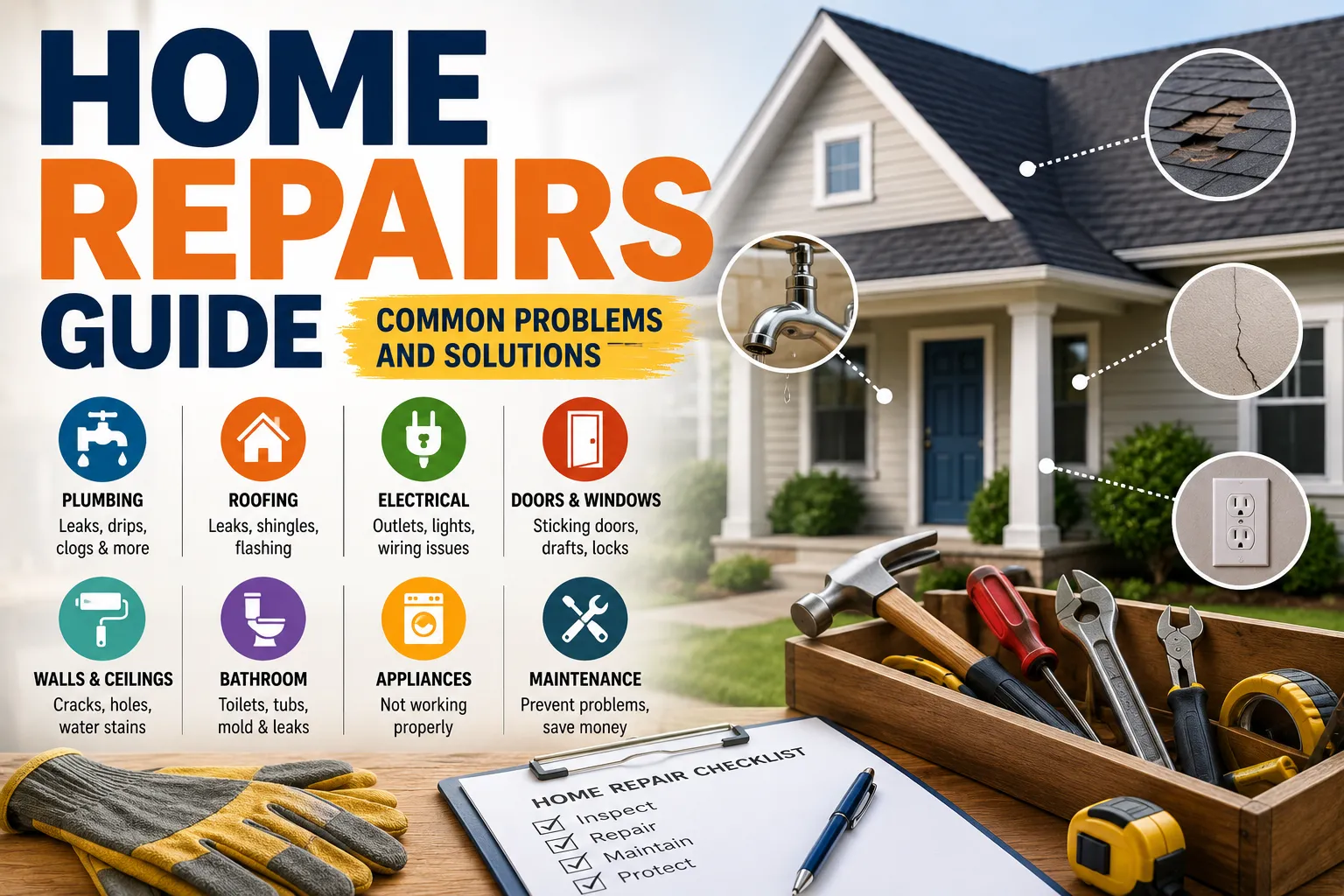
Home Repairs Guide: Common Problems and Solutions
Every home eventually needs repairs.
A dripping faucet, cracked wall, blocked drain, damaged roof, faulty electrical outlet, or sticking door may begin as a minor inconvenience. Left unattended, however, some problems can become significantly more expensive and disruptive.
Knowing how to recognize common home problems, understand their likely causes, and determine when to call a professional can help homeowners protect their property and avoid unnecessary repair costs.
This guide covers some of the most common home repairs, practical solutions, warning signs, and maintenance habits that can keep a house in better condition. It also fits into the broader home maintenance, repairs, and improvement guide, which covers the larger systems and projects involved in keeping a property in good condition.
Why Regular Home Repairs Matter
Home maintenance is not just about making a property look good.
Small defects can sometimes lead to larger structural, electrical, plumbing, or moisture-related problems.
For example:
- A small roof leak can damage ceilings and insulation.
- A dripping pipe can eventually damage cabinets or flooring.
- A blocked gutter can contribute to water entering walls.
- A cracked seal around a window can allow moisture into the surrounding structure.
- A loose electrical connection can become a safety hazard.
- A slow drain can eventually become completely blocked.
Regular inspections allow homeowners to identify problems while they are still relatively manageable.
Repair vs. Maintenance
These two terms are often used interchangeably, but they are different.
Maintenance involves actions designed to prevent problems or keep systems working properly.
Examples include:
- Cleaning gutters
- Changing air filters
- Inspecting roof areas
- Cleaning drains
- Lubricating moving parts
- Checking plumbing connections
Repair involves fixing something that has already failed or become damaged.
Examples include:
- Replacing a broken pipe
- Repairing a leaking roof
- Fixing a damaged door
- Replacing a faulty electrical component
Good maintenance reduces the need for major repairs, but every home will eventually require some repairs.
How to Decide Whether a Repair Is Urgent
Not every home problem requires immediate professional attention.
A useful way to classify repairs is:
Emergency Repairs
These involve immediate risks to people, the structure, or the property.
Examples include:
- Major water leaks
- Electrical sparks or burning smells
- Gas leaks
- Major roof damage
- Sewage backups
- Significant flooding
- Structural instability
Address these problems immediately and contact an appropriately qualified professional.
Urgent Repairs
These may not represent an immediate emergency but should be addressed soon.
Examples include:
- Persistent plumbing leaks
- Water entering around windows
- A failing water heater
- Significant mold or moisture problems
- Damaged locks
- Repeated electrical breaker trips
Routine Repairs
These can usually be scheduled according to convenience and budget.
Examples include:
- Minor paint damage
- Small drywall holes
- Loose cabinet handles
- Sticking interior doors
- Minor cosmetic cracks
Understanding the difference can help prevent homeowners from ignoring serious issues while also avoiding unnecessary panic over minor ones.
Plumbing Repairs
Plumbing is one of the most common sources of household problems.
Even a relatively small leak can waste water and damage surrounding materials.
Understanding how the pipes, fixtures, drains, and shutoffs fit together can make diagnosis easier, so homeowners may also find this guide to how home plumbing systems work useful when dealing with household plumbing problems.
Leaking Faucets
A dripping faucet is usually caused by a worn or damaged internal component.
Depending on the faucet design, the problem may involve:
- A worn washer
- A damaged cartridge
- A faulty valve
- A deteriorated seal
The exact repair depends on the faucet type.
If the faucet continues leaking after the appropriate component is replaced, the fixture itself may need further inspection or replacement.
Leaking Pipes
Pipe leaks can occur under sinks, behind walls, beneath floors, or around appliances.
Common signs include:
- Damp cabinets
- Water stains
- Musty odors
- Peeling paint
- Unexplained increases in water usage
- Damp flooring
- Visible dripping
A visible leak should not be ignored simply because the amount of water appears small.
Water can travel through building materials and cause damage away from the original leak.
If a pipe is actively leaking, shut off the appropriate water supply if you can do so safely and arrange for repair.
Low Water Pressure
Low water pressure can have several causes.
Possible problems include:
- Partially closed valves
- Blocked faucet aerators
- Mineral buildup
- Plumbing leaks
- Pipe restrictions
- Problems with the municipal supply
If low pressure affects only one faucet, inspect the fixture first.
If pressure is low throughout the house, the problem may require a broader plumbing investigation.
Slow Drains
A slow drain is often an early warning sign of a developing blockage.
Common causes include:
- Hair
- Soap residue
- Grease
- Food particles
- Mineral buildup
Start by identifying which drain is affected.
A single slow sink drain may have a localized blockage, while several slow drains at the same time can indicate a larger plumbing problem.
Avoid repeatedly pouring harsh chemicals down drains without understanding the cause.
Completely Blocked Drains
When a drain stops flowing completely, mechanical methods such as a plunger or appropriate drain-cleaning tool may help with some blockages.
However, persistent blockages can indicate a deeper issue.
If multiple fixtures are backing up, especially if wastewater is involved, professional plumbing assistance may be necessary.
Running Toilets
A toilet that continues running after flushing can waste a surprising amount of water.
Possible causes include:
- A worn flapper
- A faulty fill valve
- Incorrect float adjustment
- A damaged seal
These components are often replaceable without replacing the entire toilet.
If the problem keeps returning, have the toilet inspected.
Toilet Leaks Around the Base
Water appearing around the base of a toilet can indicate a failed seal or another plumbing problem.
Do not simply wipe up the water and continue using the toilet.
Repeated moisture can damage flooring and the surrounding structure.
If the toilet moves when you sit on it, that is another reason to have it inspected.
Roof Repairs
The roof protects the entire building from weather.
Roof problems therefore deserve prompt attention.
For additional background on roofing components, common vulnerabilities, and ongoing care, see this guide to how residential roofing systems work and require maintenance.
Roof Leaks
A leak may appear as:
- Ceiling stains
- Damp patches
- Peeling paint
- Dripping water
- Musty odors
- Damaged insulation
The visible stain inside the house is not necessarily directly below the actual roof entry point.
Water can travel along roofing materials, framing, and other surfaces before appearing indoors.
For this reason, locating the source of a roof leak can be more complicated than simply patching the visible ceiling stain.
Missing or Damaged Roof Materials
After storms or strong winds, inspect the roof from a safe location for obvious signs of damage.
These may include:
- Missing shingles
- Broken tiles
- Damaged flashing
- Loose roofing materials
- Fallen branches
- Damaged gutters
Do not climb onto a roof if you are not equipped and trained to do so safely.
A professional roof inspection is often the safer choice.
Damaged Flashing
Flashing helps direct water away from vulnerable areas around:
- Chimneys
- Roof valleys
- Vents
- Skylights
- Wall intersections
Damaged or poorly installed flashing can contribute to leaks.
Repairing the flashing properly is usually more effective than repeatedly sealing the interior stain.
Clogged Gutters
Gutters direct rainwater away from the roof and building.
When they become blocked with leaves, dirt, or other debris, water can overflow.
Potential consequences include:
- Wet exterior walls
- Foundation moisture
- Damaged landscaping
- Roof-edge deterioration
- Water entering the home
Clean gutters regularly and inspect downspouts to ensure water can flow away from the building.
Wall and Ceiling Repairs
Walls and ceilings naturally experience wear over time.
Not every crack indicates a major structural problem, but some deserve closer attention.
Small Drywall Holes
Small holes caused by nails, screws, or minor impacts can usually be repaired with suitable patching material.
The general process is:
- Clean the damaged area.
- Apply appropriate patching compound.
- Allow it to dry.
- Sand it smooth.
- Prime if necessary.
- Repaint.
For larger holes, the damaged section may need to be replaced with a piece of drywall.
Cracked Walls
Small superficial cracks can result from normal movement, drying, or settling.
However, homeowners should pay closer attention to cracks that are:
- Large
- Rapidly expanding
- Repeatedly returning
- Accompanied by sticking doors
- Accompanied by uneven floors
- Appearing around structural openings
If you are concerned that a crack could indicate structural movement, seek an assessment from an appropriately qualified professional rather than simply filling it.
Water Stains on Ceilings
A brown or discolored ceiling patch often indicates previous or ongoing moisture intrusion.
Possible sources include:
- Roof leaks
- Plumbing leaks
- Bathroom leaks
- Condensation
- HVAC drainage problems
Painting over the stain without addressing the source usually only hides the symptom temporarily.
First determine whether moisture is still entering the area.
Peeling Paint
Peeling paint can be caused by:
- Moisture
- Poor surface preparation
- Age
- Excess humidity
- Incompatible paint layers
If moisture is involved, correct the moisture problem before repainting.
Otherwise, the new paint may peel again.
Door Repairs
Doors experience frequent use, making them prone to alignment and hardware problems.
Sticking Doors
A door may stick because of:
- Humidity
- Wood movement
- Misaligned hinges
- Loose screws
- Building movement
- A swollen frame
Start by checking the hinges and screws.
If the problem is seasonal, moisture and temperature changes may be contributing.
Avoid removing large amounts of material from a door until you understand why it is sticking.
Squeaky Hinges
A squeaky hinge often needs cleaning and appropriate lubrication.
If the noise continues, inspect the hinge for looseness, wear, or misalignment.
Loose Door Handles
Loose handles are usually caused by hardware that has worked loose over time.
Tightening the appropriate screws may solve the problem.
If the mechanism is damaged, replacement may be necessary.
Doors That Will Not Lock Properly
A misaligned latch or strike plate can prevent a door from locking.
Check whether the door is sitting correctly in its frame.
Because locks are security devices, persistent problems should be repaired promptly.
For exterior doors, do not compromise on security simply to avoid the cost of replacing worn hardware.
Window Repairs
Windows affect comfort, security, ventilation, and energy efficiency.
Drafty Windows
Air entering around a closed window may indicate:
- Worn weatherstripping
- Damaged seals
- Poor installation
- Frame gaps
- Aging components
Replacing damaged weatherstripping can sometimes improve the seal without replacing the entire window.
Condensation on Windows
Condensation can occur when warm, humid air meets a cold surface.
Occasional condensation may be related to indoor humidity.
However, condensation between sealed panes of certain double-glazed windows can indicate a failed insulating seal.
If moisture repeatedly appears between panes, professional assessment may be appropriate.
Cracked Glass
Cracked window glass can compromise safety and insulation.
Do not assume a crack is purely cosmetic.
If the glass is severely damaged or the window is difficult to secure, arrange for appropriate repair or replacement.
Electrical Repairs
Electrical problems require particular caution.
Unlike many cosmetic repairs, an electrical mistake can cause fire, electric shock, or equipment damage.
Homeowners who want a better understanding of the systems behind these problems can refer to this guide to how residential electrical systems work and stay safe.
Flickering Lights
Flickering can result from:
- Loose bulbs
- Faulty fixtures
- Poor connections
- Overloaded circuits
- Wiring problems
If replacing or tightening a bulb does not solve the problem, further investigation may be necessary.
Persistent flickering should not simply be ignored.
Frequently Tripping Circuit Breakers
A breaker that trips occasionally when a high-powered appliance starts may have a straightforward explanation.
Frequent or unexplained trips can indicate:
- Circuit overload
- Faulty equipment
- Short circuits
- Wiring problems
Do not repeatedly reset a breaker without identifying why it is tripping.
If the issue continues, contact a qualified electrician.
Burning Smells or Warm Outlets
A burning smell, buzzing sound, discoloration, or unusually warm electrical outlet can indicate a serious electrical problem.
Stop using the affected outlet or device and arrange for professional inspection.
Do not continue using an outlet simply because it still appears to work.
Faulty Light Switches
A switch that feels unusually hot, sparks, buzzes, or behaves inconsistently should be inspected.
Basic electrical repairs may look simple, but electrical systems are not an area where inexperienced homeowners should take unnecessary risks.
Heating and Cooling Repairs
Heating, ventilation, and air-conditioning systems can develop a range of problems.
Understanding these components as part of the home’s larger infrastructure can also help homeowners follow a more complete major home systems maintenance approach.
Air Conditioner Not Cooling
Possible causes include:
- Dirty filters
- Blocked airflow
- Thermostat problems
- Refrigerant issues
- Dirty coils
- Mechanical faults
Start with simple maintenance such as checking the filter and thermostat.
If the system still fails to cool properly, professional service may be necessary.
Air Conditioner Freezing Up
Ice forming on an air-conditioning system can indicate an airflow or refrigeration problem.
Possible causes include restricted airflow or low refrigerant, among other issues.
Do not assume that simply removing the ice fixes the underlying problem.
Strange HVAC Noises
Different noises can indicate different problems.
Examples include:
- Rattling
- Grinding
- Screeching
- Banging
- Buzzing
A new or unusual sound deserves attention, particularly if the system’s performance has changed at the same time.
Appliance Repairs
Household appliances can be expensive to replace, so identifying simple problems first can be worthwhile.
Washing Machine Not Draining
Possible causes include:
- Blocked filters
- Kinked drain hoses
- Drain obstructions
- Pump problems
Check the manufacturer’s troubleshooting instructions before attempting repairs.
If the machine is still under warranty, avoid unauthorized modifications.
Refrigerator Not Cooling Properly
Possible causes can include:
- Blocked airflow
- Dirty condenser components
- Door-seal problems
- Thermostat issues
- Mechanical faults
Keep the refrigerator at the temperature recommended by the manufacturer and address persistent cooling problems promptly.
Food safety becomes a concern when a refrigerator cannot maintain safe temperatures.
Dishwasher Not Cleaning Properly
Poor dishwasher performance can result from:
- Blocked spray arms
- Dirty filters
- Incorrect loading
- Low water temperature
- Detergent problems
Cleaning the filter and checking spray-arm openings can sometimes restore performance.
Oven Not Heating Correctly
An oven that heats unevenly or fails to reach the selected temperature may have a faulty heating element, sensor, thermostat, or another component.
For gas appliances, unusual smells or combustion problems require immediate attention.
Floor Repairs
Floors receive constant wear.
The correct repair depends heavily on the flooring material.
Scratched Hardwood Floors
Minor surface scratches may sometimes be treated with appropriate wood-care products.
Deep scratches may require refinishing.
Avoid using cleaning or repair products that are not designed for the specific floor finish.
Damaged Tiles
A cracked tile can sometimes be replaced individually.
The repair generally involves:
- Removing the damaged tile carefully.
- Preparing the surface.
- Installing a compatible replacement.
- Allowing the adhesive to cure.
- Regrouting as appropriate.
Keep spare tiles from an original installation when possible.
Finding a matching replacement years later can be surprisingly difficult.
Squeaky Floors
Squeaking can occur when flooring materials move against one another or against framing.
The appropriate repair depends on whether the floor is accessible from above or below and what type of construction is involved.
Persistent or widespread movement should be investigated rather than simply silenced.
Kitchen Repairs
The kitchen combines plumbing, electrical systems, appliances, cabinetry, flooring, and countertops.
Loose Cabinet Doors
Cabinet hinges can loosen through repeated use.
Adjusting or tightening the hinges may restore alignment.
If the screw holes have become damaged, the hinge may require a more substantial repair.
Damaged Countertops
Small chips or scratches may sometimes be repaired depending on the countertop material.
Different materials require different products and techniques.
Avoid using abrasive cleaners on surfaces that can be easily scratched.
Leaking Under the Kitchen Sink
This is one of the most common household plumbing problems.
Check:
- Supply connections
- Drain connections
- Faucet connections
- Dishwasher hoses
- Garbage-disposal connections where applicable
Place a container beneath the leak temporarily if necessary, but arrange for proper repair rather than leaving the container there indefinitely.
Bathroom Repairs
Bathrooms are particularly vulnerable to moisture damage.
Mold and Mildew
Mold growth can indicate excessive moisture.
Possible causes include:
- Poor ventilation
- Leaks
- Condensation
- Water intrusion
- Damp materials
Clean visible mold appropriately, but more importantly, identify and correct the moisture source.
Large or persistent mold problems may require professional assessment.
Failed Bathroom Sealant
Sealant around bathtubs, showers, sinks, and other wet areas can deteriorate.
Signs include:
- Cracking
- Peeling
- Gaps
- Discoloration
- Water getting behind the seal
Replacing deteriorated sealant can help prevent water from entering vulnerable joints.
However, if there is already hidden water damage, simply applying new sealant will not solve the underlying problem.
Weak Bathroom Ventilation
Poor ventilation allows humidity to remain in the room.
This can contribute to:
- Condensation
- Peeling paint
- Mold
- Damp surfaces
Use exhaust ventilation appropriately and allow the bathroom to dry after use.
Exterior Home Repairs
The outside of the house is exposed to weather throughout the year.
Cracked Exterior Caulk
Caulk around windows, doors, and other joints can deteriorate over time.
Replacing damaged exterior sealant can help prevent water and air infiltration.
Use a product designed for exterior applications and compatible with the surrounding materials.
Damaged Siding
Cracked, loose, or missing siding can expose underlying materials to moisture.
Repair or replace damaged sections before water has an opportunity to cause more extensive problems.
Cracked Concrete
Small cracks in concrete can occur naturally as materials move and weather changes.
However, large, widening, uneven, or repeatedly worsening cracks may require professional assessment.
Pay particular attention to cracks associated with drainage problems or significant movement.
Foundation and Structural Concerns
Some home problems deserve more caution than ordinary maintenance issues.
Warning signs can include:
- Large or rapidly growing cracks
- Significant floor slopes
- Doors and windows suddenly becoming difficult to operate
- Major foundation movement
- Persistent water intrusion
- Large gaps around structural elements
These signs do not automatically mean a house has serious structural damage.
But they justify professional evaluation.
Avoid attempting structural repairs based solely on online instructions.
Water Damage
Water is one of the most destructive forces affecting homes.
It can damage:
- Wood
- Drywall
- Insulation
- Flooring
- Electrical components
- Cabinets
- Structural materials
If water enters the home unexpectedly, stop the source if it can be done safely.
Then dry affected areas as quickly as practical and assess the extent of the damage.
Hidden moisture can lead to mold and deterioration even after the visible water disappears.
Pest-Related Home Repairs
Pests can cause both cosmetic and structural damage.
Common household pests may include:
- Termites
- Ants
- Rodents
- Cockroaches
- Wood-boring insects
Signs of Termites
Potential warning signs include:
- Damaged wood
- Mud tubes in some regions
- Discarded wings
- Hollow-sounding timber
- Visible insects
If termites are suspected, professional pest inspection is often worthwhile.
Structural pest damage can become significantly more expensive if ignored.
Rodent Damage
Rodents can damage:
- Insulation
- Stored materials
- Wood
- Plumbing-related materials
- Electrical wiring
Evidence may include droppings, gnaw marks, scratching noises, or nesting material.
Address both the infestation and the entry points that allow rodents into the property.
When DIY Repairs Make Sense
DIY repairs can save money and provide homeowners with useful skills.
They are generally more appropriate for tasks such as:
- Painting
- Replacing cabinet hardware
- Patching small drywall holes
- Installing simple shelves
- Cleaning gutters where safe
- Replacing basic weatherstripping
- Adjusting doors
- Basic household maintenance
The important question is not whether a repair looks easy.
It is whether you have the knowledge, tools, and safety equipment to complete it correctly.
When to Hire a Professional
Professional assistance is strongly recommended for work involving significant risks or specialized expertise.
This can include:
- Major electrical work
- Gas systems
- Structural repairs
- Major plumbing failures
- Roof work at dangerous heights
- Significant mold or water damage
- Major HVAC repairs
- Foundation problems
- Extensive pest infestations
The cost of hiring a qualified professional can be much lower than the cost of correcting an unsafe or unsuccessful DIY repair.
Get Multiple Repair Quotes
For larger projects, consider getting several estimates.
Ask each contractor to explain:
- What needs to be repaired
- What materials will be used
- Labor costs
- Estimated timeline
- Warranty information
- What is included and excluded
- Whether permits are required
The cheapest quote is not automatically the best.
Consider experience, licensing where applicable, insurance, reputation, communication, and the quality of the proposed work.
Keep Records of Home Repairs
A home-maintenance record can be valuable.
Keep track of:
- Repair dates
- Contractor information
- Receipts
- Warranties
- Appliance models
- Replacement parts
- Roof work
- Plumbing work
- Electrical work
- Major renovations
These records can help with future maintenance and may also be useful when selling the property.
Create a Home Maintenance Calendar
Instead of waiting for something to break, schedule regular inspections.
Monthly
Check:
- Plumbing leaks
- Drains
- Appliances
- HVAC filters
- Visible moisture
- Doors and locks
Every Few Months
Inspect:
- Gutters
- Caulking
- Exterior surfaces
- Roof areas that can be viewed safely
- Windows
- Pest activity
Annually
Consider:
- Professional HVAC servicing where appropriate
- Roof inspection
- Plumbing inspection if needed
- Electrical inspection when warranted
- Major appliance maintenance
- Exterior maintenance
- Smoke and carbon-monoxide alarm checks
The appropriate schedule depends on the home’s age, climate, construction, and systems.
Home Repairs That Can Save Money
Some repairs are relatively inexpensive when caught early.
Examples include:
- Fixing small plumbing leaks
- Replacing damaged weatherstripping
- Clearing gutters
- Repairing deteriorated sealant
- Replacing worn filters
- Fixing minor roof damage
- Addressing small areas of water intrusion
The longer a problem is allowed to develop, the more likely it is to affect other materials.
Don’t Ignore Recurring Problems
If the same problem keeps coming back, replacing the visible component may not be enough.
For example:
A ceiling stain that repeatedly returns may indicate an unresolved roof or plumbing leak.
A drain that repeatedly blocks may have a deeper obstruction.
A circuit breaker that keeps tripping may indicate an electrical problem rather than a faulty switch.
Recurring problems deserve investigation.
Home Repairs After Buying a Property
New homeowners often discover maintenance issues after moving in.
A home inspection can identify many problems before purchase, but it cannot predict every future repair.
After moving in, prioritize:
- Safety issues
- Active water leaks
- Structural concerns
- Electrical problems
- Security issues
- Heating and cooling failures
- Preventive maintenance
- Cosmetic improvements
This order helps protect the property before spending heavily on appearance.
Keep an Emergency Repair Kit
A basic household repair kit can be useful for minor jobs.
Consider keeping:
- Screwdrivers
- Adjustable wrench
- Pliers
- Hammer
- Tape measure
- Utility knife
- Level
- Flashlight
- Hex keys
- Drill and appropriate bits
- Work gloves
- Safety glasses
- Plumber’s tape
- Basic fasteners
- Appropriate sealants
Do not use a tool simply because you own it.
Use the correct tool for the task and follow safety instructions.
Learn Where Your Main Shutoffs Are
Every homeowner should know where important shutoff points are located.
These may include:
- Main water shutoff
- Individual plumbing shutoffs
- Electrical panel
- Gas shutoff where applicable
Knowing where these are can save valuable time during an emergency.
Make sure household members know how to access them safely.
Don’t Repair the Symptom and Ignore the Cause
One of the most important home-repair principles is to look beyond what you can immediately see.
A damp wall is a symptom.
The cause might be a leaking pipe, roof problem, failed seal, condensation, or drainage issue.
A cracked tile is a symptom.
The underlying problem might involve movement, moisture, installation, or a damaged substrate.
Painting over a stain or sealing a crack may make a room look better temporarily, but the repair will not last if the underlying cause remains.
A Practical Home Repair Checklist
When you notice a problem, work through these questions:
1. What exactly is happening?
Describe the problem rather than guessing the cause.
2. When did it start?
A sudden problem may have a different cause from gradual deterioration.
3. Is it getting worse?
Rapidly worsening problems deserve greater urgency.
4. Is water involved?
Moisture problems should generally be investigated promptly.
5. Is there an electrical or gas safety concern?
If so, prioritize safety and professional assistance.
6. Is the problem structural?
If you are unsure, seek professional evaluation.
7. Can I safely handle this repair?
If not, hire someone qualified.
8. What caused the problem?
Addressing the cause makes the repair more likely to last.
Common Home Repair Mistakes
Waiting Too Long
Small problems can become major repairs.
Choosing the Cheapest Materials
Low-quality materials may not last and can result in repeated repairs.
Ignoring Manufacturer Instructions
Appliances, flooring, roofing products, and other materials often have specific maintenance requirements.
Doing Unsafe Electrical Work
Electrical systems require appropriate training and safety procedures.
Painting Over Moisture Damage
This hides symptoms without addressing the cause.
Using the Wrong Sealant
Different materials and locations require different products.
Replacing Parts Without Diagnosing the Problem
Replacing a component without understanding why it failed may not solve the underlying issue.
Think Long-Term When Repairing a Home
A good repair should do more than make the problem disappear today.
Consider:
- Why did the problem happen?
- Is it likely to happen again?
- Is there a better material?
- Can the area be protected?
- Does another part of the house need inspection?
- Is maintenance required afterward?
This mindset can turn individual repairs into a broader home-maintenance strategy.
A Well-Maintained Home Is Easier to Live In
Home repairs are an unavoidable part of property ownership, but they do not have to become a constant source of stress.
The most effective approach is to pay attention to small warning signs, address water and safety problems quickly, maintain major systems regularly, and know when a project has moved beyond reasonable DIY work.
You do not need to become a professional plumber, electrician, roofer, or builder to take good care of a home.
You simply need to understand the basics, recognize when something is unusual, and avoid allowing manageable problems to become expensive emergencies.
Fix small problems early, investigate recurring problems, and never compromise on safety just to save money on a repair.
That approach can protect both the condition of your home and the investment you have made in it.