House Red Flags to Look for Before Buying
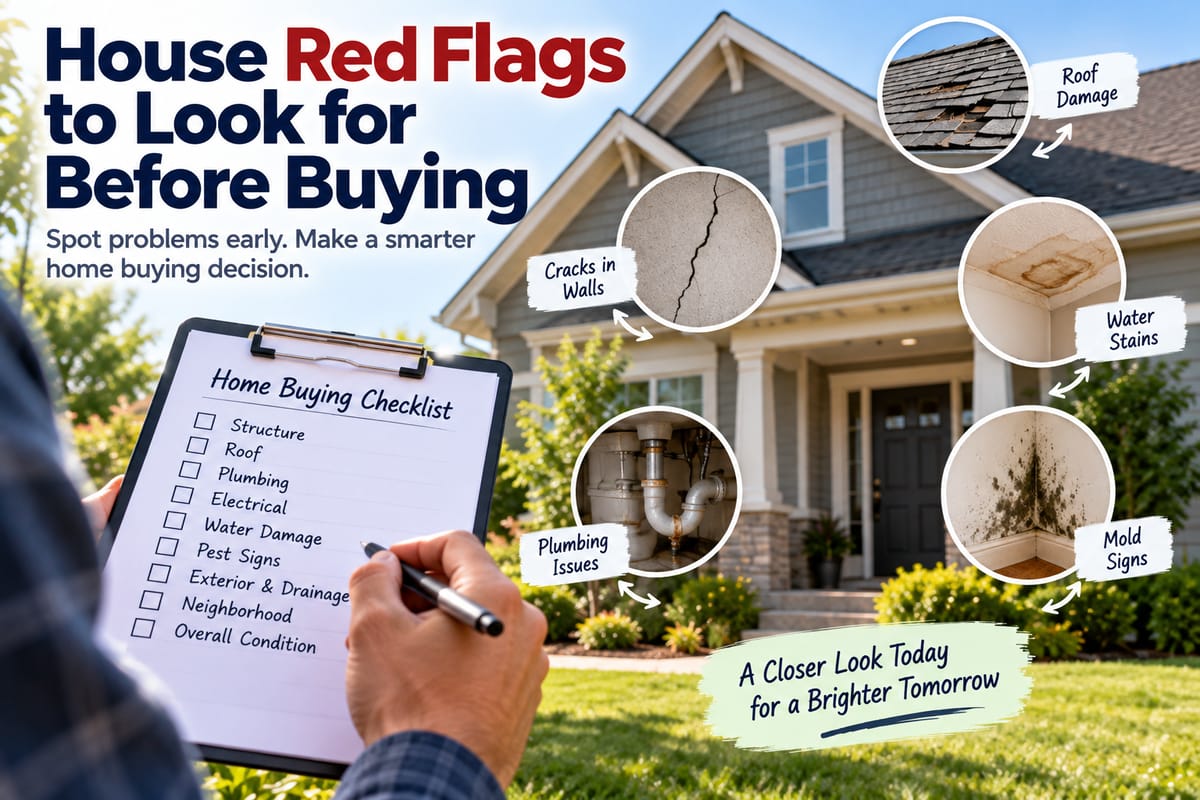
House Red Flags to Look for Before Buying
Buying a house is one of the biggest financial decisions many people make, which makes it important to look beyond fresh paint, attractive finishes, and carefully staged rooms. A property can look excellent during a viewing while hiding expensive maintenance problems, structural concerns, drainage issues, or other warning signs.
Some problems are relatively easy and inexpensive to fix. Others can require major repairs, create ongoing maintenance costs, or affect the property’s long-term value.
Knowing what to look for before making an offer can help buyers ask better questions and investigate potential problems before committing to a purchase.
Why House Red Flags Matter
A home is more than its appearance. Behind the walls, floors, ceilings, and landscaping are systems that can be expensive to repair or replace.
Potential concerns can include:
- Structural movement
- Roof deterioration
- Water damage
- Poor drainage
- Electrical problems
- Plumbing issues
- Pest activity
- Moisture and mold
- Aging mechanical systems
- Unpermitted alterations
- Neighborhood problems
Not every warning sign means a house should automatically be rejected. The important issue is understanding what the problem is, how serious it may be, what it could cost to address, and whether it affects the property’s suitability.
For buyers who are unfamiliar with the process, a first-time home buyers guide can provide useful background on the major stages involved in purchasing a property.
Red Flag: Large or Unexplained Cracks
Cracks are common in many homes, but their location, size, direction, and pattern can provide clues about what is happening.
Small superficial cracks in paint or plaster may be relatively minor. Larger cracks, particularly those that appear around windows and doors or extend through masonry, may deserve closer investigation.
Buyers should pay attention to:
- Wide cracks
- Stair-step cracks in masonry
- Cracks that extend through multiple materials
- Cracks accompanied by doors or windows that no longer close properly
- Cracks that appear to be growing
- Uneven floors associated with visible cracking
A crack does not automatically indicate a serious structural defect, but unexplained or significant movement should be investigated rather than ignored.
Red Flag: Doors and Windows That Stick
Doors and windows that suddenly become difficult to open or close can sometimes indicate moisture, settlement, swelling, poor installation, or structural movement.
A single sticking door may simply need adjustment. Several doors or windows exhibiting similar problems could deserve more attention.
During a viewing, buyers should open and close representative doors and windows rather than assuming everything operates correctly.
Red Flag: Water Stains on Ceilings or Walls
Brown, yellow, or discolored patches on ceilings and walls can indicate previous or ongoing water intrusion.
Possible sources include:
- Roof leaks
- Plumbing leaks
- Damaged flashing
- Poor drainage
- Leaking bathrooms
- Condensation
- Problems around windows
A seller may have repaired the original source of a stain, but buyers should not assume that simply because an area has been painted over, the underlying problem has disappeared.
Ask when the damage occurred, what caused it, and whether repairs were completed.
Red Flag: Musty Smells
A persistent musty or damp smell can be an indication of excess moisture.
Potential sources include leaks, poor ventilation, water intrusion, damp basements or crawl spaces, and hidden moisture behind walls or flooring.
A strong fragrance or air freshener during a viewing should not automatically be interpreted as suspicious, but buyers may want to pay attention to whether unusual odors return after windows have been closed for a while.
Red Flag: Fresh Paint in Isolated Areas
Fresh paint is not inherently a problem. Homeowners routinely repaint before selling.
However, freshly painted patches on an otherwise older wall or ceiling can justify additional questions.
The paint may simply cover an old repair, but it could also conceal staining, cracks, or other cosmetic damage.
Look for differences in paint texture, color, or finish between adjacent areas.
Red Flag: Signs of Mold or Persistent Moisture
Visible mold, bubbling paint, peeling surfaces, warped flooring, or damaged drywall can indicate moisture problems.
The visible material may be only the most obvious part of the issue. If moisture has been present for a long period, damage can extend behind finished surfaces.
Buyers should investigate the source of the moisture rather than focusing only on cleaning or repainting the affected area.
Red Flag: Poor Drainage Around the Property
Water should generally be directed away from the home’s foundation rather than toward it.
During a property inspection, look at the grading around the house, downspouts, drainage channels, and areas where water may collect.
Potential warning signs include:
- Standing water
- Soil that slopes toward the house
- Erosion near foundations
- Overflowing or poorly positioned downspouts
- Damp foundation walls
- Water marks in lower-level areas
Drainage problems can contribute to moisture intrusion and other expensive maintenance issues.
Red Flag: A Damaged or Aging Roof
The roof is one of the home’s most important protective systems.
Look for visible signs such as missing or damaged roofing materials, sagging areas, deteriorated flashing, damaged gutters, or evidence of previous leaks.
A roof nearing the end of its expected service life may not be an immediate reason to walk away from a property, but it should be reflected in the buyer’s financial planning.
A professional assessment can provide more useful information than a visual inspection from the ground.
Red Flag: Gutters and Downspouts in Poor Condition
Gutters are easy to overlook during a home viewing, but they play an important role in directing rainwater away from the structure.
Damaged, disconnected, sagging, or blocked gutters can allow water to accumulate around walls and foundations.
Check whether downspouts discharge water far enough away from the house and whether there are visible signs of erosion beneath them.
Red Flag: Uneven or Sloping Floors
A floor that feels noticeably uneven can have many possible causes.
It could result from normal construction characteristics, an aging structure, moisture damage, foundation movement, or problems with the underlying framing.
Buyers should avoid trying to diagnose the cause themselves. Significant or unexplained unevenness deserves professional investigation.
Red Flag: Electrical Problems
Older electrical systems can present both maintenance and safety concerns.
During a viewing, buyers may notice warning signs such as:
- Damaged outlets
- Loose switches
- Missing covers
- Flickering lights
- Frequently tripped breakers
- Extension cords being used extensively
- Outdated electrical components
Do not remove electrical panels or attempt to investigate wiring yourself. A qualified professional can assess the system safely.
Red Flag: Plumbing Problems
Plumbing problems can range from relatively minor leaks to expensive pipe or drainage issues.
Check visible areas under sinks for moisture, staining, corrosion, or unusual odors.
Run faucets where appropriate and observe water pressure and drainage.
Buyers should also pay attention to toilets, showers, water heaters, and exposed plumbing.
A slow drain may be a simple blockage, but multiple slow drains can indicate a larger drainage problem.
Red Flag: Old or Neglected Mechanical Systems
Heating, cooling, water-heating, and ventilation equipment can represent significant future expenses.
Find out the approximate age of major systems and whether they have been maintained regularly.
An older system may still operate perfectly well, but its remaining useful life should be considered when calculating the home’s potential maintenance costs.
Red Flag: DIY Work That Looks Questionable
Homeowners often make improvements themselves, and many DIY projects are perfectly acceptable.
However, buyers should be cautious when work appears poorly executed or when important systems have been modified without professional oversight.
Warning signs can include unfinished electrical work, uneven structural modifications, unusual plumbing arrangements, or additions that do not appear to match the original construction.
Ask whether permits were required and whether they were obtained.
Red Flag: Unpermitted Additions or Renovations
A converted garage, finished basement, extra bedroom, enclosed porch, or other addition may increase a property’s usefulness and value.
But if significant work was performed without required approvals, it can create complications.
Unpermitted work may affect insurance, future renovations, property records, financing, or resale.
This is one reason a thorough complete guide to property due diligence can be useful before committing to a purchase.
Red Flag: Pest Damage
Evidence of termites, rodents, carpenter ants, or other pests should be investigated.
Look for:
- Droppings
- Chewed materials
- Damaged wood
- Small holes
- Mud tubes
- Nesting materials
- Unusual sounds
- Signs of previous pest treatment
Pest problems can range from relatively manageable infestations to damage that affects structural components.
Red Flag: Poor Ventilation
Poor ventilation can contribute to condensation, odors, moisture, and deterioration.
Bathrooms, kitchens, attics, and other areas that generate or accumulate moisture deserve particular attention.
Check whether ventilation systems appear functional and whether there are signs of persistent condensation or dampness.
Red Flag: Damaged Exterior Walls
Exterior walls protect the house from weather and moisture.
Look for damaged siding, deteriorated masonry, cracked exterior finishes, gaps around windows, damaged sealants, and areas where water may enter.
Small exterior defects can become more expensive when water is allowed to penetrate repeatedly.
Red Flag: Landscaping That Hides the Foundation
Trees, shrubs, decorative plants, and landscaping can make a property attractive, but excessive vegetation immediately around the house can make inspection more difficult.
Dense landscaping may hide cracks, drainage problems, foundation damage, or deteriorated exterior materials.
Trees planted too close to structures can also create potential maintenance concerns depending on their size, root systems, and location.
Red Flag: A Basement or Lower Level That Feels Damp
Basements and other below-grade spaces deserve particular attention.
Look for:
- Damp odors
- Water stains
- Efflorescence
- Peeling paint
- Cracks
- Mold
- Wet flooring
- Dehumidifiers running continuously
- Water collection systems
A finished basement can sometimes make moisture problems harder to identify because walls and floors may conceal the underlying condition.
Red Flag: Neighborhood Noise and Traffic
A beautiful house can become less appealing if the surrounding environment does not match the buyer’s expectations.
Visit the property at different times when possible. Listen for traffic, nearby businesses, construction, events, aircraft, trains, or other recurring noise.
Consider how the neighborhood feels during mornings, evenings, weekends, and other relevant periods.
Learning how to evaluate a neighborhood before buying a home can help buyers assess factors that cannot be understood from the house itself.
Red Flag: Poor Access or Parking
Parking and access can have a major effect on daily life.
Consider whether the driveway is suitable for the household’s vehicles, whether street parking is consistently available, and whether access becomes difficult during bad weather.
For properties in areas with narrow roads, steep driveways, or shared access, buyers should understand exactly how access works.
Red Flag: Signs of Flooding
Past flooding can cause extensive damage and create recurring maintenance challenges.
Look for water stains, damaged lower walls, unusual flooring replacements, drainage infrastructure, or other indications that water has entered the property.
Ask directly about previous flooding rather than relying solely on visible evidence.
Understanding the property’s drainage, elevation, local water patterns, and insurance considerations can be particularly important in areas vulnerable to heavy rainfall.
Red Flag: The House Has Been on the Market for a Long Time
A long marketing period does not automatically mean that something is wrong with a property.
There may be many explanations, including pricing, market conditions, location, presentation, or limited buyer demand.
However, an unusually long listing period can be a reason to investigate rather than ignore.
Review the property’s history and ask whether previous offers fell through and, if so, why.
Red Flag: Repeated Price Reductions
Price reductions can have many explanations and are not necessarily evidence of a physical problem.
The seller may have initially priced the property too aggressively, market conditions may have changed, or buyer demand may have been weaker than expected.
Still, repeated reductions can justify asking additional questions about the property, its condition, and its market history.
Red Flag: Pressure to Skip an Inspection
A seller or other party pressuring a buyer to skip an independent inspection deserves careful consideration.
An inspection can identify problems that are difficult for an ordinary buyer to see during a short viewing.
A proper home inspection guide can help buyers understand the areas that should be examined before completing a purchase.
Red Flag: The Seller Cannot Explain Major Repairs
If a house has clearly undergone substantial repairs or renovations, buyers should ask what work was performed and when.
Useful documentation may include:
- Contractor invoices
- Receipts
- Permits
- Warranties
- Maintenance records
- Inspection reports
A lack of documentation does not automatically mean the work was defective, but it can make it harder to establish what was done and whether it was completed properly.
Red Flag: The Property Looks Too Good to Be True
A beautifully renovated home at an unusually attractive price can be appealing, but buyers should still investigate the fundamentals.
Look beyond:
- New paint
- Modern fixtures
- Staged furniture
- Decorative landscaping
- New flooring
Ask about the roof, structure, plumbing, electrical systems, drainage, permits, property history, and neighborhood.
Cosmetic improvements can make a house look newer without changing the condition of its underlying systems.
What Buyers Should Do When They Find a Red Flag
Finding a warning sign does not necessarily mean the purchase should be abandoned.
Instead, determine:
- What exactly is the problem?
- How serious is it?
- What caused it?
- Has it been repaired before?
- What would it cost to repair properly?
- Does it affect safety or habitability?
- Could it become worse over time?
- Does it affect the property’s value or insurability?
A professional inspection or specialist assessment can provide information that a buyer cannot obtain from a visual walkthrough.
Build a Repair Budget Before Buying
Buyers should consider both immediate repairs and future maintenance.
A house that needs a new roof, major plumbing work, electrical upgrades, or drainage improvements may require significantly more cash after closing than a property in better condition.
The purchase price is therefore only one part of the financial calculation.
Estimate potential repair and maintenance costs before deciding how much you can comfortably spend on the property.
Red Flags Are About Investigation, Not Panic
Every house has imperfections. Older properties will naturally have more wear and may require more maintenance than newer construction.
The purpose of identifying red flags is not to find a perfectly problem-free house. It is to understand the property’s condition well enough to make an informed decision.
Visible cracks, water stains, old systems, drainage concerns, unusual odors, questionable renovations, and neighborhood issues should prompt questions and investigation.
The strongest buying process combines a careful property viewing with professional inspection, document review, financial planning, and neighborhood research. When buyers understand the risks before signing, they are in a much better position to account for repairs, negotiate where appropriate, and choose a home that fits their long-term plans.