How Different Mops Work
How Different Mops Work
Mops are among the most familiar cleaning tools in a home, but not every mop works in the same way. Different mop designs are built for different surfaces, messes and cleaning routines.
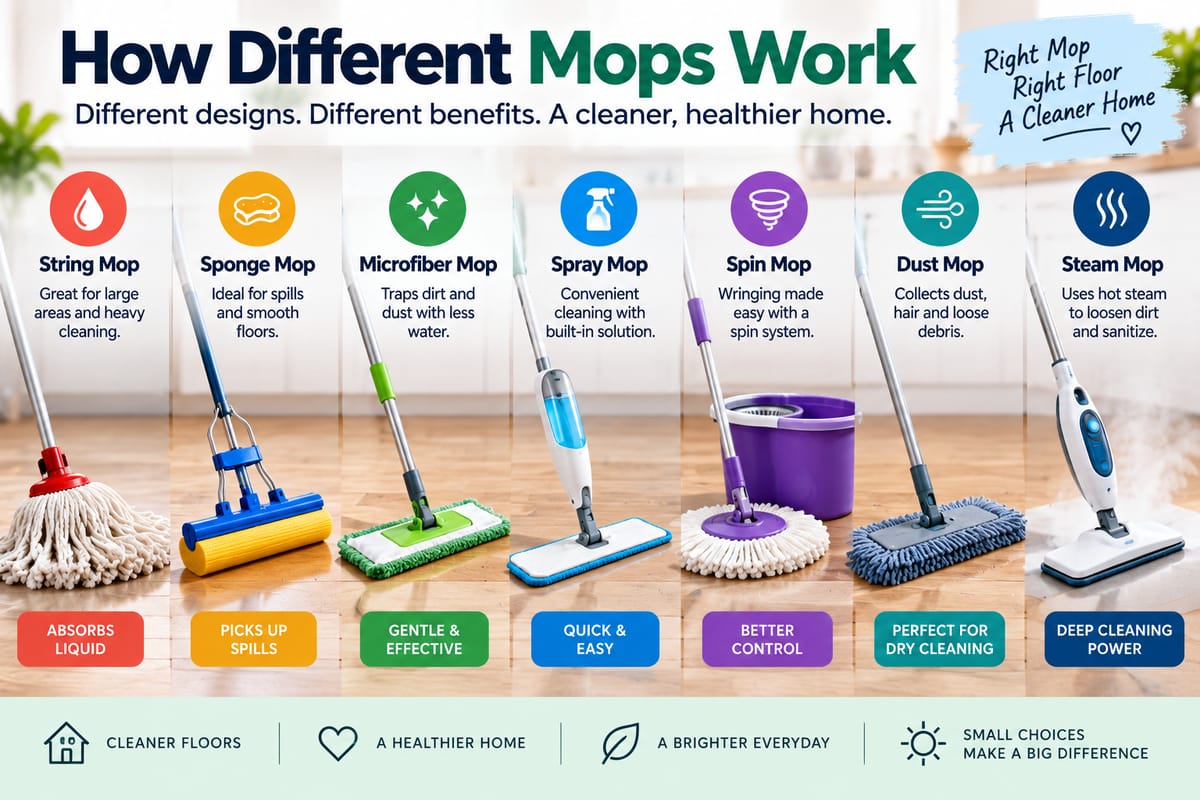
A traditional string mop can absorb large amounts of liquid, while a microfiber flat mop is designed to collect dust and dirt with relatively little water. Spray mops add convenience by combining a cleaning solution reservoir with a reusable pad, while spin mops make it easier to wring out a wet mop without touching the head.
Choosing the right mop can make cleaning more effective and reduce the risk of leaving excess water, streaks or residue on a floor.
Understanding how different mops work also makes it easier to match a cleaning tool to the flooring and type of dirt being removed.
What Does a Mop Actually Do?
A mop is designed to remove dirt, dust, spills and other debris from hard surfaces using some combination of moisture, cleaning solution, mechanical action and absorbent material.
When a mop moves across a floor, several things can happen at once.
The mop head may loosen dirt from the surface, absorb liquid, trap particles in its fibers and transfer the collected material away from the floor.
The effectiveness of a mop depends on several factors, including:
- The material used for the mop head
- How much water or cleaning solution is applied
- The amount of pressure used
- The type of floor being cleaned
- The kind of dirt or spill involved
- How frequently the mop head is cleaned
- How effectively the mop removes dirty water
A mop therefore is more than a simple wet cleaning tool. Its design determines how it interacts with the surface.
Why There Are Different Types of Mops
Floors vary considerably.
Tile can tolerate more moisture than some types of wood flooring. Smooth surfaces may benefit from microfiber, while heavily soiled floors can require a mop capable of holding more water.
Cleaning tasks also differ. Removing crumbs and light dust is not the same as cleaning a sticky kitchen spill or washing a heavily trafficked floor.
That is why manufacturers have developed different mop designs for different situations.
Understanding common household cleaning equipment is useful when building a complete cleaning routine. The Cleaning Tools: Complete Guide to Household Tools & Uses provides a broader look at the tools commonly used for household cleaning.
How a Traditional String Mop Works
The traditional string mop has a long handle attached to a bundle of absorbent strands.
These strands are usually made from materials such as cotton or synthetic fibers.
To use one, the mop head is placed into a bucket containing water and cleaning solution. The mop is then wrung out before being moved across the floor.
The strands spread across the surface and collect dirt while absorbing liquid.
Advantages of String Mops
String mops can be useful for:
- Large floor areas
- Heavy spills
- Deep cleaning
- Textured surfaces
- Floors that can safely tolerate more moisture
Their large mop heads can hold substantial amounts of water and cleaning solution.
Limitations of String Mops
The main challenge is moisture control.
If a string mop is too wet, it can leave excessive water behind. This may increase drying time and can be unsuitable for flooring that should not remain wet.
A dirty mop head can also redistribute grime if it is repeatedly used without being rinsed or replaced.
How a Sponge Mop Works
A sponge mop uses an absorbent sponge head rather than strings or fabric pads.
Many sponge mops have a built-in squeezing mechanism. The user can pull a lever or handle to compress the sponge and remove excess water.
This design makes sponge mops particularly convenient for quick spills and routine hard-floor cleaning.
Benefits of Sponge Mops
Sponge mops can be effective for:
- Absorbing spills
- Cleaning smooth hard floors
- Quick kitchen cleanups
- Removing visible liquid
- Routine maintenance
The sponge can absorb a significant amount of moisture and is relatively easy to wring.
What to Watch For
Sponge heads need to be cleaned and dried properly between uses.
A damp sponge stored in an enclosed environment can develop unpleasant odors. Over time, the material may also deteriorate and become less effective.
Replacing the head when it becomes worn is an important part of maintaining cleaning performance.
How a Flat Microfiber Mop Works
Flat microfiber mops use a relatively thin cleaning head covered with a microfiber pad.
Microfiber consists of very fine synthetic fibers designed to capture dust, dirt and other particles.
Unlike a traditional wet mop, a flat microfiber mop can be used with relatively little moisture.
This makes it useful for everyday maintenance and floors where excess water is undesirable.
Why Microfiber Is Effective
The fine fibers can reach into small surface irregularities and collect particles as the mop moves across the floor.
Microfiber pads can also be washed and reused, reducing the need for disposable cleaning materials.
A microfiber mop can be used either dry or slightly damp depending on the task.
Dry Microfiber Cleaning
When used dry, microfiber can collect:
- Dust
- Hair
- Pet fur
- Fine particles
- Light debris
This makes a dry microfiber pad useful for removing loose material before wet cleaning.
Damp Microfiber Cleaning
A slightly damp pad can help remove:
- Light stains
- Fingerprints
- Small spills
- Everyday grime
- Residue from normal household activity
The relatively low moisture level can also allow floors to dry quickly.
How a Spray Mop Works
A spray mop combines a mop head with a small reservoir attached to the handle.
Instead of carrying a bucket, the user fills the reservoir with an appropriate cleaning solution or water. A trigger releases a controlled amount of liquid onto the floor or mop pad.
The mop is then moved across the surface to loosen and collect dirt.
Why Spray Mops Are Convenient
Spray mops can be useful when cleaning small areas because there is no need to repeatedly carry a bucket.
They are particularly convenient for:
- Kitchens
- Entryways
- Apartments
- Quick daily cleaning
- Small spills
- Routine maintenance
Because the amount of liquid can be controlled, spray mops can also help prevent floors from becoming unnecessarily wet.
How a Spin Mop Works
A spin mop combines a wet mop head with a specialized bucket containing a spinning mechanism.
After the mop is rinsed, it is placed into the spinning basket. Activating the spinner forces water out of the mop head through centrifugal force.
The user can therefore control how wet the mop becomes before putting it back onto the floor.
Advantages of Spin Mops
Spin mops can be useful for people who prefer traditional wet cleaning but want more control over moisture.
They can provide:
- Effective rinsing
- Adjustable moisture levels
- Large cleaning heads
- Hands-free wringing
- Convenient bucket-based cleaning
They can be particularly useful when cleaning larger areas.
How a Dust Mop Works
A dust mop is designed primarily for collecting loose debris rather than washing a floor.
It typically has a broad, flat head covered with a fabric or microfiber material.
The mop is pushed across the floor, allowing the head to collect dust and other lightweight particles.
Dust mops can be especially useful for large surfaces because the wide head can cover a considerable area with each pass.
They can also be used before wet mopping.
Removing loose debris first prevents the wet mop from turning dust and dirt into a muddy residue.
How a Steam Mop Works
A steam mop uses heated water to produce steam, which is directed through the mop head onto the floor.
The heat and moisture help loosen certain types of dirt and residue.
Unlike conventional wet mopping, steam cleaning does not necessarily require the same quantity of liquid cleaning solution.
However, steam mops are not appropriate for every flooring material.
Some surfaces can be damaged by excessive heat or moisture, so manufacturers’ flooring and appliance instructions should be followed carefully.
Where Steam Mops Can Be Useful
Depending on the flooring and manufacturer’s recommendations, steam mops may be useful for:
- Certain sealed hard floors
- Tile surfaces
- Grout areas
- Kitchen floors
- Bathroom floors
The suitability of steam cleaning depends heavily on the material and finish.
How a Spin-and-Spray Mop Differs
Some modern mop designs combine features from different mop categories.
A mop may have a spray reservoir, a washable microfiber pad and a mechanism that makes wringing easier.
These combination designs aim to reduce the number of separate tools needed for routine cleaning.
Their main advantage is convenience. Instead of filling a bucket and repeatedly rinsing a large mop head, users can spray a controlled amount of solution and replace or wash the pad when necessary.
How Mops Work on Different Flooring Types
One of the most important factors when choosing a mop is the floor itself.
Different flooring materials have different tolerances for water, heat, cleaning chemicals and mechanical friction.
Tile
Tile generally handles moisture well, although grout can require additional attention.
A wet mop can be useful for removing accumulated dirt, while microfiber can work well for routine maintenance.
Vinyl
Vinyl flooring can usually be cleaned with a damp mop and an appropriate floor cleaner.
Excessive water should still be avoided, particularly around seams and edges.
Laminate
Laminate flooring generally benefits from low-moisture cleaning.
A damp microfiber mop can be preferable to soaking the floor with a heavily saturated mop.
Hardwood
Hardwood requires particular care because excessive moisture can damage the material or finish.
A lightly damp microfiber mop may be appropriate for some sealed hardwood floors, but cleaning recommendations can vary depending on the finish.
Stone
Natural stone flooring can be sensitive to certain cleaning chemicals.
The correct mop and cleaning product depend on the specific type of stone and its finish.
For a more detailed comparison, How to Clean Different Flooring Types explains how cleaning methods can vary between flooring materials.
Wet Mopping vs. Damp Mopping
The amount of moisture on the mop can be just as important as the type of mop being used.
Wet Mopping
Wet mopping uses a relatively saturated mop head.
It can be useful for heavily soiled surfaces or large spills when the flooring can safely tolerate significant moisture.
Damp Mopping
Damp mopping uses much less water.
The mop is damp enough to loosen and collect dirt but not so wet that it leaves large amounts of liquid behind.
This approach is often useful for routine cleaning and floors that should not be exposed to excessive moisture.
How Often Should Floors Be Mopped?
There is no single schedule that works for every household.
High-traffic areas may need more frequent cleaning than bedrooms or rarely used spaces.
Homes with pets, children or frequent outdoor activity may also accumulate dirt more quickly.
A practical cleaning schedule can combine regular maintenance with deeper cleaning when necessary.
For a broader approach to household cleaning schedules, How Often Should You Deep Clean? explains how routine cleaning and deeper cleaning can fit together.
How to Get Better Results From Any Mop
Even the best mop will not work efficiently if it is used incorrectly.
Several basic practices can improve results.
Remove Loose Dirt First
Sweep, vacuum or dry mop the floor before wet cleaning.
This prevents loose particles from becoming muddy when combined with water.
Use the Right Amount of Water
More water does not necessarily mean a cleaner floor.
Too much moisture can leave residue, increase drying time and potentially damage certain materials.
Rinse Dirty Mop Heads
A mop that becomes saturated with dirty water can spread grime instead of removing it.
Rinsing or replacing the cleaning pad regularly helps maintain effectiveness.
Work in Sections
Cleaning one manageable section at a time makes it easier to monitor how much moisture is being used and whether dirt is being removed.
Allow the Floor to Dry
Proper ventilation can speed drying and reduce the time surfaces remain damp.
Keeping Mop Heads Clean
A mop itself can become a source of contamination if it is not maintained properly.
Reusable mop heads and pads should be cleaned according to their care instructions.
After use:
- Remove the mop head or pad when possible.
- Rinse away visible dirt.
- Wash reusable materials according to the manufacturer’s instructions.
- Allow them to dry completely.
- Store them in a clean, ventilated location.
Avoid leaving a wet mop sitting in a bucket for long periods.
A clean, dry mop is much better prepared for the next cleaning session.
Choosing the Right Mop for the Job
The best mop depends on the specific cleaning task.
| Mop type | Particularly useful for | Moisture level |
|---|---|---|
| String mop | Large areas and heavier cleaning | High |
| Sponge mop | Spills and smooth floors | Medium to high |
| Flat microfiber mop | Routine maintenance | Low |
| Spray mop | Quick everyday cleaning | Low to medium |
| Spin mop | Larger wet-cleaning jobs | Adjustable |
| Dust mop | Loose dust and debris | Dry |
| Steam mop | Suitable heat-tolerant surfaces | Steam |
The table is a general guide rather than a universal rule. Flooring manufacturers’ care instructions should take priority.
The Role of Mopping in a Complete Cleaning Routine
Mopping is only one part of household floor care.
A complete routine may also include dusting, vacuuming, wiping surfaces, cleaning bathrooms, maintaining kitchens and periodically addressing areas that receive less frequent attention.
Combining regular maintenance with deeper cleaning can help prevent dirt from accumulating.
For a broader household strategy, The Ultimate Guide to Cleaning Your Home covers the different tasks involved in keeping a home clean and organized.
Common Mopping Mistakes
Several simple mistakes can reduce cleaning effectiveness.
Using Too Much Cleaning Product
More detergent does not necessarily produce a cleaner floor. Excess product can leave behind a sticky or cloudy residue.
Using the Same Dirty Water Too Long
Once water becomes heavily contaminated, continuing to use it can spread dirt around the floor.
Ignoring the Floor Manufacturer’s Instructions
Different materials have different requirements. A cleaning method that works well on tile may be unsuitable for certain wood, laminate or specialty surfaces.
Leaving Mop Heads Damp
Damp storage can contribute to unpleasant odors and poor hygiene.
Mopping Before Removing Loose Dirt
Wet cleaning works more effectively when dust, hair and loose debris have already been removed.
Why Mop Design Matters
Different mop designs solve different cleaning problems.
String mops prioritize absorption and coverage. Sponge mops focus on liquid pickup. Microfiber mops emphasize particle capture with relatively little moisture. Spray mops prioritize convenience and controlled application, while spin mops make it easier to adjust moisture during wet cleaning.
The differences may seem small, but they can significantly affect how quickly and effectively a floor can be cleaned.
Rather than looking for one mop that does everything perfectly, it can be more useful to choose a mop based on the flooring, cleaning frequency and type of mess being handled.
A good cleaning routine ultimately depends less on using the most complicated tool and more on matching the right tool and technique to the surface being cleaned.