Fall 2026 Interior Design Trends Shift Toward Layered, Colorful and Personalized Homes
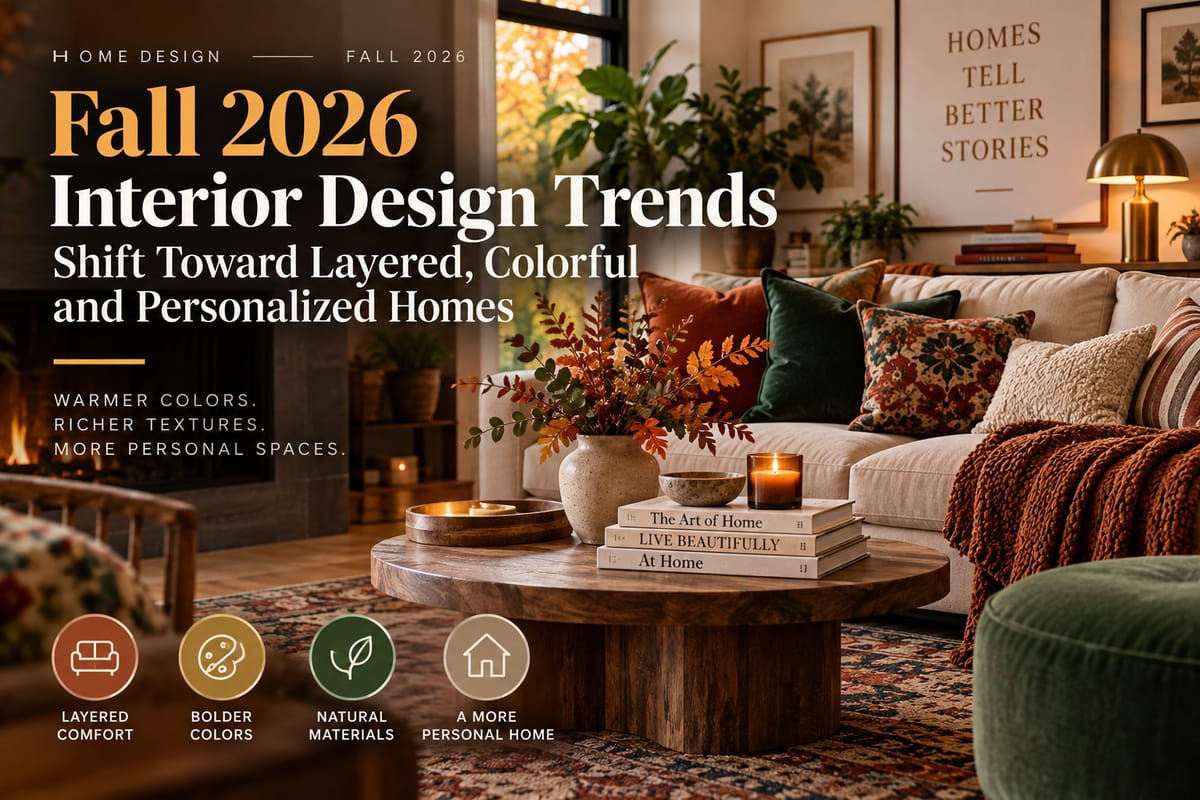
Fall 2026 Interior Design Trends Shift Toward Layered, Colorful and Personalized Homes
Fall 2026 is bringing a noticeable change to the way people are thinking about their homes. Instead of perfectly coordinated rooms built around neutral palettes, designers are increasingly embracing warmer colors, layered textures, natural materials and objects that tell a personal story.
The shift is not necessarily about abandoning modern design. It is about making modern spaces feel more lived-in.
Recent design reports and conversations with interior professionals point toward a similar direction: homeowners are moving away from stark white-and-gray interiors and increasingly looking for warmth, character and individuality. Houzz’s 2026 U.S. Fall Design Trends Report describes warm wood, earthy colors, multiple textures and natural materials as increasingly important elements, while also highlighting growing interest in collected and personalized interiors.
That makes fall 2026 less about decorating a home according to one specific style and more about creating rooms that feel comfortable, expressive and connected to the people who live in them.
Layering Becomes the Foundation of Fall Interiors
Layering is one of the clearest themes emerging this season.
Instead of relying on a single statement piece, designers are combining several visual and tactile elements to give rooms greater depth. A living room might pair a textured sofa with patterned cushions, a wool throw, a vintage rug, natural wood furniture and warm lighting.
The objective is not to make every item match. In fact, some of the most interesting fall interiors deliberately combine materials and patterns that are different but visually connected.
Designers are recommending combinations of wool, linen, wood, leather, woven materials and other tactile surfaces to create a more inviting atmosphere. Richer shades such as rust, plum, olive and deeper browns can then be introduced without requiring an entire room makeover.
This approach also makes seasonal decorating more flexible. Rather than filling a room with obvious autumn decorations, homeowners can change its mood through textiles, lighting, color and a few carefully selected accessories.
For more ideas around this approach, Layered Comfort explores how layering can make interiors feel warmer and more comfortable.
Color Is Moving Beyond Safe Neutrals
The dominance of beige, gray and bright white is continuing to soften.
Fall 2026 color palettes are increasingly featuring deeper and more complex shades, including burgundy, plum, chocolate brown, cinnamon, ochre, olive and earthy reds. These colors can create a stronger sense of warmth as natural daylight becomes shorter during the fall months.
The change does not mean every wall needs to become dark red or deep brown.
Color can be introduced through an armchair, rug, artwork, curtains, cushions or smaller decorative objects. A neutral room can also become significantly warmer by adding one or two saturated colors alongside natural materials.
Designers are also becoming more comfortable with unexpected combinations. Mustard and burgundy, for example, are being highlighted as a combination that can produce a warmer and richer atmosphere when balanced with supporting shades such as olive, ochre or neutral tones.
This reflects a broader understanding of how color affects the experience of a room. Instead of choosing colors simply because they are fashionable, homeowners are increasingly considering whether a particular shade makes a space feel calm, energetic, intimate, dramatic or welcoming.
Pattern Mixing Is Becoming More Confident
Another major shift is the return of pattern.
For several years, many contemporary interiors emphasized restrained patterns and carefully controlled palettes. Fall 2026 is showing more willingness to mix stripes, checks, florals, traditional motifs and other decorative patterns.
The key difference is that designers are generally not suggesting that every pattern should compete for attention.
Instead, successful pattern mixing often relies on a shared color family. A striped chair might sit alongside a checked cushion, while an organic floral pattern appears elsewhere in the room. The different designs create visual interest without making the space feel completely disconnected.
This contributes to the collected appearance that is becoming increasingly popular.
A room does not have to look as though every item was purchased during the same shopping trip. Mixing patterns can make it appear as though the space has evolved naturally over time.
Warm Wood and Natural Materials Add Depth
Wood is also playing an important role in the warmer direction of interior design.
Dark and medium wood tones such as walnut and espresso are receiving renewed attention, particularly when paired with stone, textiles and lighter surfaces. Designers are also emphasizing the natural variation and imperfections found in materials rather than treating them as flaws.
Natural stone, plaster, handmade tile, aged metals and textured woods can give a room a sense of permanence.
This is particularly noticeable in spaces that combine materials rather than using one finish throughout. A warm wooden cabinet might sit against a textured plaster wall, while stone accessories and woven fabrics introduce additional layers.
The result is an interior that feels less manufactured and more connected to natural materials.
Personalized Homes Are Replacing Perfect Showrooms
Perhaps the biggest change is the growing importance of personality.
For years, highly polished interiors designed to look universally appealing dominated many renovation and decorating trends. That approach often relied on neutral colors, predictable furniture arrangements and minimal personal possessions.
Fall 2026 is moving in another direction.
Houzz reports that professionals are seeing greater demand for homes that reflect individual lifestyles, personal histories and preferences. Handcrafted materials, vintage pieces, original architectural details, distinctive artwork and unusual colors can all contribute to that sense of identity.
The same shift is visible in the broader design conversation about homes becoming less like showrooms and more like personal environments.
For a closer look at this movement, Interior Designers Move Away From Perfect Showrooms Toward More Personal Homes examines the growing preference for character and individuality over perfectly staged spaces.
Vintage Pieces Fit Naturally Into the New Direction
The renewed interest in personalization is also creating more room for vintage furniture and decorative objects.
A vintage cabinet, inherited chair, old painting or secondhand table can introduce something that a brand-new matching furniture set cannot easily replicate: history.
That does not mean homes need to become traditional or heavily nostalgic.
A contemporary sofa can work alongside an antique side table. Modern lighting can sit above a vintage dining table. Contemporary artwork can be displayed in a room containing furniture from several different periods.
The contrast is part of the appeal.
Fall 2026 interiors increasingly favor spaces that appear to have developed over time rather than being designed entirely from a single catalog.
Lighting Is Becoming More Layered Too
The layering trend extends beyond furniture and fabrics.
Lighting is increasingly being treated as part of the room’s atmosphere rather than simply a practical necessity. Instead of relying on one bright ceiling fixture, designers are combining table lamps, floor lamps, sconces and decorative lighting to create different levels of illumination.
This becomes particularly useful during fall and winter, when rooms are used more heavily in the evening.
A warm table lamp beside a reading chair can create a completely different atmosphere from overhead lighting. Small pools of light can also highlight artwork, bookshelves, architectural details or decorative objects.
The result is a room that can change character depending on the time of day.
Comfort Is Becoming More Sophisticated
The renewed focus on comfort does not necessarily mean oversized furniture and endless blankets.
Instead, comfort is increasingly being connected to materials, proportions, lighting and how people actually use their homes.
Soft upholstery, tactile fabrics, supportive seating, warm wood and intimate furniture arrangements can make a room more comfortable without sacrificing visual sophistication.
This is part of a wider movement toward homes that are designed around everyday life rather than photography.
A beautiful room still matters, but it also needs to work.
Homes Are Being Designed to Evolve
Another important theme for fall 2026 is longevity.
Rather than constantly replacing interiors whenever a new trend emerges, homeowners are increasingly interested in spaces that can adapt over time. Houzz reports that professionals are seeing greater attention to long-term livability, including flexible spaces, multigenerational needs and wellness-oriented features.
That changes the way trends are approached.
Instead of redesigning an entire room around one season’s aesthetic, homeowners can introduce smaller changes that work with what they already own. A new rug, lamp, set of cushions, artwork or accent chair can alter the character of a room without requiring a complete renovation.
This makes personalization more practical as well as more sustainable.
The Fall 2026 Look Is Less About Following Rules
The strongest interior design message emerging this fall may be that there is no single required look.
Layered rooms can be minimalist or maximalist. Rich colors can appear on walls or through small accessories. Vintage furniture can sit comfortably alongside contemporary pieces. Natural materials can be rustic, refined or highly modern.
What connects many of these approaches is the desire for interiors to feel warmer, more tactile and more personal.
Fall 2026 therefore represents less of a dramatic break from previous design movements and more of an evolution. The emphasis is shifting from perfectly coordinated rooms toward spaces with depth, history and individuality.
For homeowners, that can mean there is less pressure to start over. Existing furniture, personal collections and meaningful objects can become the foundation for a refreshed interior.
The emerging style is not about making every home look the same. It is about making each home feel more like the people who live there.