How Drainage Systems Protect Homes
How Drainage Systems Protect Homes
A home can have a strong foundation, durable walls, and a well-maintained roof, but water can still become one of its biggest threats. Rainfall, surface runoff, groundwater, and plumbing leaks can all introduce moisture into places where it can cause expensive damage.
Drainage systems are designed to control where water goes and move it away from vulnerable parts of a property. Although many drainage features are easy to overlook, they play an important role in protecting foundations, walls, landscaping, and indoor spaces.
Understanding how drainage works can help homeowners identify problems earlier, plan maintenance, and reduce the risk of costly water-related repairs.
What Is a Home Drainage System?
A home drainage system is a collection of features designed to collect, redirect, and safely discharge water around a property.
Depending on the home’s design and location, drainage may include:
- Gutters and downspouts
- Downspout extensions
- Surface drains
- French drains
- Swales and grading
- Foundation drains
- Sump pumps
- Stormwater channels
- Drainage pipes
- Yard drains
- Permeable surfaces
These components may work independently or as part of a larger drainage strategy. The goal is generally the same: prevent uncontrolled water from accumulating near the home.
Drainage also overlaps with the home’s plumbing infrastructure. Understanding How Home Plumbing Systems Work can help homeowners distinguish between systems that manage wastewater inside the house and systems that manage rainwater and groundwater outside it.
Why Water Around a Home Can Be a Problem
Water itself is not necessarily harmful to a building. The problem occurs when it remains in places that were not designed to handle prolonged moisture.
Persistent water exposure can contribute to:
- Soil erosion
- Foundation problems
- Basement or crawl-space moisture
- Mold and mildew growth
- Wood rot
- Damaged landscaping
- Cracked or deteriorating masonry
- Pest problems
- Flooding
- Damage to flooring and interior finishes
Even relatively small drainage problems can become more serious when they are repeated during heavy rainfall.
For example, a downspout that releases water directly beside a foundation may not cause visible damage immediately. Over time, however, repeated saturation can increase moisture around the foundation and contribute to erosion or water intrusion.
How Gutters Protect the Roof and Foundation
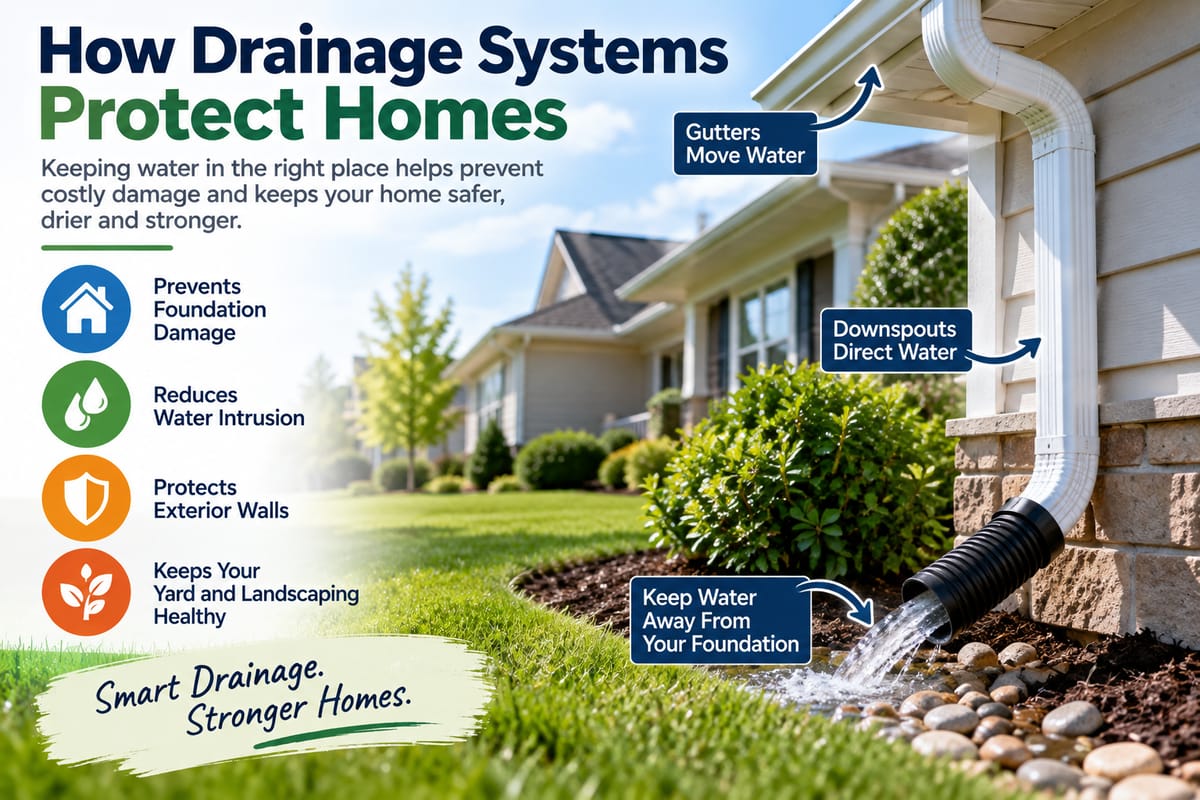
Gutters are one of the most visible parts of a home’s exterior drainage system. Their primary job is to collect rainwater running off the roof and direct it toward downspouts.
Without functioning gutters, large volumes of water can fall directly from the roof edge onto the ground around the house.
This can cause:
- Soil erosion
- Water pooling
- Landscape damage
- Splashing against exterior walls
- Increased moisture near the foundation
Downspouts extend this drainage network from the roof to the ground. Ideally, water should be discharged in a location where it can flow away from the home’s foundation without creating another drainage problem.
Clogged gutters can undermine this entire system. Leaves, branches, dirt, and other debris can prevent water from flowing properly, causing gutters to overflow during storms.
Regular inspection and cleaning should therefore be part of routine Home Maintenance Projects.
How Grading Directs Water Away From the House
The ground surrounding a home is an important part of its drainage system.
Ideally, the terrain immediately around the structure should encourage water to move away from the foundation rather than toward it. This is commonly achieved through appropriate grading.
Poor grading can cause rainwater to collect next to the house. Even if gutters and downspouts are functioning correctly, water may still travel toward the building if the surrounding soil slopes in the wrong direction.
Over time, persistent pooling can increase moisture exposure around foundations and lower portions of exterior walls.
Grading problems can develop for several reasons, including soil settlement, landscaping changes, construction work, and erosion.
Foundation Drainage and Moisture Protection
Some homes require additional drainage around their foundations, particularly properties with basements, crawl spaces, high groundwater levels, or challenging soil conditions.
Foundation drainage systems can collect water around the structure and direct it toward an appropriate discharge point. Depending on the property, this may involve perforated drainage pipes, gravel, drainage membranes, sump systems, or other components.
Keeping water away from the foundation is important because foundations are exposed to moisture from the surrounding soil.
When drainage systems fail, water pressure can increase around foundation walls. In some properties, this can contribute to basement leaks or other forms of water intrusion.
A drainage system is therefore not simply a landscaping feature. It can form part of the home’s broader moisture-management strategy.
How Drainage Protects Exterior Walls
Exterior walls and the building envelope are constantly exposed to rain, wind, humidity, and temperature changes. Drainage helps reduce the amount of water that remains against these surfaces.
Features such as roof overhangs, gutters, flashing, drainage planes, properly sealed openings, and appropriate grading can work together to control moisture.
The broader role of these components is explained in How Home Exterior Walls and Building Envelopes Protect Against Weather.
Effective drainage does not mean keeping every part of a building completely dry at all times. Instead, it helps ensure that water can move through or away from exterior assemblies without becoming trapped where it can cause damage.
Yard Drainage Can Prevent Water From Pooling
Some properties naturally collect water in low areas of the yard. Heavy rainfall can make the problem more noticeable, particularly when the soil drains slowly.
Yard drainage solutions can include:
- Catch basins
- Channel drains
- French drains
- Dry wells
- Grading adjustments
- Drainage swales
- Underground drainage pipes
The appropriate solution depends on the source and volume of water, soil conditions, property layout, and local drainage requirements.
Simply installing a drain without addressing where the water is coming from may not solve the underlying problem.
A good drainage plan considers the entire path of water, from where it enters the property to where it ultimately needs to go.
Drainage and Basement Protection
Basements are particularly vulnerable to water because they are below ground level.
Water can enter through cracks, joints, porous materials, improperly sealed openings, or pressure from saturated soil.
Exterior drainage can reduce the amount of water reaching foundation walls, while interior systems such as sump pumps may provide another layer of protection.
A properly functioning sump pump can collect water and discharge it away from the building. However, pumps require maintenance and depend on electricity or backup power systems, depending on the installation.
Homeowners should understand how their basement drainage system works rather than waiting until a major storm reveals a problem.
What Happens When Drainage Systems Fail?
Drainage failures can range from relatively minor inconveniences to significant structural and property damage.
Common warning signs include:
- Water pooling near the foundation
- Overflowing gutters
- Downspouts discharging too close to the house
- Damp basement walls
- Musty odors
- Standing water in the yard
- Soil washing away around the foundation
- Cracked or deteriorating exterior surfaces
- Water stains
- Frequently clogged drains
A single symptom does not necessarily identify the exact cause. For instance, basement moisture could result from surface runoff, foundation cracks, plumbing problems, condensation, or several issues occurring together.
The earlier a drainage problem is investigated, the more opportunities there may be to address it before the damage becomes extensive.
Seasonal Drainage Maintenance
Drainage systems need periodic attention because they are exposed to weather, vegetation, soil movement, and debris.
Routine maintenance can include:
- Cleaning gutters and checking downspouts.
- Removing debris from surface drains.
- Inspecting areas around the foundation after heavy rain.
- Checking for standing water.
- Looking for soil erosion or settlement.
- Making sure downspout outlets remain clear.
- Inspecting drainage grates and channels.
- Checking sump pumps where applicable.
- Watching for changes in yard grading.
- Addressing small drainage problems before they become persistent.
Maintenance should be approached as an ongoing part of property care rather than something reserved for emergencies.
Drainage Problems Should Not Be Ignored
Water-related damage can progress gradually, which makes drainage problems easy to overlook. A small area of standing water might appear harmless, while repeated exposure can eventually affect soil, landscaping, exterior materials, or foundation areas.
Homeowners should pay particular attention after periods of heavy rainfall. Storms can reveal drainage weaknesses that are not obvious during dry weather.
It is also important to investigate recurring problems instead of repeatedly treating their visible symptoms. Moving water away temporarily may not resolve an underlying grading, drainage, or structural issue.
Drainage Can Help Protect Home Value
A home’s condition is closely connected to how well its major systems and exterior components are maintained. Water damage can create repair expenses and may affect the condition and appearance of the property.
Proper drainage is therefore one component of broader property preservation. Maintaining gutters, exterior surfaces, foundations, landscaping, and other systems can reduce avoidable deterioration.
Homeowners looking at the bigger picture can also explore How to Protect and Improve Home Value for a broader understanding of maintenance and property improvements.
When Professional Help May Be Necessary
Some drainage issues can be handled through routine maintenance, but more complicated problems may require professional evaluation.
Professional assistance may be appropriate when:
- Water repeatedly enters a basement.
- Foundation areas remain saturated.
- Major grading changes are needed.
- Drainage pipes appear damaged or blocked underground.
- Significant erosion is occurring.
- A sump system repeatedly fails.
- Water is affecting structural components.
- A drainage modification could affect neighboring properties.
Professionals can help identify the source of water and determine whether the problem involves grading, gutters, underground drainage, foundation conditions, plumbing, or several systems at once.
A Small Drainage Problem Can Become a Bigger Home Problem
A well-designed drainage system quietly performs an important job: it gives water a controlled path away from the places where it can cause damage.
Gutters move roof runoff, downspouts carry it away from the structure, grading influences surface flow, and foundation drainage can help manage water below ground. Together, these systems form an important line of defense against moisture-related problems.
For homeowners, the key is not simply having drainage features in place but keeping them functional. Regular inspections, timely maintenance, and attention to warning signs can help prevent manageable drainage issues from developing into expensive property problems.