How Garden Climate Affects Plant Selection
How Garden Climate Affects Plant Selection
Choosing plants for a garden is about more than finding flowers, vegetables, shrubs, or trees that look attractive. A plant also needs environmental conditions that allow it to grow, survive seasonal changes, and remain healthy over time.
One of the most important factors is climate.
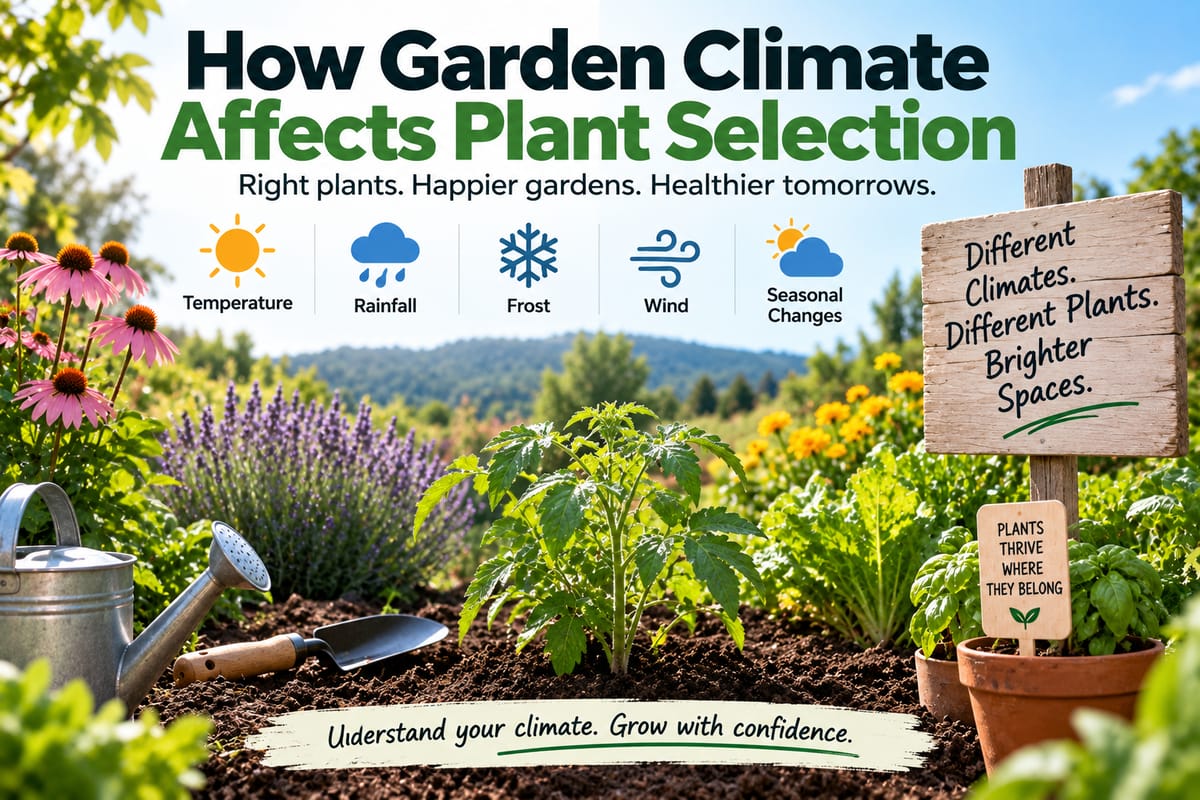
Temperature, rainfall, humidity, seasonal patterns, wind, frost, and the length of the growing season can all influence which plants are suitable for a particular garden. A plant that thrives in one region may struggle in another, even when it receives the right amount of sunlight and is planted in fertile soil.
Understanding the relationship between climate and plant selection can help gardeners create landscapes that are healthier, easier to maintain, and better suited to local conditions.
What Does Garden Climate Mean?
Garden climate refers to the environmental conditions that regularly affect plants in a particular location.
Climate is different from weather. Weather describes short-term conditions such as today’s temperature or tomorrow’s rainfall, while climate describes longer-term patterns.
Important climate factors for gardens include:
- Average temperatures
- Winter and summer conditions
- Rainfall patterns
- Humidity
- Frost and freezing temperatures
- Length of the growing season
- Wind exposure
- Drought frequency
- Seasonal changes
- Extreme heat
- Extreme cold
A gardener needs to consider these conditions when deciding which plants are likely to perform well.
Why Climate Matters When Choosing Plants
Plants have different environmental requirements.
Some species are adapted to warm conditions and may be damaged by frost. Others need a period of cold temperatures as part of their natural growth cycle. Some plants tolerate dry conditions, while others require consistently moist soil.
When a plant is placed outside its preferred climate range, several problems can occur.
It may:
- Grow slowly
- Produce fewer flowers or fruits
- Develop stress symptoms
- Become more vulnerable to pests and diseases
- Require frequent watering
- Suffer heat or cold damage
- Die during extreme weather
Choosing plants that are naturally compatible with the local climate can reduce these problems from the beginning.
Understanding Plant Hardiness
Plant hardiness refers to a plant’s ability to survive particular environmental conditions, especially low temperatures.
Hardiness information is particularly useful in regions where winter temperatures can fall below freezing.
A plant rated for a warm climate may not survive a cold winter, while a cold-hardy plant may tolerate freezing conditions much better.
However, hardiness is only one part of plant selection.
A plant may survive the winter but still struggle because of excessive summer heat, inadequate rainfall, humidity, poor soil, or other environmental conditions.
Gardeners should therefore consider the complete climate rather than focusing on one temperature measurement.
Temperature and Plant Selection
Temperature affects almost every aspect of plant growth.
It influences:
- Seed germination
- Root development
- Photosynthesis
- Flowering
- Fruit production
- Water use
- Dormancy
- Pest activity
- Disease development
Different plants have different temperature preferences.
Warm-season plants generally perform best when temperatures are consistently warm, while cool-season plants may grow more successfully during milder periods.
Understanding the typical temperature patterns in a garden can help determine when plants should be planted and which species are appropriate.
Extreme Heat Can Change Plant Choices
Average temperatures do not tell the whole story.
Short periods of extreme heat can place significant stress on plants, particularly when combined with dry soil or strong winds.
Heat-sensitive plants may experience:
- Wilting
- Leaf scorching
- Flower drop
- Reduced growth
- Increased water demand
- Sun damage
Gardeners in hot climates may therefore benefit from choosing plants that tolerate heat and periods of limited moisture.
Mulching, appropriate irrigation, shade structures, and careful placement can also help protect plants during periods of high temperatures.
Cold, Frost, and Freezing Conditions
Cold weather presents a different set of challenges.
Frost can damage tender leaves, flowers, stems, and young plants. Prolonged freezing temperatures can cause even more serious damage to plants that are not adapted to cold conditions.
Gardeners should consider whether a plant can tolerate the lowest temperatures normally experienced in the area.
It is also useful to understand the difference between a brief cold snap and a prolonged period of freezing weather.
Some plants may survive a short exposure to cold but suffer significant damage if low temperatures continue for several days.
Rainfall Influences Plant Selection
Rainfall is another major climate factor.
A garden in a naturally wet environment has very different plant-selection requirements from a garden in a dry region.
High rainfall can create challenges such as:
- Waterlogged soil
- Root problems
- Fungal diseases
- Nutrient leaching
- Poor drainage
Dry climates can create different challenges:
- Drought stress
- Rapid soil drying
- Increased irrigation requirements
- Leaf wilting
- Reduced flowering
Choosing plants adapted to the area’s typical rainfall pattern can reduce the amount of intervention required.
Drought-Tolerant Plants
In regions with limited rainfall or recurring dry periods, drought tolerance can be an important characteristic.
Drought-tolerant plants often have adaptations that help them conserve or access water.
Depending on the species, these may include:
- Deep root systems
- Small leaves
- Waxy foliage
- Thick leaves
- Reduced water loss
- Dormancy during dry periods
However, drought tolerance does not necessarily mean that a plant requires no water.
Newly planted specimens generally need appropriate watering while their root systems become established.
Humidity and Garden Plants
Humidity can influence plant health, particularly when combined with warm temperatures.
Some plants thrive in humid environments, while others prefer drier air.
High humidity can also create conditions favorable to certain fungal and bacterial diseases because moisture remains on leaves for longer periods.
In humid climates, gardeners may need to pay closer attention to:
- Air circulation
- Plant spacing
- Watering practices
- Leaf moisture
- Disease-resistant varieties
Plants that naturally occur in humid environments may be better suited to these conditions.
Wind Exposure Matters Too
Wind is sometimes overlooked when gardeners think about climate.
Strong winds can increase water loss from leaves and soil while also causing physical damage to plants.
Tall plants, young trees, and plants with fragile stems can be particularly vulnerable.
Wind can:
- Break branches
- Damage leaves
- Dry out soil
- Increase evaporation
- Cause plants to lean
- Damage flowers
Wind exposure should therefore be considered when selecting plants and deciding where to place them.
A sheltered garden may support plants that would struggle in an exposed location.
The Growing Season
The growing season is the period during which environmental conditions are suitable for active plant growth.
Its length varies significantly between climates.
A long growing season provides more time for plants to develop, flower, and produce fruit. A short growing season may require gardeners to select fast-growing plants or carefully time planting.
For vegetable gardens, growing-season length can be especially important.
A crop that needs a long period to mature may not perform well in an area where favorable conditions last only a short time.
Climate Affects When You Plant
Plant selection and planting schedules are closely connected.
Even a suitable plant can struggle if it is planted at the wrong time.
Gardeners should consider:
- Typical last frost dates
- Typical first frost dates
- Seasonal rainfall
- Summer heat
- Winter conditions
- Soil temperatures
- Expected growing period
In warmer climates, planting may be possible during periods when gardeners in colder regions must wait.
Likewise, some plants that thrive during cool weather may need to be grown before the hottest part of the year arrives.
Microclimates Can Change Garden Conditions
A garden’s overall regional climate is important, but conditions can vary significantly within the same property.
These smaller areas are known as microclimates.
For example, one part of a garden might be warmer because it is next to a sun-heated wall, while another area might remain cool because it is shaded by trees.
Other microclimate influences include:
- Buildings
- Walls
- Fences
- Slopes
- Paved surfaces
- Water features
- Trees
- Windbreaks
- Low-lying areas
Understanding these variations can allow gardeners to place plants where conditions are most suitable.
Sunlight and Climate Work Together
Climate should never be considered separately from sunlight.
A hot climate with intense sunlight creates different growing conditions from a hot climate with significant shade.
Likewise, a cool garden that receives several hours of direct sunlight may support plants that would struggle in a shaded location.
Sunlight influences photosynthesis, flowering, growth, and plant development.
For more information about this important relationship, see How Sunlight Affects Plant Growth in Gardens.
Soil and Climate Are Connected
Climate also affects soil conditions.
Rainfall can influence soil moisture and nutrient availability, while prolonged heat can cause soil to dry quickly. Heavy rain can contribute to erosion or nutrient loss in some situations.
Soil texture also influences how much water remains available to plants.
Sandy soil generally drains more quickly, while clay-heavy soil can retain more water but may drain poorly.
Gardeners should therefore consider both climate and soil when choosing plants.
A deeper understanding of these conditions can be found in The Ultimate Guide to Soil Health.
Native Plants and Local Climate
Native plants can be useful choices because they have evolved within the environmental conditions of their natural regions.
Depending on the species, native plants may already be adapted to local:
- Temperatures
- Rainfall patterns
- Soil conditions
- Seasonal cycles
- Local wildlife
- Common environmental stresses
This does not mean every native plant will suit every garden.
A native species may still require particular soil, sunlight, drainage, or moisture conditions.
However, considering plants that naturally occur in the region can provide a useful starting point.
Choosing Trees for Different Climates
Trees require particularly careful selection because they can remain in a landscape for decades.
A tree that is poorly suited to the local climate can become difficult to maintain or suffer repeated environmental stress.
Gardeners should consider:
- Mature size
- Temperature tolerance
- Water requirements
- Wind resistance
- Soil preferences
- Root characteristics
- Growth rate
- Seasonal behavior
- Local environmental conditions
Before planting a long-lived tree, it is useful to understand how it will perform as it matures.
How to Choose Trees for Your Garden provides a broader framework for evaluating trees based on garden conditions and long-term needs.
Climate and Garden Design
Climate should also influence the overall design of a garden.
A garden designed for a hot, dry environment may use different plant arrangements and water-management strategies than a garden in a cool, wet region.
Climate-conscious design can influence:
- Plant spacing
- Shade placement
- Wind protection
- Irrigation
- Drainage
- Ground cover
- Mulching
- Plant grouping
- Path placement
- Selection of hardscape materials
Gardeners can explore these broader design considerations through Understanding Garden Design and Landscape Planning.
Group Plants With Similar Needs
One practical strategy is to group plants according to their environmental requirements.
For example, plants that tolerate dry conditions can be placed together, while moisture-loving plants can occupy areas where water is more readily available.
This approach is sometimes called hydrozoning when it is based primarily on water requirements.
Grouping plants with similar needs can make watering and maintenance more efficient.
It also reduces the risk of giving one plant too much water simply because another plant growing nearby requires it.
Consider Seasonal Changes
A garden’s climate is not static throughout the year.
Conditions can change considerably between seasons.
A plant may thrive during spring but experience stress during summer heat. Another may perform poorly during hot weather but flourish during a cooler season.
When selecting plants, consider how the garden changes throughout the year.
Ask:
- When is the garden hottest?
- When is rainfall most common?
- When does the soil become driest?
- Are there periods of frost?
- When are strong winds most likely?
- Which seasons provide the best growing conditions?
This approach creates a garden plan based on the full annual cycle rather than one season.
Climate Change and Long-Term Plant Selection
Long-term changes in temperature and rainfall patterns can also influence gardening decisions.
Gardeners planning landscapes that are expected to remain productive for many years may want to consider whether the plants they select can tolerate a reasonable range of environmental conditions.
This can include looking for plants with suitable tolerance to:
- Heat
- Drought
- Heavy rainfall
- Variable temperatures
- Local seasonal conditions
Long-lived plants such as trees deserve particular attention because replacing them after environmental stress can be costly and disruptive.
Avoid Choosing Plants Only for Appearance
A beautiful plant may not be a suitable plant.
Garden centers and catalogs often make it easy to focus on flower color, foliage, shape, or size. These characteristics matter, but they should not be considered before basic growing requirements.
A better selection process starts with the garden’s conditions.
Consider:
- What climate does the plant prefer?
- Can it tolerate local temperature extremes?
- How much water does it need?
- What type of soil does it prefer?
- How much sunlight does it require?
- How large will it become?
- How much maintenance will it need?
Once these requirements match the garden, appearance can become part of the final selection.
A Practical Climate-Based Plant Selection Process
Gardeners can use a simple process when choosing plants.
Step 1: Identify Your Climate
Understand typical temperatures, rainfall, humidity, frost risk, and seasonal patterns.
Step 2: Observe Your Garden
Look at the conditions within the actual property. Identify sunny, shaded, windy, sheltered, dry, and wet areas.
Step 3: Check Plant Requirements
Read reliable plant information to determine its preferred temperature, water, soil, and sunlight conditions.
Step 4: Compare Requirements With Conditions
Ask whether the plant’s needs match what your garden can naturally provide.
Step 5: Consider Maintenance
A plant may survive in a particular climate but require intensive watering, protection, pruning, or pest management.
Step 6: Think Long Term
Consider how the plant will perform as it matures and how seasonal and environmental changes may affect it.
Climate-Friendly Gardening Can Reduce Maintenance
Selecting plants suited to local conditions can make gardening more manageable.
Plants that match the climate may need less intervention than species that constantly struggle against environmental conditions.
This can potentially reduce the need for:
- Frequent watering
- Frost protection
- Heat protection
- Replacement planting
- Intensive maintenance
- Corrective soil management
The goal is not to eliminate garden care. Every garden requires attention. Instead, climate-conscious plant selection helps create conditions in which plants have a better chance of growing naturally.
Creating a Garden That Works With Its Environment
Climate is one of the foundations of successful plant selection.
Temperature determines whether plants can tolerate local conditions. Rainfall influences water availability. Humidity affects moisture and disease pressure. Wind can increase stress and physical damage, while the length of the growing season influences what can be grown and when.
Sunlight, soil, drainage, and microclimates then add another layer of detail.
The most successful plant choices are therefore not necessarily the most unusual or visually dramatic ones. They are plants whose natural requirements fit the conditions the garden can provide.
By understanding local climate before choosing plants, gardeners can build outdoor spaces that are more resilient, easier to care for, and better adapted to the environment around them.