How Home Plumbing Systems Work
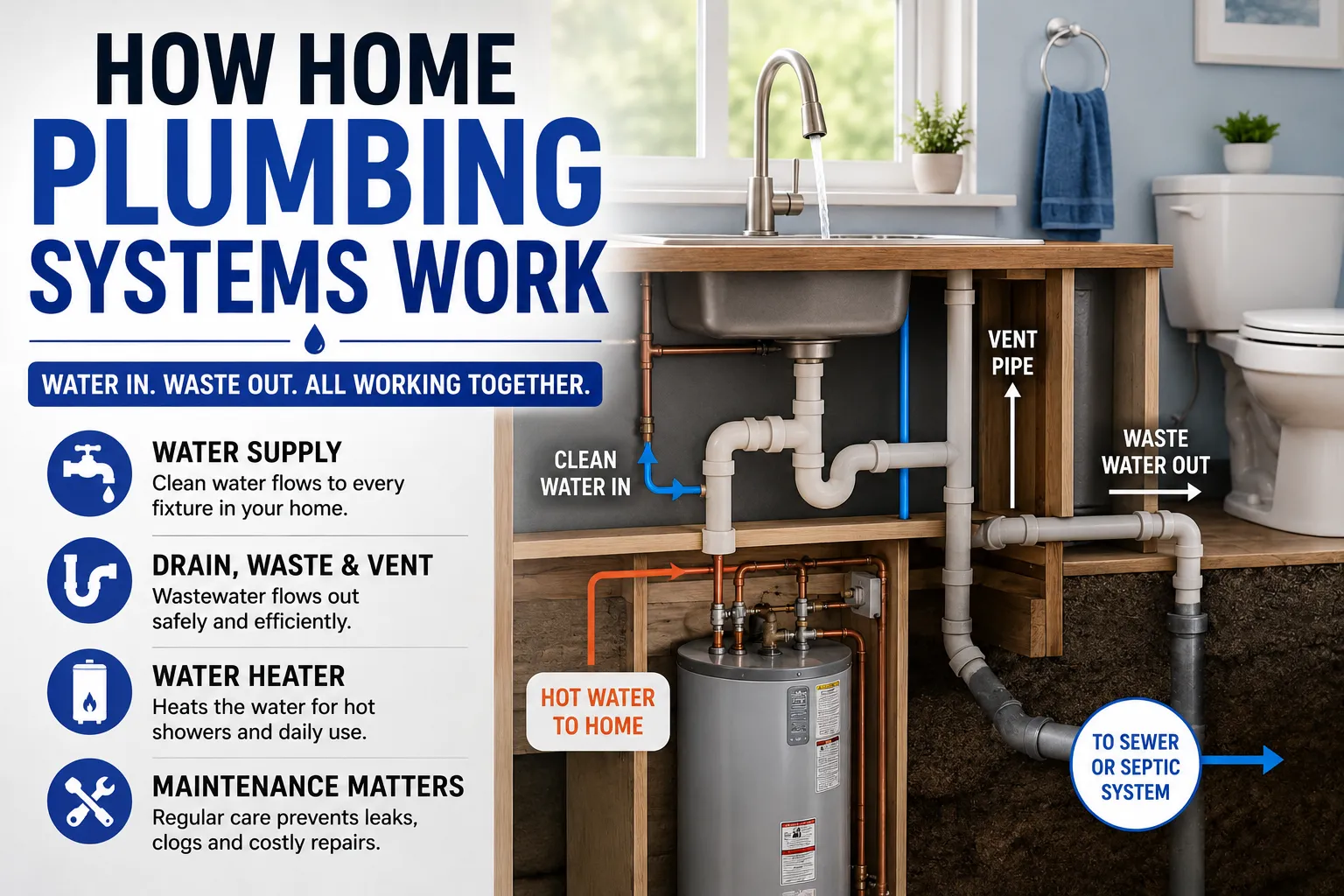
How Home Plumbing Systems Work
A home’s plumbing system is one of those things most people rarely think about until something goes wrong. A blocked drain, dripping faucet, weak shower or burst pipe can quickly turn an ordinary day into an expensive repair job.
Behind every sink, toilet, shower and appliance is a network of pipes, valves, fixtures and drains designed to move clean water into the home and wastewater out. Understanding how these components work together can make it easier to identify problems, perform basic maintenance and know when a plumbing issue requires professional attention.
Plumbing is also an important part of broader home maintenance projects, since problems with water supply, drainage, leaks and fixtures can affect many other parts of a property.
This guide explains how home plumbing systems work, from the main water supply to drainage, ventilation, water heaters and common plumbing problems.
What Is a Home Plumbing System?
A residential plumbing system is a network that performs two fundamental jobs:
- Delivers clean water to fixtures and appliances.
- Removes wastewater from the home.
Most homes have two interconnected but separate systems:
- Water supply system
- Drain-waste-vent system, commonly called the DWV system
The supply side operates under pressure, while wastewater generally moves through drainpipes using gravity.
This basic distinction explains much of how residential plumbing works.
The Two Main Sides of Home Plumbing
1. The Water Supply System
The supply system brings fresh water into the house.
Depending on the property and local infrastructure, water may enter from a municipal water supply or another source such as a private well.
Water travels through a main supply pipe and is distributed to different fixtures throughout the building.
These fixtures can include:
- Kitchen sinks
- Bathroom sinks
- Toilets
- Showers
- Bathtubs
- Washing machines
- Dishwashers
- Outdoor faucets
- Water heaters
The water supply system must maintain enough pressure to deliver water where it is needed.
2. The Drainage System
The drainage system carries used water and waste away from fixtures.
Unlike supply pipes, drainage pipes typically don’t rely on water pressure from the source. They are designed with appropriate slopes so wastewater can flow toward the sewer or an onsite wastewater treatment system.
The drainage system connects sinks, showers, bathtubs, toilets and appliances to larger drainpipes.
How Water Enters Your Home
The process begins at the home’s main water connection.
For a property connected to a public water network, water generally travels through an underground service line before entering the building.
A typical arrangement includes:
Water main → service pipe → main shutoff valve → water meter → distribution pipes → fixtures
The exact arrangement varies depending on local plumbing regulations and the home’s design.
The Main Shutoff Valve
The main shutoff valve is one of the most important components homeowners should know.
It allows the water supply to the entire home to be turned off.
Knowing where this valve is located can be extremely valuable during a plumbing emergency.
If a pipe suddenly bursts, shutting off the main water supply can significantly reduce the amount of water entering the building while the problem is addressed.
How Water Pressure Works
Water pressure allows water to travel through the supply pipes and reach faucets, showers and appliances.
Pressure can come from the public water system, a well pump or a combination of pumps and pressure tanks.
Several factors can affect water pressure, including:
- Municipal supply pressure
- Elevation
- Pipe size
- Pipe condition
- Partially closed valves
- Plumbing restrictions
- Pressure regulators
- Multiple fixtures operating simultaneously
If water pressure suddenly becomes much weaker than usual, there may be a problem with the supply system, a valve, a regulator, mineral buildup or another component.
How Cold and Hot Water Reach Fixtures
Once water enters the home, the supply system distributes it through a network of pipes.
Cold water generally travels directly from the incoming supply to fixtures.
Hot water follows a different route.
A typical system works like this:
Cold water supply → water heater → hot-water pipes → faucets and appliances
The water heater raises the temperature of incoming cold water and stores or produces hot water depending on the type of system.
How Home Water Heaters Work
Water heaters provide hot water for activities such as:
- Showering
- Washing dishes
- Cleaning
- Laundry
- Cooking-related tasks
Common types include:
- Storage-tank water heaters
- Tankless water heaters
- Heat-pump water heaters
- Solar water-heating systems
- Gas-powered systems
- Electric systems
Storage-Tank Water Heaters
Traditional water heaters store a quantity of heated water inside an insulated tank.
When someone opens a hot-water faucet, heated water leaves the tank while new cold water enters to replace it.
Tankless Water Heaters
Tankless systems heat water as it passes through the unit rather than storing a large volume of hot water.
They can provide hot water on demand, although their performance depends on factors such as flow rate, incoming water temperature and system capacity.
How Faucets Work
A faucet controls the flow of water from the plumbing system.
Traditional faucets may use washers or compression mechanisms, while modern designs often use cartridge, ceramic-disc or ball mechanisms.
When you open a faucet, a valve inside the fixture moves to allow water through.
When you close it, the valve restricts the flow.
A dripping faucet can indicate worn or damaged internal components, mineral buildup or another issue.
How Toilets Work
Toilets use a combination of water flow and gravity to remove waste.
When you flush a conventional toilet, several things happen:
- The flush mechanism opens.
- Water flows from the tank or supply into the bowl.
- The increased water level moves waste through the trap.
- Wastewater enters the drain system.
- The tank or flushing mechanism resets for the next use.
The curved section inside the toilet creates a trap that holds a small amount of water.
That water helps prevent sewer gases from entering the home.
What Are Plumbing Traps?
A plumbing trap is a curved section of drainpipe designed to retain water.
The most familiar example is the P-trap beneath a sink.
Its basic purposes include:
- Preventing sewer gases from entering living spaces
- Helping protect indoor air quality
- Providing a barrier between the drainage system and the room
You may find traps beneath:
- Bathroom sinks
- Kitchen sinks
- Utility sinks
- Some appliances and fixtures
If a sink hasn’t been used for a long time, the water inside its trap can evaporate. This can sometimes allow unpleasant drain odors into the room.
How Drains Work
When you open a faucet or take a shower, wastewater enters a drain.
The water moves through smaller drainpipes before joining larger drainage lines.
Drainpipes are generally installed with appropriate slopes to encourage wastewater to move toward the main drain.
The system relies heavily on gravity.
This is why incorrect pipe slopes can contribute to drainage problems.
Why Plumbing Needs Vent Pipes
Drainpipes aren’t the entire drainage system.
Homes also need plumbing vents.
Vent pipes allow air to enter and move through the drainage system, helping maintain appropriate pressure.
Without proper venting, draining water can create pressure changes that interfere with traps and drainage.
Signs of potential drainage or venting problems can include:
- Gurgling drains
- Slow drainage
- Unpleasant odors
- Bubbles in toilets
- Repeated drain problems
However, these symptoms can have multiple causes, so they don’t automatically mean that a vent pipe is blocked.
How Sewer Lines Work
The home’s drainage network eventually connects to a larger sewer or onsite wastewater system.
For properties connected to a municipal sewer, wastewater travels through the home’s main drain and into the public sewer network.
From there, it is transported to a wastewater treatment facility.
Properties using septic systems have a different arrangement.
Wastewater flows into a septic tank, where solids and liquids are separated and treated through a combination of settling and biological processes before the liquid component moves into the drainfield.
What Is the Main Drain?
The main drain is the larger pipe responsible for carrying wastewater away from the house.
Individual fixtures usually connect to branch drainpipes.
These branches eventually connect to larger drainage lines.
A simplified arrangement looks like this:
Kitchen sink ─────┐
Bathroom sink ────┤
Shower ────────────┤
Toilet ────────────┤── Main drain ── Sewer or septic system
Laundry ───────────┘
A blockage in a branch pipe may affect one fixture.
A blockage in the main drain can affect multiple fixtures throughout the home.
What Are Plumbing Cleanouts?
A cleanout is an access point that allows plumbers to reach sections of the drainage system.
Cleanouts are particularly useful when a drain becomes blocked.
Instead of dismantling a wall or removing fixtures, a plumber can sometimes access the drainage pipe through a cleanout opening.
The location of cleanouts varies by property and local plumbing design.
Homeowners should know where accessible cleanouts are located, particularly if they have experienced recurring drainage problems.
Common Plumbing Pipe Materials
Homes can contain different types of plumbing pipes depending on their age, location and construction.
Common materials include:
Copper
Copper has historically been widely used for water supply lines.
It is durable and resistant to many forms of corrosion, although it can be more expensive and requires specialized installation skills.
PVC
PVC is commonly used for certain drainage and plumbing applications.
It is lightweight, relatively easy to work with and resistant to many forms of corrosion.
CPVC
CPVC is designed for certain hot- and cold-water applications.
PEX
PEX is a flexible plastic tubing commonly used for water distribution.
Its flexibility can make installation easier because long sections can sometimes be installed with fewer connections.
Galvanized Steel
Older homes may contain galvanized steel pipes.
Over time, internal corrosion can reduce the effective diameter of these pipes, potentially contributing to low water pressure and other problems.
Why Pipes Make Noise
Plumbing noises aren’t always a sign of a serious problem, but they can provide clues about what is happening inside the system.
Common sounds include:
- Humming
- Whistling
- Banging
- Ticking
- Gurgling
- Rattling
- Dripping
For example, pipes can make noise when water flow suddenly stops or changes direction.
A phenomenon commonly called water hammer can occur when flowing water is stopped abruptly, creating a pressure wave that produces a banging sound.
Loose pipes can also vibrate when water flows through them.
Persistent or severe noises should be investigated, particularly when accompanied by leaks or changes in water pressure.
Why Drains Become Clogged
Drain blockages are among the most common residential plumbing problems.
Kitchen drains can accumulate:
- Grease
- Food particles
- Soap residue
- Other debris
Bathroom drains may collect:
- Hair
- Soap
- Personal-care product residue
Toilets can become blocked when inappropriate objects or excessive amounts of material are flushed.
A slow drain is often an early warning sign.
Addressing drainage problems early can sometimes prevent a minor restriction from developing into a complete blockage.
How to Prevent Plumbing Clogs
A few simple habits can help reduce drainage problems.
In the Kitchen
Avoid pouring large amounts of grease or cooking oil down the drain.
Use a sink strainer to catch food particles.
In the Bathroom
Clean hair and debris from drain covers regularly.
Don’t flush items that aren’t designed to be flushed.
Throughout the Home
Avoid using excessive amounts of products that can accumulate in drains.
If a drain repeatedly becomes blocked, investigate the underlying cause rather than repeatedly treating the symptom.
How Plumbing Leaks Develop
Leaks can occur for many reasons.
Common causes include:
- Corrosion
- Damaged seals
- Loose connections
- High water pressure
- Freezing temperatures
- Aging pipes
- Physical damage
- Poor installation
A small leak may initially appear harmless, but water can cause significant damage to walls, floors, cabinets and structural materials if it continues unchecked.
Signs of a Hidden Plumbing Leak
Not every leak is immediately visible.
Warning signs can include:
- Unexpected increases in water usage
- Damp walls or ceilings
- Water stains
- Musty odors
- Peeling paint
- Warped flooring
- Mold growth
- Sounds of running water when fixtures are off
If you suspect a hidden leak, investigate promptly.
Some leaks can cause extensive damage before they become obvious.
Why Water Pressure Can Change
Water pressure may fluctuate for many reasons.
A sudden drop can result from:
- A partially closed shutoff valve
- A failing pressure regulator
- Supply problems
- Pipe restrictions
- Leaks
- Mineral buildup
- Problems with pumps in private systems
If low pressure affects only one faucet, the problem may be localized to that fixture.
If the entire home experiences low pressure, the cause may be farther upstream.
Plumbing Maintenance Homeowners Should Know
Regular maintenance can help identify problems before they become expensive repairs.
Check Exposed Pipes
Look underneath sinks and around accessible plumbing for:
- Drips
- Corrosion
- Mineral deposits
- Dampness
- Damaged connections
Test Shutoff Valves
Know where important shutoff valves are located and ensure they can be operated when necessary.
Inspect Water Heaters
Look for visible leaks, corrosion or other signs of deterioration.
Follow the manufacturer’s maintenance instructions.
Monitor Water Usage
Unexpected changes in water consumption can sometimes reveal leaks.
Protect Vulnerable Pipes
In areas where freezing temperatures occur, exposed pipes may need insulation and other protection.
Plumbing Maintenance Checklist
A simple maintenance routine can include:
| Task | Suggested Frequency |
|---|---|
| Check visible pipes for leaks | Regularly |
| Inspect under sinks | Regularly |
| Clean drain strainers | Weekly or as needed |
| Check water heater area | Regularly |
| Test accessible shutoff valves | Periodically |
| Monitor unusual water usage | Ongoing |
| Inspect toilets for leaks | Periodically |
| Check outdoor faucets and pipes | Seasonally where relevant |
| Have persistent plumbing problems inspected | As needed |
The appropriate schedule depends on the home’s age, plumbing materials and local conditions.
DIY Plumbing Versus Professional Repairs
Some plumbing tasks are relatively simple.
Homeowners may be able to handle tasks such as:
- Replacing a faucet aerator
- Cleaning a sink strainer
- Tightening certain accessible connections
- Replacing some fixture components
- Clearing minor surface-level blockages
More complicated work should generally be left to a qualified plumbing professional.
This can include:
- Major pipe replacement
- Sewer line repairs
- Gas-related work
- Significant leaks inside walls
- Water heater installation
- Extensive drainage problems
- Structural plumbing modifications
Local plumbing codes and licensing requirements vary, so check the rules applicable to your area before undertaking significant plumbing work.
When to Call a Plumber
A professional inspection is especially important when:
- Multiple drains are backing up
- Sewage is coming into the home
- A pipe has burst
- Water is leaking inside a wall or ceiling
- You cannot locate the source of a leak
- Water pressure suddenly changes throughout the house
- A water heater is leaking
- Plumbing problems keep returning
- You suspect a damaged sewer line
Trying to solve a major plumbing problem without the necessary equipment or expertise can make the damage worse.
How Plumbing Systems Save Water
Modern plumbing can incorporate several water-saving technologies.
These include:
- Low-flow showerheads
- Efficient faucets
- Dual-flush toilets
- Water-efficient washing machines
- Leak detection systems
- Smart water meters
- Rainwater collection systems where permitted
- Greywater systems where legally and technically appropriate
Reducing unnecessary water consumption can lower utility costs while also reducing pressure on water resources.
Smart Plumbing Technology
Technology is increasingly becoming part of residential plumbing.
Smart water monitoring devices can track water consumption and, depending on the system, detect unusual flow patterns.
Some systems can automatically shut off water when they detect a potential major leak.
These technologies can be particularly useful in homes that are frequently unoccupied or where water damage would be especially costly.
However, smart devices should supplement—not replace—basic maintenance.
How to Understand Your Home’s Plumbing Layout
If you want to become more familiar with your home’s plumbing, start by identifying:
- The main water shutoff valve
- The water meter, where applicable
- The water heater
- Main drain access points
- Accessible cleanouts
- Individual fixture shutoff valves
- Sewer or septic connections
- Exposed supply and drainage pipes
If you have access to building plans or plumbing diagrams, keep them somewhere safe.
Knowing the layout can save valuable time during an emergency.
Frequently Asked Questions About Home Plumbing
How does water move through a house?
Water normally enters through a main supply line and is distributed through pressurized pipes to individual fixtures. Used water enters the drainage system and generally flows through sloped pipes toward the main drain, sewer or septic system.
Why do homes need plumbing vents?
Vent pipes help regulate air pressure within the drainage system and help protect the water seals in plumbing traps.
What is the difference between supply and drain pipes?
Supply pipes deliver clean water under pressure, while drainpipes carry wastewater away from fixtures, generally using gravity.
Why does my sink drain slowly?
A slow sink can be caused by accumulated debris, grease, hair, mineral deposits or a restriction farther down the drainage line.
Where does toilet waste go?
After flushing, waste and water travel through the toilet’s trap and drainage pipes before entering the home’s main drain and ultimately a municipal sewer or onsite wastewater system.
How long do plumbing pipes last?
There is no single lifespan for all plumbing pipes. Longevity depends on the pipe material, water chemistry, installation quality, environmental conditions and maintenance.
Is low water pressure always a plumbing problem?
Not necessarily. Low pressure can originate from the municipal supply, pumps, regulators, valves, pipe restrictions or individual fixtures.
Understanding Your Plumbing Can Prevent Bigger Problems
A home plumbing system may look complicated when viewed as a network of pipes hidden behind walls and beneath floors, but its basic purpose is straightforward: bring clean water in and move wastewater out.
The supply system uses pressure to deliver water, while the drainage system relies largely on gravity and proper venting to carry wastewater away. Fixtures, traps, valves, water heaters and cleanouts each play specific roles in keeping that system operating safely.
For homeowners, the most valuable plumbing knowledge isn’t necessarily knowing how to repair every pipe. It’s knowing where the shutoff valves are, recognizing early warning signs, understanding what different components do and knowing when a problem requires professional help.
A little familiarity with the system can make everyday maintenance easier—and can help you react much faster when a plumbing emergency strikes.