How Major Home Systems Work and What Homeowners Maintain
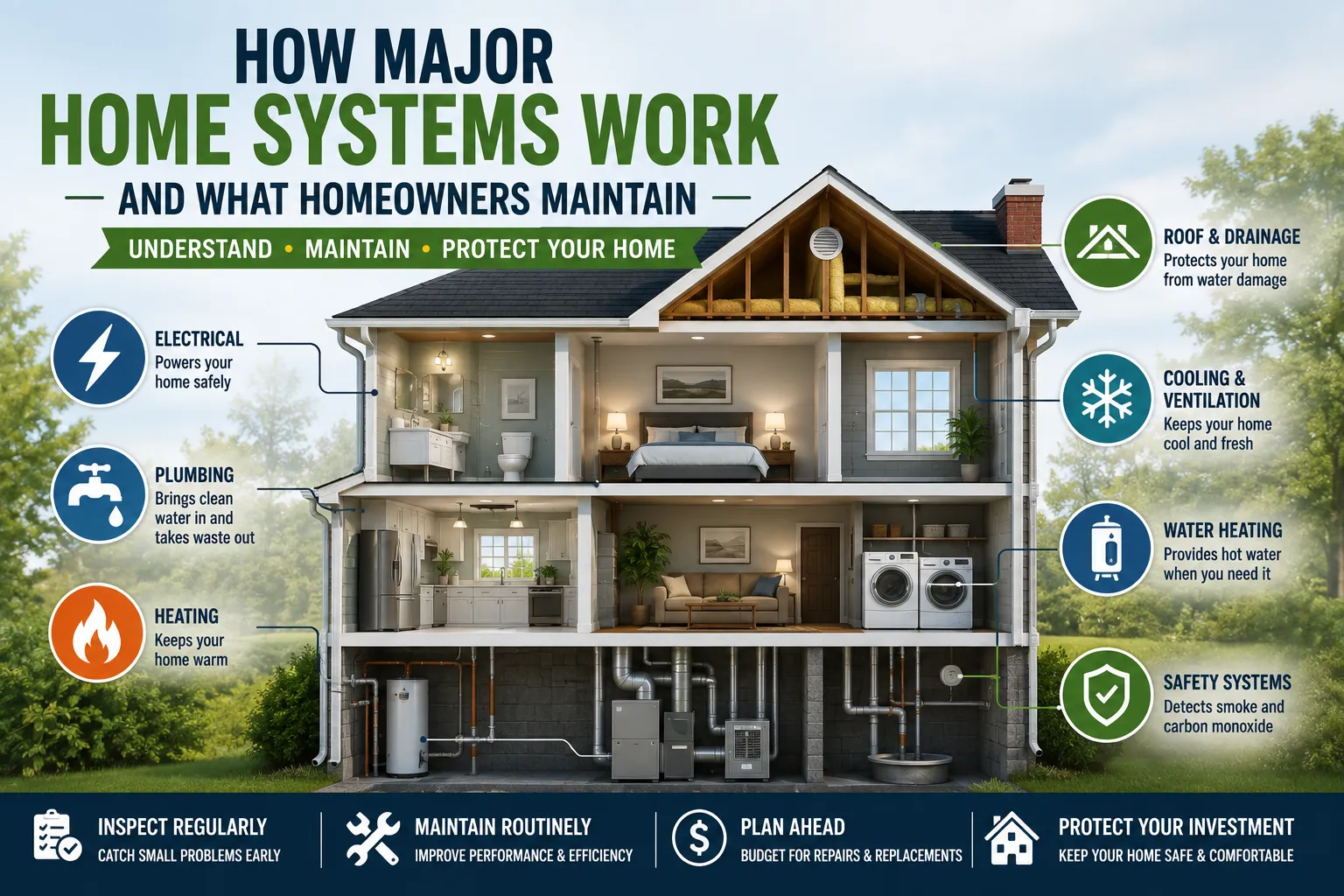
How Major Home Systems Work and What Homeowners Maintain
A home is much more than walls, floors, windows, and a roof. Behind the visible parts of a property is a network of systems that provide water, electricity, heating, cooling, ventilation, drainage, and other essential services.
Understanding how these systems work can help homeowners recognize problems earlier, plan maintenance, and make better decisions when repairs or replacements are needed.
You do not need to become an electrician, plumber, HVAC technician, or structural engineer to understand your house. A basic knowledge of the major systems—and knowing which tasks are safe for routine homeowner maintenance—can go a long way.
Why Homeowners Should Understand Their Major Systems
Home systems rarely fail without warning.
A dripping faucet, unusual electrical smell, slowly draining sink, unusually high water bill, inconsistent room temperatures, or missing roof shingles can sometimes provide early clues that something needs attention.
Understanding the basic function of each system helps homeowners:
- Identify potential problems sooner
- Schedule routine maintenance
- Reduce avoidable damage
- Understand contractor recommendations
- Budget for major replacements
- Improve energy and water efficiency
- Protect the value of the property
- Know when professional help is necessary
Maintenance is also easier when you understand what you are maintaining and why it matters. For a broader overview of the work involved in keeping a property in good condition, see these home maintenance projects.
The Main Systems Found in a Home
Most modern homes contain several interconnected systems.
The exact configuration varies according to the property’s age, location, climate, construction method, and available utilities, but common systems include:
- Structural components
- Roofing and drainage
- Electrical systems
- Plumbing
- Heating and cooling
- Ventilation
- Water heating
- Appliances
- Insulation
- Windows and doors
- Drainage and sewer systems
- Fire and carbon monoxide safety equipment
- Exterior and landscaping systems
Some systems require specialized professionals for almost all repairs, while others have straightforward maintenance tasks homeowners can perform themselves.
How the Electrical System Works
The electrical system distributes electricity throughout the house.
Electricity generally enters the property through a service connection and passes through the main electrical panel. From there, individual circuits distribute power to outlets, lights, appliances, and permanently connected equipment.
A simplified system looks like:
Utility supply → electrical meter → main panel → individual circuits → switches, outlets and equipment
The electrical panel contains circuit breakers or, in older installations, fuses.
Circuit breakers are designed to interrupt electricity when a circuit experiences conditions such as excessive current.
For a more detailed explanation of electrical components, circuits, and homeowner safety, see how residential electrical systems work and stay safe.
What Homeowners Can Maintain
Routine electrical maintenance is mostly about observation rather than opening electrical equipment.
Homeowners can:
- Test appropriate ground-fault circuit interrupter devices where installed
- Check that outlets and switches are not visibly damaged
- Replace suitable light bulbs
- Keep electrical panels accessible
- Avoid overloading outlets
- Inspect extension cords for visible damage
- Pay attention to unusual buzzing, burning smells, sparks, or repeated breaker trips
Electrical work involving wiring, panels, service equipment, or other hazardous components should generally be handled by a qualified electrician.
Why Circuit Breakers Matter
A circuit breaker is more than an on/off switch.
It provides protection by interrupting electrical flow when the circuit experiences an abnormal electrical condition.
If a breaker repeatedly trips, simply resetting it over and over may conceal an underlying problem.
Repeated trips can be associated with:
- An overloaded circuit
- A faulty appliance
- Wiring problems
- Short circuits
- Other electrical faults
The appropriate response depends on the cause.
If a breaker repeatedly trips or there are signs of overheating, burning, smoke, or electrical arcing, professional assessment is appropriate.
How the Plumbing System Works
A home’s plumbing system has two major functions:
- Bringing clean water into the property.
- Removing wastewater.
A simplified water-supply system looks like:
Water source → main supply → distribution pipes → faucets, fixtures and appliances
The drainage side works in the opposite direction:
Fixtures → drain pipes → larger drainage lines → sewer or septic system
Plumbing systems also rely on traps and vents to control drainage and prevent sewer gases from entering living spaces.
Homeowners who want to understand the components behind these processes can also explore how home plumbing systems work.
What Homeowners Maintain in Plumbing Systems
Homeowners can perform several basic plumbing tasks.
These include:
- Checking for visible leaks
- Cleaning faucet aerators
- Keeping drains free of inappropriate materials
- Checking under sinks periodically
- Inspecting exposed pipes for corrosion or damage
- Knowing where the main water shutoff is located
- Monitoring unusually high water usage
- Cleaning accessible showerheads
- Checking toilet fixtures for persistent leaks
A small leak may seem insignificant, but hidden water can eventually damage cabinets, flooring, walls, ceilings, or structural components.
Know Where the Main Water Shutoff Is
Every homeowner should know how to shut off the property’s main water supply.
The location varies by home.
It may be near:
- Where the water line enters the house
- A utility area
- A basement
- A garage
- An exterior service point
Knowing the location before an emergency occurs can save valuable time.
If a major pipe suddenly fails, the ability to shut off the water quickly can reduce the amount of damage.
How Water Heaters Work
Water heaters provide hot water for activities such as:
- Showering
- Washing dishes
- Laundry
- Cleaning
- Other household uses
Common systems include conventional tank water heaters and tankless or instantaneous systems.
A conventional tank stores heated water in an insulated container. A tankless system heats water as it flows through the unit.
Both types require maintenance, although the exact requirements differ.
What Homeowners Should Monitor
Homeowners can periodically check for:
- Visible leaks
- Corrosion
- Unusual noises
- Changes in hot-water performance
- Water around the base of a tank
- Unusual discharge from associated components
Maintenance involving gas connections, combustion systems, electrical components, or internal parts should follow the manufacturer’s instructions and may require a qualified technician.
How Heating Systems Work
Heating systems vary widely.
A home may use:
- Furnaces
- Heat pumps
- Boilers
- Radiant heating
- Electric resistance heating
- Wood or other fuel-burning systems
A forced-air furnace, for example, heats air and distributes it through ducts.
A heat pump moves heat rather than simply generating it in the same way a traditional furnace does.
A boiler heats water, which can then circulate through radiators, baseboards, or other heat-emitting equipment.
Understanding the type of heating system in your house is important because maintenance requirements differ.
What Homeowners Maintain in Heating Systems
Routine homeowner maintenance may include:
- Replacing or cleaning filters as recommended
- Keeping vents unobstructed
- Keeping equipment areas clear
- Checking for unusual noises
- Monitoring inconsistent heating
- Keeping outdoor heat-pump units free from obvious obstructions
- Scheduling professional servicing according to the equipment and manufacturer’s recommendations
Do not attempt to repair gas lines, combustion equipment, refrigerant systems, or complex electrical components without the appropriate qualifications.
For a broader look at how different systems fit into a home’s overall maintenance needs, how major home systems work and what homeowners maintain provides useful context.
How Air Conditioning Systems Work
Air conditioning systems remove heat from indoor air and transfer it outside.
A typical central air-conditioning system uses:
- An indoor coil
- An outdoor condenser
- A compressor
- A refrigerant circuit
- A blower
- Ductwork or another distribution system
The system circulates indoor air across a cooling component, removes heat, and sends cooled air back into the home.
Basic Homeowner Maintenance
Depending on the system, homeowners can:
- Replace or clean filters
- Keep outdoor equipment clear of excessive debris
- Keep supply and return vents unobstructed
- Check for unusual noises
- Monitor cooling performance
- Keep condensate drainage areas clear when appropriate and accessible
Refrigerant handling and major mechanical repairs should be left to appropriately qualified professionals.
Why HVAC Filters Matter
Air filters perform an important role in forced-air heating and cooling systems.
They capture airborne particles before air circulates through the system.
A heavily loaded filter can restrict airflow and may reduce system performance.
However, there is no single replacement schedule that applies to every home.
The correct interval depends on factors such as:
- Filter type
- System design
- Household conditions
- Pets
- Occupancy
- Indoor air quality
- Manufacturer recommendations
Check the equipment and filter manufacturer’s instructions rather than automatically assuming that every filter needs replacement on the same schedule.
How Ventilation Works
Ventilation brings fresh air into a building and helps remove stale or contaminated air.
It can occur through:
- Windows
- Exhaust fans
- Mechanical ventilation systems
- Dedicated fresh-air systems
- Balanced ventilation systems
Bathrooms and kitchens commonly use exhaust fans because cooking and bathing produce moisture and other airborne contaminants.
Proper ventilation can help manage indoor humidity and reduce the buildup of odors and pollutants.
Why Moisture Control Matters
Moisture is one of the most important things homeowners need to manage.
Excess moisture can contribute to:
- Mold growth
- Wood deterioration
- Peeling paint
- Damaged drywall
- Musty odors
- Pest problems
- Structural deterioration
Common sources include:
- Plumbing leaks
- Roof leaks
- Condensation
- Poor ventilation
- Groundwater intrusion
- Overflowing gutters
- Drainage problems
The most effective approach is usually to identify and correct the source rather than simply cleaning visible moisture.
How the Roof Protects the Home
The roof is one of a home’s primary defenses against weather.
It protects the structure from:
- Rain
- Snow
- Wind
- Sun
- Debris
- Temperature extremes
A roofing system may include more than the visible shingles or tiles.
Depending on the design, it can contain:
- Roof covering
- Underlayment
- Flashing
- Structural decking
- Ventilation components
- Gutters and drainage elements
Damage to one part of the system can eventually affect other parts.
Homeowners can learn more about these components and their maintenance requirements in how residential roofing systems work and require maintenance.
What Homeowners Should Check on the Roof
Roof inspections should be approached carefully.
From ground level, homeowners can look for obvious signs such as:
- Missing or damaged roofing materials
- Sagging areas
- Damaged flashing
- Excessive moss or vegetation
- Debris accumulation
- Water stains inside the house
- Damaged gutters
Walking on a roof can be dangerous and can damage certain roofing materials.
For detailed inspection, especially on steep or difficult-to-access roofs, use a qualified roofing professional.
How Gutters and Downspouts Work
Gutters collect rainwater from the roof and direct it toward downspouts.
Downspouts then carry water away from the building.
This system helps prevent excessive water from accumulating around foundations and exterior walls.
What Homeowners Maintain
Depending on the property, routine maintenance can include:
- Removing leaves and debris
- Checking that gutters are not sagging
- Confirming that downspouts are connected
- Checking where downspouts discharge water
- Looking for visible leaks
- Checking for blockages
Keeping water away from the foundation is an important part of protecting the property.
How the Foundation Supports the Home
The foundation transfers the weight of the building into the ground.
Different homes use different foundation types, including:
- Slab foundations
- Crawl spaces
- Basements
- Pier-and-beam systems
Foundation design depends heavily on soil conditions, climate, building type, and local construction practices.
Homeowners generally should not attempt structural foundation repairs themselves.
Instead, they should watch for signs that warrant professional evaluation.
Foundation Warning Signs
Potential warning signs can include:
- Significant new cracks
- Large or changing cracks
- Doors or windows that suddenly become difficult to operate
- Uneven floors
- Persistent water intrusion
- Noticeable structural movement
- Significant separation between walls and ceilings
Not every crack means a serious structural problem.
Homes naturally experience some movement, and materials can expand and contract.
The important issue is understanding whether a particular condition is significant or changing.
When structural concerns appear, a qualified professional should evaluate them.
How Insulation Works
Insulation slows the movement of heat through a home’s building envelope.
During cold weather, it helps reduce heat loss.
During hot weather, it can help reduce heat entering the home.
Common insulation materials include:
- Fiberglass
- Mineral wool
- Cellulose
- Spray foam
- Rigid foam
Insulation performance depends not only on the material but also on installation quality, air leakage, moisture conditions, and the overall building design.
Where Insulation Matters Most
Important areas can include:
- Attics
- Exterior walls
- Floors above unconditioned spaces
- Basements
- Crawl spaces
- Roof assemblies
The appropriate insulation strategy depends on the climate and construction of the home.
Simply adding insulation without considering moisture and ventilation can sometimes create unintended problems.
How Windows and Doors Affect the Home
Windows and exterior doors play several roles.
They:
- Keep weather outside
- Allow natural light
- Provide ventilation when opened
- Affect energy efficiency
- Contribute to security
- Influence indoor comfort
Air leaks around windows and doors can increase drafts and energy use.
Homeowners can periodically check for:
- Damaged seals
- Cracked glass
- Failed weatherstripping
- Sticking windows
- Water intrusion
- Deteriorated frames
Some repairs are simple, while damaged or poorly installed windows may require professional replacement.
How the Drainage System Works
Water management around a property is closely connected to the home’s long-term condition.
Rainwater should generally be directed away from vulnerable areas rather than allowed to collect against foundations or enter the building.
The drainage network may include:
- Gutters
- Downspouts
- Grading
- Surface drains
- French drains
- Stormwater systems
- Sump pumps
- Sewer or septic systems
The correct setup depends on the property.
Sewer and Septic Systems
Homes connected to municipal sewer systems send wastewater into a public sewer network.
Homes without sewer connections may use septic systems.
A septic system typically separates and treats wastewater through a tank and soil-based treatment area.
Homeowners with septic systems need to understand their system’s maintenance requirements.
This can include:
- Monitoring usage
- Avoiding inappropriate materials
- Protecting the drain field
- Scheduling inspections or pumping as recommended
- Watching for sewage odors or drainage problems
Never assume that a septic problem will resolve itself.
How Smoke and Carbon Monoxide Detectors Protect the Home
Smoke alarms provide early warning of fires.
Carbon monoxide alarms provide warning about the presence of carbon monoxide, a dangerous gas that can be produced by incomplete combustion from fuel-burning equipment.
Homeowners should:
- Install appropriate alarms according to local requirements
- Test them regularly
- Replace batteries or follow manufacturer instructions
- Replace units according to manufacturer recommendations
- Keep alarms unobstructed
- Understand the difference between smoke and carbon monoxide detection
For a broader look at hazards that homeowners can identify and address, see how to identify and prevent common safety hazards inside a home.
Never ignore an alarm.
If an alarm activates unexpectedly, follow appropriate emergency procedures and leave the area when necessary.
How Appliances Fit Into Home Maintenance
Major appliances are also part of the home’s maintenance picture.
Important appliances can include:
- Refrigerators
- Dishwashers
- Washing machines
- Dryers
- Ovens
- Garbage disposals
- Range hoods
Each appliance has its own maintenance requirements.
Cleaning filters, vents, seals, coils, or other accessible components according to the manufacturer’s instructions can help maintain performance.
Why the Clothes Dryer Needs Attention
Dryers generate heat and move air through a ventilation system.
Lint can accumulate in the lint filter and, depending on the system, in other parts of the exhaust path.
Homeowners should:
- Clean the lint filter regularly
- Keep the area around the dryer clear
- Follow the manufacturer’s maintenance instructions
- Have the exhaust system inspected or cleaned when appropriate
A poorly maintained dryer ventilation system can restrict airflow and create safety concerns.
How the Home’s Structure Works Together
It is useful to remember that home systems do not operate independently.
For example:
Roof → gutters → downspouts → drainage → foundation
A problem at one stage can affect the next.
Similarly:
HVAC → ductwork → insulation → windows and doors → indoor comfort
Energy efficiency depends on the interaction between equipment and the building envelope.
Plumbing also connects:
Water supply → fixtures → drains → sewer or septic system
Thinking about the home as a connected system makes maintenance decisions easier.
A Practical Home Maintenance Schedule
There is no universal maintenance calendar because homes differ substantially.
However, homeowners can organize maintenance by frequency.
| Frequency | Examples of Tasks |
|---|---|
| Regularly | Check for leaks, replace appropriate filters, inspect visible problem areas |
| Monthly | Check accessible plumbing areas, test applicable alarms, inspect HVAC filters |
| Seasonally | Check gutters, drainage, exterior areas and HVAC performance |
| Annually | Review major systems, inspect roof and exterior conditions, service equipment as recommended |
| As Needed | Repair leaks, address electrical problems, replace damaged components |
| Professional Schedule | Service HVAC, inspect specialized systems, evaluate structural concerns |
Manufacturer instructions and local requirements should take priority over generic schedules.
Keep a Home Maintenance Record
A maintenance record can be surprisingly valuable.
Keep track of:
- Repairs
- Equipment installations
- Appliance purchases
- Roof work
- HVAC servicing
- Plumbing repairs
- Electrical work
- Warranty information
- Inspection reports
- Replacement dates
This helps you understand the age of major systems and can make future planning easier.
It can also provide useful documentation when selling the property.
Know the Age of Your Major Systems
Major components do not last forever.
Eventually, homeowners may need to replace:
- Roofing
- HVAC equipment
- Water heaters
- Appliances
- Windows
- Electrical components
- Plumbing components
- Exterior finishes
There is no single replacement age that applies to every product.
Installation quality, climate, maintenance, usage, material quality, and product design all affect service life.
Instead of waiting for catastrophic failure, keep track of the approximate age and condition of major components.
Plan for Maintenance Before Problems Become Emergencies
Preventive maintenance is generally easier than emergency repair.
A homeowner who notices a small plumbing leak can address it before water damages surrounding materials.
Someone who notices deteriorating roof components can investigate before a major storm exposes the interior to water.
Likewise, unusual HVAC noises can be investigated before the system stops working during extreme weather.
The goal is not to predict every failure.
It is to create a habit of noticing changes before they become major problems.
What Homeowners Should Not Attempt Alone
DIY maintenance can save money, but not every task is appropriate for an untrained homeowner.
Professional assistance is particularly important for work involving:
- Main electrical panels
- Service wiring
- Gas lines
- Refrigerant systems
- Major structural components
- Complex plumbing repairs
- Roof work at unsafe heights
- Significant foundation movement
- Sewage problems
- Major heating equipment
- Potentially hazardous materials
The cost of professional work should be considered alongside the risks of incorrect repairs.
Signs That a Home System Needs Attention
A few warning signs deserve particular attention.
Electrical
- Burning smell
- Sparks
- Repeated breaker trips
- Hot outlets or switches
- Buzzing sounds
Plumbing
- Persistent leaks
- Sudden loss of water pressure
- Sewage odors
- Water stains
- Unusually high water consumption
HVAC
- Unusual noises
- Weak airflow
- Persistent temperature differences
- Unexpected cycling
- Water around equipment
Roof
- Water stains
- Sagging
- Missing materials
- Damaged flashing
- Persistent leaks
Foundation and structure
- Significant or changing cracks
- Uneven floors
- Major sticking doors
- Visible movement
- Persistent water intrusion
When a warning sign suggests a potentially dangerous condition, prioritize safety and professional assessment.
Build a Maintenance Mindset
Home maintenance becomes much easier when it is treated as an ongoing process rather than a collection of emergencies.
Instead of waiting for something to break:
- Learn how the system works.
- Identify its important components.
- Understand the manufacturer’s maintenance requirements.
- Inspect accessible areas periodically.
- Keep records.
- Address small problems promptly.
- Bring in qualified professionals when necessary.
- Budget for eventual replacement.
This approach can make homeownership more predictable.
A Home Works Best When Its Systems Work Together
A house may look simple from the outside, but its comfort and safety depend on dozens of components working together.
The electrical system supplies power. Plumbing moves water. HVAC equipment manages temperature. Insulation and windows help control heat transfer. The roof and drainage system keep water out. The foundation supports the structure, while alarms provide important safety warnings.
Homeowners do not need to personally repair every system.
What matters most is knowing what each system does, what normal operation looks like, which maintenance tasks are appropriate, and when a problem requires professional attention.
Turning Home Maintenance Into Long-Term Protection
The most effective homeowners are not necessarily the ones who know how to fix everything themselves. They are the ones who pay attention to their property’s condition, keep records, follow maintenance recommendations, and act before small problems become expensive emergencies.
A regular inspection of the roof, plumbing, electrical components, HVAC equipment, drainage, structure, and safety devices can reveal issues while they are still manageable.
Over time, that simple habit can protect more than the physical house. It can protect comfort, safety, household finances, and the long-term value of the property.