How Smart Outdoor Devices Improve Home Security and Convenience
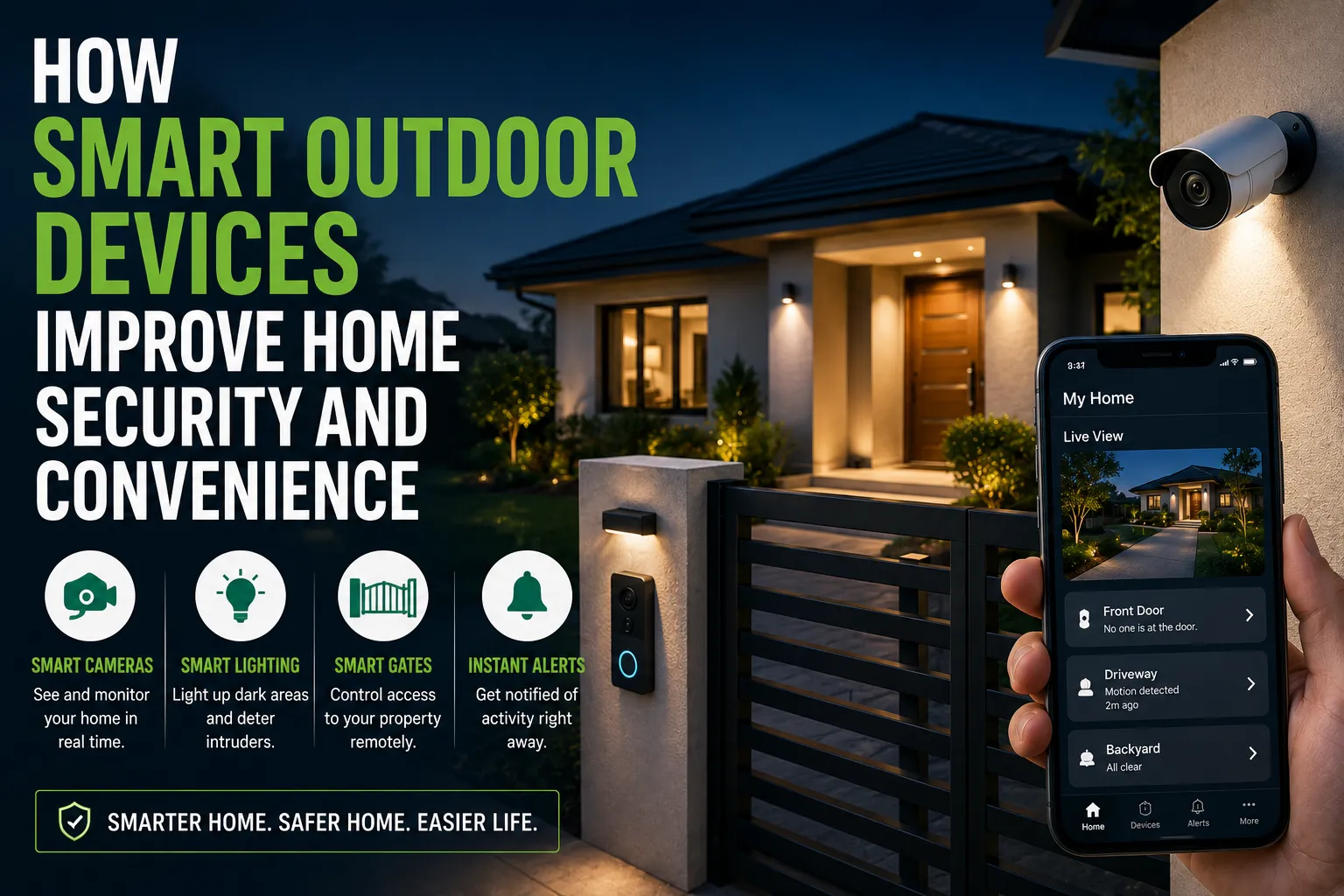
How Smart Outdoor Devices Improve Home Security and Convenience
Smart home technology is moving beyond living rooms, kitchens and bedrooms. Increasingly, homeowners are bringing connected technology into outdoor spaces, using smart cameras, lighting, doorbells, locks, gates and sensors to make properties safer and easier to manage.
These devices can provide homeowners with greater visibility around their properties while allowing many outdoor systems to be monitored and controlled remotely. A person can check a camera from a smartphone, receive an alert when motion is detected or turn on exterior lights without being physically at home.
The result is a combination of security, automation and convenience that can make outdoor areas more responsive to what is happening around a property.
For a broader look at how these technologies fit together, the Complete Guide to Smart Homes explores the wider connected-home ecosystem.
What Are Smart Outdoor Devices?
Smart outdoor devices are connected products designed to operate outside the home and communicate with a smartphone, home network or other smart-home equipment.
Common examples include:
- Outdoor security cameras
- Video doorbells
- Smart floodlights
- Motion sensors
- Smart locks
- Connected gates and garage doors
- Smart irrigation systems
- Outdoor speakers
- Environmental sensors
- Smart plugs and outdoor switches
Some devices work independently through a dedicated mobile application, while others can be connected through a broader smart-home platform.
This connectivity allows homeowners to monitor and control outdoor equipment without having to operate each device manually.
Smart Cameras Provide Remote Visibility
One of the most useful outdoor smart-home devices is the connected security camera.
Traditional security cameras may record footage locally, but modern smart cameras can provide additional features such as remote viewing, motion detection and real-time notifications.
A homeowner might receive an alert when movement is detected near a driveway, entrance or backyard and then check the camera through a smartphone.
Many models can also record video, provide night vision and distinguish between different types of movement.
For example, some systems can differentiate between people, vehicles and general motion. This can reduce the number of unnecessary notifications compared with basic motion detection.
Homeowners considering camera-based monitoring can also explore Smart Cameras and Video Doorbells Explained for a closer look at how these devices work.
Video Doorbells Add Another Layer of Protection
Smart video doorbells combine a doorbell with a camera and communication system.
When someone approaches the entrance, the device can send an alert to the homeowner’s phone. Depending on the model, the homeowner may then be able to see and communicate with the visitor remotely.
This can be useful when someone is at work, traveling or simply unable to reach the door.
Video doorbells can also provide a record of activity around an entrance, potentially helping homeowners understand what happened if a package goes missing or an unfamiliar person approaches the property.
Smart Lighting Can Improve Visibility
Outdoor lighting plays an important role in both security and convenience.
Smart lighting allows homeowners to control exterior lights remotely or automate them based on schedules, motion or other conditions.
A motion-activated light can illuminate a driveway or pathway when someone approaches. Scheduled lighting can make a property appear occupied during certain hours.
Lighting can also improve everyday convenience. Instead of walking through a dark garden or driveway to find a switch, homeowners can use sensors or an app to activate the lights automatically.
Homeowners planning a wider connected lighting setup can learn more from The Complete Guide to Smart Home Lighting.
Motion Sensors Can Detect Activity
Motion sensors can provide another way to monitor outdoor areas.
Instead of continuously recording video, a sensor can detect movement and trigger an action, such as switching on a light or sending an alert.
Sensors can be positioned around driveways, gates, gardens and other areas where unusual activity might be important.
When integrated with other smart devices, they can create automated responses.
For example, motion detected near a side entrance could trigger a light while simultaneously sending an alert to the homeowner.
The wider role of connected sensors is explained in the Smart Home Monitoring Guide: Sensors and Alerts.
Smart Locks Make Access Easier
Connected locks can change how homeowners manage access to their properties.
Depending on the system, users may be able to lock or unlock doors remotely, create temporary access codes or check whether a door is secured.
This can be convenient when family members, cleaners, contractors or delivery workers need access.
Instead of physically handing someone a key, a homeowner may be able to provide temporary digital access and remove it later.
Smart locks can therefore combine security with practical convenience.
For a more detailed look at connected entry systems, the Complete Guide to Smart Home Access Control covers smart locks, access methods and related technologies.
Connected Gates Can Be Controlled Remotely
For homes with driveways or perimeter gates, connected gate controllers can make entering and leaving the property easier.
A homeowner may be able to open or close a gate using a smartphone or integrate the gate with other security equipment.
Some systems can also provide notifications when a gate is opened.
This can be particularly useful for larger properties where the gate may be some distance from the main building.
However, connected access systems should always include appropriate security protections because compromising a smart gate could potentially give an unauthorized person physical access to the property.
Smart Outdoor Devices Can Work Together
The biggest advantage of a connected outdoor system may not come from any individual device.
It comes from allowing several devices to communicate.
A motion sensor could activate a light. A camera could begin recording when movement is detected. A security system could send a notification to a smartphone.
These actions can happen automatically without requiring the homeowner to operate each device separately.
This type of automation can turn individual gadgets into a coordinated security system.
Making different devices communicate reliably is an important part of building a connected home, and Understanding Smart Home Integration and Compatibility provides more detail on how compatibility affects these setups.
Remote Monitoring Adds Convenience
One of the defining characteristics of smart outdoor technology is remote access.
A homeowner who is away from the property may still be able to check cameras, control lights, verify locks or monitor other connected equipment.
This can provide reassurance during travel or long periods away from home.
For example, if a homeowner receives a motion alert while away, they can check the camera before deciding whether further action is necessary.
Remote access can also simplify everyday tasks, such as turning on outdoor lights before arriving home.
Smart Outdoor Technology Can Help With Deliveries
Online shopping has made package deliveries a routine part of modern household life.
Smart doorbells and outdoor cameras can help homeowners monitor activity around entrances and delivery areas.
Some systems provide motion alerts when someone approaches the door, while cameras can capture activity around the property.
Smart locks and compatible access systems can also provide controlled entry in certain circumstances.
These features do not eliminate the risk of package theft, but they can give homeowners better awareness of activity around their homes.
Automation Can Make Everyday Tasks Easier
Not every smart outdoor device needs to be focused on security.
Connected technology can also automate routine household tasks.
Smart irrigation controllers, for example, can manage watering schedules and may adjust operation based on environmental conditions or weather information.
Smart outdoor plugs can control garden equipment or decorative lighting.
Automated lighting can switch on and off according to schedules or environmental conditions.
These features can reduce the number of small tasks homeowners need to remember each day.
Smart Outdoor Devices Can Save Time
Convenience is often one of the strongest reasons people adopt smart-home technology.
A homeowner may not think much about manually switching on a porch light or checking whether a gate is closed. But over weeks and months, automation can remove many repetitive actions.
Smart technology can handle routine tasks according to predefined rules.
That allows homeowners to spend less time managing equipment and more time using their property.
Security Alerts Can Provide Faster Awareness
A traditional security system may depend on someone noticing something unusual.
Smart systems can actively notify homeowners when certain events occur.
Depending on the equipment and settings, alerts might be triggered by:
- Motion
- A person approaching
- A door opening
- A gate being opened
- A detected vehicle
- Unusual activity around a monitored area
- Changes in environmental conditions
The usefulness of these alerts depends heavily on how accurately the system detects meaningful events.
Too many unnecessary notifications can quickly become frustrating, so homeowners should configure detection zones and sensitivity settings carefully.
Privacy Is an Important Consideration
Smart outdoor devices provide useful information, but they also collect data.
Cameras may record people entering and leaving a property. Doorbells may capture activity on nearby walkways. Sensors can generate information about when certain areas are being used.
Homeowners therefore need to think carefully about privacy.
Cameras should generally be positioned to monitor the homeowner’s property without unnecessarily recording neighboring homes or private spaces.
Users should also understand how recordings are stored, who can access them and whether the manufacturer provides adequate security protections.
Strong Passwords Matter
A smart security device is only as secure as the account controlling it.
Homeowners should use strong, unique passwords for smart-home accounts and avoid reusing passwords from other services.
Where available, multi-factor authentication can provide another layer of protection.
Keeping device firmware and mobile applications updated is also important because manufacturers periodically release security fixes and other improvements.
Protect the Home Network
Smart outdoor devices typically rely on a wireless or wired network to communicate with other systems.
That makes the home network an important part of the overall security setup.
Using a secure Wi-Fi password, keeping the router’s software updated and using modern wireless security standards can reduce unnecessary risks.
Some homeowners may also choose to place smart-home devices on a separate network from computers and other sensitive devices.
The goal is to avoid treating every connected gadget as an isolated product. The security of the wider network matters too.
A stronger understanding of the network supporting these devices can be developed through the Complete Guide to Smart Home Networking.
Outdoor Devices Need to Survive the Environment
Unlike indoor smart-home products, outdoor devices have to deal with weather and changing environmental conditions.
Rain, dust, humidity, sunlight, heat and cold can affect electronic equipment.
Before purchasing an outdoor device, homeowners should check its environmental rating and installation requirements.
A product designed specifically for outdoor use is generally more appropriate than an indoor device placed outside.
Proper installation can also improve reliability and extend the useful life of the equipment.
Internet Dependence Can Be a Weakness
Smart-home convenience often depends on internet connectivity.
If a cloud-connected device loses its connection, some remote features may become unavailable.
This is an important consideration when choosing security equipment.
Homeowners should determine what happens when the internet goes down or power is interrupted. Some systems may continue recording locally or performing basic functions, while others may depend heavily on cloud connectivity.
Understanding these limitations before installation can prevent unpleasant surprises later.
Smart Technology Does Not Replace Basic Security
Connected devices can improve awareness, but they should not be treated as a complete replacement for basic security practices.
Good exterior lighting, strong doors and gates, secure windows, appropriate fencing and sensible landscaping can all contribute to property security.
Homeowners should also avoid relying entirely on notifications.
A smartphone alert does not necessarily mean that someone is committing a crime, and a missed alert does not prove that nothing happened.
Smart devices are most effective when they complement sensible physical security measures.
For broader guidance on protecting connected devices and the home as a whole, see the Smart Home Security Guide.
Choosing the Right Devices
Homeowners do not necessarily need to turn every outdoor feature into a smart device.
The best approach is to identify specific problems first.
Someone concerned about visibility around a driveway might benefit from a camera and motion-activated lighting.
Someone who frequently needs to provide access to visitors might prioritize a smart lock or gate controller.
A homeowner who struggles to maintain a regular watering schedule may find a smart irrigation system more useful.
Starting with a clear need can prevent unnecessary spending on gadgets that provide little practical value.
The Future of Outdoor Home Automation
Smart outdoor technology is becoming increasingly integrated.
Instead of managing cameras, lights, locks and sensors separately, homeowners can increasingly connect them through unified platforms.
Artificial intelligence is also being incorporated into some security products, allowing systems to analyze activity and identify patterns or objects more intelligently.
The long-term trend is toward homes that can respond automatically to what is happening around them.
That could mean lights activating when someone approaches, cameras identifying relevant activity, gates responding to authorized users and homeowners receiving more useful rather than constant notifications.
A Smarter Perimeter for the Modern Home
Outdoor smart devices are changing the way homeowners interact with the areas surrounding their properties.
Cameras provide visibility, smart lights improve illumination, connected locks and gates simplify access, while sensors and automated systems can respond to activity without requiring constant attention.
The benefits extend beyond security. Smart outdoor technology can also save time, automate routine tasks and make everyday life more convenient.
However, connected devices should be selected carefully. Privacy, cybersecurity, weather resistance, internet dependence and proper installation all matter.
When these factors are considered, smart outdoor technology can become more than a collection of gadgets. It can form a practical layer of automation and awareness that helps homeowners keep their safer, more manageable and easier to control.