How Sauces, Stocks and Flavor Foundations Work in Cooking
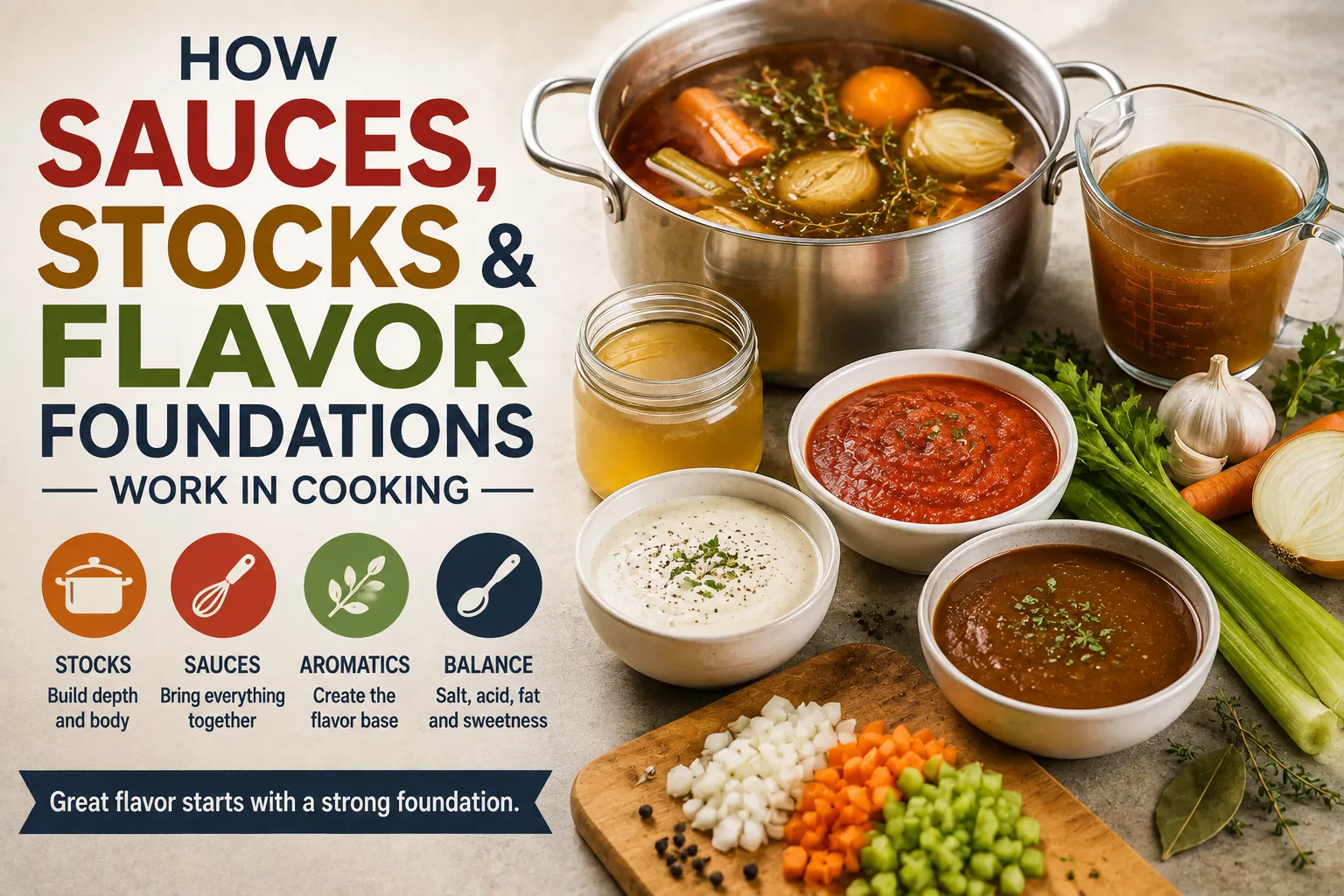
How Sauces, Stocks and Flavor Foundations Work in Cooking
Great cooking is often less about complicated recipes and more about understanding what happens beneath the surface. Sauces, stocks and other flavor foundations are among the most important tools for building depth, balance and complexity in food.
A well-made stock can give a soup body and a sauce richness. A carefully prepared sauce can bring together otherwise separate ingredients. Aromatic vegetables, herbs, spices, fats and cooking liquids can establish the flavor direction of an entire dish before the main ingredients are even added.
Understanding how these foundations work makes cooking more flexible. Instead of relying entirely on recipes, home cooks can learn how to build flavors deliberately, adjust dishes when something tastes flat and use simple ingredients more effectively.
For beginners who want to understand these techniques in the wider context of home cooking, The Complete Guide to Cooking for Beginners provides a broader foundation for developing essential kitchen skills.
What Is a Flavor Foundation?
A flavor foundation is the combination of ingredients and techniques used to establish the basic character of a dish.
Common foundations include:
- Stocks and broths
- Aromatic vegetables
- Garlic and ginger
- Herbs and spices
- Cooking fats
- Reduced liquids
- Tomato-based mixtures
- Fermented ingredients
- Spice pastes
- Vegetable purees
These components may not always be the most noticeable ingredients in the finished dish, but they influence everything added afterward.
For example, onions slowly cooked in oil can provide sweetness and depth. Garlic can add pungency and aroma. Toasted spices can introduce warmth and complexity. A stock can contribute savory flavor and body.
The foundation determines where the dish starts.
Why Flavor Foundations Matter
Many foods taste flat when their individual ingredients are simply cooked together without developing layers of flavor.
A flavor foundation solves part of this problem by introducing complexity early.
Consider a simple vegetable soup. Water, vegetables and salt can produce an edible result, but starting with onions, carrots and celery cooked gently in oil before adding stock creates a more developed flavor.
The difference comes from technique as much as ingredients.
Cooking ingredients at different stages allows their flavors to change and interact.
The Role of Aromatic Vegetables
Onions, carrots and celery are widely used as aromatic vegetables in many cooking traditions.
A common combination is known as mirepoix, traditionally made from onions, carrots and celery.
Other cuisines use different combinations.
Garlic, ginger, scallions, peppers, tomatoes, leeks and various herbs can serve similar roles depending on the dish.
Aromatic vegetables are often cooked in fat before liquids are introduced.
This process softens their texture and changes their flavor while releasing aromatic compounds into the cooking fat.
Why Cooking Aromatics First Makes a Difference
Raw onions and cooked onions do not taste the same.
As onions cook, their texture softens and their sharpness decreases. Longer cooking can encourage browning and the development of sweeter, deeper flavors.
Garlic behaves differently. It can become aromatic quickly, but prolonged high heat can cause it to burn and become bitter.
This is why the order in which ingredients enter the pan matters.
Cooking is essentially a process of controlling chemical and physical changes through time, temperature and moisture.
For a broader explanation of how different cooking techniques affect ingredients, see Cooking Methods Explained: The Complete Guide.
Understanding Stocks
Stock is a liquid prepared by simmering ingredients such as bones, meat, vegetables or aromatic ingredients in water.
Traditional stocks often use bones because connective tissue and other components can contribute body to the finished liquid.
Stocks may be made from:
- Chicken
- Beef
- Pork
- Fish
- Shellfish
- Vegetables
- Mushrooms
The exact ingredients and technique vary considerably between culinary traditions.
Stock Versus Broth
The terms “stock” and “broth” are sometimes used interchangeably, but traditionally they describe somewhat different preparations.
Stock is often associated with bones and connective tissue and is valued for body and structure.
Broth is generally associated more closely with meat, vegetables or other ingredients cooked in liquid and is often intended to be consumed as a finished soup or liquid.
Modern food terminology does not always follow these distinctions strictly.
For practical cooking, the most important question is what the liquid contributes to the dish: flavor, body, aroma, salt or all of these.
How Stocks Add Body
One of the most valuable characteristics of a traditional stock is its ability to add body.
Collagen from connective tissue can break down during cooking and contribute gelatin.
When a stock containing gelatin cools, it may become somewhat firm or jelly-like. When heated, that gelatin returns to a liquid state.
This gives sauces and soups a fuller mouthfeel.
Vegetable stocks do not provide gelatin, but they can still contribute substantial flavor through vegetables, mushrooms, herbs and other ingredients.
Why Roasting Ingredients Can Deepen Stock
Some stocks begin with roasted bones or vegetables.
Roasting encourages browning and creates additional flavors before the ingredients enter the cooking liquid.
The resulting stock can have a darker color and deeper, more roasted character.
This can be particularly useful for hearty dishes where a light, delicate stock would not provide enough flavor.
However, roasting is not always necessary.
A lighter stock may be preferable for delicate soups, seafood preparations or dishes where the stock is not supposed to dominate.
The Importance of Simmering
Stock is generally cooked gently rather than aggressively boiled.
A gentle simmer allows flavors and soluble components to move into the liquid while helping produce a cleaner result.
Hard boiling can agitate the ingredients and make it more difficult to maintain clarity.
The appropriate cooking time also depends on the ingredients.
Fish stock generally requires much less time than a stock made from large bones.
Reducing a Stock
A stock can be reduced by simmering it so that some of its water evaporates.
As the volume decreases, the remaining flavors become more concentrated.
Reduction is one of the fundamental techniques behind many sauces.
However, concentration also increases saltiness if the liquid already contains salt.
For that reason, cooks often avoid heavily salting a liquid that they intend to reduce significantly.
What Makes a Sauce Different From a Stock?
A stock is primarily a flavorful cooking liquid.
A sauce is generally more concentrated and is designed to accompany or coat food.
Sauces can provide:
- Moisture
- Richness
- Acidity
- Sweetness
- Saltiness
- Aroma
- Texture
- Visual contrast
They can transform the eating experience by connecting several ingredients into a single flavor profile.
The Basic Structure of a Sauce
Many sauces can be understood through a few fundamental components.
Liquid
The liquid might be stock, wine, milk, cream, tomato, fruit juice, water or another ingredient.
Flavor
Aromatics, herbs, spices, meat drippings, vegetables, mushrooms, cheese and fermented ingredients can provide flavor.
Concentration
Reduction can intensify flavor by removing water.
Texture
Fat, starch, gelatin, purees or emulsions can give a sauce its desired consistency.
Balance
Salt, acid, sweetness, bitterness and richness must work together.
Not every sauce requires all of these components, but thinking in these terms helps explain why a sauce works.
How Reduction Builds Flavor
Reduction is one of the simplest ways to create a more concentrated sauce.
Imagine a pan containing stock and cooking juices. As water evaporates, the liquid becomes more concentrated.
The result can have a stronger savory flavor and thicker consistency.
Reduction also changes the balance of ingredients.
If a sauce contains wine, for example, reducing it can remove some water and volatile alcohol while concentrating its remaining flavors.
Reduction requires attention because excessive evaporation can produce a sauce that is too salty, too intense or too thick.
Deglazing Turns Pan Residue Into Flavor
After meat or vegetables are browned, the bottom of the pan may contain caramelized or browned bits.
These concentrated pieces of residue are often called fond.
Adding a liquid such as stock, wine or water can loosen the fond from the pan.
This technique is called deglazing.
The resulting liquid captures flavors that might otherwise be left behind.
Deglazing is one reason restaurant-style pan sauces can taste surprisingly complex despite using relatively few ingredients.
Fat Is More Than a Cooking Medium
Fat plays several roles in sauces and flavor foundations.
Butter, olive oil, vegetable oils and other fats can carry aromatic compounds and contribute richness.
Fat can also change how flavors are perceived.
For example, herbs and spices cooked briefly in oil can release fat-soluble aromatic compounds, distributing their flavors throughout the dish.
This is one reason cooking spices in oil can produce a different result from simply adding the same spices at the end.
Emulsions Create Creamy Sauces
Some sauces depend on an emulsion, which is a mixture of liquids that normally do not stay combined.
Oil and water naturally separate.
An emulsion allows tiny droplets of one liquid to become dispersed throughout another.
Mayonnaise is a classic example, combining oil and an aqueous component into a thick mixture.
Hollandaise is another example, using egg yolks to help stabilize a mixture involving melted butter and an acidic liquid.
Emulsions require technique because temperature, ingredient ratios and mixing can affect their stability.
Butter Can Finish a Sauce
Adding cold butter near the end of cooking is a classic technique for enriching certain sauces.
As the butter melts and disperses through the liquid, it can add richness and create a smoother texture.
This technique is sometimes called mounting with butter.
The sauce should generally not be subjected to excessive heat afterward because the emulsion can break.
Starch Can Thicken Sauces
Starches are another important way to create sauce texture.
Flour, cornstarch and other starches can absorb water and swell when heated.
A classic flour-and-fat mixture called a roux is used to thicken sauces such as béchamel and certain gravies.
Cornstarch can also be mixed with cold liquid before being added to a hot preparation, helping prevent lumps.
Different thickeners create different textures, so the choice depends on the desired result.
Roux Provides More Than Thickness
A roux is made by cooking flour with fat.
The cooking time influences its flavor and color.
A lightly cooked roux produces a relatively mild thickening base.
A darker roux develops deeper, more toasted flavors but generally provides less thickening power because prolonged cooking changes the starch.
Different cuisines use roux in different ways.
Tomato Can Be a Flavor Foundation
Tomatoes can form the foundation of countless sauces, soups and braises.
Fresh tomatoes, canned tomatoes, tomato paste and tomato puree each behave differently.
Tomato paste is particularly useful for adding concentrated tomato flavor.
Cooking tomato paste in oil can deepen its flavor and encourage browning before liquid is added.
Acidity is another important characteristic of tomatoes.
That acidity can help balance rich or fatty ingredients.
Acid Keeps Rich Foods in Balance
Acid is one of the most important tools for creating balanced food.
Common acidic ingredients include:
- Lemon juice
- Vinegar
- Wine
- Tamarind
- Citrus
- Yogurt
- Certain fermented foods
A rich sauce can sometimes taste heavy without acidity.
Adding a small amount of lemon juice or vinegar can make the same dish seem brighter and more balanced.
This does not mean every dish needs to taste sour.
Acid is often used subtly to sharpen other flavors.
Salt Amplifies Flavor
Salt does more than make food taste salty.
In appropriate amounts, it can enhance the perception of other flavors.
A sauce with insufficient salt may taste dull even when it contains flavorful ingredients.
However, adding too much salt is difficult to correct, particularly after reduction.
This is why cooks often season gradually and taste repeatedly throughout the cooking process.
Sweetness Can Balance Acidity and Bitterness
Sweetness can also play a balancing role.
A small amount of sugar, honey, fruit or naturally sweet vegetables can soften excessive acidity or bitterness.
This does not mean that every sauce should be sweet.
The objective is balance.
For example, a tomato sauce may naturally become sweeter as onions cook and tomatoes reduce. A small amount of additional sweetness may sometimes be useful, but excessive sugar can mask rather than improve flavor.
Umami Adds Savory Depth
Umami is commonly associated with savory, deeply satisfying flavors.
Ingredients rich in naturally occurring glutamates and related compounds include:
- Mushrooms
- Tomatoes
- Parmesan cheese
- Soy sauce
- Fermented foods
- Meat
- Fish
- Certain stocks
Umami can make a dish taste fuller and more substantial.
However, adding more umami ingredients is not always the answer to a weak dish. Salt, acidity, aroma and texture must also be balanced.
Herbs and Spices Establish Character
Herbs and spices can dramatically change the identity of a sauce or stock.
Basil, thyme, rosemary, parsley, cilantro, bay leaves, cumin, coriander, paprika, black pepper and many other seasonings can create very different flavor profiles.
Some herbs are better added early because they release flavor during cooking.
Others are more effective toward the end because their fresh aromas are delicate.
Understanding when to add an ingredient is often as important as knowing how much to use.
For a deeper look at building flavor with these ingredients, see How to Season Food With Herbs, Spices, Salt and Other Flavors.
Layering Flavor Is More Effective Than Adding Everything at Once
One of the most useful cooking principles is to build flavor in stages.
For example:
- Heat the cooking fat.
- Cook the aromatics.
- Add spices when appropriate.
- Brown the main ingredients.
- Deglaze the pan.
- Add stock or another liquid.
- Reduce or simmer.
- Adjust seasoning.
- Finish with fresh herbs, acid or butter.
Each stage contributes something different.
Cooking everything together from the beginning can produce a less developed result because the ingredients do not have the opportunity to undergo their most useful transformations.
Browning Creates Complexity
Browning is responsible for many of the flavors people associate with well-cooked food.
When proteins and other ingredients brown under appropriate conditions, chemical reactions produce new aromas and flavors.
This is commonly associated with the Maillard reaction.
Browning occurs on meat, vegetables, bread and many other foods.
The important lesson for sauce-making is that the browned ingredients and residue left in the cooking vessel can become part of the sauce.
Temperature Changes Flavor
Temperature affects both flavor development and texture.
Low temperatures can be useful for gently softening onions and developing sweetness.
Higher temperatures can encourage browning.
Simmering allows flavors to combine gradually.
Excessive heat can burn delicate ingredients or cause emulsified sauces to separate.
Good cooking therefore involves controlling heat rather than simply choosing between “high” and “low.”
The Difference Between Flavor and Texture
A sauce can taste delicious but still feel wrong.
It may be too thin, too thick, greasy, grainy or watery.
Texture influences how flavor is experienced.
A sauce that coats the surface of food evenly can deliver its flavors differently from a thin liquid.
Gelatin, starch, fat and pureed vegetables can all change mouthfeel.
This is why sauce-making is partly an exercise in texture management.
How to Rescue a Sauce That Tastes Flat
When a sauce tastes disappointing, adding more of everything is usually not the best solution.
Instead, identify what is missing.
If it tastes bland, it may need salt.
If it tastes heavy, it may benefit from acidity.
If it tastes harsh, additional cooking or a balancing ingredient may help.
If it tastes weak but balanced, reduction may concentrate the flavors.
If it tastes one-dimensional, fresh herbs, spices or another aromatic element may add complexity.
Taste, diagnose and adjust one variable at a time.
How Stocks and Sauces Work Together
Stocks often provide the liquid foundation for sauces.
A common sequence is:
aromatics → browning → deglazing → stock → reduction → finishing
Each stage contributes something different.
The stock provides moisture and savory depth.
Reduction concentrates the liquid.
Pan drippings or fond contribute browned flavors.
Finishing ingredients such as butter, herbs or acid adjust the texture and balance.
This basic structure can be adapted to countless dishes.
You Do Not Always Need Homemade Stock
Homemade stock can be excellent, but it is not essential for every meal.
Commercial stocks and broths can be convenient and useful.
The most important consideration is understanding their characteristics.
Some packaged stocks contain significant amounts of sodium, which can affect how aggressively you should season the rest of the dish.
Low-sodium varieties can give cooks more control over the final seasoning.
Using Water as a Flavor Foundation
Water may seem like the least interesting cooking liquid, but it can be surprisingly effective.
A dish with strongly flavored ingredients does not always need stock.
Water allows the flavors of vegetables, meat, herbs and spices to remain prominent without introducing another dominant flavor.
The key is to build sufficient flavor through the other components.
Sauces Can Transform Simple Ingredients
A sauce can make inexpensive or familiar ingredients feel completely different.
Roasted vegetables can be paired with a yogurt-herb sauce.
Grilled chicken can be finished with a pan sauce.
Pasta can be transformed with a simple tomato sauce.
Rice can become the base for a dish when combined with a flavorful broth and aromatic ingredients.
For example, understanding how rice can be cooked with better texture makes it easier to appreciate how a well-built sauce or flavorful cooking liquid can complement a properly prepared grain.
The sauce does not need to be complicated.
It needs to be balanced.
A Practical Way to Think Like a Cook
Instead of memorizing dozens of recipes, learn to recognize the basic roles ingredients play.
Ask:
What provides aroma?
What provides savory depth?
What provides acidity?
What provides richness?
What provides texture?
What needs concentration?
What needs freshness at the end?
Once you start thinking in these categories, you can modify recipes more confidently.
If you are missing an ingredient, you may be able to replace it with another ingredient that performs a similar role.
Building Better Flavor at Home
Sauces, stocks and flavor foundations are essentially tools for controlling how ingredients interact.
Aromatics establish the first layer. Browning creates complexity. Stocks provide depth and body. Reduction concentrates flavor. Fats add richness and carry aromas. Acid provides balance. Herbs and spices establish character. Thickening techniques shape texture.
The most important lesson is that flavor rarely comes from one ingredient alone. Great cooking usually develops through layers, with each step contributing something different to the final dish.
Once you understand those layers, cooking becomes less about following instructions perfectly and more about knowing what your food needs at each stage. That shift—from simply preparing ingredients to deliberately building flavor—is one of the most useful skills a home cook can develop.