How to Cook Chicken Evenly and Safely at Home
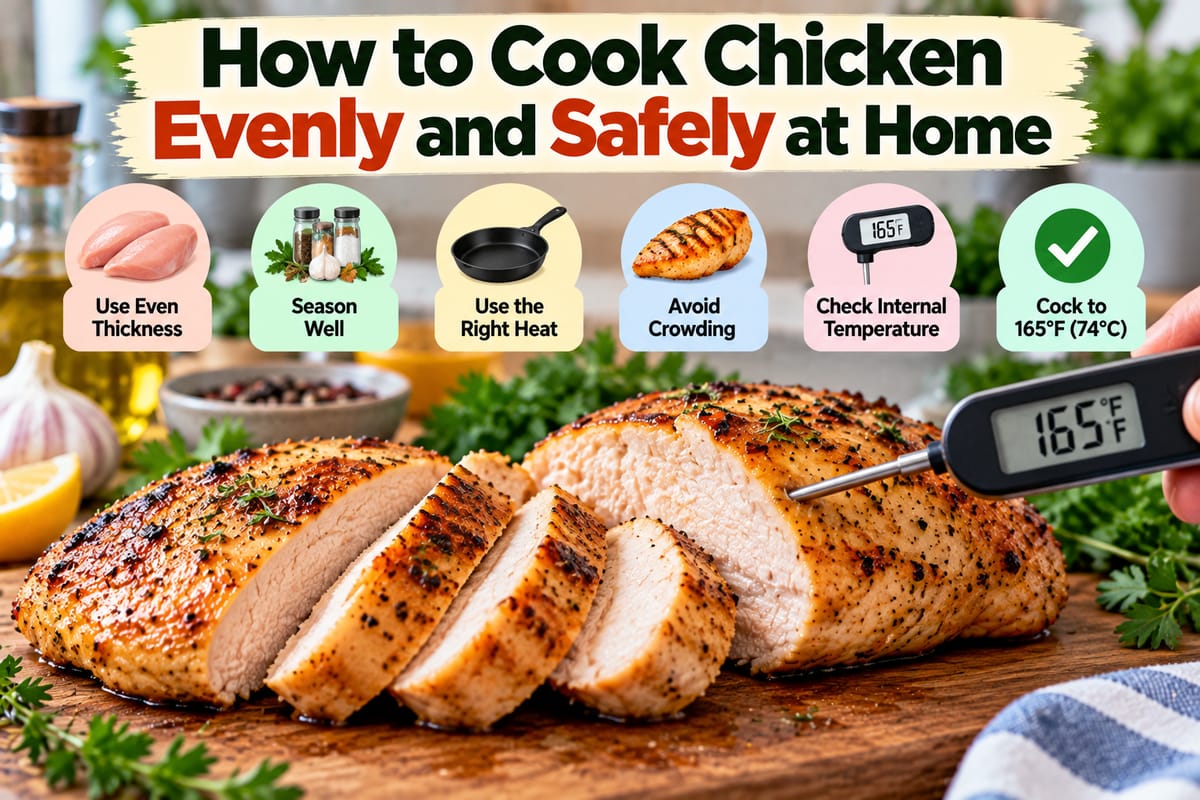
How to Cook Chicken Evenly and Safely at Home
Cooking chicken at home seems straightforward, but getting every part cooked evenly while keeping the meat juicy and safe requires more than simply turning on the stove or oven. Chicken pieces vary in thickness, shape, size, and bone structure, which means they do not always cook at the same rate.
The thickest part of a chicken breast can remain undercooked while the thinner edges become dry. A whole chicken can have a fully cooked exterior while the meat near the bone needs more time. Even smaller pieces can cook unevenly when they are crowded together in a pan.
The good news is that reliable chicken cooking is largely about controlling a few fundamentals: preparation, thickness, cooking temperature, timing, spacing, and checking doneness.
For anyone still developing basic kitchen skills, The Complete Guide to Cooking for Beginners offers a broader foundation for understanding cooking techniques, ingredients, heat, and kitchen practices.
Why Chicken Can Cook Unevenly
Chicken is not a uniform ingredient.
A boneless chicken breast may be thick in the center and thin around the edges. A bone-in thigh contains more connective tissue and has a different shape from a chicken tender. Wings have multiple joints and relatively small amounts of meat, while a whole chicken contains several different sections that cook at different rates.
Several factors influence how evenly chicken cooks:
- Thickness
- Size
- Presence of bones
- Starting temperature
- Cooking method
- Oven or pan temperature
- Position in the cooking vessel
- Whether pieces are crowded
- Whether the meat was prepared evenly
- How often the meat is turned or moved
Understanding these factors makes it easier to predict how chicken will behave during cooking.
The Most Important Rule: Check the Internal Temperature
Color alone is not a reliable way to determine whether chicken is safely cooked.
The safest approach for home cooks is to use a food thermometer and check the internal temperature at the thickest part of the meat.
For poultry, the commonly recommended minimum internal temperature is 165°F (74°C).
The thermometer should be inserted into the thickest portion without touching bone when possible, because bone can affect the reading.
For irregularly shaped pieces, it can be useful to check more than one location.
Temperature control is also important for cooking quality, not just safety. How Cooking Temperature Affects Food and Cooking Results explains how heat influences the texture, moisture, and overall result of cooked food.
Start With Evenly Sized Pieces
One of the simplest ways to improve consistency is to make chicken pieces as similar in thickness as practical.
If one piece is twice as thick as another, both pieces are unlikely to finish at exactly the same time.
When preparing chicken breasts, cooks can use a meat mallet or another appropriate tool to gently flatten particularly thick areas.
The objective is not necessarily to make every piece identical. It is to reduce extreme differences in thickness.
Even thickness allows heat to reach the center more predictably.
Butterflying Thick Chicken Breasts
Very thick chicken breasts can be difficult to cook evenly in their original shape.
Butterflying involves cutting horizontally through the breast so it opens into a thinner piece. The meat can then be cooked as a flatter portion.
This technique can:
- Reduce cooking time
- Promote more even cooking
- Reduce the risk of a dry exterior and undercooked center
- Make portions more consistent
Care should be taken when handling raw chicken and cutting boards to prevent cross-contamination.
Pound Chicken Carefully
Another option is gently pounding thick chicken breasts to a more consistent thickness.
Place the chicken between suitable layers, such as food-safe plastic wrap or parchment, and gently flatten the thicker areas.
Avoid pounding so aggressively that the meat becomes torn or excessively thin.
The goal is consistency, not maximum thinness.
Bring Chicken to a Consistent Starting Temperature
The starting temperature of the chicken affects cooking time.
Chicken taken directly from a refrigerator will require different cooking conditions from chicken that has been sitting out for a short period during preparation.
However, raw chicken should not be left at room temperature for extended periods.
The safest approach is to minimize the time raw poultry spends outside appropriate refrigeration and organize preparation so the meat can move efficiently from storage to cooking.
Dry the Surface Before Cooking
Patting chicken dry with clean paper towels before cooking can improve browning, particularly when using a pan, grill, or oven.
Excess surface moisture can initially cause water to evaporate rather than allowing the surface to brown efficiently.
Drying the exterior also makes it easier for seasonings and marinades to adhere.
Paper towels used on raw chicken should be discarded immediately, and hands, surfaces, and utensils should be cleaned appropriately afterward.
Season Chicken Evenly
Seasoning is not only about flavor. Applying it consistently helps ensure that different parts of the chicken taste balanced.
Depending on the recipe, seasoning might include:
- Salt
- Black pepper
- Garlic
- Paprika
- Herbs
- Spices
- Lemon
- Ginger
- Marinades
- Oil
For thick pieces, seasoning the surface alone may produce a less balanced result than using an appropriate marinade or seasoning method.
The cooking method should also influence seasoning choices.
Pan-Cooking Chicken Evenly
Pan-searing is a common way to cook boneless chicken pieces.
A basic approach is:
- Prepare pieces to a relatively even thickness.
- Pat the chicken dry.
- Season appropriately.
- Preheat the pan.
- Add an appropriate amount of cooking oil.
- Place the chicken in the pan without overcrowding.
- Allow the first side to develop color.
- Turn the chicken when appropriate.
- Continue cooking until the thickest part reaches 165°F (74°C).
- Allow the chicken to rest briefly before serving.
The exact cooking time depends on the thickness of the pieces and the heat being used.
A timer can help with consistency, but it should not replace checking internal temperature.
Avoid Overcrowding the Pan
Putting too many chicken pieces into a pan at once can interfere with cooking.
Crowding can cause the temperature of the cooking surface to drop and can increase the amount of moisture released around the chicken.
Instead of browning efficiently, the pieces may begin to steam.
If necessary, cook the chicken in batches.
Leaving enough space between pieces allows heat to circulate and makes it easier to turn the chicken.
Oven-Baking Chicken
Baking can be one of the most convenient methods for cooking chicken at home.
For even results:
- Arrange pieces in a suitable baking dish or pan.
- Avoid stacking pieces.
- Leave some space between portions where practical.
- Use consistent-sized pieces.
- Preheat the oven.
- Monitor the thickest portion with a thermometer.
- Allow the chicken to rest after cooking.
Bone-in and boneless chicken pieces have different cooking characteristics, so the cooking time should not be assumed to be identical.
Roasting a Whole Chicken
A whole chicken presents a different challenge because it contains several sections of meat with different thicknesses.
The breast can cook faster than the legs and thighs because of differences in shape and composition.
To cook a whole chicken more evenly:
- Remove excess moisture from the surface.
- Season the chicken as desired.
- Position it appropriately in the roasting pan.
- Avoid excessive stuffing that could interfere with cooking.
- Roast according to the recipe and oven conditions.
- Check internal temperature in appropriate locations.
- Confirm that the thickest areas have reached a safe temperature.
- Allow the chicken to rest before carving.
A thermometer is particularly useful with whole poultry because visual appearance can be misleading.
Cooking Chicken on the Grill
Grilling introduces another variable: direct and indirect heat.
Very high direct heat can brown the outside quickly while leaving the center undercooked.
For thicker chicken pieces, a combination of direct and indirect heat can help.
A practical approach is to:
- Preheat the grill.
- Clean the cooking surface.
- Start with appropriate heat.
- Sear the chicken where suitable.
- Move thicker pieces away from intense direct heat if necessary.
- Continue cooking until the internal temperature reaches 165°F (74°C).
- Use separate utensils for raw and cooked chicken.
The precise technique depends on the type and size of the chicken being grilled.
Cooking Chicken on the Stovetop With a Lid
Using a lid can help retain heat and moisture while chicken cooks.
However, covering a pan also changes the cooking environment.
If the goal is to brown the chicken, leaving the pan uncovered for part of the cooking process may help the surface develop color. Covering it later can help the interior continue cooking.
The right balance depends on the recipe.
A cook should still verify the internal temperature rather than relying only on cooking time.
How to Cook Chicken Thighs
Chicken thighs contain more connective tissue and generally have a different texture from chicken breasts.
They can be cooked using methods such as:
- Roasting
- Braising
- Grilling
- Pan-cooking
- Slow cooking
- Stewing
Thighs can tolerate longer cooking and often become tender as connective tissue breaks down.
Even so, food safety still requires reaching an appropriate internal temperature.
For more guidance on matching techniques to different poultry cuts, How to Cook Different Cuts of Meat and Poultry Properly provides a broader look at how different cuts behave during cooking.
How to Cook Chicken Breasts Without Drying Them Out
Chicken breasts are relatively lean, which means they can become dry when overcooked.
Several techniques can help:
Flatten Thick Areas
More consistent thickness helps the breast cook at a similar rate.
Avoid Excessively High Heat
Very high heat can brown the exterior quickly while leaving the center behind.
Use a Thermometer
Removing chicken from heat based on appearance alone can lead to overcooking.
Do Not Keep Cooking After It Is Done
Once the thickest part reaches the appropriate safe temperature, continued cooking can gradually reduce moisture.
Let It Rest
Allowing cooked chicken to rest briefly before cutting can help retain moisture.
How to Cook Chicken Wings Evenly
Chicken wings are relatively small but contain several sections.
They can be:
- Baked
- Grilled
- Fried
- Air-fried
- Roasted
For oven or air-fryer cooking, arranging wings in a single layer can promote more consistent exposure to heat.
Turning them during cooking can also help with even browning.
As with other poultry, the thickest portions should be checked for safe internal temperature.
How to Cook Chicken Tenders
Chicken tenders are generally thinner than full chicken breasts and therefore cook relatively quickly.
Their small size makes them particularly vulnerable to overcooking.
For best results:
- Keep the pieces relatively similar in size.
- Avoid excessively high heat.
- Leave space between pieces.
- Turn them as needed.
- Check the thickest part for doneness.
Because tenders are thin, a thermometer with a suitable probe can be particularly useful.
Cooking Frozen Chicken
Frozen chicken requires additional care because the frozen center can remain cold while the exterior cooks.
Whenever practical, safely thaw chicken before cooking.
Appropriate thawing methods include:
- In the refrigerator
- In cold water with appropriate food-safety handling
- Using a microwave when the chicken will be cooked immediately afterward
Chicken should not be left to thaw for extended periods at room temperature.
If cooking from frozen, use a method and recipe specifically designed for frozen poultry and verify the internal temperature carefully.
Food Safety Begins Before Cooking
Safe chicken preparation starts before the pan, oven, or grill is turned on.
Raw poultry can carry harmful microorganisms, so preventing cross-contamination is essential.
Important practices include:
- Wash hands before and after handling raw chicken.
- Keep raw chicken separate from ready-to-eat foods.
- Use appropriate cutting boards and utensils.
- Clean preparation surfaces after handling raw poultry.
- Refrigerate chicken appropriately.
- Avoid using the same plate for raw and cooked chicken.
- Cook chicken thoroughly.
For a broader overview of safe kitchen practices, The Complete Guide to Food Safety covers food handling, storage, cross-contamination, cooking, and other important safety principles.
Do Not Wash Raw Chicken
Washing raw chicken under running water can spread contaminated droplets around the sink, counter, utensils, and nearby food.
Washing does not make raw chicken safe to eat.
Proper cooking is what reduces harmful microorganisms to safe levels.
Instead of washing chicken, remove unwanted moisture with disposable paper towels when needed and immediately clean your hands and preparation surfaces after handling the raw poultry.
Use Separate Equipment for Raw and Cooked Chicken
One of the easiest ways to create cross-contamination is to use the same plate or utensil for raw and cooked chicken.
For example, if raw chicken is placed on a plate before cooking, cooked chicken should not be returned to that same plate unless it has been properly washed.
Use clean utensils and serving dishes for the finished food.
This small habit can significantly improve kitchen hygiene.
Do Not Rely on Chicken Color
Chicken can change color during cooking, but color is not a sufficiently reliable safety test.
Meat can appear white before it has reached a safe internal temperature, while some fully cooked chicken can retain a slight pink appearance depending on factors such as pigments and cooking conditions.
The thermometer provides a more useful measurement.
Insert the probe into the thickest part of the chicken and avoid touching bone where possible.
Where to Check the Temperature
The correct thermometer placement depends on the shape of the chicken.
For boneless pieces, insert the probe into the thickest section.
For bone-in pieces, check the thickest portion while avoiding direct contact with the bone.
For whole chickens, check appropriate thick areas, including the thickest part of the breast and the inner portions of the thigh or wing area.
If different parts are significantly different in thickness, check more than one location.
The objective is to make sure the portions most likely to remain undercooked have reached the appropriate temperature.
Resting Chicken After Cooking
Resting is often associated with improved texture and moisture distribution.
Once chicken has reached the appropriate internal temperature, transferring it to a clean plate and allowing it to rest briefly can make it easier to slice and serve.
Resting does not replace the need to reach a safe internal temperature during cooking.
It is also important to remember that the chicken can continue to change in temperature after being removed from heat, but home cooks should not rely on this effect as a substitute for properly cooking poultry.
Cutting Chicken After Cooking
Cutting into chicken immediately can release juices onto the cutting board.
Allowing the meat to rest briefly before slicing can help preserve moisture.
When slicing larger chicken breasts, cut across the grain where practical. This can make the meat feel more tender when eaten.
Always use a clean cutting surface for cooked chicken.
How to Prevent Dry Chicken
Dry chicken is often the result of excessive cooking rather than insufficient seasoning.
Several habits can help prevent it:
- Use evenly sized pieces.
- Avoid unnecessarily high heat.
- Monitor the internal temperature.
- Choose appropriate cooking methods for the cut.
- Avoid leaving cooked chicken on heat longer than necessary.
- Consider marinades or brines where appropriate.
- Allow the meat to rest.
A thermometer can be especially useful because it allows the cook to stop guessing.
How Marinades Affect Chicken
Marinades can add flavor and sometimes influence texture.
Common marinade ingredients include:
- Oil
- Citrus juice
- Vinegar
- Yogurt
- Herbs
- Spices
- Garlic
- Ginger
- Salt
However, marinades used with raw chicken should be handled carefully.
Never reuse a marinade that has contacted raw chicken as a sauce unless it is thoroughly cooked first.
If some marinade will be used as a finishing sauce, reserve it separately before adding the raw chicken.
Brining Chicken
Brining involves exposing chicken to a salt solution or salt-based preparation before cooking.
It can help season the meat and may affect moisture retention.
Brining can be particularly useful for lean chicken breasts, although the technique needs to be matched to the recipe because excessive salt or overly long brining can negatively affect flavor and texture.
If a recipe already contains salty ingredients, adjust the additional salt accordingly.
Choosing the Right Cooking Method
Different chicken cuts respond differently to heat.
| Chicken type | Suitable methods | Main consideration |
|---|---|---|
| Chicken breast | Baking, pan-cooking, grilling | Avoid overcooking |
| Chicken thighs | Roasting, braising, grilling | Allow connective tissue to soften |
| Wings | Baking, grilling, frying | Cook evenly and brown thoroughly |
| Drumsticks | Roasting, grilling, braising | Check around the thickest area |
| Tenders | Pan-cooking, baking, air frying | Cook quickly without drying |
| Whole chicken | Roasting | Different sections cook at different rates |
The best method depends on the cut, thickness, recipe, equipment, and desired texture.
Common Mistakes When Cooking Chicken
Cooking by Time Alone
Recipes provide estimated cooking times, but appliances, portions, and starting temperatures vary.
Use time as a guide and temperature as the safety check.
Using Excessively High Heat
High heat can burn or dry the exterior before the center is fully cooked.
Crowding the Cooking Surface
Too many pieces can interfere with browning and heat distribution.
Cutting Chicken Open Repeatedly
Constantly cutting into chicken to inspect the center releases juices and makes it harder to judge doneness accurately.
Use a thermometer instead.
Reusing Raw-Chicken Utensils
Utensils that touched raw chicken should not be used for cooked chicken without proper cleaning.
Forgetting About Carryover Cooking
Chicken can continue changing temperature after being removed from heat, so cooks should consider this when managing texture. However, the chicken should still reach a safe temperature rather than relying on uncertain carryover effects.
A Simple Method for Reliable Chicken
For home cooks who want a repeatable routine, the following process works across many chicken recipes:
1. Prepare evenly sized pieces.
Flatten thick portions when appropriate.
2. Keep raw chicken refrigerated until preparation.
Avoid unnecessary time at room temperature.
3. Dry and season the chicken.
Use clean equipment and avoid cross-contamination.
4. Preheat the cooking equipment.
Allow the pan, oven, grill, or other appliance to reach the intended temperature.
5. Give each piece enough space.
Avoid unnecessary crowding.
6. Cook using an appropriate method.
Match the technique to the cut.
7. Check the thickest portion.
Use a food thermometer.
8. Confirm 165°F (74°C).
Make sure the chicken reaches the appropriate minimum internal temperature.
9. Transfer to a clean plate.
Do not reuse the plate that held the raw chicken.
10. Rest briefly before serving.
Then slice and serve using clean utensils.
Making Safe Chicken a Consistent Kitchen Habit
Cooking chicken evenly and safely does not require complicated equipment or advanced culinary skills. The most important habits are straightforward: prepare pieces to a manageable thickness, use appropriate heat, avoid overcrowding, prevent cross-contamination, and check internal temperature rather than relying on appearance alone.
Different cuts require different approaches, but the same principles apply across breasts, thighs, wings, drumsticks, tenders, and whole chickens.
Once cooks become comfortable using a thermometer and matching cooking methods to different cuts, chicken becomes much easier to prepare consistently. The result is not only safer food but also better control over texture, moisture, browning, and flavor.