How to Transplant Garden Plants Successfully
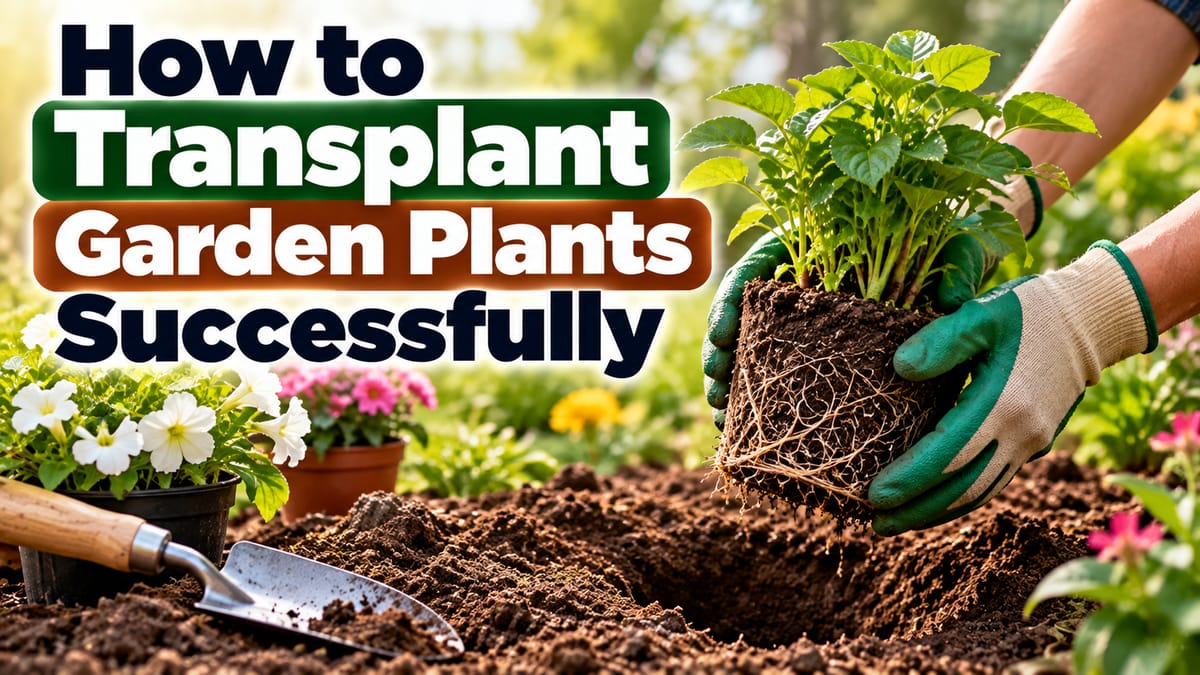
How to Transplant Garden Plants Successfully
Transplanting garden plants can give a landscape a fresh start, make better use of available space, and help plants grow in locations where they receive more suitable light, moisture, and room to develop. But moving a plant from one place to another is more than simply digging it up and putting it back into the soil.
A plant that has become established in one location has developed a root system adapted to its surroundings. When it is moved, some roots may inevitably be disturbed or damaged. The plant may also experience temporary stress as it adjusts to different soil conditions, sunlight, moisture levels, and temperatures.
Successful transplanting therefore depends on preparation, careful handling, appropriate timing, and consistent aftercare.
Whether you are moving a young perennial, relocating a shrub, dividing an established plant, or redesigning an entire garden bed, understanding the process can significantly improve the chances of a smooth transition.
Why Transplant Garden Plants?
There are many reasons gardeners decide to move plants.
A plant may have outgrown its original location, become crowded by neighboring plants, or been placed somewhere that does not provide the conditions it needs.
Common reasons for transplanting include:
- Improving sunlight exposure
- Moving a plant away from competing roots
- Correcting poor drainage
- Giving plants more growing space
- Redesigning a garden bed
- Protecting plants from excessive heat or wind
- Moving young plants into permanent positions
- Relocating plants before construction or landscaping work
- Creating a more attractive garden layout
- Replacing an unsuitable planting location
Transplanting can also be part of a broader garden redesign. Before moving plants, it can help to consider the overall arrangement of paths, planting beds, structures, sunlight, and outdoor living areas through Understanding Garden Design and Landscape Planning.
Which Plants Can Be Transplanted?
Many garden plants can be transplanted successfully, particularly when they are relatively young or have manageable root systems.
Common candidates include:
- Perennial flowers
- Herbs
- Vegetable seedlings
- Small shrubs
- Young trees
- Ornamental grasses
- Ground covers
- Container-grown plants
- Certain established annuals
However, some plants are much more sensitive to root disturbance than others.
Large, mature trees and shrubs can be particularly difficult to move because their root systems may extend well beyond the visible portion of the plant.
The older and larger a plant becomes, the more planning may be required.
The Best Time to Transplant Garden Plants
Timing can have a major effect on transplant success.
In many climates, transplanting is easier when weather conditions are relatively mild and plants are not experiencing extreme heat, drought, or active environmental stress.
For many deciduous plants, periods of dormancy can be useful because the plant is not actively producing large amounts of new foliage.
For perennials, transplanting may also work well during cooler portions of the growing season.
The exact timing depends on:
- Plant species
- Local climate
- Current weather
- Soil conditions
- Plant growth stage
- Root development
- Expected temperatures
Avoid treating a particular calendar date as universally appropriate. A planting period that works well in one climate may be unsuitable in another.
Why Transplanting Can Stress Plants
Plants depend heavily on their root systems.
Roots absorb water and nutrients, anchor plants in the soil, and interact with the surrounding soil environment.
When a plant is dug up, some roots are inevitably disturbed. The plant may temporarily lose part of its ability to absorb water even though its leaves continue losing moisture through transpiration.
This creates a temporary imbalance.
A transplanted plant may therefore show symptoms such as:
- Wilting
- Drooping leaves
- Yellowing foliage
- Slower growth
- Temporary leaf loss
- Reduced flowering
- General signs of stress
These symptoms do not automatically mean that the transplant has failed.
A plant may need time to rebuild its root system and adjust to its new environment.
Prepare the New Location First
One of the most important transplanting principles is to prepare the destination before removing the plant.
Digging up a plant and then spending a long time preparing its new location leaves the roots exposed unnecessarily.
Before moving the plant, determine:
- Where it will be planted
- How much sunlight it receives
- Whether the soil drains well
- How much space the mature plant needs
- Whether nearby plants will compete for resources
- Whether the location is exposed to strong wind
- Whether irrigation is available
Prepare the new planting hole before beginning the transplant.
This allows the plant to be moved quickly from its original location into suitable soil.
Match the New Location to the Plant
A successful transplant is not simply about moving the plant without damaging it.
The new location must also provide suitable growing conditions.
Consider the plant’s requirements for:
Sunlight
Some plants thrive in full sun, while others prefer partial shade or filtered light.
Moving a shade-loving plant into intense afternoon sunlight can create stress even if the transplant itself is performed perfectly.
Soil Moisture
Different plants have different water requirements.
A plant accustomed to relatively dry soil may struggle in an area that remains consistently wet.
Likewise, a moisture-loving plant may suffer if placed in rapidly draining soil.
Soil Type
Soil structure, organic matter, drainage, and fertility all influence plant establishment.
If the new location has dramatically different soil conditions, the plant may need additional care while it adapts.
Space
Consider the plant’s mature size rather than its current size.
A small shrub may look appropriately positioned when planted but become crowded as it grows.
Water the Plant Before Transplanting
Watering the plant before transplanting can help ensure that the root zone has adequate moisture.
The objective is to provide sufficient moisture without leaving the soil excessively saturated.
A properly hydrated plant is generally better positioned to handle the temporary stress associated with moving.
Watering practices should also continue after transplanting, when maintaining appropriate soil moisture becomes particularly important.
For practical guidance on establishing a consistent watering routine, see the Complete Guide to Watering Garden Plants Correctly.
Prepare the Plant’s Root Zone
Before digging, estimate how far the plant’s roots may extend.
For smaller plants, the root system may be relatively compact. Established shrubs and larger plants can have roots extending considerably farther from the main stem or trunk.
The objective is to preserve as much of the useful root system as reasonably possible.
A sharp spade or digging tool can help create cleaner cuts through the soil and reduce unnecessary tearing.
Avoid pulling aggressively on the plant’s stems or foliage.
The root system should be handled carefully throughout the process.
Dig Around the Plant Carefully
Begin by digging around the plant rather than immediately digging directly beneath its base.
Create a broad circle around the root zone and gradually work inward.
The size of the root ball depends on the plant’s size, species, and root structure.
The goal is to lift the plant with a substantial amount of surrounding soil while keeping the root system intact.
For a small perennial, this may be relatively straightforward.
For a shrub or young tree, the process requires considerably more care.
Protect the Root Ball
Once the plant has been loosened, preserve the soil surrounding its roots as much as possible.
A stable root ball protects fine roots from drying and reduces physical disturbance.
For larger plants, wrapping the root ball with suitable material can help keep the soil together during transport.
Do not leave exposed roots sitting in direct sunlight or drying wind.
Fine roots can dry out quickly, and unnecessary exposure increases transplant stress.
Handle Plants by the Root Ball
When moving a plant, support the root ball rather than pulling on the trunk, stem, or branches.
This is particularly important for larger plants.
The root ball may be heavy, and lifting the plant by its upper growth can place damaging pressure on the stem or trunk.
For larger specimens, use appropriate lifting assistance rather than attempting to move a heavy root ball alone.
Keep Roots Moist During the Move
If the plant cannot be replanted immediately, protect its roots from drying.
Keep the root ball shaded and reasonably moist.
Avoid leaving a plant sitting for extended periods in direct sunlight, strong wind, or excessive heat.
The shorter the time between lifting and replanting, the easier it is to maintain favorable root conditions.
Prepare the New Planting Hole
The new hole should generally be wide enough to accommodate the root system comfortably.
Avoid creating a hole that is unnecessarily deep.
The plant should generally be positioned so that its root flare and planting depth are appropriate for the species.
For trees and shrubs, planting too deeply can create long-term problems.
The surrounding soil should also provide enough room for roots to expand outward as the plant establishes.
Place the Plant at the Correct Depth
Planting depth is one of the easiest aspects of transplanting to overlook.
A plant that is buried too deeply may experience problems with oxygen availability around the root zone, stem health, and long-term growth.
A plant planted too shallowly may also struggle with moisture and root stability.
For trees and shrubs, the transition between the trunk and major roots provides an important visual clue when determining appropriate depth.
When transplanting woody plants, additional guidance can be found in How to Plant and Maintain Healthy Trees and Shrubs at Home.
Backfill the Hole Carefully
Once the plant is positioned correctly, begin returning soil around the root ball.
Work carefully to eliminate large air pockets without aggressively compacting the soil.
The objective is to create good contact between the surrounding soil and the root system.
Avoid using excessive force to pack the soil.
Roots need access to both moisture and oxygen, so compacting the planting area unnecessarily can interfere with healthy root development.
Water Immediately After Planting
Water the newly transplanted plant thoroughly after it has been placed in its new location.
This helps settle the surrounding soil and provides moisture to the root zone.
It also helps reveal whether water is draining appropriately.
If water remains pooled around the plant for an extended period, drainage may need further attention.
The goal is to maintain adequate moisture while avoiding prolonged waterlogging.
Add Mulch Around the Plant
A layer of organic mulch can help moderate soil temperature and reduce moisture loss.
Suitable mulch materials may include:
- Shredded bark
- Wood chips
- Chopped leaves
- Compost
- Other appropriate organic materials
Keep mulch away from direct contact with the plant’s stem or trunk.
A thick mound of mulch pressed against the trunk can create an unnecessarily damp environment and may contribute to plant health problems.
Protect the Plant From Extreme Conditions
Recently transplanted plants are more vulnerable to environmental stress.
Depending on the season and local conditions, protection may be helpful against:
- Intense sunlight
- Strong winds
- Extreme heat
- Sudden cold
- Heavy rainfall
- Dry conditions
Temporary shade can be useful for some plants, particularly when transplanting occurs during warm weather.
However, plants still need appropriate light, so protective measures should not unnecessarily block suitable sunlight for long periods.
Avoid Heavy Pruning
It may seem logical to remove a large amount of foliage after transplanting because the root system has been disturbed.
However, excessive pruning can create additional stress.
Leaves are essential to photosynthesis, and the plant needs functioning foliage to produce energy.
Remove damaged, broken, or clearly unhealthy growth when appropriate, but avoid aggressive pruning unless the plant’s characteristics or circumstances make it necessary.
Give Transplanted Plants Time to Establish
One of the most important lessons in transplanting is patience.
A plant may appear to stop growing after being moved.
That does not necessarily indicate failure.
The plant may be directing energy toward rebuilding its root system rather than producing large amounts of new foliage.
During this period, consistent moisture and suitable environmental conditions can help the plant gradually establish itself.
Avoid repeatedly disturbing the roots to check whether they are growing.
Signs That a Transplant Is Recovering
Recovery can be gradual.
Positive signs may include:
- New leaf growth
- Firm stems
- Healthy-looking foliage
- New shoots
- Stable plant structure
- Gradually increasing growth
- Normal seasonal development
Some plants recover quickly, while others require substantially more time.
The speed of establishment depends on plant species, size, season, weather, root damage, and growing conditions.
Common Transplanting Mistakes
Moving Plants on Extremely Hot Days
High temperatures can increase water loss and make transplant stress more severe.
Whenever possible, choose milder conditions.
Leaving Roots Exposed
Roots can dry rapidly when exposed to air, sunlight, and wind.
Keep them protected throughout the moving process.
Making the Hole Too Small
A cramped planting hole can make it difficult to position the root system properly.
A sufficiently wide hole provides room for roots to settle naturally.
Planting Too Deeply
Deep planting is particularly problematic for trees and shrubs.
Always pay attention to the appropriate planting depth.
Overwatering
Newly transplanted plants need moisture, but excessive water can reduce oxygen availability around roots and create other problems.
Water according to the plant and soil conditions rather than following a rigid schedule.
Fertilizing Too Aggressively
A newly transplanted plant is already experiencing stress.
Applying excessive fertilizer can create additional problems, particularly if the root system has been disturbed.
Focus first on appropriate planting, moisture, and establishment.
Repeatedly Moving the Same Plant
Frequent relocation can repeatedly disturb the root system.
Whenever possible, choose the new location carefully before beginning the transplant.
Transplanting Seedlings
Seedlings are often easier to transplant than established plants because their root systems are smaller.
However, young plants can still be delicate.
Before transplanting seedlings:
- Prepare the destination.
- Water the seedlings appropriately.
- Handle them gently.
- Avoid crushing stems.
- Preserve as much of the root system as possible.
- Plant at an appropriate depth.
- Water after planting.
- Protect them from extreme conditions while they establish.
Young plants can sometimes be transplanted as part of a propagation process. Gardeners interested in producing new plants can learn more from the Complete Guide to Plant Propagation.
Transplanting Perennial Flowers
Perennials are often transplanted when they become overcrowded or when gardeners want to divide established clumps.
The process can involve carefully lifting the plant, separating appropriate sections, and replanting them in suitable locations.
Each division should have enough roots and healthy growth to establish independently.
Avoid creating extremely small divisions that have insufficient roots or foliage to recover effectively.
Water newly divided plants thoroughly and monitor them closely while they establish.
Transplanting Herbs and Vegetable Plants
Vegetable seedlings and herbs can also be transplanted successfully.
Young plants may benefit from gradual exposure to outdoor conditions before being moved permanently, particularly when they were started indoors or in a protected environment.
This process is commonly known as hardening off.
Hardening off allows plants to gradually adapt to outdoor sunlight, wind, temperature fluctuations, and other conditions.
Moving a tender seedling directly from a sheltered environment into harsh outdoor conditions can increase stress.
Transplanting Trees and Shrubs
Trees and shrubs require additional consideration because their root systems can be extensive.
Young trees and smaller shrubs are generally easier to transplant than large established specimens.
Before moving a woody plant, consider:
- Trunk size
- Root spread
- Soil conditions
- Plant health
- Season
- Available equipment
- Destination space
- Long-term mature size
Large trees may require specialized equipment and professional assistance.
Attempting to move a heavy established tree without the appropriate tools can cause serious injury or permanently damage the plant.
Transplant Shock
Transplant shock describes the stress plants can experience after being moved.
It can occur because of:
- Root disturbance
- Moisture changes
- Temperature changes
- Different sunlight levels
- Changes in soil conditions
- Physical damage
- Loss of fine roots
Symptoms vary by plant but may include wilting, leaf drop, slowed growth, or temporary discoloration.
Reducing unnecessary root disturbance and maintaining suitable moisture are two important ways to support recovery.
How Long Does Transplant Recovery Take?
There is no single recovery period that applies to every plant.
A small perennial may begin showing new growth relatively quickly.
A larger shrub may require considerably longer.
A tree can take much longer to become fully established.
Factors affecting recovery include:
- Plant species
- Plant size
- Root damage
- Season
- Soil quality
- Water availability
- Temperature
- Sunlight
- Wind exposure
- Overall plant health
Rather than focusing exclusively on a specific number of days, watch for gradual signs of recovery.
Should You Fertilize After Transplanting?
Newly transplanted plants do not always need immediate fertilizer.
The priority is usually establishing a healthy root environment with appropriate moisture, adequate oxygen, and suitable soil conditions.
Excessive fertilizer can damage roots or encourage growth at a time when the plant is already under stress.
If fertilization is appropriate for the particular plant and soil, follow recommendations suited to the species and growing conditions.
A soil test can also provide useful information when nutrient deficiencies are suspected.
How Soil Quality Affects Transplant Success
Healthy soil supports root establishment.
Important soil characteristics include:
- Drainage
- Structure
- Organic matter
- Moisture retention
- Aeration
- Nutrient availability
- Appropriate pH
If the destination soil is severely compacted, poorly drained, or otherwise unsuitable, simply moving the plant will not solve the underlying problem.
Improving the planting environment before or during transplantation can give roots a better opportunity to establish.
Transplanting as Part of Garden Design
Moving plants can be a useful tool when a garden’s layout no longer meets the needs of the household or the plants themselves.
For example, a mature tree may eventually shade an area that once received full sun.
A shrub may outgrow a narrow planting bed.
A perennial may become crowded by surrounding plants.
Instead of removing the plants entirely, transplanting may allow gardeners to preserve them while improving the overall layout.
This makes transplanting particularly useful when updating an established landscape.
When Not to Transplant a Plant
Sometimes leaving a plant in place is the better option.
Avoid unnecessary transplanting when:
- The plant is already severely stressed
- Weather conditions are extreme
- The plant is very large and difficult to move
- The destination is unsuitable
- The root system cannot be preserved adequately
- The plant is diseased and should not be relocated
- There is no clear benefit to moving it
Every transplant introduces some degree of stress.
The decision should therefore have a clear purpose.
Helping Plants Settle Into Their New Home
Successful transplanting is largely about reducing stress while giving roots the conditions they need to recover and expand.
Choose the new location carefully, prepare it before digging, preserve as much of the root system as possible, move the plant promptly, and maintain appropriate moisture after planting.
Most importantly, allow the plant time to adjust.
A transplanted plant may not immediately reward the gardener with rapid growth or abundant flowers. Much of the early work happens below the soil surface as roots reconnect with their surroundings.
With thoughtful preparation and consistent care, transplanting can turn an overcrowded or unsuitable planting area into an opportunity for healthier growth and a more functional garden.