How to Identify Areas for Growth
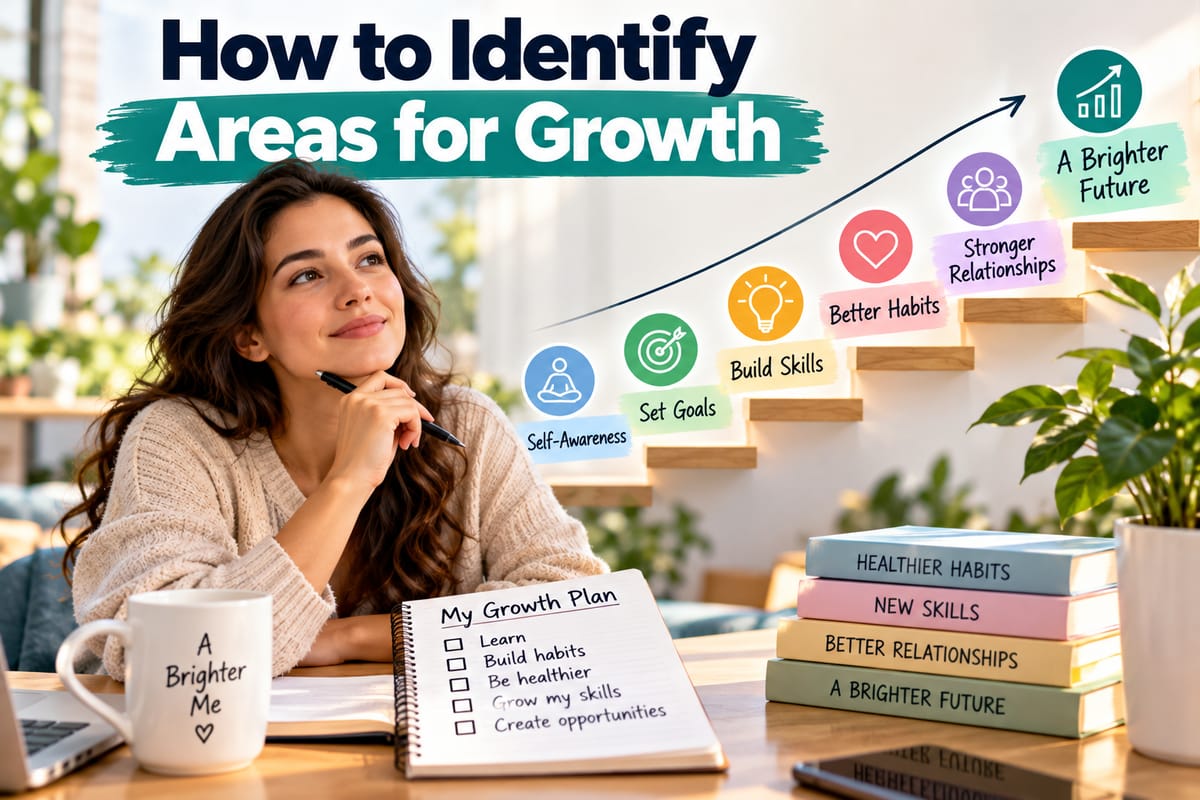
How to Identify Areas for Growth
Personal growth does not always begin with a major life change. Often, it starts with recognizing a small area where something could work better.
Identifying areas for growth means taking an honest look at your skills, habits, relationships, routines, mindset, and priorities to determine where improvement could make your life more fulfilling or effective. The process is not about finding everything that is wrong. Instead, it is about understanding where development could create meaningful benefits.
Growth also looks different for everyone. One person may want to improve communication skills, while another may want to become more organized, develop greater confidence, learn a new skill, or create healthier routines.
The most useful approach is to identify areas that matter to your circumstances and then turn those observations into practical steps.
What Does Personal Growth Mean?
Personal growth is the ongoing process of developing knowledge, skills, habits, self-awareness, and other capabilities that can improve how you navigate life.
It can involve many areas, including:
- Communication
- Emotional awareness
- Time management
- Creativity
- Decision-making
- Financial skills
- Organization
- Relationships
- Career development
- Physical habits
- Learning
- Confidence
- Problem-solving
Personal growth does not necessarily mean becoming a completely different person.
In many cases, it means becoming more capable of handling the situations, responsibilities, and goals that are important to you.
The broader process is explored in How Personal Development Works and How People Build Meaningful Skills.
Start With Self-Awareness
Before deciding what to improve, it helps to understand your current situation.
Self-awareness involves recognizing your strengths, weaknesses, habits, preferences, reactions, and recurring patterns.
Ask yourself:
- What do I currently do well?
- What situations regularly frustrate me?
- What tasks do I tend to avoid?
- What skills would make my life easier?
- Where do I frequently make the same mistakes?
- What do I wish I had more confidence doing?
- What activities consistently give me a sense of satisfaction?
- What responsibilities feel unnecessarily difficult?
The answers can reveal potential areas for development without requiring harsh self-judgment.
Look for Recurring Frustrations
Repeated frustration can provide useful information.
If you regularly feel overwhelmed by deadlines, organization might be an area worth developing.
If you frequently struggle to express your thoughts, communication could be a useful focus.
If you consistently avoid unfamiliar situations because you are uncertain about your abilities, confidence or skill development might deserve attention.
The important thing is to look for patterns rather than isolated bad days.
One difficult experience does not necessarily indicate a personal weakness. A recurring challenge may provide a stronger signal.
Pay Attention to What You Avoid
Avoidance can sometimes identify an area where additional knowledge or confidence would be useful.
For example, someone might avoid:
- Speaking in groups
- Managing finances
- Learning technology
- Starting creative projects
- Exercising consistently
- Having difficult conversations
- Applying for new opportunities
- Asking for help
Avoidance does not automatically mean something needs to change. Some activities may simply not be important to you.
The useful question is whether avoidance is preventing you from doing something you genuinely want or need to do.
Examine Your Daily Habits
Large goals are often influenced by small daily behaviors.
Review how you typically spend your time.
Consider:
- How you start your mornings
- How you organize your work
- How often you procrastinate
- How much time you spend on entertainment
- How consistently you pursue important goals
- How you handle household responsibilities
- How often you make time for learning
- How you respond to unexpected problems
You may discover that an area for growth is not a missing skill but a routine that needs adjustment.
For example, someone who wants to read more may not need greater motivation. They may simply need a consistent period during the day when reading is easier to maintain.
Ask for Constructive Feedback
Other people can sometimes notice patterns that are difficult to see yourself.
Trusted friends, colleagues, mentors, teachers, or family members may provide useful perspectives on your strengths and areas for improvement.
When asking for feedback, specific questions tend to be more useful than broad ones.
Instead of asking, “What is wrong with me?” consider asking:
- What do you think I do particularly well?
- Where could I communicate more clearly?
- What skill would help me become more effective?
- Is there a habit you think holds me back?
- What is one thing I could improve?
Not every piece of feedback needs to be accepted. The purpose is to gather information and look for patterns.
Identify Your Strengths Too
Personal growth should not focus exclusively on weaknesses.
Your existing strengths can provide clues about where you might develop next.
For example, someone who is highly organized may be able to use that strength to develop project-management skills.
Someone who enjoys explaining ideas may be able to develop teaching, writing, or public-speaking abilities.
Someone who naturally notices details might explore research, design, analysis, or craftsmanship.
Growth is often easier when you build on capabilities you already possess.
Consider Where You Want Your Life to Go
An area for growth should have some connection to the life you want to build.
Without that connection, personal development can become a collection of activities that consume time without providing meaningful benefits.
Ask yourself:
- What kind of person do I want to become?
- What responsibilities do I want to handle better?
- What experiences do I want to have?
- What abilities would make those experiences easier?
- What kind of relationships do I want to build?
- What interests do I want to explore?
- What would I like my everyday life to look like?
These questions can help distinguish meaningful development from improvement for its own sake.
Separate Wants From Social Expectations
Not every area that appears to need improvement actually matters to you.
Social media, workplace culture, family expectations, advertising, and cultural norms can create ideas about what a successful person “should” be able to do.
Someone may feel pressure to become more productive when what they actually need is more balance.
Another person may believe they should pursue a particular career even though their genuine interests lie elsewhere.
Personal growth becomes more useful when it reflects your own values and circumstances rather than an external definition of success.
Evaluate Your Skills
Create a simple inventory of skills you currently have.
You might divide them into categories such as:
Practical Skills
- Cooking
- Home maintenance
- Organization
- Financial management
- Planning
Communication Skills
- Listening
- Writing
- Speaking
- Negotiation
- Conflict management
Professional Skills
- Technical knowledge
- Leadership
- Project management
- Presentation
- Research
Personal Skills
- Self-discipline
- Emotional awareness
- Adaptability
- Decision-making
- Problem-solving
Then identify which skills would have the greatest practical impact if improved.
You do not need to develop every skill equally.
Look at Areas Where Small Improvements Could Have Large Effects
Some areas of growth have a multiplier effect.
Improving time management, for example, may create more space for work, relationships, hobbies, exercise, and rest.
Improving communication can influence professional relationships, friendships, family interactions, and collaboration.
Improving financial organization can reduce stress and make future planning easier.
When deciding what to work on first, consider which improvement could positively influence several areas of life.
Explore Your Curiosity
Curiosity can reveal areas of growth that traditional self-assessment might overlook.
Pay attention to topics you naturally research, questions you repeatedly ask, or activities that make you lose track of time.
You may discover an interest in:
- Photography
- Writing
- Gardening
- Technology
- Cooking
- Music
- Design
- History
- Languages
- Entrepreneurship
- Science
- Crafts
Curiosity does not always need to become a career or major life project.
Learning something simply because it interests you can be a meaningful form of personal development.
The relationship between creativity, independent learning, and personal interests is explored in How to Develop Creativity, Learn Independently and Pursue Meaningful Personal Interests.
Review Your Relationships
Relationships can also reveal areas for personal growth.
Consider how you communicate with friends, family members, colleagues, and other people in your life.
Potential areas for development might include:
- Listening more carefully
- Expressing needs clearly
- Setting boundaries
- Handling disagreements
- Showing appreciation
- Giving constructive feedback
- Being more dependable
- Asking for help when needed
The goal is not to take responsibility for every problem in a relationship.
Instead, focus on behaviors you can control.
Examine How You Respond to Setbacks
Setbacks can provide valuable information about areas for growth.
When something does not go as planned, consider what happened without immediately turning the experience into a judgment about yourself.
Ask:
- What specifically went wrong?
- What was within my control?
- What was outside my control?
- What did I learn?
- What would I do differently next time?
- Is there a skill that would help me handle this situation better?
This approach transforms difficult experiences into opportunities for learning.
Use Reflection as a Regular Practice
Reflection can help identify patterns that are difficult to notice when you are constantly moving from one task to another.
A weekly or monthly reflection might include questions such as:
- What went well?
- What was difficult?
- What did I learn?
- What surprised me?
- What did I avoid?
- What am I proud of?
- What would I like to handle differently?
Reflection is explored further in How Reflection Supports Personal Development.
A short, consistent reflection practice can be more useful than occasionally spending hours analyzing your entire life.
Turn Observations Into Specific Goals
Identifying an area for growth is only the beginning.
The next step is deciding what you actually want to change.
Instead of saying:
“I need to become more organized.”
Try:
“I will spend 15 minutes every Sunday planning the week ahead.”
Instead of:
“I want to improve my communication.”
Try:
“I will practice summarizing what someone has said before responding during important conversations.”
Specific goals make progress easier to recognize.
Choose Meaningful Goals
Goals are more sustainable when they have a clear connection to something you value.
A meaningful goal might involve:
- Learning a skill
- Improving a relationship
- Becoming more organized
- Exploring an interest
- Developing greater confidence
- Creating a healthier routine
- Preparing for a career change
- Completing a personal project
The process of turning personal priorities into actionable objectives is covered in How to Set Meaningful Personal Goals.
The goal does not have to be impressive to anyone else. It needs to matter enough to you that you are willing to invest time and effort in it.
Start With One or Two Areas
Trying to improve everything simultaneously can create unnecessary pressure.
If you identify ten areas for growth, you do not need to work on all ten.
Choose one or two that:
- Matter to your current circumstances
- Are within your control
- Could provide meaningful benefits
- Can be addressed realistically
- Interest you enough to sustain effort
Once those areas become more established, you can reassess what deserves attention next.
Measure Progress Without Obsessing Over Perfection
Personal growth is rarely linear.
There may be weeks when you make significant progress and other periods when circumstances make improvement difficult.
Rather than expecting constant progress, look for evidence of change over time.
Useful measures might include:
- Completing more tasks independently
- Responding differently to familiar challenges
- Becoming more consistent
- Feeling more confident
- Making fewer repeated mistakes
- Learning new skills
- Handling difficult situations more effectively
Progress can be gradual without being insignificant.
Reassess Your Priorities Regularly
An area that matters today may become less important later.
Life circumstances change. Work responsibilities, relationships, interests, financial situations, and personal priorities can all evolve.
For that reason, identifying areas for growth should be an ongoing process rather than a permanent checklist.
Every few months, ask:
- Is this still important to me?
- Have my circumstances changed?
- What have I learned?
- What is working?
- What no longer feels relevant?
- Is there another area that now deserves attention?
This keeps personal development flexible.
Focus on Growth That Makes Life Better
Identifying areas for growth is ultimately about understanding where development can make a meaningful difference.
The most valuable area is not necessarily the one that looks most impressive or receives the most attention from other people. It may be a simple skill that makes everyday responsibilities easier, an interest that brings greater satisfaction, or a habit that creates more time and stability.
Start by observing your patterns, recognizing your strengths, listening to useful feedback, reflecting on setbacks, and paying attention to what genuinely matters to you.
Then choose a small number of meaningful areas and work on them consistently.
Personal growth becomes much more sustainable when it is treated not as a demand to become perfect, but as an opportunity to become more capable, self-aware, and intentional over time.