How to Build Wildlife Friendly Gardens
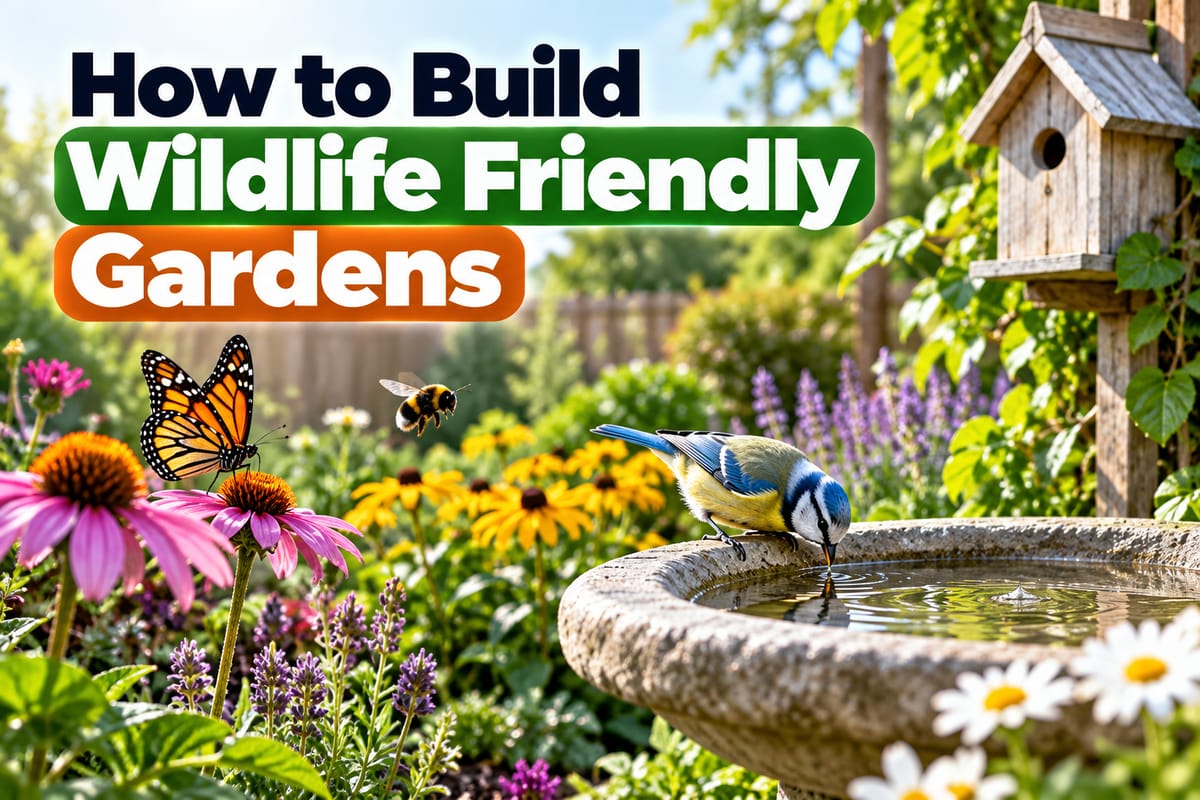
How to Build Wildlife Friendly Gardens
A garden can be much more than a place for flowers, vegetables, lawns, and ornamental plants. With thoughtful planning, it can become a small but valuable habitat for birds, butterflies, bees, beneficial insects, and other wildlife.
Wildlife-friendly gardening does not require turning a yard into an unmanaged wilderness. It is about creating conditions that provide food, water, shelter, nesting opportunities, and safe places for animals to move through the landscape.
Even a relatively small garden can contribute to local biodiversity when it contains a variety of plants and habitats. Trees can provide nesting sites, flowering plants can supply nectar, dense vegetation can offer shelter, and shallow water sources can support birds and insects.
The most effective wildlife gardens also work with the natural characteristics of the site. Choosing appropriate plants, reducing unnecessary chemical use, maintaining different layers of vegetation, and providing resources throughout the year can make an outdoor space considerably more welcoming to wildlife.
What Is a Wildlife-Friendly Garden?
A wildlife-friendly garden is an outdoor space intentionally designed or managed to support local wildlife.
The goal is not simply to attract as many animals as possible. Instead, it is to provide useful habitat while maintaining a healthy, functional garden.
A wildlife-friendly garden may include:
- Native or locally appropriate plants
- Flowering plants that provide nectar
- Plants that produce seeds, berries, or fruit
- Trees and shrubs for shelter
- Dense vegetation for nesting
- Water sources
- Leaf litter and natural ground cover
- Safe spaces for insects
- Areas where wildlife can move between habitats
- Reduced reliance on unnecessary pesticides
The exact design depends on the local climate, available space, soil, existing vegetation, and wildlife species in the area.
Why Wildlife-Friendly Gardens Matter
Urbanization and land development can reduce the amount of natural habitat available to wildlife.
Gardens cannot replace large natural ecosystems, but they can provide additional habitat within developed areas.
A network of gardens, parks, planted verges, green spaces, and other habitats can create opportunities for wildlife to find food and shelter.
Even when a garden is small, its plants can provide valuable resources for pollinators and birds.
Wildlife-friendly gardening can also benefit people by creating more visually diverse outdoor spaces and encouraging closer observation of nature.
Start With the Garden’s Existing Conditions
Before adding new features, examine what is already present.
Look at:
- Existing trees
- Shrubs
- Flowering plants
- Lawn areas
- Soil conditions
- Sunlight
- Shade
- Water availability
- Existing wildlife
- Wind exposure
- Drainage
- Available planting space
A garden may already contain useful habitat that should be preserved.
An established tree, for example, can provide considerably more ecological value than a newly planted ornamental tree. Mature vegetation can offer nesting locations, shelter, shade, flowers, fruit, and insects.
Understanding the site’s existing characteristics is also an important part of good landscape planning. Understanding Garden Design and Landscape Planning explores how site conditions and garden layout influence outdoor spaces.
Choose Plants That Support Local Wildlife
Plant selection is one of the most important decisions in a wildlife-friendly garden.
Plants can provide:
- Nectar
- Pollen
- Seeds
- Fruit
- Foliage
- Shelter
- Nesting material
- Cover from predators and harsh weather
Whenever possible, consider plants that are well adapted to the local environment.
Native plants can be particularly valuable because local wildlife may have evolved alongside them and rely on them for food or habitat.
This does not mean every plant in a wildlife garden must be native. Carefully selected non-native plants can also provide useful resources, particularly when they are not invasive and are well suited to the site.
Create Different Layers of Vegetation
Wildlife does not use every part of a garden in the same way.
A garden containing several vegetation layers can provide more habitat than one consisting entirely of short lawn.
Consider incorporating:
- Tall trees
- Small trees
- Shrubs
- Tall flowering plants
- Ground covers
- Grasses
- Low-growing plants
- Leaf litter
Different animals can use different layers.
Birds may nest in trees and shrubs, insects may feed among flowers and grasses, while ground-dwelling creatures may use leaf litter and dense low vegetation for shelter.
Plant Trees for Long-Term Habitat
Trees can become some of the most valuable features in a wildlife-friendly garden.
They can provide:
- Nesting sites
- Shade
- Seeds
- Fruit
- Flowers
- Bark and crevices
- Perching locations
- Shelter from weather
The best tree choices depend on local conditions and available space.
A tree should be selected with its mature size in mind. Planting a species that eventually becomes too large for the available space can create maintenance and safety problems.
Where space permits, a combination of tree species can provide different resources throughout the year.
Add Shrubs for Shelter and Food
Shrubs occupy an important middle layer between trees and ground-level plants.
Dense shrubs can give small birds and other animals places to hide from predators and harsh weather.
Some shrubs also produce:
- Berries
- Seeds
- Flowers
- Nectar
- Edible fruits
Evergreen shrubs can provide shelter during seasons when deciduous plants have lost their leaves.
A mixture of shrub types can therefore create more varied habitat.
Grow Flowering Plants for Pollinators
Flowering plants can make a garden especially useful to bees, butterflies, moths, and other pollinating insects.
Rather than planting one species that flowers for a short period, consider selecting plants with different flowering periods.
This can provide food resources across a longer portion of the year.
A pollinator-friendly planting area might include:
- Native flowering plants
- Herbs allowed to flower
- Perennial flowers
- Flowering shrubs
- Flowering trees
- Plants with different flower shapes
Different insects have different feeding behaviors, so plant diversity can be more useful than relying on a single highly attractive species.
Provide Flowers in Multiple Seasons
A garden that provides flowers for only a few weeks may leave pollinators with limited resources for the rest of the year.
Try to create a sequence of flowering periods.
For example, early-season plants can provide resources when insects first become active, while later-flowering species can support pollinators toward the end of the growing season.
The exact plants depend on the local climate.
The goal is to create continuity rather than having one short period of abundant flowers followed by a long period with little available food.
Avoid Planting Only for Appearance
Ornamental value is important, but wildlife gardening adds another consideration: ecological function.
A plant may look attractive but provide relatively little food or shelter.
When choosing plants, consider questions such as:
- Does it produce nectar?
- Does it provide pollen?
- Does it produce seeds?
- Does it offer fruit?
- Can insects use its foliage?
- Does it provide shelter?
- Does it flower at a useful time of year?
- Is it appropriate for the local environment?
This approach can produce a garden that is both attractive and biologically useful.
Provide Water for Wildlife
Water is another important garden resource.
Birds, insects, and other animals may use suitable water sources for drinking or other needs.
A wildlife-friendly water feature can be as simple as a shallow container that is cleaned and refilled regularly.
Consider including:
- Shallow birdbaths
- Small ponds
- Water-filled containers
- Shallow dishes
- Naturalistic water features
Safety is important. Deep containers can pose risks to small animals, so shallow areas and escape routes can make water features more accessible.
Water should also be maintained regularly to prevent it from becoming stagnant or accumulating debris.
Create a Small Wildlife Pond
If space allows, a pond can create a particularly diverse habitat.
Even a small pond can support aquatic plants and provide water for insects and other wildlife.
A well-designed pond can include:
- Shallow edges
- Deeper central areas
- Aquatic plants
- Rocks
- Vegetation around the margins
- Gentle access points
The design should reflect local conditions and avoid introducing invasive species.
Leave Some Natural Material in the Garden
A perfectly tidy garden is not necessarily the most useful garden for wildlife.
Dead leaves, fallen branches, seed heads, and other natural materials can provide habitat.
Leaf litter can shelter insects and other small organisms. Fallen branches can provide hiding places. Hollow stems may be used by some insects.
Instead of removing every piece of organic material, consider leaving some in designated areas.
This creates a balance between a maintained garden and a habitat-rich landscape.
Create a Leaf-Litter Area
Leaves are often treated as garden waste, but they can have ecological value.
A layer of leaves can:
- Protect soil
- Add organic matter
- Provide shelter
- Support decomposers
- Create habitat for insects
- Help retain moisture
Leaves can be left beneath suitable trees and shrubs or incorporated into designated natural areas.
They can also be composted and returned to the garden as a soil amendment.
Provide Shelter for Birds
Birds need more than food.
They also require safe locations for resting, nesting, and protection from predators.
Trees, dense shrubs, climbing plants, and other vegetation can provide natural shelter.
Birdhouses can also be useful in appropriate settings, although their design and placement should reflect the needs of local bird species.
A garden with several vegetation layers can provide shelter without requiring artificial structures everywhere.
Provide Food for Birds
Bird-friendly plants can supply seeds, berries, fruits, nectar, and insects.
Some trees and shrubs produce food at particular times of year, creating seasonal resources.
Bird feeders can supplement natural food sources, but they require responsible maintenance.
Feeders should be cleaned regularly, and food should be stored properly to reduce contamination and discourage unwanted pests.
A garden designed to produce natural food can reduce the need to rely entirely on feeders.
Make the Garden Useful to Butterflies
Butterflies require more than nectar-producing flowers.
Their life cycles can also depend on specific host plants where eggs are laid and caterpillars feed.
This means a garden designed exclusively for adult butterflies may provide only part of the necessary habitat.
A more complete butterfly garden combines:
- Nectar plants
- Host plants
- Shelter
- Sunlit areas
- Water
- Protected vegetation
Accepting some caterpillar feeding on plants can be part of supporting the complete butterfly life cycle.
Support Moths and Night-Active Wildlife
Wildlife gardening should not focus only on daytime species.
Moths and other nocturnal organisms can also contribute to garden ecosystems.
Night-blooming or strongly scented flowers can provide resources for some nocturnal pollinators.
Reducing unnecessary outdoor lighting can also make gardens more suitable for wildlife that is active after dark.
Where lighting is necessary, directing it toward the ground and limiting excessive brightness can help reduce unnecessary disturbance.
Create Habitat for Beneficial Insects
Not every insect in a garden is a pest.
Many insects help pollinate plants, decompose organic material, or prey on other insects.
Ladybirds, lacewings, hoverflies, predatory beetles, and other beneficial organisms can contribute to natural pest regulation.
Providing flowers, shelter, and diverse vegetation can make the garden more attractive to these species.
How Beneficial Insects Help Control Pests and Support Healthy Gardens provides a closer look at how beneficial insects contribute to healthy gardens.
Avoid Unnecessary Pesticide Use
Broad use of pesticides can affect organisms that were not the intended target.
A product designed to control one pest may also affect beneficial insects and other organisms.
Wildlife-friendly gardening therefore emphasizes prevention and targeted management.
Before treating a problem, identify:
- What organism is causing the damage?
- How serious is the damage?
- Is the plant likely to recover?
- Are beneficial organisms already controlling the problem?
- Is treatment actually necessary?
A small amount of insect damage does not necessarily mean that a plant is unhealthy.
Use Organic Gardening Practices Thoughtfully
Organic gardening can support wildlife by emphasizing soil health, biodiversity, natural pest management, and reduced reliance on synthetic inputs.
This can involve practices such as:
- Composting
- Mulching
- Crop rotation
- Diverse planting
- Biological pest management
- Careful watering
- Improving soil structure
However, “organic” does not automatically mean that every product is harmless to wildlife.
Even naturally derived pest-control products can affect non-target organisms when used incorrectly.
Organic Gardening Explained provides more information about the principles and practices involved in organic gardening.
Use Companion Planting Carefully
Companion planting involves growing different plants together based on potential benefits from their proximity.
Some combinations may help attract beneficial insects, diversify habitat, or make efficient use of garden space.
However, companion planting should not be treated as a universal solution for pest problems.
The strongest wildlife benefits generally come from overall plant diversity and habitat quality rather than relying on a particular combination of plants.
Manage Garden Pests Without Eliminating Wildlife
A wildlife-friendly garden will contain insects.
Some will feed on plants.
The objective is not to eliminate every insect but to maintain a reasonable ecological balance.
Useful approaches can include:
- Monitoring plants regularly
- Removing severely affected plant material
- Encouraging natural predators
- Improving plant health
- Using physical barriers where appropriate
- Selecting resistant plant varieties
- Applying targeted controls only when necessary
The Complete Guide to Garden Pest Control offers broader guidance on managing garden pests while protecting the wider landscape.
Avoid Invasive Plant Species
A plant that grows aggressively can sometimes escape garden boundaries and spread into natural habitats.
Invasive species can displace native vegetation and alter ecosystems.
Before planting unfamiliar species, check whether they are considered invasive in the local area.
Choosing appropriate plants is particularly important near natural areas, waterways, forests, and other sensitive habitats.
Provide Safe Places for Ground-Dwelling Wildlife
Not every animal needs a tree.
Ground-level habitat can support insects, amphibians, reptiles, and other small creatures.
Useful features can include:
- Dense ground cover
- Logs
- Rocks
- Leaf litter
- Native grasses
- Low shrubs
- Undisturbed soil
These areas can create small refuges where animals can shelter from predators and environmental conditions.
Create a Wildlife Corridor
A wildlife corridor is a connected route through which animals can move between suitable habitats.
In a residential setting, individual gardens may be small, but several neighboring gardens can collectively create more useful habitat.
Planting connected hedges, shrubs, trees, or ground covers can reduce gaps between suitable areas.
Even a narrow planted boundary can provide a route for some small animals and insects.
Use Fences Strategically
Fences can unintentionally prevent wildlife from moving through a neighborhood.
Where appropriate, small openings at ground level can allow some animals to pass between gardens.
The right approach depends on local wildlife and security requirements.
A wildlife-friendly garden does not have to eliminate boundaries. It can simply consider whether those boundaries need to be completely impermeable.
Make Gardens Safer for Wildlife
Wildlife can encounter hazards in residential landscapes.
Potential risks include:
- Open drains
- Deep containers
- Chemical exposure
- Sharp structures
- Uncovered water tanks
- Excessive outdoor lighting
- Large areas of impermeable surfaces
- Windows near feeding or nesting areas
Simple design changes can sometimes reduce these risks.
For example, escape ramps can help small animals leave water features, while covered containers can prevent accidental access to unsuitable water.
Be Careful With Garden Lighting
Artificial light can affect nocturnal wildlife.
Bright lighting can alter animal behavior, interfere with feeding patterns, and change how insects interact with their environment.
Where possible, use outdoor lighting only where it is needed.
Motion-sensitive lights, downward-directed fixtures, and lower-intensity lighting can reduce unnecessary illumination.
Protect Nesting Areas
Birds and other wildlife may use vegetation for nesting.
Avoid unnecessary disturbance during active nesting periods where practical.
Pruning should also be planned carefully when vegetation may contain nests.
Dense shrubs, trees, climbing plants, and other structural vegetation can provide valuable nesting opportunities.
Give Wildlife Year-Round Resources
A wildlife garden should not be designed around one season.
Wildlife needs resources throughout the year.
Consider providing:
- Spring flowers
- Summer nectar sources
- Autumn fruits and seeds
- Winter shelter
- Evergreen vegetation
- Persistent seed heads
- Water during dry periods
Seasonal diversity makes the garden more useful than a landscape that provides abundant resources for only a few weeks.
Reduce Excessive Lawn Areas
Lawns can have practical uses, but large expanses of closely cut grass generally provide fewer habitat opportunities than diverse planting.
Reducing unnecessary lawn can create space for:
- Flowering plants
- Shrubs
- Native grasses
- Trees
- Ground covers
- Wildlife habitat
Even converting a small section of lawn can increase plant diversity.
A garden does not need to eliminate lawns completely. The goal is to use lawn where it serves a purpose and consider alternative planting where it does not.
Let Some Plants Go to Seed
Removing flowers as soon as they fade can reduce the amount of food available to wildlife.
Allowing selected plants to produce seeds can provide resources for birds and other animals.
Seed heads can also add winter structure and visual interest.
This is another example of how slightly less intensive maintenance can make a garden more valuable to wildlife.
Compost Garden Organic Material
Composting can turn leaves, plant trimmings, and other suitable organic material into a useful soil amendment.
A compost area can also become a small habitat for decomposers and other organisms.
The finished compost can improve soil structure and return nutrients to the garden.
Good composting practices can therefore connect waste reduction, soil health, and wildlife-friendly gardening.
Build Wildlife-Friendly Gardens on a Small Budget
Creating habitat does not necessarily require expensive landscaping.
Simple changes can make a meaningful difference.
Consider:
- Planting a few flowering species
- Leaving some leaves under shrubs
- Adding a shallow water dish
- Planting a native shrub
- Reducing unnecessary pesticide use
- Allowing some flowers to produce seeds
- Creating a small log or rock habitat
- Replacing part of a lawn with diverse plants
Wildlife gardening can develop gradually rather than requiring a complete garden renovation.
Wildlife Gardening in Small Spaces
Even a balcony, courtyard, or small urban yard can provide resources.
Container plants can offer flowers and shelter. Window boxes can support pollinators. A small water source can provide drinking opportunities for birds and insects.
The most important consideration is making efficient use of available space.
Vertical gardening, climbing plants, container shrubs, and compact trees can create additional habitat without requiring a large ground area.
Choose Plants With Different Heights and Forms
Plant structure matters as much as plant species.
A combination of tall, medium, and low vegetation creates more opportunities for wildlife.
For example:
- Tall trees provide canopy habitat.
- Shrubs provide middle-level shelter.
- Flowers provide nectar and pollen.
- Ground covers protect soil.
- Leaf litter creates ground-level habitat.
This layered approach can make even a relatively compact garden more structurally diverse.
Avoid Making the Garden Too Tidy
Wildlife-friendly gardening often requires accepting a little imperfection.
A fallen branch, seed head, patch of leaf litter, or small area of bare soil may have ecological value.
Instead of maintaining every part of the garden to the same standard, consider creating different zones.
A formal patio can remain neat while a corner of the garden is managed more naturally.
This creates a balance between human use and wildlife habitat.
Monitor What Visits the Garden
One of the most enjoyable parts of wildlife gardening is observing what appears.
Keep track of:
- Birds
- Butterflies
- Bees
- Moths
- Beetles
- Dragonflies
- Frogs
- Lizards
- Other local wildlife
Observation can help identify which features are working and which resources may be missing.
A simple garden wildlife journal can record species, dates, weather conditions, and observations.
Adapt the Garden Over Time
A wildlife garden does not need to be perfect from the beginning.
Plants grow, trees mature, wildlife populations change, and different parts of the garden may develop in unexpected ways.
Use observations to guide future decisions.
If pollinators are abundant during one season but scarce during another, consider adding plants that flower during the quieter period.
If birds visit for food but have limited shelter, additional shrubs or trees may help.
This gradual approach allows the garden to evolve according to local conditions.
Common Wildlife Gardening Mistakes
Several mistakes can reduce the ecological value of a garden.
Planting Only One Type of Flower
Large areas of one plant species may provide abundant resources temporarily but offer less diversity throughout the year.
Removing Every Fallen Leaf
Excessive tidiness removes potential habitat.
Using Pesticides Automatically
Treating every insect as a pest can eliminate beneficial organisms.
Choosing Plants Without Considering Local Conditions
A plant that struggles in the local climate may require excessive water, fertilizer, or intervention.
Providing Food Without Shelter
Animals need safe places to rest and hide as well as food.
Ignoring Water Safety
Deep or poorly maintained water features can create hazards.
Forgetting Seasonal Needs
Wildlife needs resources throughout the year, not just during peak flowering periods.
A Practical Wildlife Garden Plan
A simple plan can make the process easier.
Step 1: Observe
Spend time identifying existing plants, wildlife, sunlight, shade, drainage, and available space.
Step 2: Protect Valuable Existing Features
Preserve mature trees, healthy shrubs, and other habitat where practical.
Step 3: Increase Plant Diversity
Add plants that provide flowers, seeds, fruit, foliage, and shelter.
Step 4: Add Water
Provide an appropriately designed and maintained water source.
Step 5: Create Shelter
Use trees, shrubs, ground covers, logs, rocks, and leaf litter.
Step 6: Reduce Unnecessary Chemicals
Use monitoring and targeted approaches rather than automatically treating every pest.
Step 7: Maintain Habitat
Allow some natural processes while keeping important areas safe and functional.
Step 8: Observe and Adapt
Watch which wildlife appears and adjust the garden over time.
A Garden That Works as a Living Ecosystem
A wildlife-friendly garden is not simply a collection of plants selected to attract birds or butterflies. It is a living system in which plants, insects, soil organisms, water, shelter, and larger animals interact.
The most effective gardens provide multiple resources at different times of year while avoiding unnecessary disruption.
They also recognize that wildlife gardening is not about eliminating every imperfection. A leaf-covered corner, a few chewed leaves, a fallen branch, or a patch of native vegetation can all contribute to a healthier ecosystem.
By combining thoughtful landscape planning with diverse planting, natural pest management, water, shelter, and responsible maintenance, homeowners can create outdoor spaces that serve people while also giving local wildlife places to feed, rest, reproduce, and move through the landscape.
A wildlife-friendly garden does not have to be large or complicated. It simply needs to give nature more opportunities to thrive.