How To Organize Items By Frequency Of Use
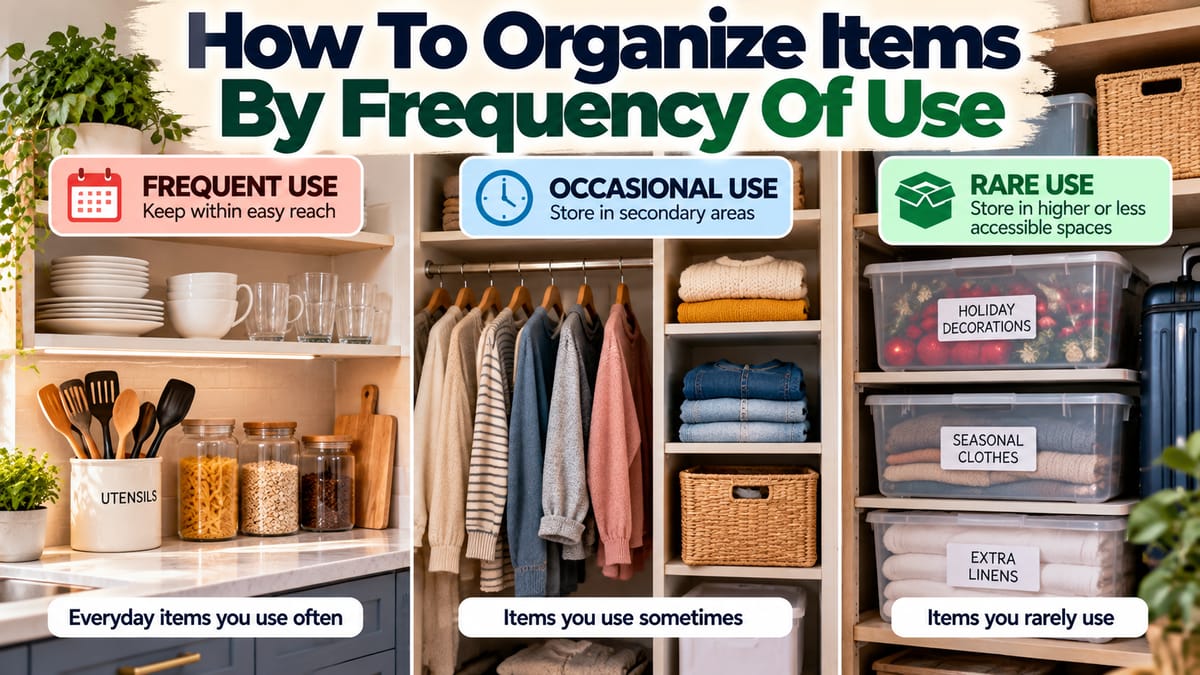
How To Organize Items By Frequency Of Use
A home can have plenty of storage and still feel difficult to navigate. The problem is often not the amount of space available, but where belongings are placed.
Items that are used every day can become frustrating to access when they are stored too far away, while rarely used belongings may occupy the easiest-to-reach shelves and drawers. Over time, this arrangement creates unnecessary effort, clutter, and repeated searching.
Organizing items according to how often they are used offers a simple way to make storage more practical. Frequently used belongings can be kept within easy reach, occasionally used items can occupy secondary storage areas, and rarely used possessions can be moved to less accessible spaces.
The result is a storage system designed around everyday behavior rather than simply grouping everything by category.
What Does Frequency-of-Use Organization Mean?
Frequency-of-use organization means arranging belongings according to how often they are needed.
A simple system can divide items into three broad groups:
- Daily-use items — used every day or almost every day
- Occasional-use items — used weekly, monthly, or for particular activities
- Rare-use items — used only a few times a year or less
This approach can be applied throughout the home.
For example, in a kitchen, everyday plates and drinking glasses might occupy an easily accessible cabinet, while specialty serving dishes can go higher up or farther back.
In a bedroom, frequently worn clothes can remain in the most accessible part of the closet while seasonal or formal clothing can be stored elsewhere.
Why Frequency of Use Matters
Storage is most useful when it reduces the effort required to retrieve and put away belongings.
If an item is used several times a day, even a small inconvenience can be repeated many times.
Imagine having to move three containers every morning just to reach a coffee mug. The individual inconvenience is minor, but repeated every day, it becomes unnecessary friction.
Organizing around frequency of use can help:
- Reduce searching
- Make frequently used items easier to reach
- Keep storage areas more orderly
- Reduce unnecessary handling
- Make putting things away easier
- Improve visibility
- Create more efficient routines
The goal is not simply to make storage look attractive. It is to make the home work better.
Start With an Inventory of Your Belongings
Before rearranging storage, take a broad look at what you actually use.
You do not necessarily need to remove everything from every cabinet. Start with one room, category, or storage area.
Ask:
- What do I use every day?
- What do I use once or twice a week?
- What do I use only occasionally?
- What has not been used in months?
- Which items are difficult to reach?
- Which items are taking up prime storage space?
These questions can reveal mismatches between how often something is used and where it is stored.
Create Three Frequency Zones
A three-zone system is simple enough to use throughout the home.
Zone One: Frequent Use
These are the belongings you reach for constantly.
Examples include:
- Everyday dishes
- Frequently worn clothing
- Toiletries
- Keys
- Everyday cooking utensils
- Common cleaning supplies
- Work equipment
- Frequently used electronics
Keep these items in the easiest-to-reach locations.
Zone Two: Occasional Use
These belongings are useful but do not need to be immediately accessible.
Examples include:
- Baking equipment
- Guest linens
- Specialty cookware
- Extra office supplies
- Seasonal accessories
- Hobby materials
These can occupy middle shelves, drawers, cabinets, or other secondary locations.
Zone Three: Rare Use
These are items that are needed infrequently.
Examples include:
- Holiday decorations
- Special-event tableware
- Luggage
- Seasonal equipment
- Keepsakes
- Rarely used tools
These items can be placed in higher shelves, storage rooms, attic areas, or other less convenient spaces, provided they remain safely accessible when needed.
Keep Daily Items at Convenient Heights
The easiest storage locations should generally be reserved for the items you use most.
For many people, this means the space between approximately waist and shoulder height is particularly useful for everyday belongings.
Drawers and shelves at comfortable heights can hold items that are frequently handled.
Less frequently used belongings can occupy:
- Higher shelves
- Lower cabinets
- Deep storage areas
- Back corners
- Secondary closets
This arrangement reduces the number of times you need to bend, stretch, climb, or move other belongings.
Organize Kitchen Items by Frequency
The kitchen is one of the easiest places to see the benefits of frequency-based organization.
Keep commonly used items such as:
- Plates
- Bowls
- Drinking glasses
- Everyday cutlery
- Cooking utensils
- Frequently used pans
- Coffee or tea supplies
within easy reach.
Specialty equipment can be moved to less accessible areas.
For example, a large roasting pan that is used only during holidays does not necessarily need to occupy the most convenient kitchen cabinet all year.
The same principle applies to appliances. If an appliance is used every morning, leaving it permanently accessible may make more sense than storing it inside a cabinet.
Organize Clothes According to Actual Wear
Clothing is another area where frequency-based organization can make a noticeable difference.
Instead of arranging every garment equally, identify the clothes you actually wear most often.
Frequently worn items can be positioned:
- At eye level
- Near the front of drawers
- On easily accessible hangers
- In the most convenient part of the closet
Less frequently worn garments can be placed farther back or in secondary storage.
The goal is to make the clothes you regularly choose the easiest ones to find.
A practical guide to organizing clothes and closet storage can help turn this principle into a broader clothing-storage system.
Make Frequently Used Shoes Easy to Reach
Shoes can also be arranged according to how often they are worn.
Everyday footwear can stay near the entrance or in the most accessible part of a shoe rack.
Occasional shoes, formal footwear, and seasonal pairs can be stored farther away.
This reduces the tendency for frequently worn shoes to become scattered around the home simply because their designated storage location is inconvenient.
Arrange Bathroom Items Around Daily Routines
Bathrooms often contain many products that are used at different frequencies.
Daily essentials might include:
- Toothbrushes
- Toothpaste
- Soap
- Face products
- Deodorant
- Hairbrushes
- Everyday skincare items
These should be easy to reach.
Occasional products can go into drawers or cabinets, while rarely used items can be stored in less accessible areas.
Grouping items according to the sequence in which they are normally used can make the system even more efficient.
For example, morning grooming products can be stored together if they are consistently used as part of the same routine.
Apply the Same Principle to Cleaning Supplies
Cleaning supplies can easily become disorganized when frequently used products are stored alongside specialty products.
Consider keeping everyday supplies in an easily accessible location, while reserving secondary storage for products used less often.
Frequently used items might include:
- General-purpose cleaner
- Microfiber cloths
- Sponges
- Everyday brushes
- Dusting tools
Less frequently used supplies can be stored elsewhere.
Safety should always take priority when organizing cleaning products. Keep potentially hazardous products appropriately secured and follow their storage instructions.
Organize Office and Work Supplies
A home office can benefit significantly from frequency-based organization.
Items used throughout the day should be within comfortable reach.
These might include:
- Pens
- Notebooks
- Computer accessories
- Headphones
- Frequently used documents
- Chargers
Items used less often can be moved to drawers, cabinets, or secondary storage.
This approach can keep the primary work surface clearer without making essential supplies difficult to access.
Think About Frequency Before Buying Storage
It is tempting to buy containers, baskets, shelves, and organizers before deciding what needs to be stored.
A better approach is to understand the storage problem first.
Ask:
Which items need to be accessible, and which items simply need a safe place to stay?
Storage should support the way belongings are actually used.
The broader approach to improving personal organization skills can help with the planning and habits behind effective organization, rather than focusing only on containers and furniture.
Use Prime Storage Space Strategically
Every storage area has some locations that are more convenient than others.
Prime storage locations might include:
- Eye-level shelves
- Top drawers
- Front sections of cabinets
- Open shelving
- Easily accessible hooks
- Areas close to frequently used workspaces
Do not automatically give these locations to the largest or most valuable possessions.
Give them to the belongings that benefit most from easy access.
Create Secondary Storage Zones
Once frequent-use items have been given convenient locations, secondary areas can hold belongings that are needed less often.
Examples include:
- Upper shelves
- Under-bed storage
- Basement areas
- Garage shelving
- Storage cabinets
- Secondary closets
The exact location depends on the item and the home.
The important principle is that reduced accessibility should correspond to reduced frequency of use.
Use Labels for Infrequently Used Items
Rarely used belongings can be difficult to remember once they have been moved into deeper storage.
Labels can help.
A clearly labeled container might identify its contents as:
- Holiday Decorations
- Winter Accessories
- Guest Bedding
- Camping Equipment
- Craft Supplies
- Tax Records
- Special Occasion Items
Clear labels reduce the need to open multiple containers to find one particular item.
Use Transparent Containers When Appropriate
Transparent containers can make stored belongings easier to identify without opening every box.
They can work particularly well for:
- Craft supplies
- Small tools
- Accessories
- Cables
- Seasonal items
- Household hardware
For items that need protection from light, moisture, dust, or other environmental factors, an opaque container may be more appropriate.
The container should serve the storage need rather than simply making the shelf look uniform.
Organize by Frequency Within Categories
Frequency of use does not have to replace traditional categories.
The two systems can work together.
For example, instead of one large category called Kitchenware, create:
Daily Kitchenware
- Everyday plates
- Bowls
- Glasses
- Cutlery
Occasional Kitchenware
- Baking dishes
- Specialty utensils
- Serving bowls
Rare Kitchenware
- Holiday dishes
- Large roasting equipment
- Specialty serving pieces
This approach preserves category-based organization while making accessibility more practical.
Use Frequency-Based Organization in Closets
Closets are especially suited to this method because they often contain items with dramatically different usage patterns.
Everyday clothing can occupy the most accessible areas, while formalwear, seasonal garments, and specialty accessories can move to less convenient sections.
A detailed guide to organizing closets for easy access can help with applying these principles to hanging clothes, shelves, drawers, footwear, and accessories.
The goal is to make getting dressed easier rather than simply making the closet visually symmetrical.
Consider Seasonal Frequency
Some belongings are rarely used during one part of the year but become essential during another.
Examples include:
- Winter coats
- Fans
- Holiday decorations
- Rain gear
- Beach equipment
- Gardening supplies
These items can move between storage zones as the seasons change.
For example, winter clothing might occupy secondary storage during warmer months but move into prime closet space when temperatures drop.
Seasonal rotation allows the organization system to adapt rather than remaining fixed throughout the year.
Keep Emergency Items Easy to Find
Frequency-based organization should not be applied blindly.
Some items may be used rarely but still need to remain highly accessible because they are important during emergencies.
Examples can include:
- First-aid supplies
- Fire extinguishers
- Emergency lighting
- Important documents
- Smoke-detector equipment
The priority for these items is not frequency of use but urgency and accessibility.
Consider the Weight of Stored Items
Heavy objects should not automatically be placed in hard-to-reach locations.
Even if something is rarely used, placing a heavy item on a high shelf can create a safety problem.
Heavy belongings are often better stored at lower levels where they can be retrieved without lifting them overhead.
The frequency principle should therefore work alongside practical considerations such as weight, stability, safety, and accessibility.
Design Storage Around the Point of Use
One of the most effective organization principles is to store an item close to where it is normally used.
For example:
- Cooking utensils near the food-preparation area
- Towels near the bathroom
- Cleaning supplies near the areas they serve
- Office supplies near the desk
- Shoes near the entrance
- Bed linens near the bedroom
This reduces the amount of movement required to retrieve and return belongings.
A well-designed storage system can therefore make everyday routines more efficient without requiring more storage space.
Avoid Creating an Overly Complicated System
Organization should make life easier, not require constant maintenance.
If every item has a complicated storage rule, people may stop following the system.
A good system should be easy to understand.
For example:
Use daily → Keep close.
Use occasionally → Store nearby.
Use rarely → Store elsewhere.
That simple framework can be adapted to almost every room.
Review Your Storage System Periodically
Frequency of use can change.
A kitchen appliance that was once used weekly might become almost forgotten. A hobby might become more important. A child may outgrow certain belongings. A new job may change how an office is used.
Review storage areas periodically and ask:
- What do I use more often now?
- What has become less important?
- Which items are difficult to reach?
- What keeps getting left out?
- Which storage locations are inconvenient?
- What no longer belongs in prime space?
The items that repeatedly remain out may be providing useful information. Their storage location may simply not match their actual usage.
Let Clutter Reveal Storage Problems
Persistent clutter does not always mean that someone needs to be more disciplined.
Sometimes clutter is evidence that the storage system is inconvenient.
If shoes constantly accumulate beside the door, their designated storage may be too far away.
If kitchen utensils repeatedly remain on the counter, the drawer where they belong may be difficult to access.
If clothing constantly piles on a chair, the closet may not make frequently worn garments easy to retrieve.
Instead of repeatedly putting the same items away, examine why they are not being stored successfully.
Build Storage Systems Around Real Habits
An effective storage system should reflect how people actually live.
If a household regularly uses certain items together, storing them together can make sense.
If an item is used daily, it should not be buried beneath items used twice a year.
If something is rarely used, it does not necessarily need prime storage space.
This is where storage becomes more than simple tidying. It becomes a way of designing the home around everyday behavior.
A broader look at how home storage systems organize household belongings efficiently can help connect frequency-based organization with shelves, cabinets, drawers, containers, and other storage solutions.
A Simple Frequency-Based Organization Plan
If you want to reorganize an entire room, use a straightforward process.
Step 1: Choose One Area
Start with one drawer, cabinet, closet, or shelf rather than the entire home.
Step 2: Identify What You Use
Separate belongings according to how frequently you use them.
Step 3: Create Three Groups
Make daily, occasional, and rare-use groups.
Step 4: Identify the Best Locations
Reserve the easiest-to-reach spaces for the items used most frequently.
Step 5: Move Occasional Items
Place moderately used belongings in secondary storage.
Step 6: Relocate Rare Items
Move rarely used possessions into deeper or less accessible storage, while keeping important emergency items accessible.
Step 7: Test the System
Use the area normally for several days.
Notice which items remain difficult to retrieve.
Step 8: Adjust
Move items until the storage system matches your actual habits.
The Most Useful Storage System Is the One You Will Maintain
Organizing by frequency of use is ultimately about reducing unnecessary effort.
When daily belongings are easy to reach, occasional possessions are kept out of prime space, and rarely used items are stored safely elsewhere, the home becomes easier to navigate.
The system does not have to look perfect. It needs to make sense.
A practical organization system should answer a simple question every time you need something:
Where would I naturally look for this, and can I reach it without unnecessary effort?
When storage locations reflect how often belongings are actually used, everyday routines become simpler, clutter becomes easier to manage, and the available space can work much more efficiently.