How to Prevent Cross Contamination in the Kitchen
How to Prevent Cross Contamination in the Kitchen
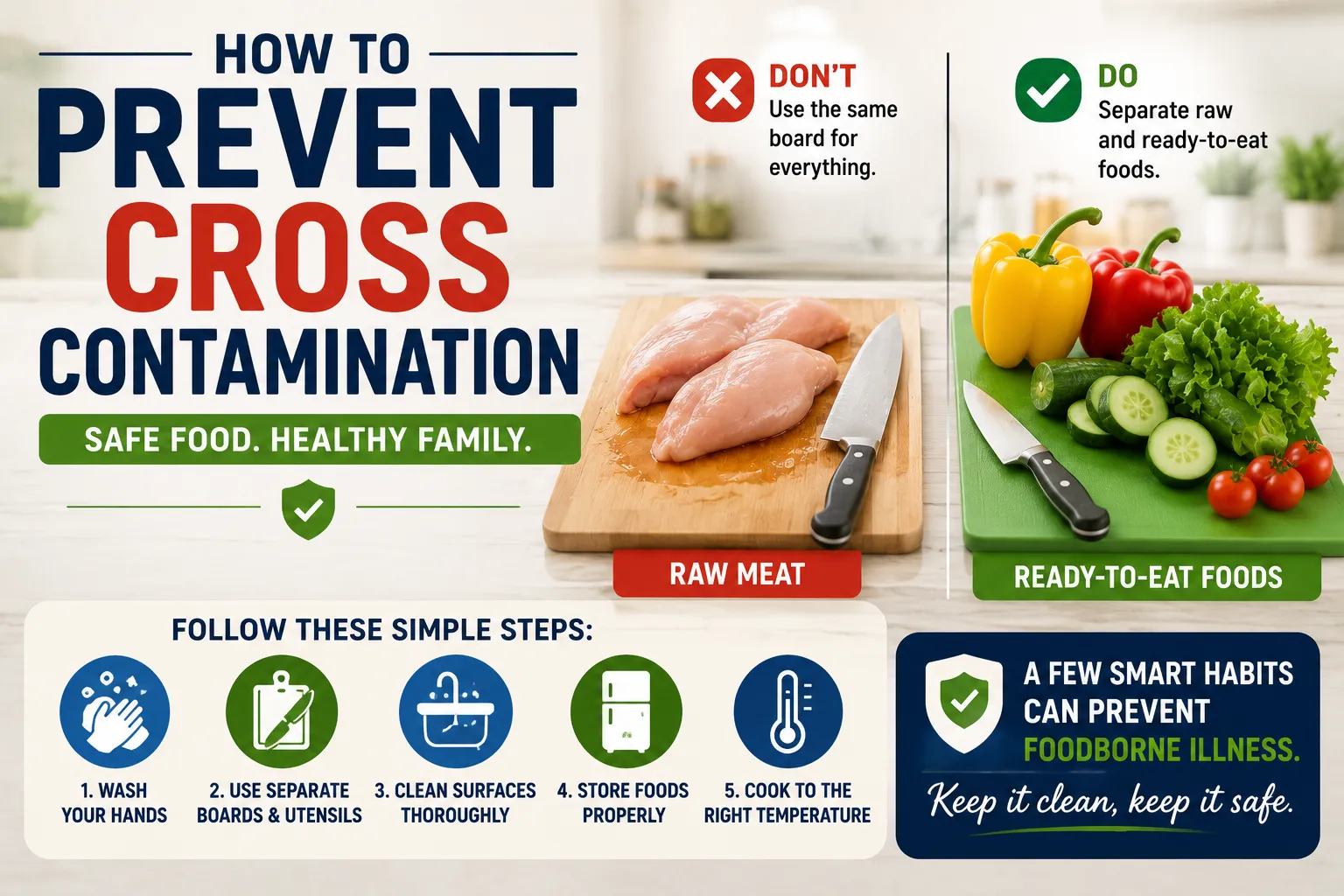
Cross contamination is one of the easiest food-safety mistakes to make at home. A cutting board used for raw chicken can transfer harmful microorganisms to vegetables. A knife used on raw meat can contaminate cooked food. Even a plate that previously held uncooked meat can become a source of contamination if cooked food is placed on it without washing it first.
The good news is that preventing cross contamination does not require complicated equipment. The basic principle is simple: keep raw foods, especially raw meat, poultry, seafood and eggs, away from foods that are ready to eat, and clean anything that comes into contact with them. The U.S. Food and Drug Administration (FDA) identifies “Separate” as one of the four fundamental steps of food safety, alongside Clean, Cook and Chill.
For a broader overview of food safety principles, storage, cooking, hygiene, and safe food handling, see Food Safety Explained.
Here’s how to put that principle into practice.
What Is Cross Contamination?
Cross contamination occurs when harmful microorganisms are transferred from one food, surface, utensil or person’s hands to another food.
For example, imagine preparing chicken for dinner:
- You place raw chicken on a cutting board.
- You cut the chicken into pieces.
- Without washing the board, you chop lettuce on it.
- You serve the lettuce raw.
The lettuce has now potentially been exposed to microorganisms from the raw chicken.
Cross contamination can also happen through:
- Knives
- Plates
- Cutting boards
- Kitchen counters
- Hands
- Dish towels
- Refrigerator shelves
- Food containers
- Cooking utensils
- Shopping bags
Raw meat, poultry, seafood and eggs are particularly important to handle carefully because they can carry harmful pathogens.
Why Cross Contamination Is Dangerous
Some harmful microorganisms can cause foodborne illness.
Depending on the pathogen and the individual, foodborne illness can cause symptoms such as:
- Nausea
- Vomiting
- Diarrhea
- Abdominal pain
- Fever
- Headache
- Body aches
Symptoms can vary considerably, and some foodborne illnesses can become serious. Children, older adults, pregnant people and individuals with certain medical conditions can be particularly vulnerable to complications.
Preventing contamination is therefore an important part of safe food preparation.
The Four Basic Steps of Food Safety
A useful way to organize kitchen food safety is:
1. Clean
Wash hands and clean food-contact surfaces.
2. Separate
Keep raw foods away from ready-to-eat foods.
3. Cook
Cook food to appropriate safe temperatures.
4. Chill
Refrigerate perishable foods appropriately.
The FDA uses these four principles as a basic framework for reducing foodborne illness risks.
This article focuses primarily on separating foods, but preventing cross contamination works best when all four principles are followed together.
1. Keep Raw Meat Separate From Ready-to-Eat Foods
The most important rule is simple:
Keep raw animal products away from foods that will not be cooked before eating.
This includes separating raw:
- Chicken
- Beef
- Pork
- Lamb
- Seafood
- Eggs
from foods such as:
- Salad
- Fruit
- Bread
- Cooked meat
- Cooked vegetables
- Cheese
- Ready-to-eat meals
The separation should happen throughout the food journey—from shopping to refrigeration to preparation and serving.
2. Separate Foods While Grocery Shopping
Cross contamination can begin before you even get home.
When shopping, keep raw meat, poultry and seafood separate from other groceries.
If possible:
- Place raw meat in separate bags.
- Keep leaking packages away from produce.
- Keep raw foods away from bread and ready-to-eat foods.
- Put raw products into sealed bags or containers where appropriate.
This helps prevent raw juices from contaminating other foods.
The FDA specifically recommends keeping raw animal foods separate from other foods in shopping carts and bags.
3. Store Raw Meat on the Bottom Shelf
Your refrigerator can also become a source of cross contamination.
Raw meat, poultry and seafood can release liquid as they sit in storage.
If those juices drip onto food below them, contamination can spread.
A simple solution is to store raw animal products in sealed containers or leak-proof bags and place them on a lower shelf.
This prevents potential drips from reaching ready-to-eat foods.
The FDA recommends keeping raw meat, poultry and seafood in sealed containers and storing them on lower refrigerator shelves.
4. Use Separate Cutting Boards
One of the easiest ways to reduce cross contamination is to use different cutting boards for different types of food.
Ideally, use:
- One board for raw meat, poultry and seafood
- Another board for fruits, vegetables and ready-to-eat foods
This creates a physical barrier between raw and ready-to-eat ingredients.
If you only have one cutting board, there is still a safe way to use it.
Prepare foods that will be eaten raw first. Then wash the cutting board thoroughly with hot, soapy water before using it for raw meat or poultry.
The FDA specifically recommends separate cutting boards where possible.
5. Wash Cutting Boards Properly
Simply wiping a cutting board with a towel is not enough after handling raw meat.
Wash it thoroughly with hot, soapy water after it comes into contact with:
- Raw meat
- Raw poultry
- Raw seafood
- Eggs
- Unwashed produce
The same applies to knives and other utensils.
After cleaning, allow the board to dry properly.
If a cutting board becomes deeply scored, cracked or difficult to clean, replacing it may be appropriate.
6. Wash Your Hands Before and After Handling Raw Foods
Your hands can easily transfer microorganisms from one food to another.
Wash your hands with soap and water:
- Before preparing food
- After handling raw meat
- After handling raw poultry
- After touching raw seafood
- After handling raw eggs
- Before touching ready-to-eat foods
The CDC recommends washing hands for 20 seconds with soap and water after touching raw meat, poultry, seafood or eggs.
Do not rely on a quick rinse.
Thorough handwashing is one of the simplest food-safety habits you can develop.
7. Don’t Touch Ready-to-Eat Foods With Raw-Food Hands
Imagine handling raw chicken and then reaching into a bag of bread.
That creates a potential route for contamination.
After handling raw foods, wash your hands before touching:
- Bread
- Salad
- Fruit
- Cooked food
- Plates
- Utensils
- Refrigerator handles
- Food containers
It is also worth remembering that you may contaminate other objects without realizing it.
If you touch a refrigerator handle with raw-food-covered hands, for example, that handle may need cleaning too.
8. Use Different Plates for Raw and Cooked Meat
This is an extremely common mistake during grilling and cooking.
You place raw meat on a plate.
The meat goes onto the grill.
When it is cooked, you put it back on the same plate.
That plate may still contain juices from the raw meat.
Instead, use a clean plate for cooked food.
The FDA and CDC specifically recommend separate plates for raw and cooked meat, poultry and seafood.
9. Don’t Reuse Raw Meat Marinade
Marinades that have been in contact with raw meat, poultry or seafood can contain harmful microorganisms.
Do not pour that marinade over cooked food unless it has been properly boiled first.
And never taste a marinade that has been used on raw meat.
If you want sauce for the finished dish, reserve some marinade separately before adding the raw meat.
The FDA specifically advises against reusing raw-food marinades unless they are boiled first.
10. Don’t Wash Raw Chicken
Washing raw chicken may seem like a way to clean it, but it can actually spread microorganisms around the kitchen.
Water droplets can splash onto:
- Countertops
- Sinks
- Nearby utensils
- Other food
- Kitchen surfaces
The CDC and FDA advise against washing raw poultry because it can spread germs around the kitchen.
Instead, handle raw chicken carefully and cook it thoroughly.
11. Keep Raw Eggs Separate
Eggs can also be a source of foodborne pathogens.
Handle raw eggs carefully and avoid allowing their contents to contact ready-to-eat foods.
After handling raw eggs:
- Wash your hands.
- Clean utensils.
- Clean preparation surfaces.
- Keep cooked egg dishes away from raw animal foods.
The FDA recommends washing hands and cleaning food-contact surfaces after handling eggs and keeping cooked, ready-to-eat egg foods separate from raw animal-derived foods.
12. Don’t Let Raw Food Juices Spread
Raw meat juices can easily spread contamination.
Be particularly careful when:
- Opening packages
- Carrying meat to the refrigerator
- Defrosting meat
- Preparing poultry
- Moving seafood
- Marinating meat
Keep raw products in leak-proof containers or bags.
If a package leaks in the refrigerator, clean the affected area promptly.
13. Keep Raw and Cooked Foods Separate on the Counter
Kitchen counters can become contaminated quickly when multiple foods are being prepared simultaneously.
Try creating separate preparation areas.
For example:
Area A: Raw meat and poultry
Area B: Vegetables and ready-to-eat ingredients
If you have limited counter space, prepare foods sequentially and clean the surface thoroughly between tasks.
14. Clean Countertops After Preparing Raw Meat
After preparing raw meat, poultry or seafood, clean the countertop before preparing ready-to-eat food.
Wash the surface appropriately with soap and water.
Depending on the surface and product instructions, a food-safe sanitizer may also be appropriate.
Always follow the instructions on the cleaning product, particularly regarding dilution and contact time.
The FDA emphasizes washing countertops and food-contact surfaces after they come into contact with raw animal products.
15. Don’t Forget Kitchen Utensils
Cross contamination isn’t limited to cutting boards.
Knives, tongs, spoons, forks and spatulas can all transfer microorganisms.
If a utensil touches raw chicken, don’t immediately use it to handle cooked chicken.
Either use a separate utensil or wash the original utensil thoroughly before using it again.
This is particularly important when cooking foods on a grill or stovetop.
16. Keep Dish Towels Clean
Kitchen towels can become contaminated when used repeatedly.
A towel used to wipe raw meat juices from a counter can transfer microorganisms to another surface.
Use clean towels and launder reusable cloths regularly.
For tasks involving potentially contaminated surfaces, disposable paper towels may sometimes be more practical.
The FDA advises laundering cloth towels frequently when they are used for kitchen cleaning.
17. Wash Fresh Produce Properly
Fresh fruits and vegetables can also become contaminated during handling.
Rinse fresh produce under running tap water before eating or preparing it, including produce with skins or rinds that are not eaten.
For firm produce, gently scrub the surface with a clean produce brush while rinsing.
Then dry produce with a clean towel or paper towel when appropriate.
Washing produce is part of the broader Clean principle of food safety.
It does not, however, make it safe to use the same unwashed cutting board that was just used for raw chicken.
18. Keep Raw Food Away From Bread and Other Ready-to-Eat Foods
Bread, fruit, salad and other foods are often eaten without another cooking step.
That means contamination transferred to them may remain there.
Keep these foods away from raw meat, poultry, seafood and eggs during preparation.
This includes keeping them separated on:
- Countertops
- Cutting boards
- Plates
- Refrigerator shelves
- Shopping bags
19. Keep Your Refrigerator Organized
A well-organized refrigerator makes food safety easier.
A simple arrangement might be:
Upper shelves
Ready-to-eat foods and leftovers.
Middle shelves
Dairy and other foods that need refrigeration.
Lower shelves
Raw meat, poultry and seafood in sealed containers.
Drawers
Produce, according to your refrigerator’s design and storage recommendations.
The exact arrangement can vary, but the important principle is preventing raw-food juices from contacting ready-to-eat foods.
20. Use Food Containers Properly
Open containers can expose food to spills and contamination.
Use clean, covered containers for leftovers and prepared foods.
When storing raw meat, poultry or seafood, use a container that can contain liquid.
Avoid placing an uncovered package of raw meat directly above food that will be eaten without cooking.
Cross Contamination During Meal Preparation
Preparing several dishes simultaneously can make food safety more complicated.
For example, you might be:
- Chopping vegetables
- Preparing raw chicken
- Cooking rice
- Making a salad
- Preparing a sauce
A simple strategy is to organize your workflow.
Prepare Ready-to-Eat Foods First
Make the salad and chop vegetables before handling raw meat.
Handle Raw Meat Later
Once ready-to-eat ingredients are safely stored away, prepare the raw meat.
Clean Before Switching Tasks
Wash hands, utensils and surfaces before moving back to ready-to-eat foods.
This reduces the number of opportunities for contamination.
Cross Contamination When Grilling
Barbecues and outdoor cooking create several opportunities for contamination.
Use one plate for raw meat and another clean plate for cooked food.
Also use separate utensils or wash them before they touch cooked food.
Keep raw meat securely wrapped and away from ready-to-eat foods during transport and preparation.
Cross Contamination During Meal Prep
Meal prepping several days’ worth of food requires extra organization.
Separate raw ingredients from foods that have already been cooked.
After cooking:
- Use clean containers.
- Use clean utensils.
- Store food appropriately.
- Avoid placing cooked food into containers that previously held raw ingredients without washing them.
- Keep raw ingredients physically separate during preparation.
Good organization can make safe meal preparation much easier.
How to Prevent Cross Contamination in a Small Kitchen
You don’t need a large kitchen to prepare food safely.
If counter space is limited:
- Prepare ready-to-eat foods first.
- Store them safely.
- Clean the work surface.
- Prepare raw meat or poultry.
- Wash utensils and cutting boards afterward.
- Clean the counter again.
Using two cutting boards can also make separation easier.
The key is not having a huge workspace. It is having a clear workflow.
Cross Contamination vs Cross Contact
These terms are sometimes confused.
Cross Contamination
Generally refers to harmful microorganisms being transferred between foods or surfaces.
Cross Contact
Is commonly used in allergen safety to describe the unintended transfer of an allergen from one food or surface to another.
For example, a knife used with peanut-containing food could transfer peanut proteins to another food.
Both situations require careful separation, although the hazards are different.
People at Higher Risk Need Extra Care
Some people are more vulnerable to severe foodborne illness.
This includes:
- Young children
- Older adults
- Pregnant people
- People with weakened immune systems
- People with certain chronic conditions
For these groups, careful food handling is particularly important.
The FDA identifies several populations as being at increased risk from foodborne illness.
Common Cross-Contamination Mistakes
Using One Cutting Board for Everything
Problem: Raw-food microorganisms can remain on the board.
Better approach: Use separate boards or thoroughly wash the board between uses.
Putting Cooked Meat on the Raw-Meat Plate
Problem: Raw juices may contaminate cooked food.
Better approach: Use a clean plate.
Reusing Raw Marinade
Problem: The marinade may contain microorganisms from the raw food.
Better approach: Discard it or boil it before reuse.
Washing Raw Chicken
Problem: Splashing water can spread microorganisms around the kitchen.
Better approach: Don’t wash raw chicken; cook it properly.
Touching the Refrigerator With Raw-Meat Hands
Problem: You can contaminate a frequently touched surface.
Better approach: Wash your hands before touching handles and other surfaces.
Using the Same Tongs for Raw and Cooked Meat
Problem: Microorganisms can transfer from raw food to cooked food.
Better approach: Use separate utensils or wash them thoroughly between uses.
A Simple Cross-Contamination Prevention Checklist
Before preparing food:
- Wash your hands.
- Clean your work surface.
- Prepare ready-to-eat foods separately.
- Have separate cutting boards available.
- Keep raw foods contained.
While cooking:
- Keep raw meat away from ready-to-eat food.
- Use clean utensils for cooked food.
- Never put cooked food on a raw-meat plate.
- Wash hands after handling raw foods.
- Clean contaminated surfaces promptly.
During storage:
- Keep raw meat sealed.
- Store raw meat on a lower refrigerator shelf.
- Keep ready-to-eat foods protected.
- Clean spills promptly.
The Safest Kitchen Is an Organized Kitchen
Preventing cross contamination is largely about creating separation and maintaining a clean workflow.
Keep raw meat, poultry, seafood and eggs away from ready-to-eat foods. Use separate cutting boards when possible, wash hands thoroughly, clean food-contact surfaces after handling raw ingredients and always use clean plates and utensils for cooked food. These simple practices reflect the FDA and CDC’s core food-safety guidance.
You also don’t need to make your kitchen complicated. A second cutting board, a few clean utensils, properly organized refrigerator shelves and a habit of washing your hands at the right moments can eliminate many common opportunities for contamination.
The most important thing is to build these habits into the cooking process until they become automatic. Separate raw from ready-to-eat, clean between tasks, and never let equipment or surfaces used for raw food come into direct contact with cooked food without proper cleaning.
That simple routine can go a long way toward making everyday meals safer for everyone at the table.