How to Prevent Laundry From Fading
How to Prevent Laundry From Fading
Bright, colorful clothing can quickly lose its original appearance when it is washed and dried repeatedly. Dark fabrics may become dull, vibrant colors can look washed out, and even some lighter garments can develop a tired appearance over time.
Laundry fading is often caused by a combination of washing methods, heat, detergent, friction, sunlight, and the natural breakdown of dyes in fabric. While some fading is unavoidable as clothing ages, the right laundry habits can significantly slow the process.
Knowing how fabrics react to water, heat, detergents, and drying conditions can help clothing retain its color for longer.
Why Does Laundry Fade?
Fabric dyes are not permanently locked into clothing. Repeated exposure to water, detergents, heat, friction, and light can gradually cause some of the dye to leave the fibers or become less visually intense.
Several factors can contribute to fading:
- Washing clothes too frequently
- Using excessively hot water
- Choosing an unsuitable wash cycle
- Using too much detergent
- Overloading the washing machine
- Excessive friction during washing
- Drying clothes in strong sunlight
- Using high dryer temperatures
- Washing garments with incompatible colors
- Using harsh cleaning products
Different fabrics and dyes respond differently to these conditions, which is why proper garment care begins with understanding the clothing itself.
For broader advice on washing, drying, and maintaining different garments, the Guide to Laundry Care provides a useful foundation.
Wash Clothes Less Often When Appropriate
One of the simplest ways to slow fading is to avoid washing garments more frequently than necessary.
Not every item needs to go through a complete wash cycle after a single use. Clothing that has not become visibly dirty, sweaty, or stained may sometimes be worn again before washing, depending on the garment and the activity it was used for.
Every wash exposes fabric to mechanical action, water, detergent, and other conditions that can gradually affect its appearance.
Of course, clothing worn during exercise, exposed to significant sweat, or visibly soiled generally requires more frequent washing.
The goal is not to avoid washing clothes but to wash them according to their actual care needs.
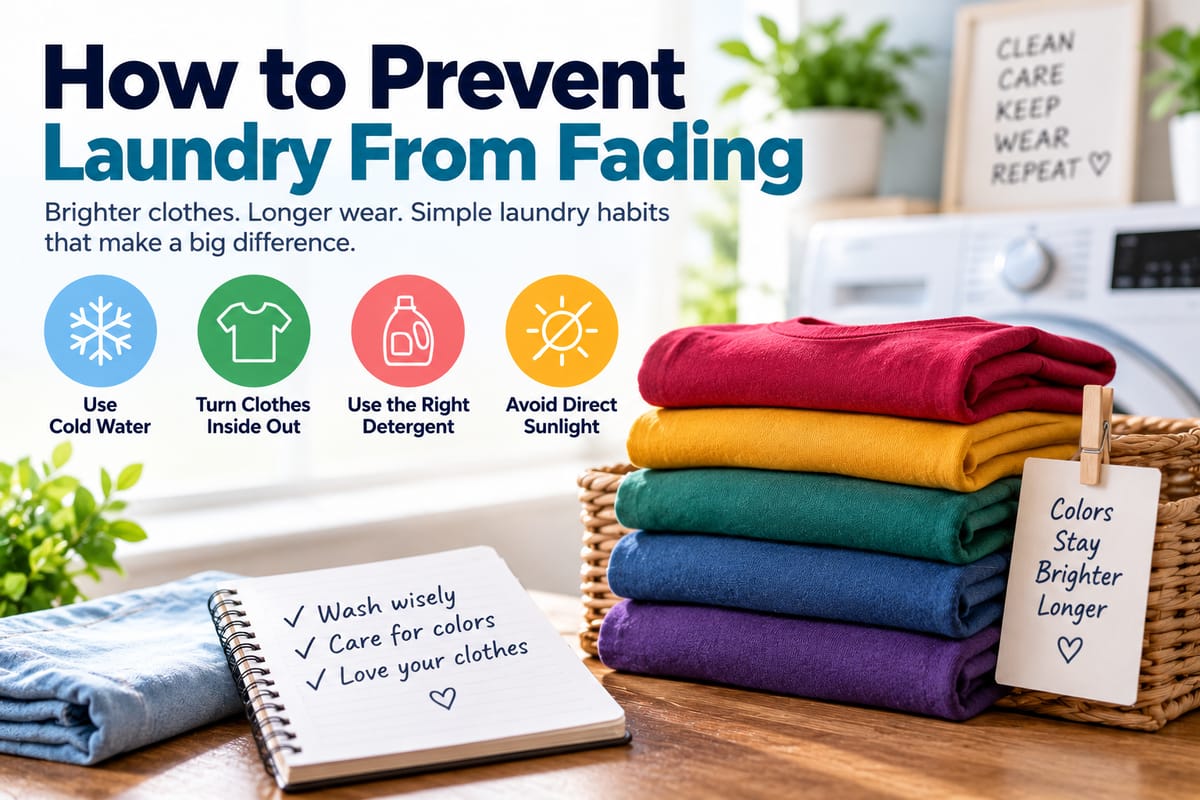
Turn Dark and Colored Clothes Inside Out
Turning garments inside out before washing can help reduce the amount of direct friction experienced by the visible outer surface.
During a wash cycle, clothing rubs against other garments and the interior of the washing machine. This repeated mechanical action can contribute to surface wear and may make colors appear dull over time.
Turning garments inside out can be particularly useful for:
- Dark jeans
- Black clothing
- Printed T-shirts
- Bright-colored garments
- Embroidered clothing
- Clothing with decorative finishes
It can also help protect printed designs and other visible details from excessive abrasion.
Use Cold or Cool Water
Hot water can be harder on some fabrics and dyes than cooler water.
Unless the garment’s care instructions call for a warmer temperature, washing colorful and dark clothing in cold or cool water can help reduce unnecessary exposure to heat.
Cooler washing can also be useful for reducing energy consumption because less energy is required to heat the water.
However, temperature should still be selected according to the garment’s care instructions and cleaning requirements. Some heavily soiled items may require different treatment.
Choose the Right Detergent
The detergent used during washing can affect how clothing looks and feels over time.
Using more detergent than necessary does not automatically make clothes cleaner. Excess detergent can leave residue behind and may require additional rinsing.
For everyday laundry, follow the detergent manufacturer’s recommended amount and adjust it when appropriate for the size of the load and water conditions.
Detergents designed for colored or dark clothing may also be useful when caring for garments where color retention is particularly important.
Avoid Overloading the Washing Machine
A washing machine needs enough room for clothes to move through the water and detergent effectively.
When a machine is packed too tightly, garments can rub against each other more intensely and may not rinse as effectively.
An overloaded machine can also make it harder for water and detergent to circulate evenly throughout the load.
Leaving appropriate space in the drum allows clothing to move more freely and can contribute to gentler washing.
Separate Laundry by Color
Sorting laundry by color remains one of the most effective ways to reduce unwanted color transfer and protect the appearance of garments.
A basic sorting system can include:
- Whites
- Light colors
- Bright colors
- Dark colors
- Very dark garments
New garments with strong dyes may be particularly likely to release some color during their first few washes.
Washing these items separately or with similar colors can reduce the chance of dye transferring onto other clothing.
Be Careful With Black Clothing
Black clothing is especially noticeable when it begins to fade.
Instead of washing black garments under unnecessarily harsh conditions, consider using cool water, a gentle cycle when appropriate, and a detergent suitable for dark clothing.
Turning black garments inside out before washing can also reduce visible surface wear.
When possible, avoid repeatedly washing black clothing alongside rough or heavily textured items that could increase friction.
Select a Gentle Cycle When Appropriate
Washing machines offer different cycle settings because different types of clothing require different levels of mechanical action.
A gentle or delicate cycle may be appropriate for garments that are more vulnerable to stretching, abrasion, or surface damage.
The correct cycle depends on the fabric and garment construction, so care labels should take priority over general rules.
Using an unnecessarily aggressive cycle can subject clothing to more movement and friction than it needs.
Avoid Excessive Heat in the Dryer
Heat can affect both fabric fibers and dyes.
Using the highest dryer temperature for every load can accelerate wear, especially for clothing that is sensitive to heat.
When the care instructions allow it, lower-temperature drying can be a better option for preserving garments over time.
Some clothes may benefit from being removed from the dryer while they are still slightly damp and allowed to finish drying naturally.
Air-Dry Colorful Clothing Carefully
Air-drying can reduce exposure to high dryer temperatures, but sunlight introduces another consideration.
Ultraviolet light can contribute to fading, particularly when colored clothing is exposed repeatedly for long periods.
If you air-dry clothes outdoors, consider placing them in a shaded or partially shaded location when appropriate.
Turning garments inside out can also reduce direct sunlight exposure on the visible exterior.
Keep Bright Clothing Away From Strong Sunlight
Sunlight can gradually affect fabric dyes.
This is why clothing left outdoors for extended periods may eventually look different from garments stored away from direct light.
For valuable or brightly colored clothing, drying indoors or in a shaded, well-ventilated area can help limit unnecessary exposure.
Once clothes are dry, storing them away from direct sunlight can provide another layer of protection.
Treat Stains Before Washing
Stains can sometimes encourage people to use harsher washing methods than necessary.
Instead of repeatedly washing a stained garment at high temperatures or using excessive detergent, treating the stain according to the fabric’s care requirements may be more effective.
The sooner an appropriate stain-treatment method is used, the less likely it may be that repeated aggressive washing will be needed.
Always check whether a stain remover is suitable for the particular fabric and dye.
Be Careful With Bleach
Chlorine bleach can alter or remove color from many fabrics.
Unless an item is specifically suitable for chlorine bleach, using it on colored clothing can result in discoloration or permanent damage.
When whitening or stain removal is necessary, select a product that is appropriate for the garment and follow the instructions carefully.
Do not assume that a product marketed for laundry is suitable for every fabric or color.
Avoid Mixing Rough Fabrics With Delicate Clothing
Friction is an often-overlooked source of clothing wear.
Items such as towels, heavy denim, and garments with rough surfaces can create more abrasion during washing than softer fabrics.
Separating particularly delicate clothing from heavier items can help reduce unnecessary friction.
This is especially useful for garments with smooth finishes, printed designs, decorative details, or softer fibers.
Read the Care Label
Garment care labels provide specific information about how an item should be washed, dried, ironed, and treated.
They may indicate:
- Recommended washing temperature
- Whether machine washing is appropriate
- Suitable wash cycles
- Drying restrictions
- Ironing temperatures
- Bleaching restrictions
- Dry-cleaning requirements
General laundry advice is useful, but the manufacturer’s care instructions should take priority when they provide specific requirements.
Protect Clothing Before Putting It Away
Laundry care does not end when clothes come out of the washing machine.
Storage conditions can also affect the appearance and lifespan of garments.
Clothes should be completely dry before being placed in drawers, wardrobes, or storage containers. Storing damp clothing can encourage unpleasant odors and other problems.
Organizing garments properly can also prevent unnecessary crushing and friction.
For practical ideas on keeping clothing accessible and well arranged, How to Organize Clothes and Closet Storage for Easier Everyday Use covers ways to manage clothing storage more effectively.
Avoid Storing Clothes in Direct Sunlight
Even clean, dry clothing can gradually fade if it is stored where strong sunlight reaches it regularly.
Closets, drawers, and covered storage areas can help protect clothing from prolonged exposure to light.
This is particularly important for garments with deep or vibrant colors.
Keeping clothing away from direct sunlight can help preserve the appearance created by the original dye.
Clean the Washing Machine Regularly
A washing machine itself needs maintenance.
Detergent residue, mineral deposits, lint, and other buildup can accumulate inside the machine. Regular cleaning can help maintain a cleaner washing environment and prevent unpleasant odors.
Follow the washing machine manufacturer’s recommendations for cleaning the drum, detergent compartments, filters, and other components.
A clean machine is an important part of maintaining a consistent laundry routine.
Avoid Using Too Much Fabric Softener
Fabric softener can change the feel of clothing, but using excessive amounts may leave a coating on certain fabrics.
Some specialized materials are also designed to manage moisture, and fabric softener may interfere with their intended performance.
Rather than automatically adding large amounts of softener to every load, follow the product instructions and consider whether the garment actually requires it.
How to Keep Jeans From Fading
Jeans often develop a worn appearance naturally, but washing methods can influence how quickly their original color changes.
To help preserve darker denim:
- Wash jeans only when necessary.
- Turn them inside out.
- Use cool water when appropriate.
- Select a suitable cycle.
- Avoid excessive detergent.
- Limit high dryer temperatures.
- Air-dry them away from strong direct sunlight when practical.
Some people intentionally wash denim less frequently to preserve its original appearance, although hygiene and personal use should always guide laundry decisions.
How to Protect Printed Clothing
Printed shirts and other decorated garments can lose visual quality through repeated friction, heat, and inappropriate washing.
Turning printed clothing inside out before washing can help protect the design.
Avoiding excessive heat during washing and drying can also reduce unnecessary stress on the printed surface.
When drying printed garments, follow their care instructions rather than assuming that a standard high-heat cycle is appropriate.
How Cleaning Habits Affect Household Fabrics
Laundry is only one part of caring for fabrics and other surfaces around the home.
Different materials respond differently to moisture, cleaning chemicals, heat, abrasion, and prolonged exposure to environmental conditions.
Understanding these differences can help prevent accidental damage beyond clothing.
For broader household maintenance advice, How to Protect Household Surface Finishes explains how everyday cleaning and maintenance choices can affect the appearance and durability of household surfaces.
Common Laundry Mistakes That Cause Fading
Some everyday habits can accelerate color loss without people realizing it.
Washing Everything in Hot Water
Using hot water for every load exposes fabrics to unnecessary heat and may contribute to faster wear.
Using Too Much Detergent
More detergent is not necessarily better. Excessive amounts can create residue and may require additional rinsing.
Leaving Clothes in Direct Sunlight
Extended exposure to strong sunlight can gradually fade many colored fabrics.
Overloading the Machine
Crowded loads increase friction and can prevent effective movement and rinsing.
Ignoring Care Labels
A garment’s recommended care method exists for a reason. Ignoring it can increase the risk of shrinkage, fading, stretching, or other damage.
Washing Clothing After Every Wear
Some garments may not need a full wash after every use, depending on how they were worn.
Using High Heat for Every Drying Cycle
High temperatures can place unnecessary stress on some fabrics and dyes.
A Simple Routine for Protecting Clothing Color
A practical routine does not have to be complicated.
Before washing, sort clothing by color and check care labels. Turn dark and printed garments inside out, select an appropriate cycle, and use the recommended amount of detergent.
During drying, avoid unnecessary high temperatures and protect colorful clothing from prolonged direct sunlight.
Afterward, make sure clothing is completely dry before storing it in a clean, organized space.
For a broader approach to keeping a home clean while protecting household belongings, The Ultimate Guide to Cleaning Your Home provides additional guidance on everyday cleaning and maintenance.
When Fading Is a Normal Part of Clothing Life
Even with excellent care, some fading is unavoidable.
Repeated washing, exposure to light, everyday friction, and normal wear eventually affect most fabrics. The goal is therefore not to keep clothing looking brand new forever but to avoid unnecessary damage and extend the useful life of each garment.
Small changes can make a noticeable difference over many washes. Cooler water, appropriate detergents, gentler cycles, sensible drying practices, proper sorting, and suitable storage can all help slow the process.
By treating clothing according to its fabric, color, construction, and care requirements, it becomes easier to preserve the appearance of favorite garments while getting more useful life from them.