Kips Bay Decorator Show House Highlights a More Expressive Direction for Home Interiors
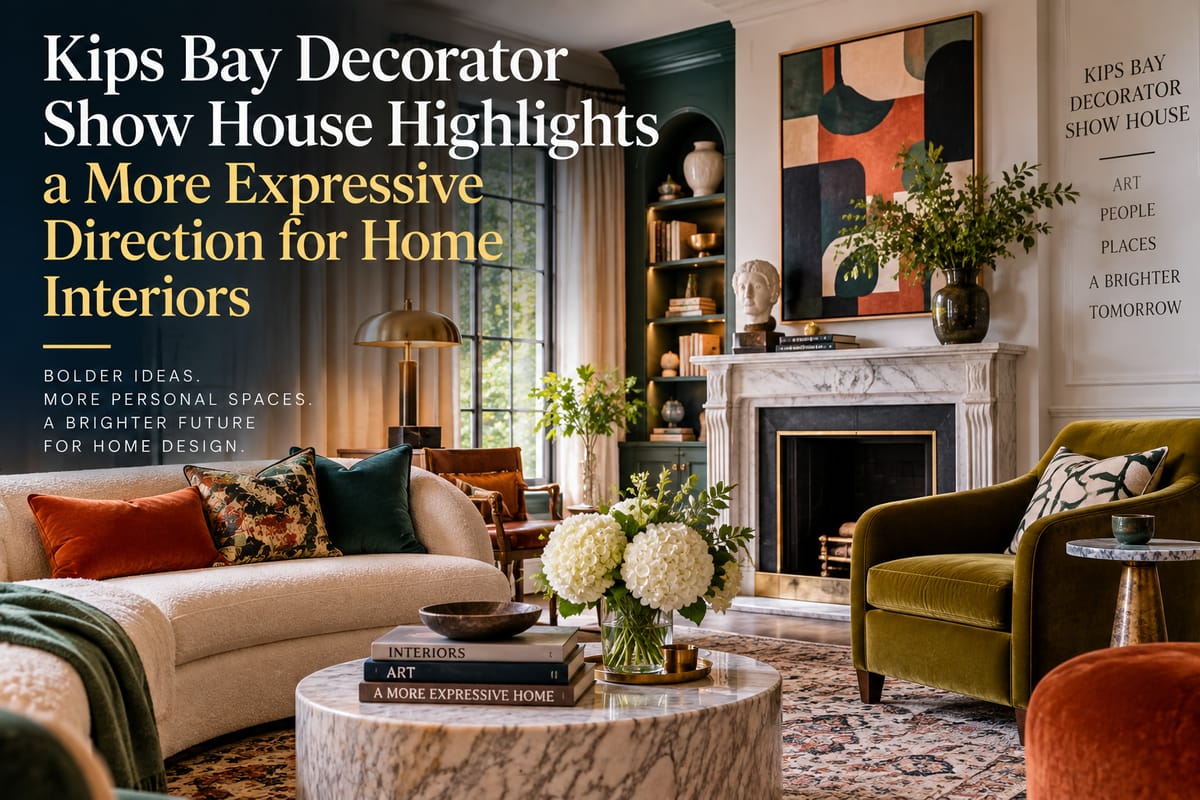
Kips Bay Decorator Show House Highlights a More Expressive Direction for Home Interiors
The 2026 Kips Bay Decorator Show House in New York is offering a vivid look at where residential interior design is heading, with designers embracing more personality, stronger visual contrasts and rooms that feel collected rather than perfectly coordinated.
Held at 80 Washington Place in Greenwich Village, the latest Show House brings together designers who have transformed a Manhattan residence into an immersive exhibition of furnishings, art, materials and technology. The event runs from September 16 through October 13, 2026, with proceeds supporting the Kips Bay Boys & Girls Club.
Rather than presenting one dominant decorating philosophy, the house demonstrates how different approaches can coexist. Color, vintage pieces, artwork, dramatic materials and unexpected combinations all play a role in creating spaces with a stronger sense of identity.
A Move Toward More Personal Interiors
One of the clearest themes emerging from this year’s Show House is personalization.
Many contemporary interiors have traditionally emphasized clean lines, coordinated furnishings and carefully controlled palettes. While those elements remain important, designers are increasingly looking for ways to make rooms feel connected to the people who actually live in them.
That can mean displaying collections, combining old and new furniture, introducing meaningful artwork or using colors and patterns that reflect individual tastes.
The direction is closely aligned with the broader movement toward homes that feel less like staged showrooms and more like genuine reflections of their occupants. This shift is also explored in Interior Designers Move Away From Perfect Showrooms Toward More Personal Homes.
The Kips Bay designers’ descriptions reinforce that idea. Several of the participating studios emphasize individuality, personal stories, collected objects, craftsmanship and the lifestyles of the people who occupy their spaces.
Color Is Becoming More Confident
Color is another major part of the expressive direction visible at the Show House.
Designers are using richer tones and more adventurous combinations rather than relying exclusively on neutral backgrounds. Veranda’s coverage of the 2026 house highlights earthy colors inspired by the 1970s, colorful veined marble and bold artwork among the notable directions on display.
The appeal of this approach goes beyond simply making a room more colorful. Stronger palettes can establish atmosphere, create visual connections between architectural elements and make individual furnishings stand out.
For homeowners, that does not necessarily mean covering every wall in a dramatic shade. A smaller intervention—a saturated chair, patterned drapery, colorful artwork or distinctive stone surface—can introduce the same sense of confidence without overwhelming an entire room.
Vintage Pieces Add History and Character
The growing role of vintage furniture is another important part of the broader design conversation.
Older furniture can introduce imperfections, craftsmanship and visual history that are difficult to replicate with entirely new pieces. When combined with contemporary furnishings, vintage objects can also prevent a room from feeling overly uniform.
That philosophy is reflected in the growing interest in Why Vintage Furniture Is Becoming the Centerpiece of Modern Homes.
At Kips Bay, the combination of antiques, contemporary pieces, artwork and custom elements demonstrates how interiors can achieve a layered appearance. The goal is not necessarily to make every object appear as though it came from the same collection, but to create relationships between pieces with different histories and visual qualities.
Bathrooms Are Getting More Attention
Bathrooms are also becoming opportunities for designers to experiment.
The 2026 Show House features statement bathrooms that use sculptural sinks, dramatic lighting and expressive materials. These spaces demonstrate how areas traditionally treated as purely functional can become important design moments.
This reflects a broader change in how homeowners think about private spaces. Bathrooms can now function as extensions of a home’s overall design language rather than simply practical rooms containing standard fixtures.
Stone, lighting, wall treatments, mirrors and hardware can all contribute to a more distinctive atmosphere.
Walls Are Becoming More Than Backgrounds
Another direction evident in the Show House is the increasing use of decorative wall treatments.
Wall panels, textured surfaces, artwork and other architectural details can give rooms more depth without relying entirely on furniture to create visual interest. Veranda identified decorative wall panels as one of the notable features of this year’s interiors.
This approach can be particularly effective in rooms where the furniture is relatively restrained. Instead of adding more objects, designers can make the architecture itself part of the decoration.
The result is often a room that feels finished without appearing overloaded.
Technology Has a Place, but It Does Not Have to Dominate
Technology continues to influence residential design, although the most successful applications can be subtle.
Smart lighting, connected appliances, automated window treatments and AI-assisted planning tools are increasingly becoming part of the home-design process. Instead of making technology the visual centerpiece, designers can integrate it into a room while maintaining a strong sense of warmth and personality.
The growing role of digital tools is explored in How AI Is Changing the Way People Design Their Homes.
AI can help homeowners experiment with layouts, color combinations and furniture arrangements before committing to physical changes. At the same time, the Kips Bay approach demonstrates why technology does not eliminate the importance of human judgment. Materials, craftsmanship, proportion, lighting and personal meaning still determine how a space ultimately feels.
Art Is Becoming Part of the Interior’s Story
Artwork also plays an important role in creating more expressive rooms.
The 2026 New York Show House includes a curated American art collection on its staircase, while individual designers are incorporating artwork and collections into their rooms in different ways.
Rather than treating art as something added after the furniture has been selected, designers can use it as a starting point for developing a room’s palette, mood or narrative.
This creates another opportunity for homeowners to move away from standardized interiors. A room built around meaningful artwork can feel inherently more individual than one assembled entirely from matching furniture and accessories.
Comfort Remains Important
Expressive design does not necessarily mean impractical design.
Several designers participating in the 2026 Show House describe their work in terms of livability, comfort and the way people actually use their homes. Kips Bay’s designer profiles repeatedly emphasize creating spaces that are personal while remaining functional and inviting.
That balance may be one of the most significant lessons from the event.
A dramatic room can still have comfortable seating. A colorful interior can still feel relaxing. A vintage piece can coexist with modern technology. And a highly designed space can still accommodate everyday life.
For homeowners following the principles outlined in a Complete Guide to Home Decor and Styling, the broader message is that good design does not have to follow a single visual formula.
What the Kips Bay Show House Signals for Homeowners
The 2026 Kips Bay Decorator Show House suggests that interior design is moving toward greater individuality rather than a single universal aesthetic.
That does not mean minimalist, traditional or neutral interiors are disappearing. Instead, homeowners have more freedom to combine different influences and create spaces around their own preferences.
A contemporary sofa can sit beside an antique cabinet. A traditional architectural detail can be paired with modern lighting. A neutral room can gain character from a dramatic artwork or a colorful vintage chair.
The most expressive interiors often come from these combinations.
For homeowners planning a redesign, the takeaway is not to copy an individual Show House room. It is to consider which elements genuinely reflect their lifestyle, interests and sense of home. The growing emphasis on personality, collected furnishings, art, craftsmanship and unexpected combinations points toward interiors that are designed to be lived in—not simply photographed.