How to Reduce Water Use While Maintaining Healthy Garden Plants
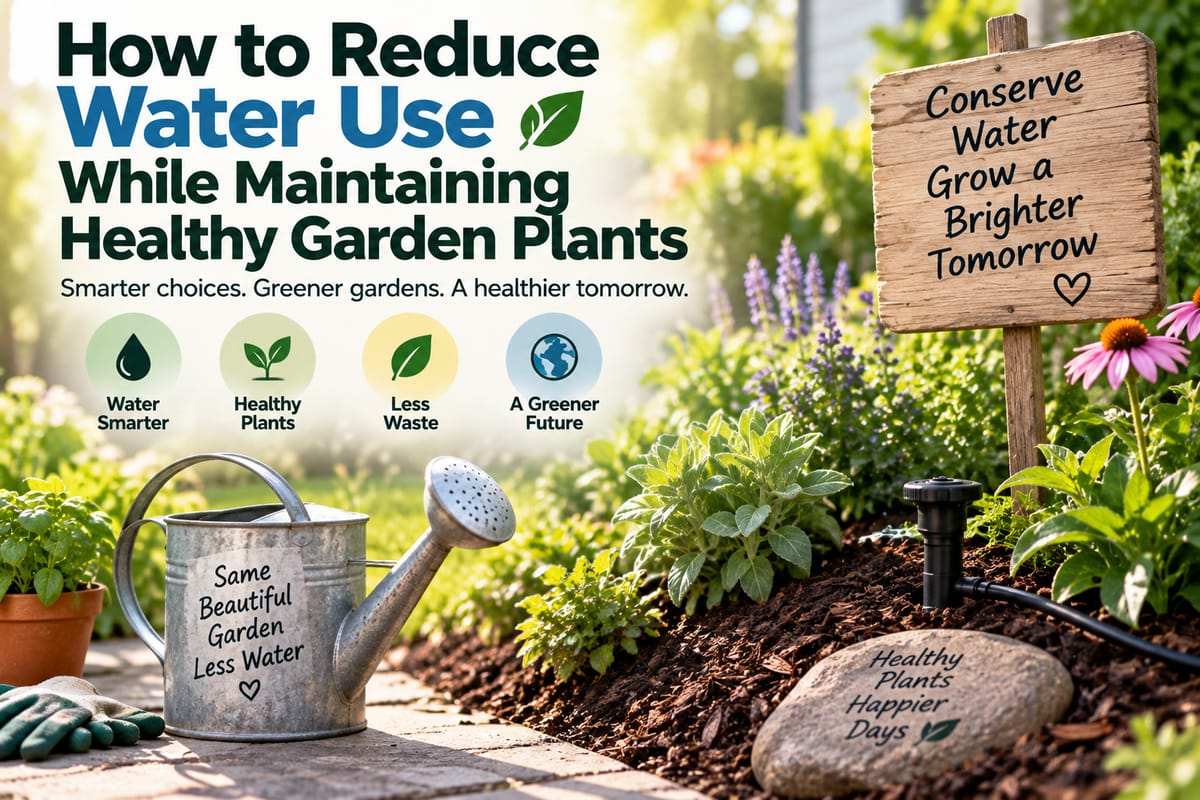
How to Reduce Water Use While Maintaining Healthy Garden Plants
Water is one of the most important resources in any garden, but using more of it does not necessarily produce healthier plants. In many gardens, water is wasted through overwatering, evaporation, runoff, inefficient irrigation, leaks, and planting choices that do not match local conditions.
Reducing water use is therefore not simply about watering less. It is about making sure the water that reaches the garden is used effectively.
Healthy plants need the right amount of moisture at the right time. By improving soil, choosing suitable plants, watering deeply, reducing evaporation, and using efficient irrigation methods, gardeners can maintain attractive and productive gardens while using less water.
Why Gardens Often Use More Water Than Necessary
Several common gardening practices can lead to unnecessary water consumption.
These include:
- Watering on a fixed schedule regardless of weather
- Applying small amounts of water too frequently
- Watering during the hottest part of the day
- Using sprinklers inefficiently
- Allowing water to run off hard or compacted soil
- Overwatering plants
- Growing plants with high water requirements in dry conditions
- Ignoring leaks in hoses and irrigation systems
- Leaving bare soil exposed to evaporation
- Watering areas where plants are not growing
The goal is not to eliminate water use. Plants need water to survive and grow. The goal is to deliver water where it is needed while minimizing unnecessary losses.
Understand How Much Water Plants Actually Need
Different plants have different water requirements.
Young seedlings may need regular moisture while their roots are developing. Established drought-tolerant plants may require considerably less water once their root systems are developed.
Water requirements can also change with:
- Temperature
- Rainfall
- Humidity
- Wind
- Soil type
- Plant size
- Plant maturity
- Sun exposure
- Season
This means there is no single watering schedule that works for every garden.
A useful starting point is to observe the plants and soil rather than automatically watering because a particular day has arrived on the calendar.
For a broader explanation of proper irrigation practices, see the Complete Guide to Watering Garden Plants Correctly.
Water Plants Deeply Instead of Constantly
One effective way to use water more efficiently is to encourage plants to develop healthy root systems.
Frequent, shallow watering can keep moisture concentrated near the soil surface. Depending on the plant and soil conditions, deeper watering can encourage roots to access moisture farther into the soil.
However, deep watering should not mean flooding the garden.
The objective is to apply enough water to moisten the appropriate root zone without creating prolonged waterlogging or runoff.
The ideal approach depends on the plant, soil, climate, and drainage conditions.
Check the Soil Before Watering
One of the simplest ways to prevent unnecessary watering is to check the soil first.
Push a finger into the soil near the plant or use another simple method to assess moisture.
If the soil is already adequately moist, additional water may not be necessary.
This is particularly useful after rainfall.
A garden can sometimes receive enough natural precipitation that additional irrigation is unnecessary, even if the normal watering day has arrived.
Water at the Right Time of Day
Timing can influence how much water actually reaches plant roots.
Watering during the cooler parts of the day can reduce evaporation compared with watering during periods of intense heat.
Morning is often a practical time because plants have access to moisture during the day while foliage has time to dry.
Evening watering can also reduce evaporation, although consistently wet foliage overnight may contribute to certain disease problems in some plants.
The best timing depends on the local climate, irrigation system, plant type, and disease conditions.
Use Mulch to Reduce Evaporation
Mulch is one of the simplest tools for conserving moisture.
A layer of suitable organic or inorganic mulch can cover exposed soil and reduce direct evaporation.
Mulch can also:
- Moderate soil temperature
- Reduce weed competition
- Protect soil from erosion
- Improve soil structure when organic materials decompose
- Reduce the impact of heavy rainfall
Organic mulches can include materials such as shredded leaves, composted materials, bark, or other appropriate plant-based materials.
Mulch should be applied carefully around plants rather than piled directly against stems or trunks.
Improve Soil Health
Healthy soil can play an important role in water management.
Soil structure affects how quickly water enters the ground, how much moisture is retained, and how easily roots can access it.
Compacted soil can cause water to run across the surface rather than infiltrate into the root zone.
Adding appropriate organic matter can improve soil structure in many garden situations.
However, soil amendments should be selected according to the existing soil and plants rather than added automatically.
Good soil management can help make irrigation more effective because water has a better opportunity to reach plant roots.
Reduce Water Loss From Runoff
Water running off a garden surface is water that plants may never use.
Runoff can occur when:
- Soil is compacted
- Water is applied too quickly
- The ground is steep
- Irrigation is poorly positioned
- Soil cannot absorb water fast enough
Applying water more slowly can improve infiltration.
On slopes, gardeners can also use appropriate planting arrangements, ground covers, terraces, or other landscape features to help slow water movement.
Use Drip Irrigation Where Appropriate
Drip irrigation delivers water close to the base of plants rather than spraying large areas.
This can reduce water loss from evaporation and minimize water being applied to spaces where plants are not growing.
Drip systems can be especially useful for:
- Vegetable gardens
- Flower beds
- Shrubs
- Container plants
- Individual trees
- Rows of plants
However, drip irrigation still needs to be designed and managed properly.
Poorly positioned emitters, blocked components, excessive pressure, or inappropriate watering schedules can still waste water.
Consider Soaker Hoses
Soaker hoses are another option for delivering water near the soil surface.
They release water gradually along the length of the hose, making them useful for some garden beds and planted areas.
Like drip irrigation, their effectiveness depends on proper placement and management.
The hose should be positioned where plant roots can access the moisture rather than simply watering empty spaces.
Use Smart Irrigation Controls
Technology can make garden watering more precise.
Smart irrigation systems can use information such as:
- Soil moisture
- Weather conditions
- Rainfall
- Temperature
- Scheduled watering
- Flow rates
Some systems can adjust irrigation when rainfall occurs, reducing the risk of watering a garden that has already received sufficient moisture.
Technology can also help identify unusual water usage.
For example, a sudden increase in flow may indicate a damaged pipe or irrigation leak.
The relationship between technology and water conservation is explored in How Smart Water Systems Detect Leaks and Save Water.
Fix Leaks Quickly
A leaking hose, connector, faucet, sprinkler, or underground irrigation line can waste water without producing any benefit for plants.
Regularly inspect irrigation equipment for:
- Drips
- Cracks
- Loose connections
- Broken emitters
- Damaged hoses
- Unusual wet areas
- Unexpected changes in water pressure
A small leak may seem insignificant, but continuous water loss can accumulate over time.
Fixing leaks is therefore one of the easiest ways to reduce water waste without changing the garden itself.
Choose Plants That Match the Climate
Plant selection has a major influence on water requirements.
Plants naturally adapted to local conditions may be better equipped to handle the area’s temperature, rainfall, humidity, and seasonal patterns.
In dry climates, gardeners can consider species known for drought tolerance.
In wetter regions, plants adapted to naturally moist conditions may require less supplemental irrigation.
The goal is to create a relationship between the garden and its environment rather than constantly forcing plants to grow in conditions that do not suit them.
Group Plants by Water Requirements
A garden becomes easier to water efficiently when plants with similar needs are grouped together.
For example, plants that require regular moisture can occupy one area, while drought-tolerant species can be planted elsewhere.
This prevents a situation in which a water-efficient plant receives excessive irrigation simply because it shares an irrigation zone with a moisture-loving species.
Grouping plants by water requirements can also simplify irrigation scheduling.
Consider Sunlight Before Planting
Sunlight affects how quickly plants use water.
Plants growing in full, intense sunlight may lose moisture more quickly than plants growing in partial shade.
Wind can increase water loss as well.
This is why plant placement matters.
Understanding the relationship between light and plant growth can help gardeners make better decisions about where to place different species. More information is available in How Sunlight Affects Plant Growth in Gardens.
Create Shade Where Appropriate
Strategic shade can reduce heat stress and evaporation.
Trees, shrubs, pergolas, shade structures, and other landscape features can provide protection for plants that do not perform well under intense sunlight.
However, adding shade should be done carefully.
Plants still require sufficient light for photosynthesis, and excessive shade can cause weak growth or reduce flowering and fruit production.
The objective is to create appropriate conditions rather than simply maximizing shade.
Control Weeds
Weeds compete with garden plants for water.
A heavily weeded garden can therefore require more irrigation because some of the available moisture is being used by unwanted plants.
Mulching can reduce weed emergence, while timely removal of weeds can reduce competition.
Keeping garden beds reasonably clear of weeds allows more of the available water to reach the plants that are intentionally being grown.
Use Ground Covers
Ground-cover plants can protect exposed soil from direct sunlight and reduce evaporation.
They can also help control erosion and reduce the amount of bare ground where weeds can become established.
When choosing ground covers, however, gardeners should consider their own water requirements.
A ground cover that requires frequent irrigation may not provide meaningful water savings.
Suitable choices depend on the local climate, soil, sunlight, and overall garden design.
Rethink Large Areas of Lawn
Traditional lawns can require significant amounts of water, particularly in hot or dry climates.
Gardeners looking to reduce water consumption may consider reducing lawn areas or replacing some sections with alternatives better suited to local conditions.
Possible alternatives include:
- Native plants
- Drought-tolerant ground covers
- Mulched planting beds
- Gravel or other appropriate hardscape
- Low-water ornamental plants
- Productive garden areas
The right approach depends on how the outdoor space is used.
A lawn that provides an important recreational area may be worth maintaining, while unused sections could potentially be redesigned.
Design the Garden Around Water Needs
Water conservation should be considered during garden design rather than added later.
A garden can be divided into zones based on water requirements, sunlight, soil, and exposure.
For example:
- High-water plants near convenient irrigation
- Moderate-water plants in standard beds
- Drought-tolerant plants in dry areas
- Shade-loving plants under trees
- Moisture-loving plants in naturally damp areas
This approach makes irrigation more targeted.
Broader principles for organizing these relationships are covered in Understanding Garden Design and Landscape Planning.
Collect Rainwater Where Appropriate
Rainwater collection can provide an additional source of water for some gardening activities.
Rain barrels and other collection systems can capture water from suitable roof surfaces and store it for later use.
Before installing a collection system, gardeners should consider local regulations, water quality, storage conditions, mosquito prevention, and appropriate uses for collected water.
Rainwater can be particularly useful during periods when natural rainfall is intermittent but garden plants still require irrigation.
Water Container Plants Carefully
Containers can dry out more quickly than plants growing directly in the ground.
This is because containers have limited soil volume and can be exposed to air on multiple sides.
To conserve water in container gardens:
- Choose appropriately sized containers
- Use suitable growing media
- Group containers with similar water requirements
- Protect containers from excessive heat where appropriate
- Check moisture before watering
- Use mulch on the soil surface when suitable
- Avoid allowing water to run away unnecessarily
Very small containers may require more frequent watering than larger containers because they hold less moisture.
Avoid Overwatering
More water does not necessarily mean healthier plants.
Overwatering can contribute to problems such as:
- Root stress
- Poor oxygen availability in soil
- Nutrient leaching
- Fungal problems
- Weak growth
- Increased pest or disease pressure in some situations
Some symptoms of overwatering can resemble symptoms of underwatering, which makes observation important.
Rather than responding to every wilted leaf with more water, examine the soil, roots, weather, and overall condition of the plant.
Water Trees Efficiently
Established trees often have extensive root systems, but newly planted trees require careful attention while they become established.
Water should reach the appropriate root zone rather than being applied only to the base of the trunk.
A slow application can help water penetrate the soil.
Mulching around trees can also reduce evaporation.
However, mulch should not be piled directly against the trunk because excessive moisture around the bark can create problems.
Pay Attention to Weather
Weather conditions can change watering requirements quickly.
Rain may eliminate the need for scheduled irrigation, while a period of intense heat may increase plant water use.
Gardeners should consider:
- Recent rainfall
- Forecast rainfall
- Temperature
- Wind
- Humidity
- Soil moisture
A flexible watering strategy is usually more efficient than blindly following a fixed schedule.
Avoid Watering During Rain
It sounds obvious, but automated irrigation systems can sometimes operate even when natural rainfall is occurring.
Smart controllers or rain sensors can help prevent this type of waste.
If irrigation is manually controlled, checking the weather before watering can accomplish the same basic goal.
The less often irrigation overlaps with meaningful rainfall, the more efficiently supplemental water can be used.
Use Water Where Roots Can Access It
Watering the leaves of a plant is not always the most efficient way to hydrate its root system.
For many garden plants, water needs to reach the soil around the roots.
Applying water directly to the appropriate root zone can reduce unnecessary evaporation and prevent large quantities of water from being lost to surrounding surfaces.
This is one reason targeted irrigation methods can be useful.
Maintain Irrigation Equipment
An irrigation system that was efficient when installed can become less efficient over time.
Emitters can clog. Sprinklers can become misaligned. Hoses can crack. Connections can loosen.
Regular maintenance can include:
- Checking emitters
- Cleaning filters
- Inspecting hoses
- Adjusting sprinkler heads
- Checking water pressure
- Looking for leaks
- Testing irrigation zones
Maintenance ensures that water continues reaching the intended areas.
Don’t Ignore Soil Compaction
Heavy foot traffic, machinery, and repeated activity can compact garden soil.
Compacted soil can reduce the amount of space available for air and water movement.
Water may then run across the surface rather than penetrating efficiently.
Avoiding unnecessary traffic on planting beds and improving soil structure where appropriate can help increase water infiltration.
Water New Plants Differently From Established Plants
Newly planted shrubs, trees, flowers, and vegetables often require more attention than established plants.
Their root systems have not yet fully expanded into the surrounding soil.
Once plants become established, their watering needs may change.
A common mistake is continuing an intensive watering schedule indefinitely simply because it was necessary when the plant was first installed.
As roots develop, gardeners should reassess the watering strategy according to the plant’s requirements and local conditions.
Choose the Right Planting Time
Planting during milder weather can reduce stress and water demand during establishment.
When possible, gardeners can consider planting during periods when temperatures are moderate and natural rainfall is more reliable.
New plants established during extreme heat may require substantially more irrigation.
Planting at an appropriate time can therefore contribute to long-term water efficiency.
Reduce Water Use Without Sacrificing Garden Health
Water conservation works best when it focuses on efficiency rather than deprivation.
Plants need sufficient moisture, but unnecessary irrigation does not improve their health.
A water-efficient garden can combine:
- Climate-appropriate plants
- Healthy soil
- Mulch
- Efficient irrigation
- Appropriate planting
- Careful observation
- Leak detection
- Weather awareness
- Good garden design
Each technique addresses a different source of water loss.
A Simple Water-Saving Garden Routine
A practical routine can make water conservation easier.
Before Watering
Check the soil and recent weather.
While Watering
Apply water slowly and target the root zone.
After Watering
Check whether water is running off or pooling.
Each Week
Inspect plants for signs of stress and examine irrigation equipment for leaks.
Each Season
Review plant performance and adjust watering schedules as weather changes.
Each Year
Consider whether plant selection, soil management, or garden design can be improved to reduce unnecessary water use.
Signs That Plants May Need More Water
Water conservation should never become an excuse for allowing plants to suffer from drought stress.
Possible signs of insufficient moisture can include:
- Persistent wilting
- Dry or brittle foliage
- Leaf curling
- Premature leaf drop
- Poor growth
- Reduced flowering
- Smaller fruits or vegetables
However, these symptoms can have other causes.
Checking soil moisture and considering the plant’s normal characteristics can help prevent unnecessary watering or incorrect diagnosis.
Signs That Plants May Be Receiving Too Much Water
Excess moisture can also cause problems.
Possible signs include:
- Constantly saturated soil
- Yellowing leaves
- Poor growth
- Root problems
- Persistent standing water
- Increased disease problems
Again, these symptoms are not definitive by themselves.
The condition of the soil and the plant’s overall environment should be considered before changing irrigation practices.
Build Water Efficiency Into Garden Design
The most effective water-saving gardens are designed with water use in mind from the beginning.
This means considering:
- Plant selection
- Sunlight
- Soil
- Drainage
- Slopes
- Wind
- Irrigation
- Mulching
- Maintenance
- Rainfall patterns
Rather than designing a garden first and attempting to reduce water use afterward, gardeners can make water efficiency one of the original design objectives.
A Practical Water-Saving Checklist
Use this checklist when evaluating a garden:
- Check soil moisture before watering
- Water according to plant needs
- Water deeply when appropriate
- Avoid unnecessary runoff
- Apply mulch to exposed soil
- Improve soil structure where needed
- Group plants by water requirements
- Choose climate-appropriate plants
- Inspect irrigation systems for leaks
- Maintain drip or soaker systems
- Adjust watering after rainfall
- Consider smart irrigation controls
- Reduce unnecessary lawn areas
- Protect suitable plants from excessive heat
- Monitor newly planted specimens
- Reassess watering as plants mature
Healthier Plants Through Smarter Water Use
Reducing garden water consumption does not have to mean sacrificing healthy plants or attractive outdoor spaces.
The most effective approach is to understand where water is going and why plants need it. Soil, sunlight, climate, plant selection, irrigation, and garden design all influence how efficiently water is used.
Simple changes can make a meaningful difference. Checking soil before watering prevents unnecessary irrigation. Mulch reduces evaporation. Efficient irrigation delivers water closer to plant roots. Climate-appropriate plants can reduce long-term demand, while regular maintenance prevents water from disappearing through leaks and runoff.
A garden that uses water wisely is not simply a garden that receives less water. It is a garden where available water is directed toward the plants, roots, and growing conditions that benefit from it most.