How to Season Food With Herbs, Spices, Salt and Other Flavors
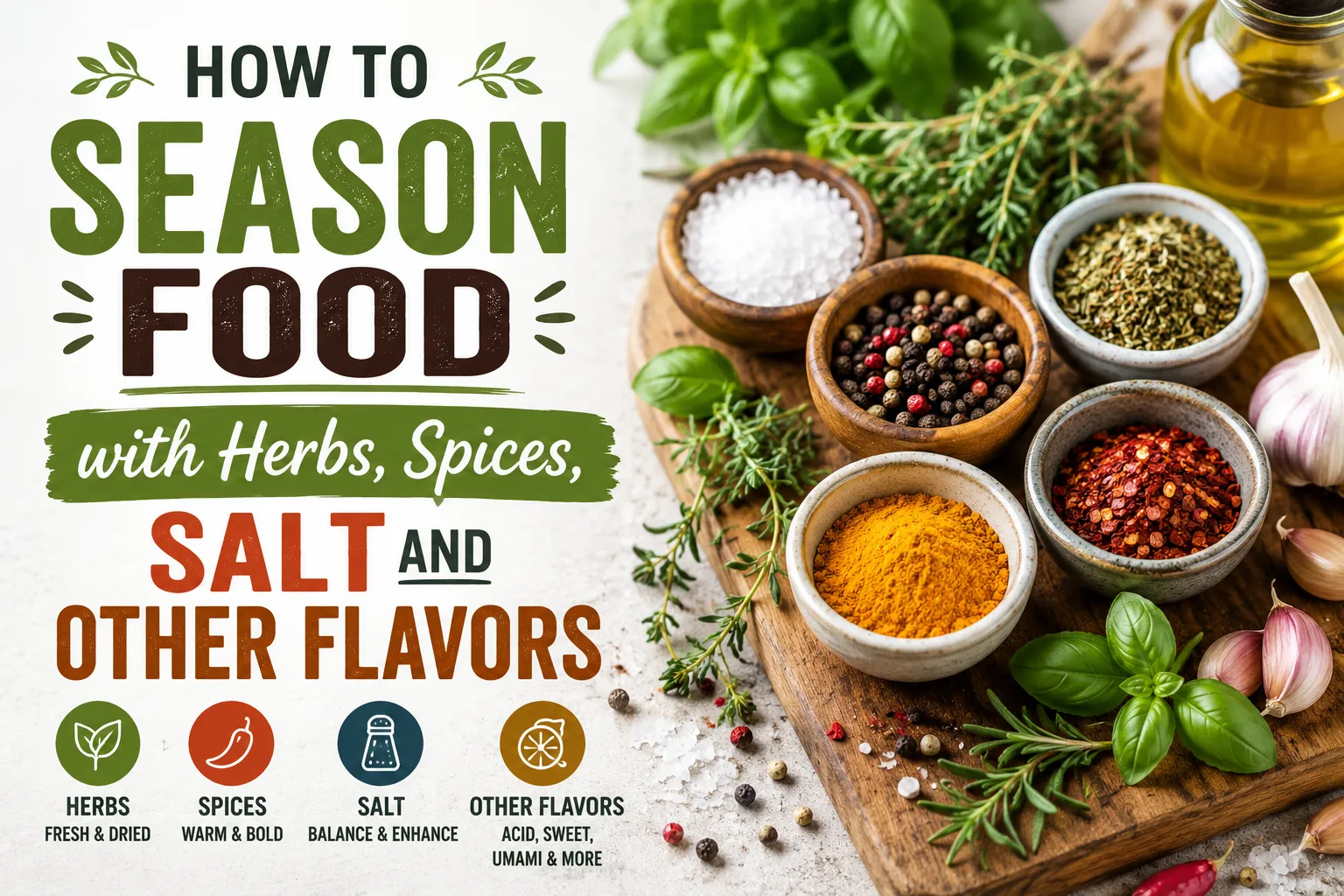
How to Season Food With Herbs, Spices, Salt and Other Flavors
Good seasoning can transform a simple meal without requiring expensive ingredients or complicated cooking techniques. A few well-chosen herbs, spices, aromatics or a carefully measured amount of salt can make vegetables taste more vibrant, meat more savory and grains far more interesting.
Yet seasoning is also one of the areas where home cooks often hesitate. How much salt should you use? Which herbs work together? When should spices be added? Why does food sometimes taste flat even after several seasonings have been added?
The answers become much easier once seasoning is understood as a balance of saltiness, aroma, acidity, sweetness, bitterness, heat, umami and texture.
For anyone learning the fundamentals of home cooking, The Complete Guide to Cooking for Beginners provides a broader foundation for understanding ingredients, techniques and essential kitchen skills.
Why Seasoning Matters
Seasoning does more than make food taste salty or spicy.
It can enhance flavors that are already present in an ingredient and create contrast between different components of a dish.
For example, a tomato can taste brighter with a little salt and acidity. Roasted vegetables can become more aromatic with herbs and spices. Beans can become richer with garlic, onion and warming spices.
The objective is usually not to make the seasoning itself the dominant flavor.
Instead, good seasoning helps the main ingredients taste more complete.
Start With Salt
Salt is one of the most fundamental seasonings in cooking.
It can enhance the perception of other flavors and make food taste more balanced. Without enough salt, some dishes can taste dull even when plenty of herbs and spices have been added.
However, more salt is not always better.
A useful approach is to season gradually, taste when appropriate and adjust toward the end.
Different types of salt can also vary in crystal size and density, meaning a tablespoon of one type may not contain exactly the same amount of salt as a tablespoon of another.
For precise cooking, particularly when following recipes, paying attention to the type of salt being used can help.
Season Throughout the Cooking Process
Seasoning only at the end can sometimes produce uneven results.
Adding appropriate amounts during cooking allows flavors to develop together.
For example, vegetables can be lightly seasoned before roasting, while a soup can be adjusted as ingredients cook and the liquid reduces.
This does not mean adding all the salt at the beginning.
Some ingredients naturally contain salt, and sauces or stocks can become more concentrated as water evaporates.
Taste as you go when the food is safe to sample.
Learn the Difference Between Herbs and Spices
Although the terms are sometimes used interchangeably, herbs and spices generally come from different parts of plants.
Herbs commonly refer to the leafy portions of plants, such as:
- Basil
- Parsley
- Cilantro
- Rosemary
- Thyme
- Oregano
- Mint
- Sage
Spices generally come from other plant parts, including seeds, bark, roots, fruits or buds.
Examples include:
- Black pepper
- Cinnamon
- Cumin
- Coriander seed
- Turmeric
- Paprika
- Cloves
- Nutmeg
- Cardamom
Understanding these categories can make it easier to experiment with different combinations.
Fresh Herbs and Dried Herbs Behave Differently
Fresh and dried herbs are not always interchangeable in equal amounts.
Drying removes much of the water from herbs and concentrates their flavor. As a result, dried herbs are generally more potent by volume.
Dried herbs are often particularly useful in longer-cooking dishes because they have time to release their flavors.
Fresh herbs can provide a brighter, more delicate character and are often added toward the end of cooking.
There are exceptions, so the best approach is to taste and adjust rather than relying exclusively on a fixed conversion.
Know When to Add Herbs
Timing can significantly affect how herbs taste.
Hardier herbs such as rosemary, thyme and dried oregano can often tolerate longer cooking.
More delicate fresh herbs such as parsley, basil, cilantro and mint are often better suited to later stages of cooking.
Adding delicate herbs near the end can help preserve their fresh aroma.
For some dishes, using herbs at two different points can provide both depth and freshness.
Toasting Spices Can Unlock More Aroma
Whole spices can contain aromatic oils that become more noticeable when gently heated.
Dry-toasting certain whole spices in a pan can intensify their fragrance before they are added to a dish.
Cumin seeds, coriander seeds and mustard seeds are examples that can work well with this technique.
The key is to use moderate heat and pay close attention.
Spices can move from fragrant to burnt surprisingly quickly.
Once they become intensely aromatic, they should be removed from the heat or incorporated into the recipe.
Ground Spices Need Careful Handling
Ground spices have a larger exposed surface area than whole spices, which means their aromas can dissipate more quickly over time.
This is one reason older ground spices may taste weaker.
Store spices in airtight containers away from excessive heat, moisture and direct sunlight.
Buying smaller quantities and replacing them periodically can help maintain their flavor.
Build Flavor With Aromatics
Herbs and spices are only part of the seasoning toolkit.
Aromatics can provide a strong foundation for many dishes.
Common examples include:
- Garlic
- Onion
- Shallots
- Ginger
- Scallions
- Lemongrass
- Celery
- Chilies
Cooking these ingredients in oil can release aromatic compounds and create a flavorful base before other ingredients are added.
A simple combination of onion, garlic and ginger, for example, can provide a foundation for numerous cuisines.
Use Black Pepper Beyond the Table
Black pepper is often treated as a finishing condiment, but it can also contribute flavor during cooking.
Freshly ground pepper generally has a more pronounced aroma than pepper that has been sitting in a shaker for a long time.
Different varieties of pepper can have distinct characteristics, ranging from citrusy and floral to earthy and intensely pungent.
Experimenting with freshly ground pepper can reveal how much complexity this familiar ingredient can add.
Acidity Can Wake Up a Flat Dish
Sometimes food does not need more salt.
It needs acidity.
Acidic ingredients can brighten flavors and provide contrast.
Common options include:
- Lemon juice
- Lime juice
- Vinegar
- Tamarind
- Yogurt
- Tomatoes
- Certain fermented foods
A small amount of acid added near the end of cooking can sometimes make a dish taste dramatically more vibrant.
This is particularly useful when a meal tastes heavy, rich or dull.
Balance Rich Foods With Acid
Rich foods can benefit from acidic flavors.
Think about the role of lemon with grilled fish, pickles alongside rich sandwiches or vinegar-based sauces with roasted meats.
The acidity provides contrast.
It does not necessarily need to make the food taste sour.
The right amount simply creates balance.
Add a small quantity, taste and increase gradually.
Sweetness Can Balance Savory Dishes
Sweet flavors are not limited to desserts.
A small amount of sweetness can balance acidity, bitterness or intense heat in savory foods.
Sources can include:
- Caramelized onions
- Naturally sweet vegetables
- Fruit
- Honey
- Maple syrup
- Certain sauces
- Small amounts of sugar
The goal is usually balance rather than obvious sweetness.
A tomato sauce, for example, may benefit from the natural sweetness of slowly cooked onions rather than a large amount of added sugar.
Umami Adds Depth
Umami is commonly described as a savory or deeply satisfying taste.
Ingredients rich in umami can give dishes greater depth.
Examples include:
- Mushrooms
- Parmesan cheese
- Tomatoes
- Soy sauce
- Miso
- Fish sauce
- Meat broths
- Certain fermented foods
Umami-rich ingredients can be especially useful in soups, stews, sauces and plant-based dishes.
When using ingredients such as soy sauce or fish sauce, remember that they can also contain significant amounts of sodium.
Use Heat Thoughtfully
Chili peppers and other spicy ingredients can add excitement to food.
Heat can come from ingredients such as:
- Fresh chilies
- Dried chili flakes
- Cayenne pepper
- Chili powder
- Hot sauces
- Black pepper
- Certain pepper varieties
The strength of chilies can vary considerably, so start with a modest amount.
You can always add more.
It is much harder to correct a dish that has become excessively hot.
Don’t Confuse Chili Powder With Chili Flakes
Different chili products can produce very different results.
Chili flakes may provide visible pieces of pepper and bursts of heat.
Ground chili powder can distribute heat more evenly throughout a dish.
Some commercial chili powders are also blends containing ingredients such as cumin, garlic and oregano rather than pure ground chili.
Checking the label helps you understand what flavor you are adding.
Use Fat to Carry Flavor
Fat can influence how flavors are perceived and distributed.
Cooking herbs, spices and aromatics in oil can help release and carry their aromatic compounds.
Examples include gently frying garlic before adding other ingredients or blooming spices in oil before incorporating them into a sauce.
Butter, olive oil and other cooking fats can also contribute their own flavors.
However, the amount of fat should suit the dish and your overall dietary needs.
Season Vegetables Before Cooking
Vegetables can benefit enormously from proper seasoning.
Roasting, grilling, sautéing and steaming each produce different opportunities.
For roasting, vegetables can be tossed with an appropriate amount of oil, salt and spices before going into the oven.
Fresh herbs, citrus juice or other finishing ingredients can then be added after cooking.
For steamed vegetables, seasoning afterward with salt, pepper, herbs and a little acidity can prevent them from tasting bland.
For a broader look at working with vegetables and plant-based ingredients, see Understanding Vegetables and Plant-Based Cooking.
Don’t Forget the Cooking Method
The cooking method changes how seasoning behaves.
Roasting can concentrate flavors through moisture loss and browning.
Grilling can introduce smoky and charred notes.
Boiling can dilute flavors.
Slow cooking can allow herbs and spices to integrate over time.
Frying aromatics can create a deeper flavor base.
Therefore, the same seasoning combination may need different amounts or timing depending on how the food is prepared.
Season Meat Before Cooking
Meat benefits from thoughtful seasoning, particularly salt.
For larger cuts, applying salt ahead of cooking can allow it to penetrate more deeply than seasoning only immediately before serving.
The timing depends on the type and size of the meat and the cooking method.
Other seasonings, such as pepper, garlic, herbs and spices, can be applied according to the recipe and cooking technique.
The goal is to develop a flavorful exterior while allowing the meat itself to remain prominent.
For more guidance on matching preparation and cooking techniques to different proteins, see How to Cook Different Cuts of Meat and Poultry Properly.
Use Marinades for Layers of Flavor
Marinades can combine multiple seasoning elements.
A basic marinade might contain:
- Oil
- Salt
- Acid
- Herbs
- Spices
- Aromatics
Different ingredients serve different purposes.
Oil can help carry flavors and coat the food. Acid can provide brightness, while herbs and spices contribute aroma.
Marinating time should depend on the ingredient and recipe. Highly acidic marinades, for example, can affect the texture of some foods if used for excessively long periods.
Season Beans and Grains
Beans, lentils, rice and other grains can become much more interesting with thoughtful seasoning.
Instead of treating them as neutral ingredients, consider building flavor into the cooking liquid or adding seasonings afterward.
Garlic, onion, bay leaves, herbs and spices can contribute depth.
For finished grains, fresh herbs, citrus, toasted spices or a flavorful dressing can transform an otherwise plain side dish.
Layer Seasoning in Soups and Stews
Soups and stews are excellent opportunities to practice layered seasoning.
Start by building a flavorful base with aromatics.
Add appropriate spices during cooking.
Season the liquid gradually.
Then taste near the end and adjust the salt, acidity, herbs or other flavors.
Because soups can reduce as they cook, it is particularly important to taste before adding large amounts of salt.
Taste for Balance, Not Just Saltiness
When tasting a dish, don’t ask only:
“Does it need more salt?”
Ask several questions:
- Does it taste flat?
- Does it need acidity?
- Is it too spicy?
- Is there enough aroma?
- Does it need sweetness to balance bitterness?
- Does it feel too rich?
- Does it need more savory depth?
- Are the main ingredients still noticeable?
This approach prevents the common mistake of adding salt repeatedly when another flavor is actually missing.
Learn to Correct an Over-Seasoned Dish
Even experienced cooks occasionally add too much seasoning.
The best correction depends on what went wrong.
If a dish is too salty, possible approaches include increasing the quantity of unsalted ingredients or adding a component that balances the flavor.
If it is excessively spicy, adding more of the other ingredients can reduce the relative concentration of the hot component.
If a sauce is too acidic, additional ingredients that provide balance may help.
There is no universal trick that instantly removes excess salt or spice.
Usually, the most reliable solution is to rebalance the dish by increasing the other components.
Keep a Small Core Collection of Seasonings
You do not need dozens of spices to become a better cook.
A practical collection might include:
- Salt
- Black pepper
- Garlic
- Onion
- Paprika
- Cumin
- Oregano
- Thyme
- Cinnamon
- Chili flakes
- Ginger
- One or two vinegars
- Lemons or limes
From this foundation, you can build a surprisingly large variety of meals.
As you become more comfortable, you can add spices and herbs associated with cuisines you enjoy.
Explore Seasoning Combinations From Different Cuisines
Learning how different culinary traditions combine flavors can expand your understanding of seasoning.
For example, Mediterranean-inspired cooking often makes extensive use of herbs, garlic, olive oil and citrus.
South Asian cooking frequently builds complex flavor through combinations of spices, aromatics and cooking techniques.
East Asian cuisines often incorporate ingredients such as ginger, garlic, soy sauce, sesame and fermented seasonings.
Mexican cooking commonly combines chilies, herbs, spices, citrus and aromatics.
Studying these combinations is not about memorizing rigid rules.
It is about learning how different ingredients can work together.
Store Herbs and Spices Properly
Good seasoning depends partly on good ingredients.
Store dried herbs and spices in cool, dry places away from direct sunlight and steam.
Avoid keeping spice containers directly above a stove where repeated exposure to heat and moisture can accelerate quality loss.
Fresh herbs require different storage approaches depending on the variety.
Using them while they are still aromatic and vibrant generally produces the best results.
Don’t Add Everything at Once
A common beginner mistake is combining too many herbs and spices.
More ingredients do not automatically mean more flavor.
If you add five strongly flavored spices, several herbs, multiple sauces and several acidic ingredients to the same dish, the individual flavors may become difficult to distinguish.
Instead, choose a primary flavor direction.
Ask yourself what you want the dish to taste like and select seasonings that support that goal.
Use Finishing Seasonings
Some flavors work particularly well when added immediately before serving.
These might include:
- Fresh herbs
- Citrus zest
- Lemon or lime juice
- Freshly ground pepper
- Chili oil
- Toasted seeds
- Flaky salt
- Freshly grated cheese
Finishing ingredients can add brightness, aroma and texture that might be lost through prolonged cooking.
Keep Texture in Mind
Seasoning is not only about taste.
Texture can also influence how satisfying a dish feels.
Toasted nuts, seeds, crispy onions, fresh herbs and crunchy vegetables can add contrast to soft foods.
A creamy soup, for example, can become more interesting when topped with toasted seeds, herbs or a small amount of crunchy vegetables.
These additions create sensory contrast without requiring complicated cooking techniques.
Practice Tasting as You Cook
One of the fastest ways to improve seasoning skills is to taste deliberately.
When appropriate and safe, taste food at different stages of preparation.
Notice how it changes after:
- Salt is added
- Aromatics are cooked
- Spices are introduced
- Acid is added
- The liquid reduces
- Fresh herbs are incorporated
This develops an understanding that recipes alone cannot provide.
Over time, you begin to recognize what a dish is missing before reaching for a particular ingredient.
Build Your Own Flavor Vocabulary
As you cook more often, try describing flavors specifically.
Instead of saying something tastes “good” or “bad,” consider whether it is:
- Salty
- Sweet
- Sour
- Bitter
- Savory
- Smoky
- Earthy
- Floral
- Citrusy
- Spicy
- Fresh
- Rich
- Mild
- Aromatic
Developing this vocabulary makes it easier to diagnose a dish.
If you can identify what is missing, you have a much better chance of knowing how to fix it.
Great Seasoning Is About Balance
Learning to season food is ultimately less about memorizing exact quantities and more about understanding balance.
Salt can enhance flavor, but acidity can provide brightness. Herbs contribute freshness and aroma. Spices add warmth, depth and complexity. Aromatics establish a foundation, while umami can give dishes greater savory character.
The best results often come from adding these elements gradually and tasting along the way.
Once you stop thinking of seasoning as simply “adding salt and spices” and start treating it as the process of balancing different flavors, everyday cooking becomes much more flexible. A few basic ingredients, thoughtful timing and a willingness to taste can turn simple food into a meal with depth, contrast and character.