London Design Festival Reveals the Interior Trends Likely to Shape 2027
London Design Festival Reveals the Interior Trends Likely to Shape 2027
London Design Festival 2026 is offering an early look at the ideas, materials and moods that could influence interiors well into 2027.
Running from September 12 to 20, the festival’s 24th edition brings together designers, furniture brands, material researchers, galleries and creative studios across 11 design districts. The programme includes exhibitions focused on interiors and furniture, new materials, craft, colour, lighting, sustainability and emerging approaches to domestic spaces.
While design festivals are not crystal balls, they can reveal where professional designers and manufacturers are putting their attention. This year’s London programme suggests that the next phase of interior design may be less interested in perfectly coordinated rooms and more focused on atmosphere, individuality, tactile materials, flexible furniture and objects that make homes feel lived in.
Several of the 2026 presentations are already looking beyond the current season. Tom Dixon’s London Design Festival installation, for example, includes an early preview of its Spring/Summer 2027 collection, with an emphasis on lighting, upholstery, side tables, portable pieces and multifunctional accessories.
Homes Are Becoming More Personal
One of the clearest directions emerging from the design world is the move away from interiors that look as though they were assembled entirely from a showroom.
Designers are increasingly embracing rooms that reveal the people who live in them. Vintage furniture, handmade objects, family pieces, collected artwork and contrasting materials can create spaces with more personality than a perfectly matched furniture set.
This shift reflects a broader approach to lifestyle design and personal living, where the home is treated as an extension of everyday routines, interests and identity.
Rather than asking whether every item matches, homeowners are increasingly asking whether each piece has a reason to be there.
That could make 2027 interiors feel more layered, eclectic and individual.
The Showroom Look Continues to Fade
The rejection of overly polished interiors is not entirely new, but it appears to be becoming more established.
The growing preference for lived-in environments can be seen in the movement described in interior designers moving away from perfect showrooms toward more personal homes.
The implication is not that beautiful design is disappearing.
Instead, beauty is being redefined.
A room can be sophisticated without appearing untouched. A carefully designed space can include worn wood, handmade ceramics, unusual art, mismatched chairs or a sentimental object that would never appear in a conventional showroom.
For 2027, that could translate into interiors that feel curated rather than coordinated.
Warmth Remains a Powerful Design Language
Colour continues to play an important role in making interiors feel comfortable and emotionally engaging.
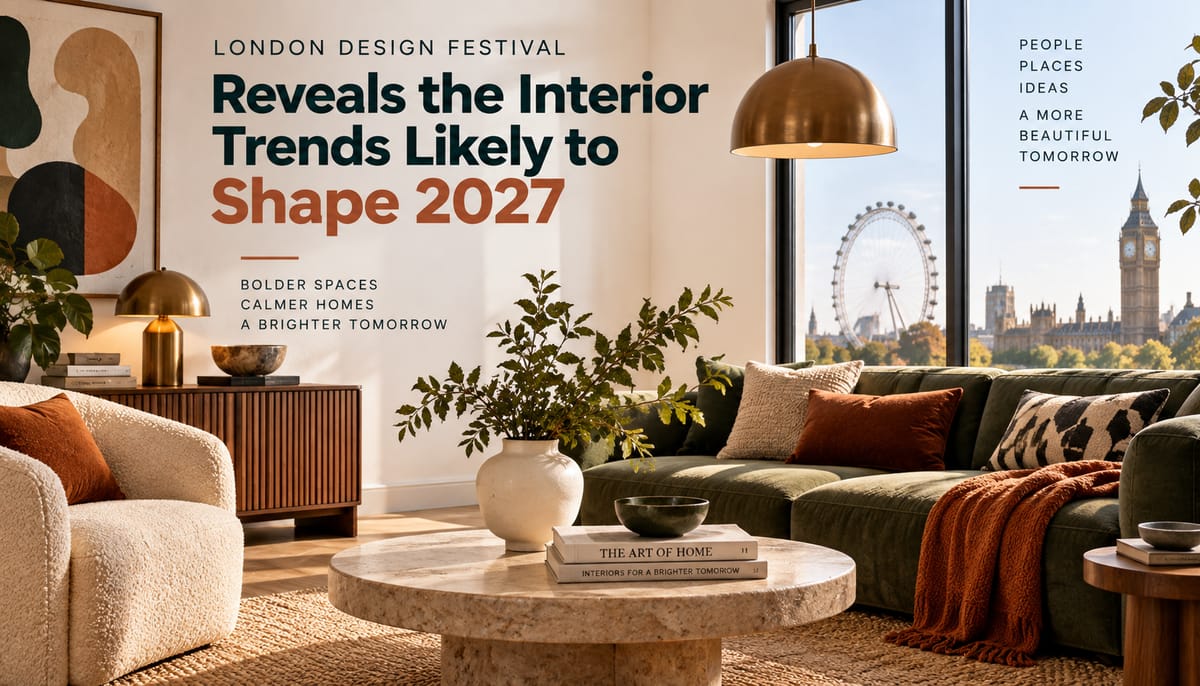
Warm browns, earthy reds, terracotta, muted ochres and other natural shades have been gaining attention across residential design. The continued interest in warm earth tones in interior design points toward a broader desire for spaces that feel grounded rather than sterile.
This does not necessarily mean every home will become brown or beige.
Instead, warmer colours can appear through smaller interventions: an upholstered chair, a rug, ceramic objects, timber furniture, curtains or a painted feature wall.
The larger trend is about atmosphere.
After years in which cool neutrals and minimalist white interiors dominated many contemporary spaces, designers are increasingly exploring colour as a way to make rooms feel warmer and more expressive.
Lighting Becomes More Than Illumination
Lighting is emerging as one of the most interesting areas to watch.
Tom Dixon’s 2026 festival presentation puts particular emphasis on portable, reflective, glowing and focused forms of illumination, alongside new furniture and accessories. The company’s preview of its SS27 collection includes portable lighting and other pieces designed to influence how people use and experience indoor spaces.
This reflects a broader change in how homeowners think about artificial light.
Instead of relying on one central ceiling fixture, rooms can use multiple sources to create different atmospheres throughout the day.
A portable lamp can move from a desk to a bedside table. A small accent light can transform a dark corner. Reflective surfaces can distribute light differently depending on their position.
The result is a more flexible approach to lighting that treats illumination as part of the furniture and atmosphere rather than simply a technical necessity.
Portable Design Could Become a Bigger Home Trend
The growing interest in portable lighting points to a wider question: what happens when more household objects are designed to move easily from one space to another?
Portable products can adapt to changing routines.
A lamp can follow someone from the kitchen to the balcony. A small side table can be repositioned for entertaining. Lightweight seating can move between indoor and outdoor areas.
This flexibility may become increasingly valuable as homes are expected to accommodate multiple functions.
The same room might serve as an office in the morning, a living area in the afternoon and an entertaining space in the evening.
Furniture that can adapt to those changes could become increasingly attractive.
Multifunctional Furniture Fits the Way People Live
Multifunctionality is another theme likely to remain important.
The idea is simple: instead of filling a home with objects that perform only one function, homeowners can choose pieces that provide multiple uses.
A side table might contain storage. A bench might provide seating while concealing blankets. A compact desk might disappear into another piece of furniture when work is finished.
Tom Dixon’s festival presentation specifically highlights multifunctional accessories alongside furniture and lighting.
This approach is particularly relevant to smaller homes, apartments and rooms that need to perform several jobs.
For 2027, multifunctionality may increasingly be presented not as a compromise but as a design feature.
Texture Is Becoming as Important as Colour
A room can feel warm even when its colour palette is relatively restrained if it contains enough variation in texture.
Wood, wool, linen, stone, metal, ceramics, glass and textured upholstery each interact differently with light and touch.
The 2026 London programme includes exhibitions and launches focused on materials, textiles, furniture and craft, reinforcing the growing importance of tactile experiences in contemporary design.
This could lead to interiors that rely less on dramatic colour contrasts and more on layers of material.
A smooth stone surface beside rough timber can create visual interest without requiring a bold colour scheme.
Likewise, a soft upholstered chair can change the character of a room even when its colour is relatively neutral.
Craft Is Moving Back Into the Spotlight
Handmade objects and traditional craft are also receiving significant attention.
The festival programme includes projects examining craft, materials and the relationship between making and meaning. One example, Future Matter: Crafting Sustainable Futures, explores circular materials, responsible production, traditional craftsmanship, urban mining and experimental material research.
That combination of craft and sustainability is particularly significant.
Consumers are becoming more interested in how products are made, where materials come from and whether objects are designed to last.
A handmade ceramic vessel or traditionally crafted textile can therefore represent more than decoration. It can bring evidence of human skill and material history into a contemporary home.
Sustainable Materials Are Becoming More Sophisticated
Sustainability in interior design is also moving beyond a simple preference for natural-looking materials.
Designers and researchers are exploring recycled, circular, reclaimed and experimental materials.
Future Matter, for example, looks at different stages of an object’s journey, from sourcing and material development through production, craftsmanship and everyday use.
That approach suggests a more comprehensive understanding of sustainable interiors.
Instead of asking only whether a product is made from a particular material, designers can consider how long it will last, whether it can be repaired, what happens when it is discarded and whether its components can be reused.
These questions could become increasingly important to mainstream interior design by 2027.
Colour Is Becoming More Confident
The festival’s programme also points toward a willingness to use colour more deliberately.
The In Living Colour exhibition in Shoreditch describes an immersive environment built around vitality, calm, curiosity and connection, while treating the showroom itself as an experiential space rather than simply a place to display products.
This reflects an important shift.
Colour is no longer necessarily being used simply to make a room look fashionable. It can help establish a mood.
Deep tones can make a room feel intimate. Soft colours can create calm. Stronger accents can energize an otherwise restrained interior.
In 2027, homeowners may increasingly choose colour based on how they want a room to feel rather than which shades happen to be popular.
The Home Is Becoming More Experiential
Another major trend is the idea that interiors should create experiences.
Instead of simply looking attractive in photographs, a successful room can appeal to multiple senses.
Lighting changes the atmosphere. Texture affects how surfaces feel. Materials influence acoustics. Furniture determines how people interact with one another.
The festival’s combination of installations, exhibitions, furniture launches and sensory presentations illustrates this broader movement toward experiential design.
This could make 2027 interiors more immersive.
A living room might be designed around conversation rather than television. A bedroom could prioritize softness and low lighting. A dining area might be designed to encourage longer gatherings.
Furniture Could Become More Social
The design of furniture influences how people behave in a room.
A large sofa can encourage informal conversation. Small movable chairs allow groups to change configuration. Side tables make it easier to keep drinks and personal objects nearby.
Designers are increasingly considering these behavioral aspects alongside appearance.
This is particularly relevant as homeowners seek spaces that support social interaction, relaxation and flexible routines.
Furniture does not simply occupy space. It helps determine how that space is used.
The Boundary Between Indoor and Outdoor Living Is Blurring
Flexible indoor-outdoor design is another direction worth watching.
Tom Dixon’s festival programme includes outdoor collections alongside portable lighting and furniture designed to work across changing environments.
The appeal is straightforward.
When weather permits, homeowners want to extend living spaces onto balconies, terraces, gardens and patios. Products that can transition between indoor and outdoor environments make that easier.
This could encourage more durable textiles, portable lighting, weather-resistant furniture and flexible layouts.
Rather than treating outdoor areas as separate from the home, designers may increasingly approach them as extensions of the same living environment.
Heritage and Innovation Can Coexist
The interest in craft and traditional materials does not mean contemporary design is turning backward.
The more interesting direction is the combination of old and new.
Traditional techniques can be used to create contemporary furniture. Heritage materials can be combined with modern manufacturing. Handmade objects can sit alongside technologically advanced lighting.
This creates interiors that feel connected to history without becoming nostalgic.
The same principle can apply to furniture. A vintage chair can work perfectly well beside a contemporary sofa if the combination reflects the homeowner’s personality.
The Rise of Collectible Interiors
The boundary between interior design and art is also becoming less rigid.
The 2026 London programme includes exhibitions featuring furniture, objects, contemporary craft and collectible design, encouraging visitors to think about individual pieces as creative works rather than interchangeable household products.
That could encourage homeowners to invest in fewer but more distinctive objects.
Instead of purchasing an entire matching furniture collection, someone might select one unusual chair, a sculptural lamp, an expressive artwork or a handmade table as the focal point of a room.
This approach naturally produces more individual interiors.
Small Details May Matter More Than Complete Makeovers
One consequence of the move toward personal design is that homeowners may not need to completely renovate their homes to participate in emerging trends.
A new lamp can change the atmosphere of a room.
A textured rug can introduce warmth.
A vintage cabinet can add personality.
New curtains can alter the colour balance.
A few handmade objects can make a standardized room feel more individual.
This makes emerging design trends more accessible because they can be introduced gradually rather than through expensive full-room transformations.
Technology Is Becoming Less Visible
Smart technology will continue to be present in homes, but the most interesting direction may be technology that disappears into the environment.
Instead of devices dominating a room, lighting, climate controls, speakers and other systems can increasingly become integrated into furniture and architecture.
This fits with the broader desire for calm, uncluttered environments.
The goal is not necessarily a technology-free home.
It is a home where technology works quietly in the background while the visual character of the space remains personal and comfortable.
2027 Could Be About Character Over Perfection
Taken together, the themes emerging from London Design Festival 2026 point toward a broader change in interior design.
The perfectly coordinated showroom is losing some of its appeal.
In its place is a more layered approach built around personality, texture, warmth, flexible furniture, expressive lighting, craft and meaningful objects.
The direction is also visible beyond London. The home design trends emerging from Intertextile Shanghai 2026 highlight the continued importance of textiles, materials and changing approaches to how homes feel and function.
The most important trend for 2027 may therefore be less about a particular colour, material or furniture shape and more about how a home makes people feel.
What 2027 Interiors May Look Like
If the signals from London continue to spread, homes in 2027 could become warmer, more tactile and considerably more personal.
Expect to see more layered lighting, portable lamps, flexible furniture, earthy colours, handmade objects, sustainable materials and combinations of old and new.
But the biggest change may be psychological.
Homeowners appear increasingly willing to reject the idea that a successful interior has to look perfect. A room can contain memories, imperfections, contrasting styles and objects collected over many years while still feeling carefully designed.
London Design Festival’s 2026 programme suggests that the future of interiors may not belong to one dominant aesthetic. Instead, it may belong to homes that tell individual stories, adapt to changing lives and make room for both beauty and everyday living.
That could make 2027 less about following a single trend and more about creating spaces that genuinely feel like home.