Mortgage Rates Above 7% Could Reshape Home Improvement Plans
Mortgage Rates Above 7% Could Reshape Home Improvement Plans
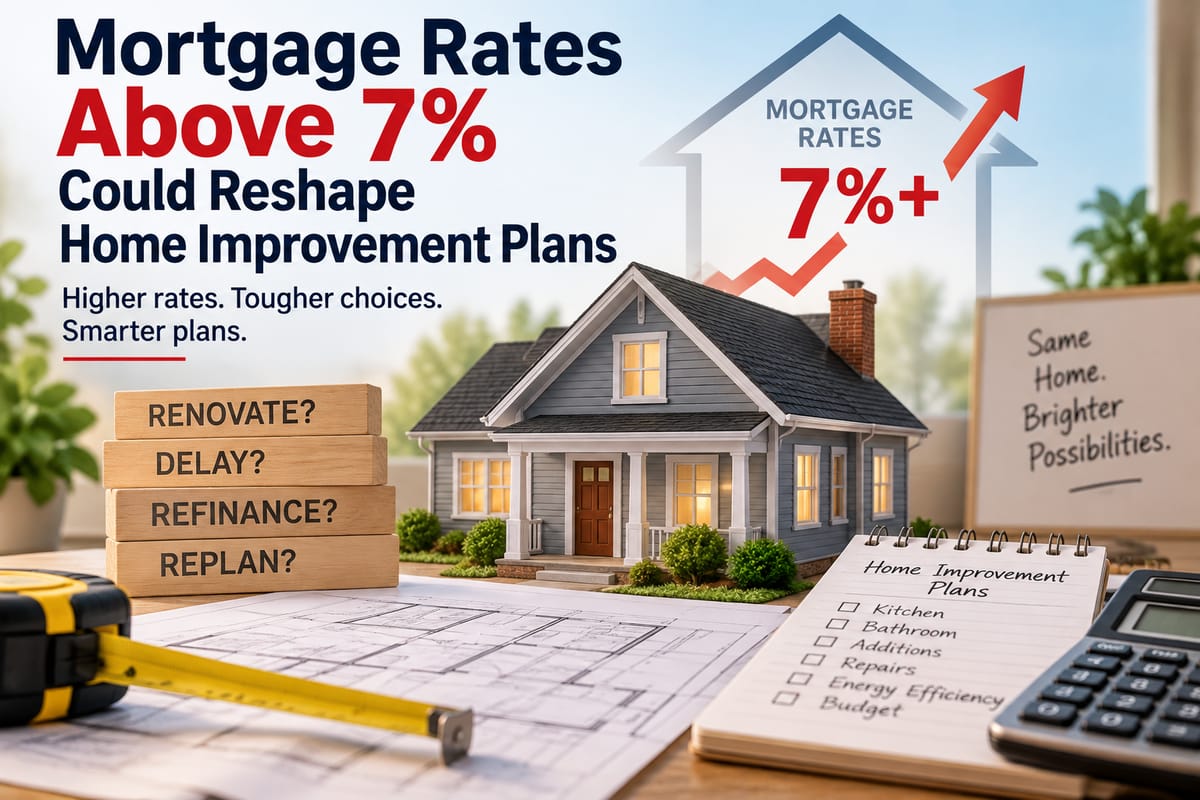
Mortgage rates above 7% can change the way homeowners think about much more than buying or refinancing a house. When the cost of borrowing rises, households may also reconsider renovation projects, repairs, additions, upgrades, and other investments in their properties.
For homeowners who depend on financing to pay for improvements, higher mortgage rates can make borrowing significantly more expensive. For others, the effect may be indirect. Higher monthly housing costs can leave less room in the household budget for remodeling kitchens, finishing basements, replacing roofs, upgrading bathrooms, or improving outdoor spaces.
At the same time, a higher-rate environment does not mean homeowners will stop improving their properties altogether. Instead, many may become more selective about which projects to undertake, prioritizing essential repairs and improvements that offer practical benefits or help protect a home’s long-term value.
Why Mortgage Rates Matter for Home Improvement
Mortgage rates influence the overall cost of owning a home. When rates rise, prospective buyers can generally afford to borrow less for the same monthly payment, while existing homeowners may be less inclined to refinance or take on additional debt.
This can have an indirect effect on renovation activity.
A household that is spending more each month on its mortgage may have less disposable income available for home improvement. Similarly, homeowners who previously planned to borrow against their home equity may reconsider if financing costs make the project substantially more expensive.
Understanding the broader borrowing environment is an important part of managing homeownership costs, and The Complete Guide to Mortgages provides useful context on how mortgage financing works.
Higher Rates Can Change Renovation Priorities
When money becomes more expensive to borrow, homeowners often have to distinguish between projects they want and projects they actually need.
A cosmetic renovation may be easier to postpone than a leaking roof or failing heating and cooling system.
This can lead households to prioritize improvements such as:
- Roof repairs and replacement
- Plumbing and electrical work
- Heating and cooling upgrades
- Water damage prevention
- Insulation improvements
- Window and door repairs
- Structural maintenance
- Safety-related upgrades
Projects that primarily improve appearance may be pushed further into the future if they require significant financing.
Kitchen and Bathroom Remodels Could Be Delayed
Kitchen and bathroom renovations are among the projects that can require substantial upfront spending.
Homeowners may still want modern cabinets, countertops, appliances, fixtures, flooring, and lighting, but higher financing costs can change the timing.
Instead of completing a full renovation at once, a homeowner might replace one element at a time.
For example, replacing an outdated appliance or repairing damaged cabinetry may provide an immediate improvement without requiring the same financial commitment as a complete kitchen remodel.
This approach can allow homeowners to continue improving their properties while keeping debt under control.
Home Additions May Face Greater Scrutiny
Large projects such as room additions, second-story expansions, and major structural renovations typically require significant investment.
When mortgage rates are high, homeowners may compare the cost of an addition with alternatives such as moving to a different property.
But high mortgage rates can make moving expensive too.
A homeowner with a relatively low existing mortgage rate may be reluctant to sell and purchase another home at a substantially higher rate. That can create an interesting dynamic in which homeowners remain in their current properties for longer and gradually adapt them to changing needs.
Renovation Instead of Moving
High mortgage rates can sometimes encourage homeowners to improve their existing properties rather than move.
Families that need an additional bedroom, a better home office, or more functional living space may decide that renovating is preferable to taking on a new mortgage.
This could support demand for smaller and medium-sized improvement projects even when large discretionary renovations slow down.
The decision ultimately depends on the property’s existing value, the cost of the proposed improvement, financing options, and the household’s long-term plans.
Homeowners May Focus More on Value-Adding Improvements
When budgets are under pressure, homeowners may place greater emphasis on projects that protect or potentially improve property value.
That does not mean every renovation will generate a financial return. Remodeling costs are not automatically recovered when a property is sold.
However, improvements that address deterioration, improve functionality, increase energy efficiency, or maintain a home’s condition can have practical benefits.
Homeowners considering the financial side of renovations can explore How to Protect and Improve Home Value when deciding which improvements deserve priority.
Essential Maintenance Becomes Even More Important
One potential mistake during a high-interest-rate period is postponing necessary maintenance simply because money is tight.
Deferring a small repair can sometimes allow a problem to become significantly more expensive.
A minor roof leak, for example, can eventually cause broader water damage. A small plumbing problem can become a major repair if ignored. Poor drainage around a home can contribute to moisture and foundation problems over time.
Homeowners therefore need to distinguish between postponing a cosmetic project and postponing maintenance that protects the property.
Creating a Home Maintenance Budget
A dedicated maintenance budget can help homeowners avoid having to finance every unexpected repair.
Setting aside money regularly can create a financial cushion for routine maintenance and occasional larger expenses.
The appropriate amount varies depending on the property’s age, size, condition, location, and systems. Older homes may require more frequent repairs, while newer properties may have fewer immediate maintenance needs.
A structured approach to planning these costs is covered in How to Budget for Home Maintenance.
Home Equity Financing May Become More Expensive
Some homeowners use home equity loans or lines of credit to finance renovations.
These products can provide access to substantial amounts of money because they are secured by the property. However, borrowing against home equity comes with costs and risks that homeowners need to understand.
When interest rates are elevated, the cost of accessing that equity can become less attractive.
Variable-rate borrowing can also create uncertainty because monthly payments may change as market rates move.
Homeowners should therefore consider the total cost of financing rather than focusing only on the amount they can borrow.
Cash-Paying Homeowners Have More Flexibility
Not every homeowner needs to finance improvements.
Households with sufficient savings can potentially continue renovation projects without being directly affected by higher borrowing costs. However, even cash-paying homeowners should consider whether using a large portion of their savings for a renovation leaves enough money for emergencies and other financial goals.
A project that can be paid for in cash is not necessarily financially sensible if it exhausts an emergency fund.
Maintaining adequate liquidity can be especially important when economic conditions are uncertain.
Energy-Efficiency Projects Could Remain Attractive
Energy-related improvements can receive particular attention when homeowners evaluate renovation spending.
Insulation, efficient windows, improved heating and cooling systems, smart thermostats, and other upgrades can potentially reduce ongoing household energy consumption.
The financial benefit depends on the property’s existing efficiency, local energy prices, installation costs, and the specific improvement.
Homeowners should therefore evaluate these projects based on both their upfront cost and expected long-term benefits rather than assuming every energy upgrade will pay for itself quickly.
DIY Projects May Become More Popular
Higher financing costs could also encourage some homeowners to take on projects themselves.
Painting, landscaping, basic decorating, shelving, minor cosmetic repairs, and other relatively straightforward improvements can sometimes be completed without hiring professional contractors.
DIY work can reduce labor expenses, although homeowners should be realistic about their skills and the complexity of the project.
Electrical, structural, roofing, plumbing, and other specialized work may require qualified professionals depending on the task and local requirements.
Saving money on labor is useful only if the project is completed safely and correctly.
Contractors May See Changes in Consumer Demand
A slowdown in financed renovations can affect contractors and home improvement businesses.
Homeowners who once planned large projects may request smaller scopes of work, delay renovations, or divide projects into multiple phases.
Contractors may consequently encounter more price-sensitive customers.
For homeowners, this can make comparing estimates, understanding project specifications, and establishing realistic budgets increasingly important.
A low initial quote should not automatically be considered the best option if it excludes important materials, permits, labor, or potential complications.
How Much House a Person Can Afford Also Matters
Mortgage rates do not operate independently of home prices.
A household’s affordability depends on several factors, including income, debt obligations, down payment, property taxes, insurance, mortgage rate, and other ownership costs.
When rates rise, a buyer may need to purchase a less expensive home to maintain a manageable monthly payment.
That can influence future renovation decisions as well.
A buyer who stretches financially to purchase a property may have limited funds remaining for improvements. Conversely, choosing a more affordable home can potentially leave more room in the budget for repairs and upgrades.
Homebuyers can learn more about this relationship through How to Determine How Much House You Can Afford.
Homeowners May Take a Phased Approach
Rather than abandoning renovation plans entirely, homeowners may divide projects into manageable stages.
A full bathroom renovation could begin with essential plumbing repairs and later include new fixtures, flooring, storage, and cosmetic improvements.
A kitchen project could follow a similar strategy, with appliances or lighting upgraded first and cabinets and countertops addressed later.
Phasing can make large projects easier to fund from regular income or savings rather than relying entirely on borrowed money.
It can also allow homeowners to reassess priorities as their financial situation changes.
Should Homeowners Wait for Mortgage Rates to Fall?
Waiting for lower rates can be tempting, but there is no guarantee about when or whether borrowing costs will decline to a level a particular homeowner considers attractive.
A homeowner should therefore avoid basing an essential repair entirely on the expectation that financing will become cheaper in the near future.
For discretionary projects, however, delaying a renovation may be reasonable if the current financing cost would place excessive pressure on the household budget.
The right decision depends on the urgency of the project, available cash, financing terms, and the homeowner’s broader financial situation.
Renovations Can Still Make Sense at Higher Rates
Higher mortgage rates do not automatically make home improvement a bad investment.
Some projects provide immediate functional benefits. Others address problems that could become more expensive if ignored.
A homeowner planning to remain in a property for many years may also place significant value on comfort and usability, even if the renovation does not produce a large financial return.
The key is to understand why the project is being undertaken and whether the household can comfortably afford it.
A New Approach to Home Improvement
Mortgage rates above 7% can change the economics of home improvement, particularly for households that depend on borrowing to fund renovations.
The likely result is not that homeowners stop improving their properties. Instead, they may become more deliberate about which projects deserve immediate attention.
Essential repairs, preventive maintenance, energy efficiency, and improvements that support long-term property value may take priority over purely cosmetic upgrades. Larger projects may be phased over time, funded through savings, or postponed until financing conditions become more favorable.
For homeowners, the broader lesson is that renovation decisions should fit within the entire household budget—not just the project estimate. When borrowing costs are high, careful planning can make the difference between an improvement that strengthens the home and a project that creates unnecessary financial strain.