Portable and Sculptural Lighting Emerges as a Major Interior Design Trend for 2026
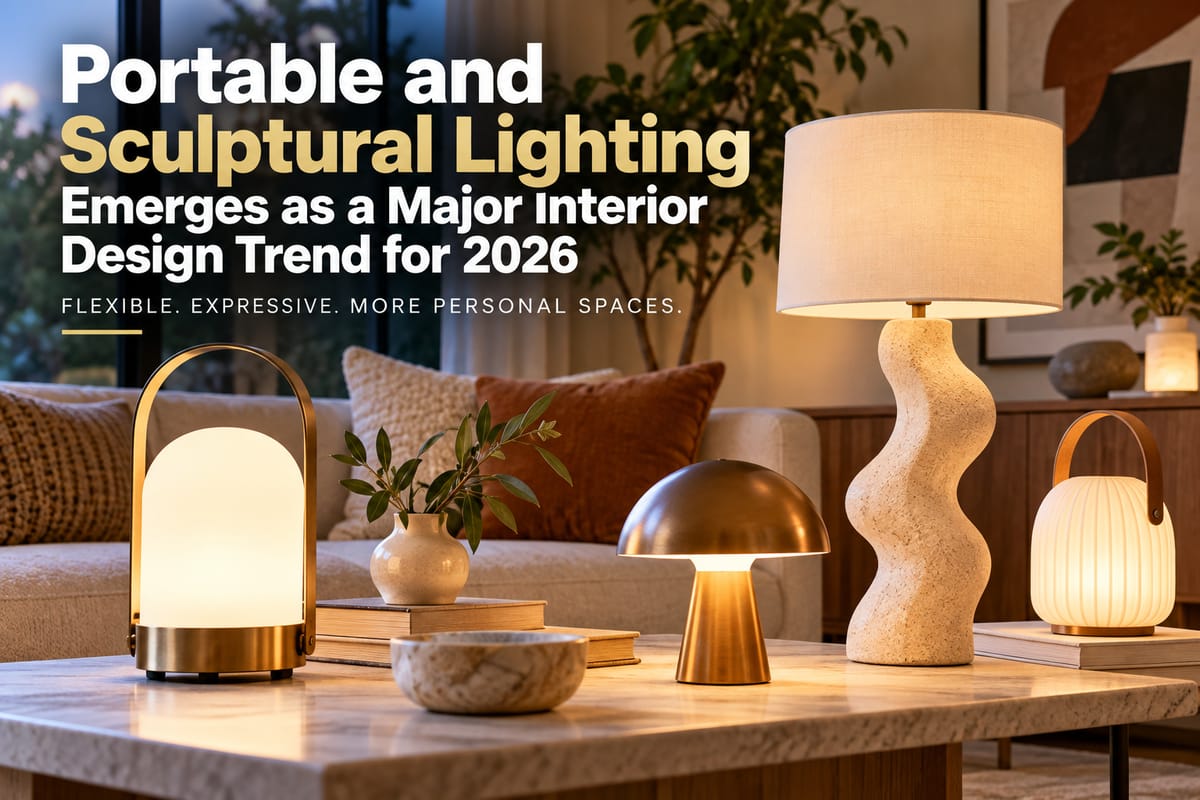
Portable and Sculptural Lighting Emerges as a Major Interior Design Trend for 2026
Lighting is taking on a much bigger role in interior design in 2026. Instead of being treated as a purely functional part of a room, lamps and fixtures are increasingly being used to shape atmosphere, introduce personality and act as visual focal points.
Two ideas are particularly prominent: portable lighting and sculptural lighting. Rechargeable lamps make it easier to move illumination wherever it is needed, while expressive fixtures bring curves, unusual proportions, textured materials and artistic forms into living spaces.
Recent 2026 design coverage points to the same broader shift. Designers are increasingly treating lighting as part of the architecture and decoration of a room, while portable rechargeable fixtures are making lighting arrangements more flexible.
Lighting Is Becoming Part of the Room’s Personality
For years, lighting was often selected after furniture, flooring, paint and other major elements had already been decided. The fixture’s primary job was simply to provide enough light.
That approach is changing.
A sculptural lamp can now serve as a decorative object even when it is switched off. An oversized floor lamp can become a focal point in an otherwise understated living room, while a small rechargeable table lamp can add a carefully positioned pool of light to a dining table, bookshelf or bedside surface.
Designers are increasingly interested in lighting that contributes to the identity of a room rather than simply disappearing into it. 2026 trend reports have highlighted bold silhouettes, organic shapes, asymmetrical arrangements and handcrafted-looking finishes as important directions.
This makes lighting particularly useful for homeowners who want to refresh a space without replacing all of their furniture.
Portable Lamps Bring More Flexibility
One of the most noticeable changes is the growing popularity of cordless and rechargeable lamps.
Portable lamps can be moved from one location to another without requiring a new electrical connection. That makes them useful in rooms where the ideal lighting position does not match the location of an outlet.
A rechargeable lamp might sit on a dining table during dinner, move to a console afterward and then be used on a balcony or patio.
This flexibility is one reason portable lighting fits naturally into modern homes, where rooms often serve multiple purposes throughout the day. Designers have identified rechargeable lamps as an important 2026 trend because they allow homeowners to adjust the atmosphere of a space without changing the permanent lighting infrastructure.
Sculptural Lighting Turns Fixtures Into Art
Sculptural lighting takes the trend in another direction.
Rather than hiding the structure of a fixture, designers are emphasizing it. Lamps may feature exaggerated curves, stacked geometric shapes, irregular silhouettes, oversized shades or unusual combinations of materials.
The goal is not necessarily to make every fixture dramatic. Instead, a carefully chosen lamp can provide a visual counterpoint to simpler furniture and architectural elements.
Recent lighting showcases have highlighted sculptural forms, stacked shapes and statement fixtures as significant directions for 2026.
This approach also allows lighting to become a form of self-expression. A ceramic lamp, textured stone fixture or sculptural metal design can communicate a very different character from a conventional neutral lamp.
Organic Shapes Are Softening Modern Interiors
The popularity of sculptural lighting does not necessarily mean sharper or more futuristic designs.
Many of the strongest 2026 lighting trends are moving toward softer shapes. Curves, rounded shades, organic silhouettes and natural-looking materials are appearing alongside more architectural designs.
Alabaster, wood, glass, ceramics, natural fibers and textured finishes are particularly suited to this direction because they introduce visual warmth while still allowing the fixture to function as a statement piece. Designers have also pointed toward natural stone and handcrafted surfaces as ways of making lighting feel more grounded and tactile.
The result is lighting that can feel contemporary without making a room appear cold.
Portable Lighting Fits the Rise of Layered Interiors
The move toward portable lighting also connects with a broader shift away from relying on one dominant ceiling light.
Layered lighting combines different sources to create several levels of illumination. A room might use a ceiling fixture for general lighting, a floor lamp for a reading area, a table lamp for warmth and a small accent light to highlight artwork or architectural details.
Portable fixtures make this approach easier because they can be repositioned as the room’s needs change.
That philosophy fits naturally with the growing interest in more comfortable, personalized interiors. For more on this direction, Layered Comfort Is Taking Over explores the broader movement toward rooms that feel warmer, softer and more lived-in.
Rather than illuminating every corner equally, layered lighting allows homeowners to create areas of focus and shadow.
The Lamp Can Become the Focal Point
A sculptural fixture can work particularly well when the rest of the room is relatively restrained.
For example, a simple sofa, neutral walls and uncomplicated flooring can provide a backdrop for an oversized curved floor lamp. In a dining area, a distinctive pendant can become the visual anchor above the table.
This approach is partly about contrast.
If every object in a room competes for attention, a sculptural lamp may simply add to the visual noise. But when surrounding elements are carefully balanced, one expressive lighting piece can create a strong focal point.
The same principle applies to portable lamps. A small, beautifully shaped cordless lamp does not need to dominate the room. It can provide a smaller point of interest while contributing to the overall lighting composition.
Materials Matter as Much as Shape
The 2026 lighting conversation is not only about silhouettes.
Materials are becoming an important part of the visual appeal. Designers are experimenting with glass, stone, metal, wood, ceramics and natural fibers to give fixtures greater texture and presence.
A rough or tactile surface can make a lamp feel more handcrafted, while translucent materials can create a softer glow.
Natural stone such as alabaster has received particular attention from designers because its translucent qualities can produce a gentle, diffused illumination while giving the fixture a substantial physical presence.
This emphasis on materials also helps lighting connect with furniture and accessories rather than appearing as an isolated feature.
Warm Light Makes Sculptural Forms More Inviting
The shape of a lamp matters, but so does the quality of the light it produces.
A dramatic fixture with harsh illumination can feel very different from the same form producing a soft, warm glow. As interiors become more layered and tactile, designers are increasingly emphasizing diffused illumination and comfortable atmospheres.
This is especially important with sculptural fixtures because their physical forms can create interesting patterns of light and shadow.
Frosted glass, fabric shades and other diffusing materials can help soften illumination. The result can make a room feel calmer in the evening without requiring intense overhead lighting.
Smart Lighting and Sculptural Design Can Work Together
Portable and sculptural lighting does not mean technology is disappearing.
Smart lighting systems can still provide control over brightness, color temperature and scheduling. The difference is that technology is increasingly being incorporated into fixtures that are designed to look like decorative objects.
Homeowners interested in combining design and technology can explore The Complete Guide to Smart Home Lighting for a broader look at how connected lighting can be incorporated into a home.
The combination can be particularly useful in multifunctional rooms. A light can provide brighter illumination when someone is working and transition to softer lighting later in the evening.
Small Portable Lamps Can Make a Big Difference
One of the advantages of this trend is that homeowners do not necessarily need to make a major renovation.
A single rechargeable lamp can change the atmosphere of a room almost immediately.
Placed on a coffee table, it can create a more intimate seating area. On a dining table, it can provide a soft centerpiece without blocking conversation. On a shelf, it can draw attention to nearby artwork or decorative objects.
Because portable lamps are not permanently installed, they also allow homeowners to experiment.
A lamp can be moved around until its position feels right. That makes portable lighting particularly appealing to renters and people who frequently change their furniture arrangements.
Sculptural Lighting Does Not Have to Mean Oversized
The word “sculptural” can suggest enormous chandeliers or dramatic architectural installations, but the trend extends to much smaller pieces.
A compact table lamp with an unusual base can have a sculptural quality. So can a mushroom-shaped shade, a curved metal frame or a simple ceramic form.
Recent 2026 lighting coverage has highlighted everything from statement installations to sculptural table lamps, showing that the trend operates at multiple scales.
This makes the style easier to incorporate into ordinary homes.
A homeowner does not need a huge open-plan living room to experiment with expressive lighting.
Lighting Is Becoming More Flexible
The larger trend behind portable and sculptural lighting is flexibility.
Modern homes are expected to support relaxation, work, entertaining, reading and socializing, sometimes within the same room. Permanent lighting positions cannot always accommodate those changing needs.
Portable fixtures provide physical flexibility, while sculptural fixtures provide visual flexibility. Together, they allow lighting to become part of the room’s changing composition.
This is also why flexible and adaptable lighting systems are receiving greater attention in 2026 design coverage.
Instead of designing a room around a fixed lighting arrangement, homeowners increasingly have the option to treat illumination as something that can evolve.
How to Use the Trend Without Overdoing It
The growing popularity of expressive lighting does not mean every room needs multiple statement fixtures.
In many cases, one distinctive piece is enough.
A sculptural floor lamp can anchor a reading corner. A portable lamp can add warmth to a console. A distinctive pendant can define a dining area.
The key is to consider proportion, placement and the relationship between the fixture and the rest of the room.
A dramatic lamp may work best against a quieter background, while a small sculptural light can disappear if surrounded by too many competing decorative objects.
The most successful spaces tend to balance visual interest with usability.
Portable Lighting Is Changing How Rooms Are Designed
The emergence of portable and sculptural lighting reflects a broader change in how people think about their homes.
Lighting is no longer simply something installed in the ceiling and switched on when it gets dark. It can influence mood, define zones, highlight objects, add texture and contribute to the personality of a room.
At the same time, rechargeable technology is making illumination less dependent on electrical outlets and permanent fixtures.
That combination of artistic form and everyday flexibility is what makes portable and sculptural lighting particularly relevant to 2026 interiors. As homes continue to become more personal, layered and multifunctional, lighting is increasingly being treated as one of the tools that gives those spaces their character.