The Ultimate Smart Home Security Guide
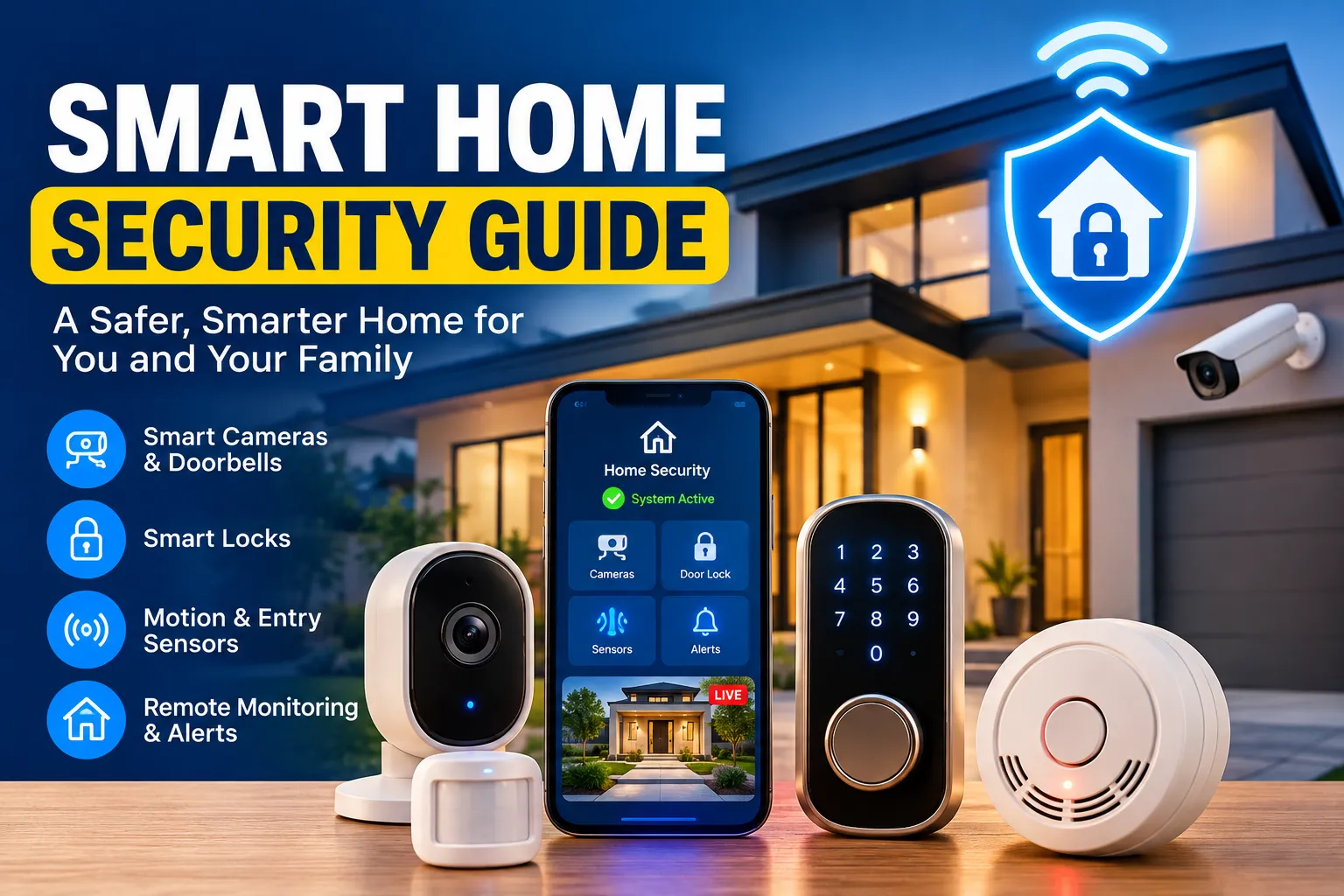
Smart Home Security Guide
Smart home technology has transformed the way homeowners protect their properties. From video doorbells and smart locks to AI-powered security cameras and automated alarm systems, connected devices now offer greater visibility and control than ever before.
Modern smart home security goes beyond deterring burglars. Today’s systems can notify homeowners about unusual activity, monitor smoke or water leaks, detect package deliveries, and even integrate with lighting and voice assistants to create a safer, more convenient living environment.
As adoption continues to grow, understanding how these technologies work and how to use them securely is becoming an essential part of responsible homeownership. For a broader overview of connected-home technology, the Complete Guide to Smart Homes explains how security, automation, energy management, and other smart home technologies fit together.
What Is Smart Home Security?
Smart home security refers to internet-connected devices that monitor, protect, and automate various aspects of home safety.
Unlike traditional alarm systems, smart security devices can often be controlled remotely through smartphones or tablets.
Common capabilities include:
- Live video monitoring
- Motion detection
- Remote locking and unlocking
- Real-time alerts
- Cloud video storage
- Home automation
- Emergency notifications
Many systems also allow homeowners to monitor multiple properties from a single app.
Why Smart Home Security Is Growing
Several factors continue to drive demand for connected home security systems.
Homeowners increasingly value:
- Remote access
- Real-time notifications
- Improved convenience
- Lower installation costs
- Easy expansion
- Better energy management
- Integration with other smart devices
As smart home ecosystems mature, security has become one of their most popular applications.
Essential Components of a Smart Security System
Most smart home security setups combine several connected devices.
Common components include:
- Smart security cameras
- Video doorbells
- Smart locks
- Motion sensors
- Door and window sensors
- Alarm sirens
- Smart lighting
- Security hubs
Each device contributes to a layered approach to home protection.
For a deeper look at controlling entry points, including connected locks and other access technologies, homeowners can explore the Complete Guide to Smart Home Access Control.
Smart Security Cameras
Connected cameras are often the centerpiece of modern security systems.
Popular features include:
- High-definition video
- Night vision
- Motion detection
- Two-way audio
- AI person detection
- Cloud recording
- Local storage options
- Mobile notifications
Many cameras can distinguish between people, vehicles, pets, and general movement, reducing unnecessary alerts.
For a more detailed explanation of connected cameras and video doorbells, see Smart Cameras and Video Doorbells Explained.
Video Doorbells
Video doorbells provide homeowners with greater visibility at the front entrance.
Typical capabilities include:
- Live video streaming
- Motion alerts
- Visitor notifications
- Two-way communication
- Package monitoring
- Remote access
They allow homeowners to answer the door even when they are away from home.
Smart Locks
Smart locks replace or enhance traditional door locks with digital controls.
Features often include:
- Smartphone unlocking
- PIN codes
- Temporary guest access
- Auto-lock functions
- Activity logs
- Voice assistant integration
Many systems eliminate the need for physical keys while providing greater control over home access.
Motion and Entry Sensors
Sensors detect activity throughout the home.
Common types include:
- Door sensors
- Window sensors
- Motion detectors
- Glass-break sensors
- Garage door sensors
When triggered, they can activate alarms or send instant notifications to homeowners.
These sensors can also form part of a broader monitoring system. The Smart Home Monitoring Guide: Sensors and Alerts explains how sensors can monitor conditions and trigger useful alerts throughout a connected home.
Smart Lighting for Security
Lighting plays an important role in home security.
Smart lighting systems can:
- Turn lights on automatically
- Simulate occupancy while away
- Activate after motion detection
- Follow customized schedules
- Integrate with security cameras
Well-lit properties may discourage unwanted visitors.
Smart lighting can also serve purposes beyond security, including convenience, automation, and energy management. Homeowners interested in connected lighting systems can explore The Complete Guide to Smart Home Lighting.
AI Is Making Security Smarter
Artificial intelligence has significantly improved home monitoring.
AI-powered systems may:
- Recognize familiar faces
- Detect unusual activity
- Differentiate between people and animals
- Reduce false alarms
- Analyze movement patterns
- Prioritize important alerts
These features help homeowners focus on meaningful security events rather than constant notifications.
Remote Monitoring
One of the greatest advantages of smart security is remote access.
Homeowners can often:
- View live camera feeds
- Lock or unlock doors
- Check sensor status
- Receive emergency alerts
- Speak through cameras
- Arm or disarm security systems
This level of control offers added peace of mind during travel or long workdays.
Reliable connectivity is particularly important when security devices depend on cloud services or remote access. Homeowners building larger connected systems can learn more from the Complete Guide to Smart Home Networking.
Privacy Considerations
Connected security devices collect sensitive information.
Responsible use includes:
- Reviewing privacy settings
- Understanding data storage practices
- Limiting unnecessary data sharing
- Updating device permissions
- Choosing strong account passwords
Protecting personal data is just as important as protecting physical property.
Cybersecurity Matters
Smart security systems rely on internet connectivity, making digital security essential.
Best practices include:
- Using strong, unique passwords
- Enabling multi-factor authentication
- Keeping device firmware updated
- Securing home Wi-Fi with modern encryption
- Removing unused devices
- Regularly reviewing connected accounts
Good cybersecurity habits help reduce the risk of unauthorized access.
Smart Home Integration
Modern security systems often work with broader smart home ecosystems.
They may connect with:
- Smart thermostats
- Smart lighting
- Voice assistants
- Garage door controllers
- Smoke detectors
- Water leak sensors
Automation allows multiple devices to respond together during specific events.
Compatibility becomes increasingly important as homeowners combine products from different manufacturers. Understanding Smart Home Integration and Compatibility explains how different devices, platforms, and standards can work together.
Choosing the Right System
When comparing smart home security systems, consider:
- Home size
- Budget
- Indoor or outdoor coverage
- Professional vs. self-monitoring
- Cloud subscription costs
- Local storage options
- Mobile app quality
- Compatibility with existing devices
Choosing equipment that matches your needs is often more valuable than purchasing the most expensive system.
Smart Security for Apartments
Apartment residents can also benefit from connected security.
Popular options include:
- Video doorbells (where permitted)
- Indoor cameras
- Smart locks
- Motion sensors
- Window sensors
- Portable alarm systems
Many wireless products require minimal installation and can move with you to a new home.
Common Mistakes to Avoid
Homeowners should avoid:
- Using default passwords
- Ignoring software updates
- Placing cameras in inappropriate locations
- Overlooking Wi-Fi security
- Installing too few sensors
- Forgetting backup power options
Regular maintenance helps ensure the system functions reliably when needed.
Future Trends in Smart Home Security
The next generation of security technology is expected to include:
- More advanced AI detection
- Predictive threat analysis
- Faster edge computing
- Improved facial recognition controls
- Smarter automation routines
- Enhanced privacy protections
- Better integration with emergency services
As technology evolves, systems are likely to become more intelligent while offering users greater control over their data.
Looking Ahead
Smart home security has evolved from simple alarm systems into comprehensive, connected ecosystems that protect homes while improving convenience. Cameras, smart locks, motion sensors, AI-powered analytics, and home automation now work together to help homeowners monitor and manage their properties from virtually anywhere.
Although no security system can eliminate every risk, combining reliable technology with strong cybersecurity practices and thoughtful installation creates a safer, smarter home. As connected devices continue to improve, smart home security will remain an important part of modern homeownership.
Frequently Asked Questions
What is a smart home security system?
A smart home security system uses internet-connected devices such as cameras, sensors, smart locks, and alarms that can be monitored and controlled remotely.
Are smart home security systems safe?
When properly configured with strong passwords, secure Wi-Fi, software updates, and multi-factor authentication, smart security systems can provide effective protection while minimizing cybersecurity risks.
Do smart security cameras require a subscription?
Some cameras offer free local storage, while others provide optional cloud storage subscriptions with additional features like extended video history and AI detection.
Can I install a smart home security system myself?
Many modern systems are designed for DIY installation, although larger or professionally monitored systems may benefit from expert installation.
What devices are most important for a smart security setup?
For many homeowners, a good starting point includes smart cameras, video doorbells, smart locks, motion sensors, and door/window sensors.
Key Takeaways
- Smart home security combines connected devices to improve home safety and convenience.
- Security cameras, smart locks, video doorbells, and motion sensors form the foundation of most systems.
- AI-powered features provide smarter alerts and reduce false notifications.
- Cybersecurity practices such as strong passwords and software updates are essential.
- Smart security systems integrate seamlessly with other connected home devices.
- A well-planned smart home security system helps protect property while providing greater peace of mind and remote control.