Storm-Damaged Homeowners Face a New Wave of Repairs as Disaster Assistance Expands
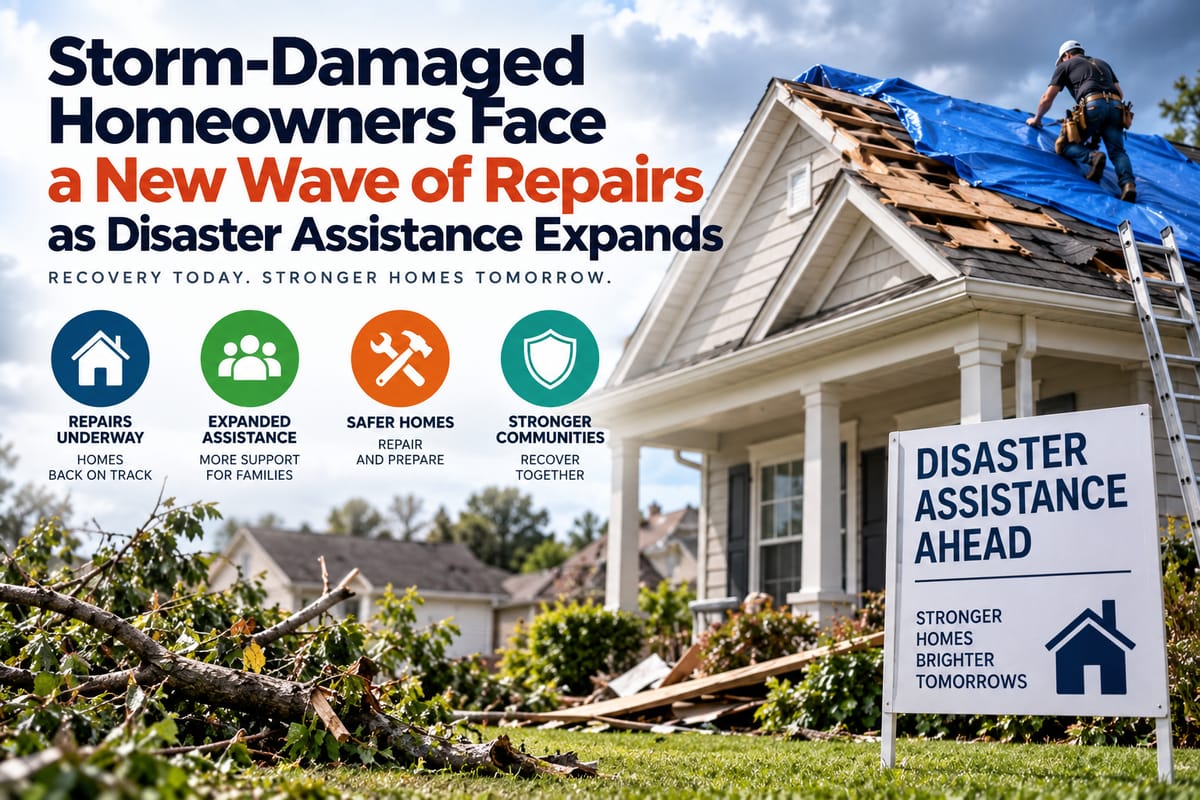
Storm-Damaged Homeowners Face a New Wave of Repairs as Disaster Assistance Expands
Storm damage can turn a home that seemed secure one day into a complicated repair project the next. High winds can tear away roofing materials, fallen trees can damage walls and electrical systems, and flooding can leave behind problems that are not immediately visible.
For homeowners recovering from federally declared disasters, the repair process can also involve insurance claims, inspections, contractors, temporary housing and applications for financial assistance.
Federal disaster assistance has evolved in recent years, with FEMA making changes intended to reduce administrative barriers and expand access to certain forms of assistance. Changes that took effect for disasters declared on or after March 22, 2024 expanded aspects of Individual Assistance and included changes to Home Repair Assistance.
For homeowners dealing with storm damage, understanding what assistance can cover — and what it cannot — can make the recovery process easier to navigate.
Why Storm Repairs Can Become Complicated
Storm damage is rarely limited to one part of a house.
A powerful storm can affect several systems simultaneously. A damaged roof may allow water into ceilings and walls. Floodwater can affect electrical components, flooring, insulation and HVAC equipment. Fallen trees can damage roofs, siding, windows and utility connections.
Some problems are obvious immediately. Others may become apparent days or weeks later.
That is why homeowners should treat the first inspection as the beginning of the recovery process rather than assuming the visible damage represents the entire problem.
A useful overview of common household problems and solutions can be found in the Home Repairs Guide.
FEMA Home Repair Assistance Has Expanded in Important Ways
FEMA’s Individual Assistance reforms were designed in part to reduce red tape and reach more disaster survivors.
Under the current framework, eligible homeowners may receive assistance for disaster-related repairs needed to make a home safe, sanitary and functional. FEMA’s guidance also allows certain situations where a disaster worsened damage that existed before the event.
Potentially eligible repairs can include damage involving:
- Roofing
- Foundations
- Electrical systems
- Heating, ventilation and air conditioning
- Wells and septic systems
- Mold caused by the disaster
- Sewer backups
- Certain private access roads
Eligibility depends on the circumstances of the disaster, the homeowner’s situation, the condition of the property and other requirements. FEMA assistance is also not intended to duplicate insurance benefits.
That distinction is important because disaster assistance is not simply a general home-improvement grant.
Safety Comes Before Cosmetic Repairs
After a major storm, homeowners may be tempted to begin replacing damaged finishes immediately.
That can be a mistake.
A damaged roof, exposed electrical wiring, structural movement or standing water can create hazards that need to be addressed before cosmetic work begins.
The priority should generally be making the property safe and preventing additional damage where it is possible to do so safely.
For example, a temporary measure to keep rain out of a damaged section of the roof may be more urgent than replacing damaged interior paint.
The same principle applies to electrical systems. Water exposure can create hazards that are not obvious simply by looking at an outlet or appliance.
Roof Damage Can Create a Chain Reaction
Roof damage is one of the most common concerns following severe storms.
Missing shingles or roofing materials may appear to be a relatively small problem, but an opening in the roof can allow water into the attic, insulation, ceilings and walls.
Moisture can then create secondary problems, including mold and deterioration of building materials.
Understanding How Residential Roofing Systems Work and Require Maintenance can help homeowners recognize why roofing problems should be addressed promptly.
Storm damage can also affect flashing, gutters, vents and other components that are essential to keeping water away from vulnerable parts of the building.
A roof does more than cover the house. It is part of a larger system for controlling water, temperature and moisture.
Homeowners Should Document Damage Carefully
Documentation can become extremely important during recovery.
Before extensive repairs are made, homeowners should photograph and record visible damage when it is safe to do so.
Useful documentation can include:
- Wide photographs showing the affected areas
- Close-up photographs of damaged materials
- Videos showing leaks or water intrusion
- Photographs of fallen trees or debris
- Lists of damaged personal property
- Receipts for emergency purchases
- Contractor estimates
- Insurance claim information
- Inspection reports
Keeping records in multiple locations can also reduce the risk of losing important information if another problem affects the property.
Documentation does not guarantee assistance or insurance coverage, but it can make it easier to establish what happened and what repairs are being requested.
Insurance and Disaster Assistance Are Not the Same Thing
One of the most important points for homeowners is understanding the difference between insurance and federal disaster assistance.
FEMA states that its assistance is not a replacement for insurance. In general, FEMA assistance is intended to address eligible disaster-related needs that are not covered by insurance or other available sources of assistance.
Homeowners should therefore review their insurance coverage and begin the claims process when applicable.
A homeowner may have coverage for some types of storm damage but not others. Policies can also contain deductibles, exclusions and coverage limits.
The exact outcome depends on the policy and the circumstances of the loss.
Why Repairs Often Go Beyond the Roof
A storm can expose weaknesses across multiple home systems.
Water entering through a damaged roof can affect ceilings and insulation. Flooding can damage electrical equipment and HVAC components. Wind can damage windows and exterior doors. Fallen trees can affect plumbing, wiring and structural components.
This makes it useful for homeowners to understand How Major Home Systems Work and What Homeowners Maintain.
Knowing where major systems are located and how they interact can help homeowners ask better questions when contractors and inspectors assess the property.
It can also help identify problems that might otherwise be overlooked during a quick visual inspection.
Not Every Repair Qualifies for Federal Assistance
Expanded assistance does not mean every storm-related repair will automatically receive federal funding.
FEMA eligibility requirements still apply.
For Home Repair Assistance, FEMA generally requires the property to be a primary residence in a federally declared disaster area, and the applicant must meet applicable eligibility requirements. FEMA also evaluates whether the damage affects the home’s habitability and whether other sources, such as insurance, cover the loss.
The nature and extent of eligible repairs can also vary depending on the disaster.
This is why homeowners should avoid assuming that an announcement about expanded assistance means every homeowner will receive enough funding to cover all repair costs.
The Difference Between Emergency Repairs and Full Restoration
Another important distinction is between making a property safe and fully restoring it.
A disaster assistance program may focus on essential repairs necessary to return a home to a safe and functional condition.
That can be very different from renovating the property to its preferred post-storm condition.
For example, a homeowner may need a damaged section of roofing repaired so that the home is protected from further water intrusion. That does not necessarily mean every cosmetic improvement associated with the roof will be covered.
Understanding that distinction can help homeowners set realistic expectations about assistance and out-of-pocket costs.
Storm Recovery Can Reveal Deferred Maintenance
Severe weather sometimes exposes problems that existed before the storm.
An aging roof, deteriorating siding, weak drainage system or neglected gutter may perform adequately under ordinary conditions but fail when exposed to extreme weather.
FEMA’s current guidance recognizes certain circumstances in which a disaster worsens pre-existing damage. However, that does not mean all existing maintenance problems become eligible disaster repairs.
This is one reason routine maintenance matters.
The Home Maintenance Projects resource provides a broader framework for keeping up with repairs before small problems become major expenses.
Repairs Can Be an Opportunity to Improve Resilience
Recovering from a storm is not only about restoring what was damaged.
Where permitted and financially practical, homeowners can also consider measures that reduce the likelihood or severity of future damage.
Depending on the location and type of disaster, mitigation can include improvements related to wind resistance, flood protection, roofing and other vulnerable components.
FEMA’s disaster assistance framework allows certain hazard-mitigation measures to be incorporated into eligible assistance in qualifying circumstances.
The exact measures available depend on the disaster and program requirements.
The broader principle is straightforward: rebuilding can provide an opportunity to make a property more resilient than it was before the storm.
Contractors Become Especially Important After Major Storms
A major disaster can create a sudden surge in demand for roofers, electricians, plumbers, restoration companies and general contractors.
That can make it difficult for homeowners to find qualified professionals quickly.
It can also create opportunities for poorly qualified contractors or scams targeting vulnerable property owners.
Homeowners should take reasonable steps to verify contractors, request written estimates, understand the proposed scope of work and avoid making rushed decisions under pressure.
Where structural, electrical or other specialized problems exist, the appropriate licensed professionals should be involved according to local requirements.
Do Not Ignore Secondary Damage
Some of the most expensive storm-related problems are not immediately visible.
Water trapped behind walls can contribute to mold or material deterioration. Moisture in insulation can reduce its effectiveness. A damaged electrical system can remain hazardous even after the visible water has disappeared.
Likewise, a roof that appears temporarily secure may still have damaged flashing or underlying materials.
Homeowners should therefore watch for signs such as:
- New ceiling stains
- Musty odors
- Peeling paint
- Damp insulation
- Warped flooring
- Unusual electrical behavior
- Persistent moisture
- Cracks that appear after the storm
- Leaks that return during rain
Early identification can sometimes prevent a manageable repair from becoming a much larger restoration project.
Disaster Recovery Centers Can Help Homeowners Navigate Assistance
FEMA operates Disaster Recovery Centers after qualifying disasters. These centers can provide information about assistance programs, help with applications, explain case status and connect survivors with other resources.
Homeowners dealing with complicated damage may find this useful because disaster recovery can involve several organizations at once.
Insurance companies, FEMA, the Small Business Administration, state agencies, local governments, contractors and nonprofit organizations can all have different roles.
A Disaster Recovery Center can help survivors understand which programs may apply to their circumstances.
The Repair Process May Take Time
Major storm recovery rarely happens overnight.
Even when assistance becomes available, homeowners may face inspections, insurance decisions, contractor scheduling, material shortages and permitting requirements.
Some repairs can also reveal additional damage after work begins.
That makes it important to think of recovery as a process rather than a single repair appointment.
A useful approach is to separate immediate safety issues from medium-term restoration and longer-term improvements.
Immediate priorities
- Make the property safe.
- Prevent additional damage where possible.
- Document losses.
- Contact the relevant insurer.
- Apply for available disaster assistance.
Medium-term priorities
- Complete essential repairs.
- Address moisture and structural problems.
- Restore damaged utilities and systems.
- Review contractor work carefully.
Longer-term priorities
- Complete deferred maintenance.
- Consider resilience improvements.
- Review insurance coverage.
- Establish a maintenance schedule.
What Homeowners Should Keep in Mind
Storm damage can be financially and emotionally disruptive, but homeowners do not necessarily have to navigate the recovery process without assistance.
Federal disaster programs have undergone changes intended to broaden access and simplify parts of the assistance process, while FEMA continues to provide Home Repair Assistance for eligible survivors in qualifying disasters.
At the same time, homeowners should understand that federal assistance has eligibility requirements and is not a substitute for insurance.
The most useful first steps are often practical ones: document the damage, protect the property from further harm when it is safe to do so, contact the appropriate insurance provider, investigate available disaster assistance and obtain qualified assessments for major repairs.
For many storm-damaged homeowners, the path back to a safe and comfortable home will involve more than replacing what the storm destroyed. It can also mean identifying hidden damage, restoring critical systems and using the rebuilding process to create a home that is better prepared for the next severe weather event.