The Complete Guide to Productivity
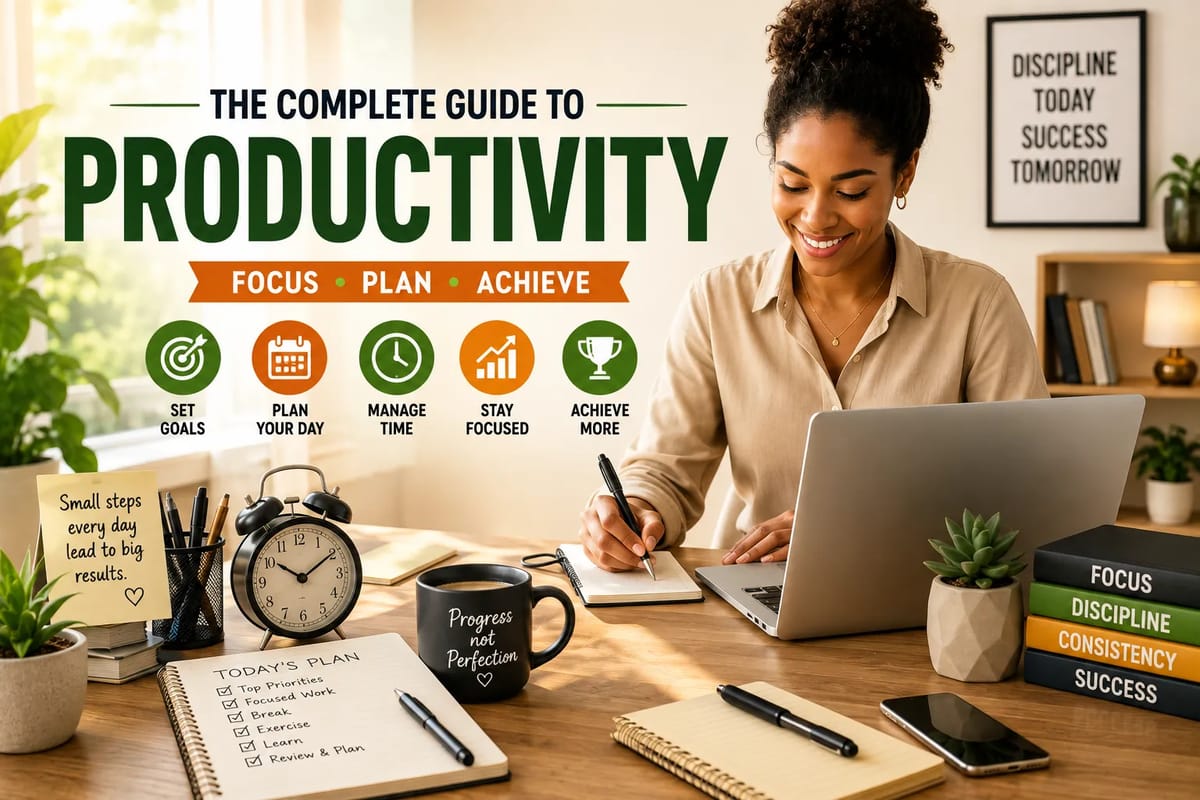
The Complete Guide to Productivity
Productivity is more than simply getting more done—it’s about using your time, energy, and attention effectively to achieve meaningful goals. In today’s fast-paced world, balancing work, personal responsibilities, and self-care can be challenging. Fortunately, developing productive habits and adopting proven strategies can help you accomplish more while reducing stress and maintaining a healthier work-life balance.
Whether you’re a student, professional, entrepreneur, or simply looking to organize your daily life better, understanding the principles of productivity can make a significant difference. This comprehensive guide explores productivity fundamentals, time management techniques, goal setting, focus strategies, digital tools, and sustainable habits that support long-term success.
What Is Productivity?
Productivity is the ability to complete meaningful tasks efficiently while making the best use of available time, energy, and resources.
Being productive does not necessarily mean being busy.
True productivity focuses on:
- Prioritizing important work
- Managing time wisely
- Eliminating distractions
- Working efficiently
- Achieving meaningful goals
- Maintaining balance and well-being
The goal is to accomplish what matters most rather than simply filling every hour with activity.
Why Productivity Matters
Improving productivity offers benefits across every aspect of life.
Higher productivity can help you:
- Achieve goals faster
- Reduce stress
- Improve work quality
- Create more free time
- Build confidence
- Strengthen work-life balance
- Increase career opportunities
- Develop healthier daily routines
Small improvements in productivity often compound into significant long-term results.
Set Clear Goals
Successful productivity begins with knowing what you’re working toward.
Effective goals are:
- Specific
- Measurable
- Achievable
- Relevant
- Time-bound
Breaking large goals into smaller milestones makes progress easier to track and helps maintain motivation.
For a deeper look at turning priorities into practical, achievable objectives, see how to set meaningful personal goals.
Prioritize What Matters Most
Not every task deserves equal attention.
One effective approach is to identify:
- High-impact tasks
- Urgent responsibilities
- Important long-term projects
- Low-priority activities
Completing your most important work first often leads to better results than constantly reacting to less significant tasks.
Plan Your Day
A simple daily plan reduces decision fatigue and keeps you focused.
Consider:
- Writing tomorrow’s task list the night before
- Scheduling your most demanding work during peak energy hours
- Grouping similar tasks together
- Allowing buffer time between appointments
- Reviewing progress at the end of the day
Planning ahead creates greater clarity and reduces unnecessary stress.
Learn Time Management Techniques
Several proven methods can improve productivity.
Time Blocking
Allocate specific blocks of time for focused work, meetings, exercise, and personal tasks.
For a broader exploration of scheduling strategies and ways to make better use of available hours, see this time management guide.
Pomodoro Technique
Work for approximately 25 minutes followed by a short break.
This approach encourages sustained concentration while preventing mental fatigue.
Task Batching
Complete similar activities together, such as:
- Responding to emails
- Making phone calls
- Administrative work
- Household chores
Batching reduces the mental effort required when switching between different types of tasks.
The Two-Minute Rule
If a task takes only a couple of minutes, complete it immediately instead of postponing it.
Small actions completed quickly prevent future clutter.
Eliminate Distractions
Modern technology makes distraction easier than ever.
Common productivity barriers include:
- Social media
- Constant notifications
- Multitasking
- Email interruptions
- Background noise
- Cluttered workspaces
Simple solutions include:
- Silencing notifications
- Closing unnecessary browser tabs
- Using focus modes
- Creating a dedicated workspace
- Scheduling email checks
Protecting your attention is often more valuable than working longer hours.
Build Healthy Daily Habits
Productivity depends on consistent routines.
Helpful habits include:
- Waking up at a consistent time
- Exercising regularly
- Eating balanced meals
- Staying hydrated
- Sleeping enough
- Reviewing daily priorities
- Limiting unnecessary screen time
Healthy routines improve both physical energy and mental focus.
Organize Your Workspace
A clean, organized workspace reduces distractions and improves efficiency.
Keep your workspace:
- Clutter-free
- Well-lit
- Comfortable
- Organized
- Stocked with essential supplies
Digital organization matters too.
Regularly organize:
- Computer files
- Email inbox
- Cloud storage
- Notes
- Calendars
Learn to Say No
Overcommitting reduces productivity.
Protect your time by:
- Setting boundaries
- Declining unnecessary commitments
- Delegating when appropriate
- Prioritizing your goals
Every “yes” should support your priorities.
Take Regular Breaks
Continuous work without rest often reduces concentration.
Short breaks can help:
- Restore focus
- Reduce fatigue
- Improve creativity
- Prevent burnout
Stepping away briefly often increases overall productivity.
Making room for rest and leisure is also an important part of maintaining a sustainable lifestyle. See how leisure and recreation improve everyday living for more on this broader role of free time.
Avoid Multitasking
Although multitasking feels productive, it often reduces efficiency.
Focusing on one task at a time helps:
- Improve accuracy
- Complete work faster
- Reduce mistakes
- Increase concentration
Single-tasking remains one of the most effective productivity habits.
Use Productivity Tools
Technology can support better organization.
Popular tools include:
- Calendar apps
- To-do lists
- Note-taking software
- Habit trackers
- Project management platforms
- Focus timers
Choose tools that simplify your workflow rather than adding unnecessary complexity.
Manage Your Energy, Not Just Your Time
Productivity depends on energy as much as time.
Pay attention to:
- Sleep quality
- Nutrition
- Exercise
- Stress levels
- Mental health
Schedule demanding tasks when your energy is naturally highest.
Develop Consistent Routines
Daily routines reduce decision-making and build momentum.
Examples include:
Morning Routine
- Wake up
- Exercise
- Review priorities
- Plan the day
Evening Routine
- Review accomplishments
- Prepare tomorrow’s schedule
- Organize workspace
- Disconnect from work
- Prioritize sleep
Consistency creates lasting habits.
Common Productivity Mistakes
Avoid these common pitfalls:
- Trying to do everything at once
- Constant multitasking
- Lack of planning
- Perfectionism
- Ignoring breaks
- Checking notifications too frequently
- Working without priorities
- Setting unrealistic goals
Recognizing these habits allows you to make meaningful improvements.
Productivity Checklist
| Habit | Daily Goal |
|---|---|
| Plan the day | ✔ |
| Complete highest-priority task | ✔ |
| Limit distractions | ✔ |
| Take regular breaks | ✔ |
| Stay hydrated | ✔ |
| Organize workspace | ✔ |
| Review progress | ✔ |
| Prepare for tomorrow | ✔ |
Frequently Asked Questions
What is the biggest productivity mistake?
Trying to multitask constantly is one of the most common productivity mistakes because it divides attention and often reduces efficiency.
How can I stay focused longer?
Working in focused time blocks, minimizing distractions, taking regular breaks, and maintaining healthy sleep habits can improve concentration.
Do productivity apps make a big difference?
Apps can be helpful for planning and organization, but lasting productivity depends more on consistent habits than on any single tool.
How can I stop procrastinating?
Break large tasks into smaller steps, start with the easiest action, eliminate distractions, and focus on progress rather than perfection.
Why is work-life balance important for productivity?
Rest, exercise, relationships, and leisure help maintain energy and reduce burnout, making it easier to stay productive over the long term.
Creating sustainable boundaries between responsibilities and personal time is central to this idea. The work-life balance guide explores how those competing demands can be managed more effectively.
Making Productivity Part of a Balanced Life
Productivity is not about working every minute of the day—it is about making intentional choices that help you accomplish meaningful goals while maintaining your health and well-being. By setting clear priorities, managing your time wisely, reducing distractions, and building sustainable routines, you can create a lifestyle that supports consistent progress without unnecessary stress.
Remember that productivity is a skill developed over time. Small daily improvements—such as planning ahead, focusing on one task at a time, and protecting your energy—can lead to remarkable long-term results. The most productive people are not necessarily the busiest; they are those who consistently focus on what matters most.
Ultimately, productivity works best when it supports the broader goal of living a satisfying and sustainable life. It should create space for meaningful work while also leaving room for relationships, hobbies, personal growth, rest, and other priorities that contribute to a balanced lifestyle.