The Complete Guide to Smart Homes
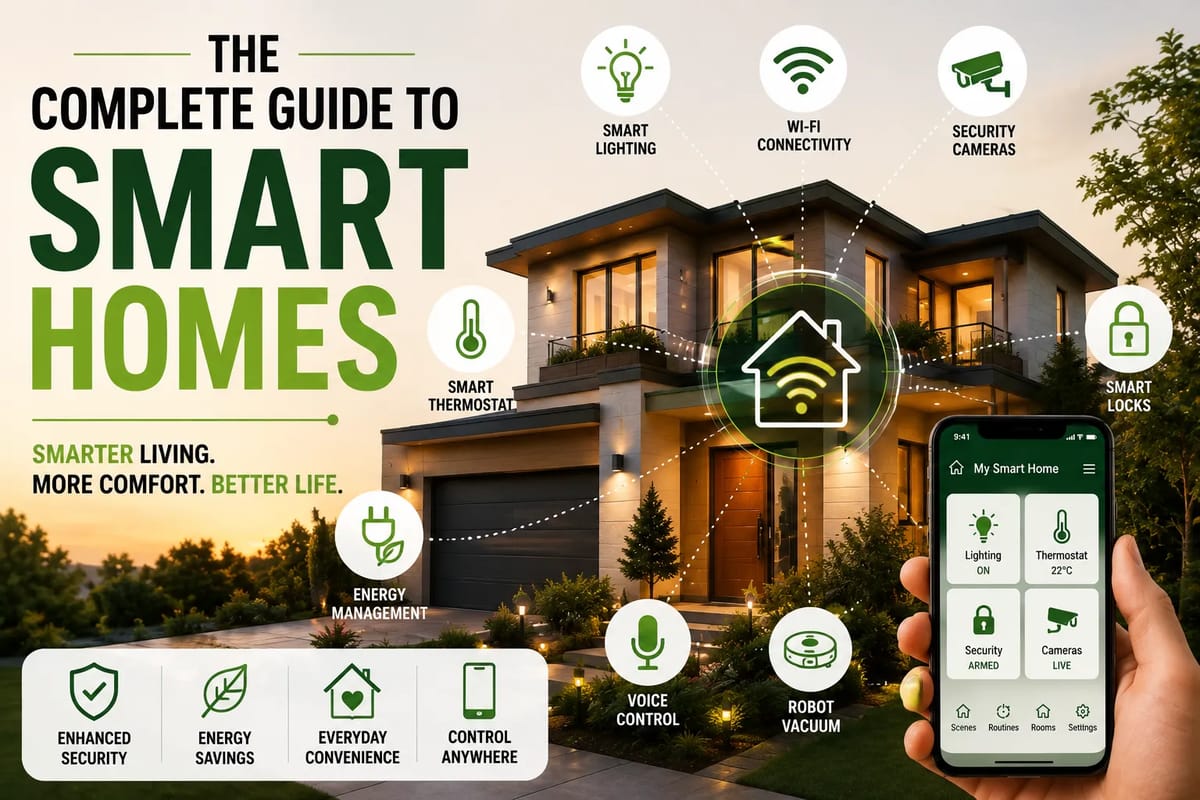
The Complete Guide to Smart Homes
Smart homes are transforming the way people live by combining internet-connected devices, automation, and artificial intelligence to create homes that are more convenient, efficient, secure, and comfortable. What was once considered futuristic technology is now becoming a standard feature in homes around the world. From controlling lights with your voice to automatically adjusting room temperatures or monitoring your property from anywhere, smart home technology continues to make everyday living easier.
Whether you’re just beginning your smart home journey or planning to automate your entire house, understanding how these systems work is essential. This comprehensive guide explains smart homes, the technologies behind them, their benefits, common devices, security considerations, and what the future holds for connected living.
What Is a Smart Home?
A smart home is a residence equipped with internet-connected devices that can communicate with one another and be controlled remotely through smartphones, tablets, voice assistants, or automated routines.
These devices use technologies such as:
- Wi-Fi
- Bluetooth
- Zigbee
- Z-Wave
- Matter
- Thread
Together, they allow homeowners to automate everyday tasks and improve how their homes function.
For homeowners who are ready to begin making changes, our guide to smart home upgrades provides a useful starting point for understanding which improvements can make the biggest difference.
How Smart Homes Work
Smart homes rely on connected devices, sensors, software, and communication protocols.
A typical smart home includes:
- Smart devices
- Wireless network
- Mobile app
- Voice assistant
- Smart home hub (optional)
- Automation routines
For example:
A motion sensor detects movement → lights automatically turn on → thermostat adjusts temperature → security cameras begin recording.
Everything works together to create a seamless experience.
The communication standards behind these connections are important too. Homeowners who want to understand how different devices communicate can explore smart home protocols explained.
Benefits of Smart Homes
Smart homes provide numerous advantages.
Convenience
Control your home from almost anywhere.
Examples include:
- Locking doors remotely
- Turning off forgotten lights
- Starting robotic vacuums
- Opening smart blinds
- Adjusting room temperatures
The convenience becomes even greater when devices from different manufacturers can operate together. Understanding how to make different smart home devices work together can help homeowners create more useful automations.
Energy Efficiency
Many smart devices help reduce unnecessary energy usage.
Examples include:
- Smart thermostats
- Smart lighting
- Energy-monitoring plugs
- Automated irrigation
- Occupancy sensors
These technologies help homeowners monitor and optimize electricity consumption.
Homeowners interested specifically in reducing household energy use can also explore the Smart Home Energy-Saving Guide.
Improved Security
Modern security systems can include:
- Smart locks
- Video doorbells
- Motion sensors
- Window sensors
- Security cameras
- Alarm systems
Many systems send instant notifications if unusual activity is detected.
For a deeper look at connected security technology, see the Smart Home Security Guide.
Comfort
Automation personalizes your living environment.
Examples:
- Lights dim automatically at night.
- Coffee starts brewing every morning.
- Blinds open with sunrise.
- Music begins when you arrive home.
Climate automation can play an especially important role in comfort. Homeowners can learn more about smart home climate control and the ways connected systems can respond to household routines.
Accessibility
Smart homes improve independence for many people.
Voice assistants and automation can help:
- Older adults
- People with disabilities
- Individuals with mobility challenges
Simple voice commands can control many household functions.
Essential Smart Home Devices
Smart Lighting
Smart bulbs and switches allow users to:
- Schedule lights
- Adjust brightness
- Change colors
- Control lights remotely
- Save energy
For a more detailed look at connected lighting, see The Complete Guide to Smart Home Lighting.
Smart Thermostats
Smart thermostats learn user preferences and automatically adjust heating and cooling.
Benefits include:
- Lower energy bills
- Better comfort
- Remote access
- Usage reports
Homeowners can learn more about connected heating and cooling in How Smart Heating and Cooling Systems Improve Home Comfort.
Smart Speakers
Popular smart speakers serve as voice-controlled assistants.
They can:
- Answer questions
- Control devices
- Play music
- Set reminders
- Manage routines
For a deeper explanation of how these devices interact with connected homes, see How Smart Speakers and Voice Assistants Control Connected Home Devices.
Smart Security Cameras
Security cameras provide:
- Live video
- Motion alerts
- Night vision
- Cloud recording
- Remote monitoring
The differences between cameras and other connected security devices are explored further in Smart Cameras and Video Doorbells Explained.
Video Doorbells
Video doorbells allow homeowners to:
- See visitors
- Speak remotely
- Receive motion alerts
- Record activity
Smart Locks
Smart locks provide:
- Keyless entry
- Temporary guest access
- Remote locking
- Activity history
Smart locks can become part of a broader access-management system. The Complete Guide to Smart Home Access Control explores this area in greater detail.
Smart Plugs
Smart plugs transform traditional appliances into connected devices.
Examples:
- Lamps
- Coffee makers
- Fans
- Holiday lights
Smart Appliances
Connected appliances include:
- Refrigerators
- Washing machines
- Ovens
- Dishwashers
- Robot vacuums
Many can be controlled through mobile apps.
Popular Smart Home Ecosystems
Many homeowners choose a central ecosystem to manage their devices.
Common ecosystems include:
- Amazon Alexa
- Google Home
- Apple Home
Increasingly, devices also support the Matter standard, improving compatibility across brands.
Compatibility is one of the most important considerations when building a connected home. Homeowners can learn more about smart home integration and compatibility before purchasing devices from multiple manufacturers.
Home Automation Explained
Automation allows devices to perform actions automatically based on triggers.
Examples include:
Morning Routine
- Lights turn on
- Coffee starts brewing
- Thermostat adjusts
- Blinds open
Leaving Home
- Doors lock
- Lights switch off
- Alarm activates
- Cameras begin monitoring
Bedtime Routine
- Lights dim
- Doors lock
- Thermostat adjusts
- Security system activates
Automation saves time while reducing repetitive tasks.
Smart Home Networking
Reliable networking is the foundation of every smart home.
Important considerations include:
- Strong Wi-Fi coverage
- Mesh Wi-Fi systems
- Reliable internet connection
- Secure passwords
- Updated routers
Larger homes often benefit from mesh networking to eliminate dead zones.
For a deeper look at the infrastructure behind connected devices, see the Complete Guide to Smart Home Networking.
Smart Home Security and Privacy
Because smart devices connect to the internet, cybersecurity is essential.
Best practices include:
- Use strong passwords.
- Enable multi-factor authentication.
- Update firmware regularly.
- Secure your Wi-Fi network.
- Buy devices from reputable manufacturers.
- Review privacy settings.
Protecting your network helps keep connected devices secure.
Regular upkeep matters too. The Smart Home Maintenance Guide covers the ongoing maintenance considerations that can help connected systems remain reliable.
Energy Management
Smart homes can help homeowners better understand energy use.
Energy-saving devices include:
- Smart thermostats
- Smart plugs
- Smart lighting
- Energy monitors
- Smart water heaters
Monitoring consumption allows households to identify opportunities to reduce utility bills.
Smart Homes and Artificial Intelligence
Artificial intelligence is making smart homes more intelligent.
AI can:
- Learn daily routines
- Predict user preferences
- Optimize energy use
- Improve voice recognition
- Detect unusual activity
- Recommend automations
As AI advances, homes are becoming increasingly personalized.
Smart Homes for Families
Families often use smart technology to:
- Monitor children
- Improve security
- Manage schedules
- Control entertainment
- Save energy
- Simplify daily routines
Automation reduces everyday household tasks.
Smart monitoring can provide another layer of awareness. Homeowners interested in sensors, notifications and automated alerts can explore the Smart Home Monitoring Guide: Sensors and Alerts.
Smart Homes for Older Adults
Connected devices can improve independent living.
Helpful technologies include:
- Voice assistants
- Medication reminders
- Smart lighting
- Fall detection systems
- Smart locks
- Video calling
These solutions support safety while maintaining independence.
Things to Consider Before Building a Smart Home
Before purchasing devices, think about:
- Budget
- Device compatibility
- Internet reliability
- Privacy
- Ease of installation
- Future expansion
- Manufacturer support
Starting with a few high-value devices often provides the best experience.
A smart home can also include specialized systems beyond lighting and security. For example, smart water systems that detect leaks and save water can address both water conservation and household protection.
Outdoor areas can benefit from connected technology as well, including the devices discussed in How Smart Outdoor Devices Improve Home Security and Convenience.
Common Smart Home Myths
| Myth | Reality |
|---|---|
| Smart homes are only for luxury houses. | Affordable devices are available for nearly every budget. |
| Installation is always difficult. | Many products are designed for simple DIY installation. |
| Every smart device works together automatically. | Compatibility depends on supported ecosystems and standards. |
| Smart homes are unsafe. | Proper cybersecurity greatly reduces risks. |
| You must automate everything. | Many homeowners start with just a few connected devices. |
Frequently Asked Questions
What is a smart home?
A smart home uses internet-connected devices that automate or remotely control household functions such as lighting, heating, security, and appliances.
Are smart homes expensive?
Not necessarily. Many homeowners begin with affordable devices like smart plugs, smart bulbs, or smart speakers and expand gradually.
Do smart homes save energy?
Many smart devices help optimize electricity use by automating lighting, heating, cooling, and appliance operation.
Is smart home technology secure?
Most devices include built-in security features, but users should also secure their home network, update software regularly, and use strong passwords.
Which smart device should beginners buy first?
Smart speakers, smart lighting, smart plugs, and smart thermostats are often among the easiest and most useful first smart home upgrades.
Building a Smart Home That Can Grow With You
Smart homes are redefining modern living by making everyday tasks simpler, improving energy efficiency, enhancing security, and creating more personalized living environments. As connected devices become more affordable and compatible, homeowners no longer need a large budget to enjoy the benefits of home automation.
Whether you begin with a single smart speaker or gradually build a fully automated home, investing in reliable devices, maintaining good cybersecurity practices, and choosing products that support widely adopted standards will help ensure your smart home remains flexible, secure, and ready for future innovations.