Millennial Gray Is Fading as Designers Embrace Warmer Colors and More Personal Interiors
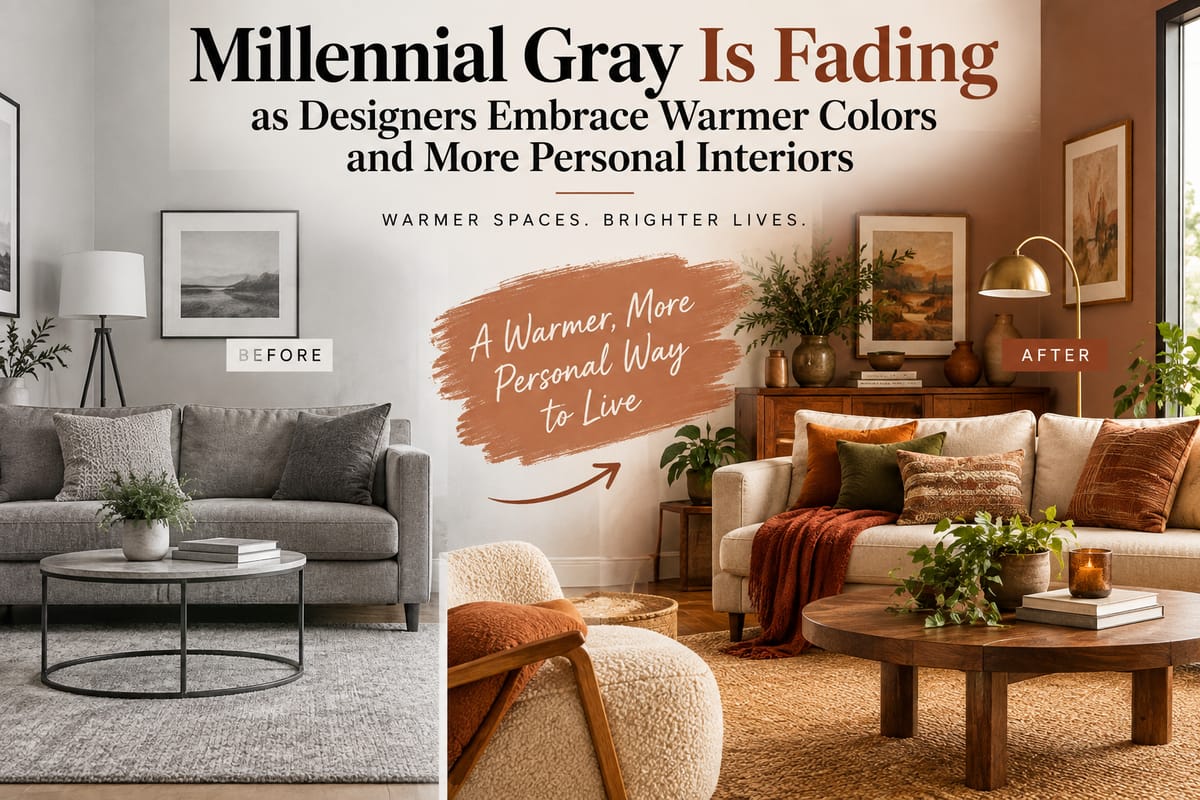
Millennial Gray Is Fading as Designers Embrace Warmer Colors and More Personal Interiors
For years, cool gray walls, matching furniture and carefully coordinated neutral interiors became a defining look in modern home design. The style was clean, adaptable and easy to pair with almost anything.
But in 2026, the design conversation is shifting.
Interior designers and homeowners are increasingly moving toward warmer colors, richer materials, layered textures and rooms that feel collected rather than perfectly coordinated. Warm whites, taupes, browns, terracotta, olive greens and other earth-inspired shades are gaining attention as designers look for interiors with more depth and personality.
The change does not mean gray has disappeared. Instead, the once-dominant cool-gray aesthetic is becoming one option among many as people reconsider what they want their homes to feel like.
Why Millennial Gray Became So Popular
The term “millennial gray” became associated with a particular style of decorating built around cool gray walls, gray flooring, neutral furniture and restrained accessories.
Its popularity made sense.
Gray could make a room look contemporary without committing homeowners to a strong color. It worked with white kitchens, stainless-steel appliances and minimalist furniture. It was also relatively easy to use when preparing a property for sale because the neutral palette could appeal to a wide range of buyers.
For many homeowners, however, the same qualities eventually made gray interiors feel predictable.
As interior design has become increasingly focused on comfort and personal expression, designers have started looking for ways to create rooms that feel warmer and more individual.
Warm Colors Are Taking Center Stage
The shift away from cool gray does not necessarily mean homes are becoming brightly colored from floor to ceiling.
Instead, many designers are turning toward warmer versions of familiar neutrals.
Think creamy white instead of stark white, taupe instead of cool gray, caramel and chocolate brown instead of pale beige, and muted terracotta or olive instead of highly saturated accent colors.
Designers surveyed about 2026 color trends have pointed to warmer, richer neutrals and earthy mid-tones as increasingly popular choices.
That makes the transition relatively accessible.
A homeowner does not have to repaint an entire house in a dramatic color. Changing a gray sofa for a warmer fabric, introducing wood furniture, adding an earthy rug or using warmer lighting can alter the character of a room without starting from scratch.
Brown Is Becoming a New Neutral
One of the clearest signs of the shift is the growing use of brown.
Chocolate, espresso, tobacco, caramel and other brown-based shades are appearing across walls, furniture, cabinetry and accessories.
Brown can provide the neutrality homeowners want while introducing more visual warmth than many cool grays.
It also works naturally with materials such as wood, leather, stone, wool and linen.
That combination is important because the current movement is not simply about paint color. It is about creating environments that have more sensory depth.
A brown wall paired with natural timber and textured upholstery produces a very different atmosphere from a flat gray room filled with matching furniture.
Earth Tones Give Interiors More Depth
Earth-inspired palettes are also becoming increasingly common.
Terracotta, rust, olive, clay, warm beige and muted greens can create a connection with natural materials and outdoor landscapes. These shades can be used as dominant colors or introduced through smaller elements such as cushions, artwork, rugs and ceramics.
The growing interest in these palettes reflects a broader desire for interiors that feel grounded rather than sterile.
The trend is especially visible in spaces where designers combine warm colors with natural wood, stone and tactile fabrics.
For homeowners interested in exploring this direction, warm earth tones in interior design offer a useful way to think about building a warmer palette without making a room feel overwhelming.
Personal Style Is Replacing Perfect Coordination
Color is only part of the change.
Another major development is the growing preference for rooms that look as though they belong to the people who live in them.
That can mean displaying family photographs, books, artwork, travel souvenirs, vintage furniture or objects with personal meaning.
Instead of buying an entire furniture collection from one showroom, homeowners are increasingly mixing pieces from different periods and sources.
The result can be less polished in the traditional sense, but more distinctive.
Recent design coverage has described a move away from overly staged interiors toward spaces with character, history and personal storytelling. Houzz’s 2026 fall trends report similarly highlights collected, layered rooms and a preference for personal history over off-the-shelf perfection.
The End of the Matching Furniture Set
Matching furniture once offered an easy way to make a room look coordinated.
A sofa, loveseat, coffee table and side tables from the same collection could produce a consistent appearance with relatively little effort.
But that approach can also make a room feel like a showroom.
Today’s warmer, more personalized interiors often use contrast instead. A contemporary sofa might sit beside a vintage wooden table. A modern lamp could be paired with an antique cabinet. Different upholstery textures might appear alongside natural stone, woven materials or handmade ceramics.
This approach creates visual tension while making the room feel assembled over time.
It also gives homeowners more freedom to keep pieces they already own rather than replacing everything whenever a new trend emerges.
Texture Is Becoming as Important as Color
A warmer interior is not necessarily created by adding more colors.
Texture can be just as important.
Linen curtains, wool rugs, boucle upholstery, natural wood, stone surfaces, woven baskets and handmade ceramics can make a neutral room feel considerably richer.
This is one reason the current design movement works even for people who prefer understated interiors.
Someone who does not want a colorful living room can still move beyond millennial gray by combining cream walls, walnut furniture, textured upholstery, soft lighting and natural materials.
The room remains relatively neutral while gaining depth.
Lighting Changes How Warm Colors Look
Paint and furniture choices cannot be considered separately from lighting.
A color that looks warm during the day may appear completely different under cool artificial lighting at night. Natural light, bulb temperature, window direction and surrounding materials can all affect how a shade is perceived.
This is why the growing interest in warmer palettes is also encouraging greater attention to layered lighting.
Instead of depending entirely on ceiling fixtures, designers are incorporating table lamps, floor lamps, wall lighting and other sources that create different levels of illumination.
The goal is not simply to make a room brighter. It is to make the atmosphere more adaptable.
Personal Interiors Do Not Have to Be Maximalist
The move away from gray does not mean minimalism is disappearing.
A homeowner can still prefer clean lines, uncluttered surfaces and simple furniture while introducing warmth and personality.
Warm minimalism can combine a restrained layout with natural wood, creamy neutrals, tactile fabrics and a few meaningful decorative pieces.
That distinction matters because design trends often become oversimplified.
Moving away from gray does not require replacing every neutral surface with a bright color. It can simply mean choosing warmer versions of familiar materials and allowing more personal elements into the space.
Color Is Becoming More Emotional
Another reason warmer colors are gaining attention is the growing recognition that color influences how people experience a room.
A cool gray can create a calm, restrained appearance, while warmer browns, creams and earthy colors can make a space feel more intimate.
That does not mean a particular color produces the same emotional response for everyone. Personal associations, lighting, room size and cultural context all matter.
For homeowners experimenting with a new palette, understanding how color changes the feel of rooms can be a useful starting point before committing to a major redesign.
Designers Are Moving Away From the Showroom Look
The desire for personalization is also changing how designers approach entire homes.
Rather than creating rooms that appear to have been purchased as complete packages, designers are increasingly combining different materials, periods, colors and objects.
This approach creates a sense of evolution.
A home can contain a modern kitchen, inherited dining chairs, contemporary artwork and a vintage sideboard without everything needing to match.
That philosophy is closely connected to the broader movement described in interior designers move toward more personal homes, where individuality and lived experience become part of the design rather than something hidden away.
Gray Is Not Going Away Completely
Despite the backlash against millennial gray, gray itself is unlikely to disappear from interior design.
Designers are still using gray, particularly when it has warmer undertones or is paired with wood, cream, brown and other warmer colors.
The difference is that gray is increasingly being used with greater intention.
A warm gray can provide balance in a room with strong colors. A darker gray can create depth. Gray can also work effectively when used as part of a layered palette rather than as the dominant color throughout an entire home.
The shift is therefore less about banning a particular shade and more about moving away from a formula.
What the New Interior Looks Like
The emerging interior design direction is less about one replacement color and more about a different philosophy.
Rooms are becoming warmer, more layered and more personal. Natural materials are gaining importance. Furniture is being mixed rather than perfectly matched. Color is being used to create atmosphere rather than simply maintain neutrality.
For homeowners, that can make decorating more flexible.
A room no longer has to follow a single trend from beginning to end. A neutral foundation can sit alongside colorful artwork, vintage furniture, natural textures and objects that have personal meaning.
That approach also makes a home easier to evolve.
Instead of redesigning an entire space every few years, homeowners can gradually add pieces that reflect changing tastes, experiences and needs.
A More Personal Era for Home Design
The fading dominance of millennial gray represents a broader change in how people think about their homes.
For much of the past decade, design often emphasized consistency, simplicity and resale-friendly neutrality. The emerging approach puts greater emphasis on comfort, individuality, texture and emotional connection.
Warm colors are an important part of that transition, but they are only one piece of it.
The larger movement is toward homes that look and feel lived in—spaces that can contain memories, imperfections, contrasting styles and personal choices without losing their sense of cohesion.
In that environment, gray still has a place. It simply no longer has to define the room.