Fall Home Improvement Projects Shift Toward Energy Efficiency as Homeowners Prepare for Winter
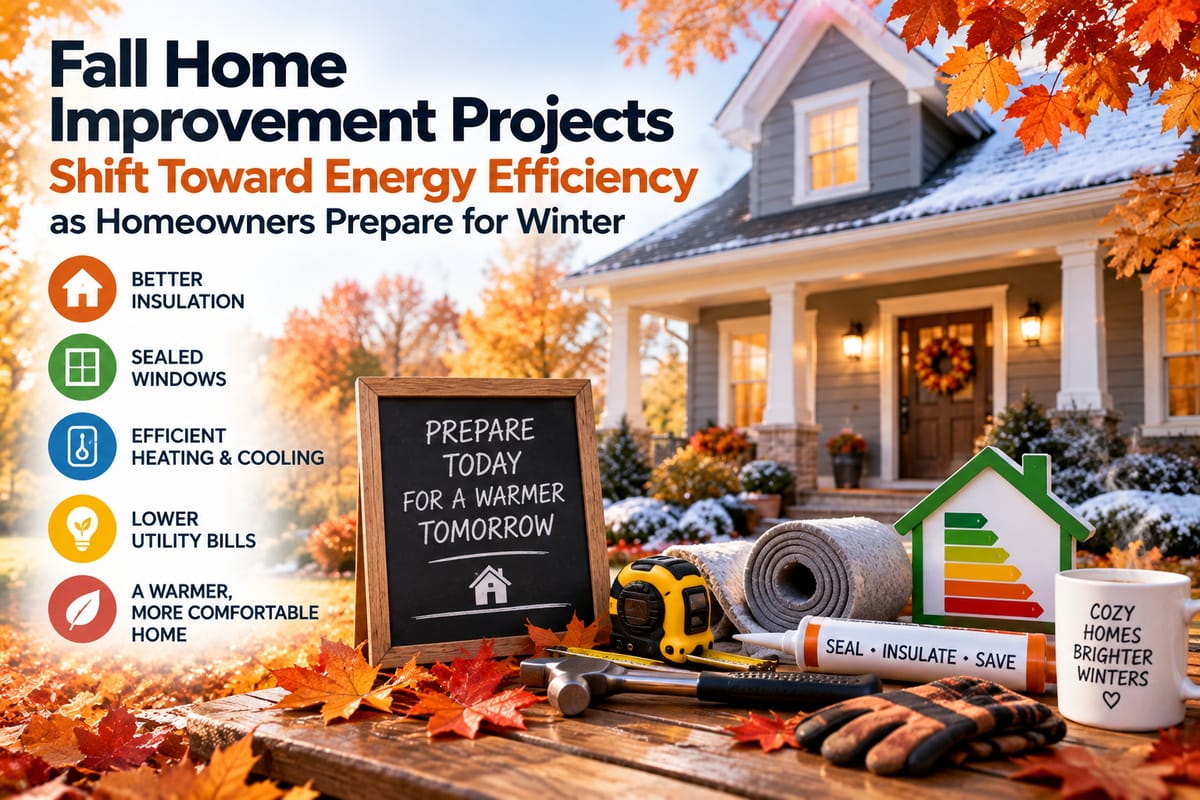
Fall Home Improvement Projects Shift Toward Energy Efficiency as Homeowners Prepare for Winter
As temperatures begin to fall, homeowners are turning their attention toward projects that can make their homes more comfortable and efficient before winter arrives.
Rather than focusing entirely on cosmetic renovations, many fall projects center on practical improvements such as insulation, air sealing, heating systems, windows and smart home controls. The goal is increasingly straightforward: keep warm air inside, reduce unnecessary energy use and prepare major household systems for colder weather.
The shift comes as the broader home improvement market enters a slower-growth period. Harvard University’s Joint Center for Housing Studies projected in July that annual spending on home improvements and repairs would grow just 0.5% by the second quarter of 2027, suggesting that homeowners may become more selective about which projects they undertake.
That environment could make energy efficiency particularly attractive because some improvements address immediate comfort and maintenance needs while potentially reducing ongoing household energy consumption.
Why Fall Is an Important Time for Home Improvements
Fall offers homeowners an opportunity to identify problems before winter weather puts additional pressure on a house.
Drafty windows, poorly sealed doors, inadequate attic insulation and aging heating equipment may become much more noticeable as outdoor temperatures decline. Addressing these issues before the coldest part of the year can also give homeowners more time to arrange professional work if a major repair or replacement is necessary.
Routine preparation remains an important part of the process. A broader checklist of Home Maintenance Projects can help homeowners organize seasonal tasks alongside larger improvement plans.
The distinction matters because not every winter-preparation project needs to involve a major renovation. Sometimes relatively small maintenance tasks can prevent larger problems later.
Energy Efficiency Is Moving Higher on the Project List
Energy efficiency has become an increasingly important consideration when homeowners evaluate improvement projects.
Insulation, weatherstripping, air sealing and efficient heating equipment can all affect how much energy a home requires to maintain comfortable indoor temperatures.
The U.S. Department of Energy notes that heating is typically one of the largest energy expenses in a home and recommends measures such as maintaining heating equipment, replacing filters and addressing leaks around windows and doors.
For homeowners looking at larger investments, energy-efficient home upgrades that can help reduce utility bills provide a broader way to think about improvements that can affect both comfort and long-term operating costs.
Insulation Can Help Keep Winter Heat Inside
Insulation is one of the most important components of an energy-efficient home because it slows the transfer of heat between the interior and exterior.
During winter, inadequate insulation can allow heat to escape through attics, walls and other parts of the building envelope. The heating system then has to operate more frequently to maintain the desired indoor temperature.
Attics are often an important place to investigate because warm air naturally moves upward. Depending on the home’s construction and existing insulation, improving attic insulation can reduce heat loss and make temperatures more consistent between rooms.
The Department of Energy also recommends considering insulation in areas such as attics and garages and addressing air leaks around windows, doors and ducts.
Air Sealing Can Address Hidden Sources of Heat Loss
A house can have substantial insulation and still lose energy through gaps and cracks.
Small openings around windows, doors, plumbing penetrations, electrical outlets and other building components can allow conditioned air to escape.
Weatherstripping and caulking are relatively straightforward examples of measures that can reduce unwanted air movement. Larger air-sealing projects may require a professional assessment to identify areas that are difficult to locate visually.
Homeowners should also avoid assuming that every draft requires replacement windows. In some situations, sealing an existing window or repairing surrounding materials may address the underlying problem at considerably less cost.
Understanding common home energy efficiency mistakes can help homeowners avoid spending money on an upgrade without addressing the larger source of energy loss.
Heating Systems Deserve Attention Before Winter
Heating equipment becomes one of the most important systems in a home once temperatures drop.
A furnace, boiler or heat pump that has not been maintained can become less efficient or experience problems when demand increases. Scheduling maintenance before the heating season can give homeowners an opportunity to identify worn components and address problems before an emergency occurs.
Filters should also be checked and replaced according to the manufacturer’s recommendations.
For homeowners considering a replacement rather than another repair, heat pumps have become an increasingly important efficiency option. The Department of Energy says modern heat pumps can use substantially less electricity for heating than conventional electric resistance systems, although actual savings depend on the equipment, climate, electricity prices and characteristics of the home.
A professional assessment is particularly important before replacing major heating equipment because the most efficient system on paper may not be the right solution for every house.
Smart Heating Controls Add Another Layer of Efficiency
Technology is also changing how homeowners manage heating and cooling.
Smart thermostats and connected HVAC controls can allow households to adjust temperatures according to schedules, occupancy and other conditions. Some systems can learn household patterns or provide information about energy consumption.
These technologies do not eliminate the need for proper insulation or maintenance, however. A smart thermostat cannot compensate for major air leaks, inadequate insulation or an improperly sized heating system.
Homeowners interested in connected equipment can also explore how smart heating and cooling systems improve home comfort to understand where automated controls can fit into a broader efficiency strategy.
Windows and Doors Are Another Fall Priority
Windows and exterior doors can become obvious sources of drafts as the weather gets colder.
Before replacing an entire set of windows, homeowners can inspect weatherstripping, caulking, frames and other components. Damaged seals or gaps may sometimes be repaired without replacing the window itself.
Where replacement is necessary, energy performance should be considered alongside appearance, durability and installation quality.
Poor installation can undermine the benefits of an otherwise efficient window. A high-performance product installed incorrectly may still allow unwanted air leakage.
Doors deserve similar attention. Weatherstripping around an exterior door can help reduce drafts, while checking the threshold can reveal gaps that become more noticeable during colder weather.
Smaller Projects Can Still Make a Difference
Not every homeowner has the budget for a new heating system, major insulation project or complete window replacement.
Smaller improvements can still contribute to winter preparation.
Potential projects include:
- Replacing damaged weatherstripping around exterior doors
- Sealing visible gaps around windows
- Adding insulation where appropriate
- Replacing or cleaning HVAC filters
- Insulating exposed hot-water pipes
- Sealing accessible ductwork
- Installing programmable or smart temperature controls
- Servicing heating equipment before heavy winter use
- Checking attic ventilation and insulation
- Repairing damaged exterior caulking
The best starting point depends on the home’s condition. Spending money on a visible upgrade before addressing a major source of heat loss can produce disappointing results.
Energy Audits Can Help Identify the Right Problems
Homeowners who are unsure where energy is being lost may benefit from a professional home energy assessment.
An audit can examine areas such as insulation, air leakage, heating and cooling equipment and other energy-consuming systems.
The purpose is not simply to produce a list of expensive upgrades. A useful assessment should help homeowners understand which problems are most significant and which improvements are likely to provide meaningful benefits.
This can be especially valuable when budgets are limited.
Instead of replacing several systems at once, a homeowner might discover that sealing air leaks and improving insulation should happen before upgrading heating equipment.
The Department of Energy has specifically highlighted the relationship between building-envelope improvements and heating-system efficiency, noting that insulation and air sealing can reduce the heating load a home needs to handle.
Rising Remodeling Costs Make Prioritization More Important
The broader remodeling market is also influencing how homeowners approach projects.
Harvard’s July 2026 LIRA forecast projected that annual growth in home improvement and repair spending would slow to 0.5% by the second quarter of 2027, with approximately $519 billion in spending projected over the four quarters through mid-2027.
A slower market does not mean homeowners are abandoning improvements. Instead, it may encourage more careful prioritization.
Projects that solve maintenance problems, improve comfort or reduce operating costs can be easier to justify than purely cosmetic work when household budgets are under pressure.
That does not mean every efficiency upgrade will pay for itself quickly. Equipment costs, labor, climate, utility rates and the condition of the existing home all affect the economics.
Homeowners Should Look at the Whole House
Energy efficiency works best when homeowners think about the house as a connected system.
Installing an efficient heating system in a poorly insulated home may not deliver the expected performance. Adding insulation without addressing significant moisture or ventilation problems can create other concerns. Installing smart controls cannot compensate for an undersized or poorly maintained HVAC system.
A whole-house approach can therefore help homeowners determine which improvements should come first.
A typical sequence might involve identifying problems, addressing basic maintenance, improving the building envelope and then evaluating heating and cooling equipment.
This approach can also prevent homeowners from repeatedly paying for upgrades that address symptoms rather than underlying problems.
Winter Preparation Is Becoming a Long-Term Investment
Fall home improvement has traditionally included projects such as painting, landscaping and cosmetic renovations. Those projects remain part of the seasonal maintenance cycle, but energy efficiency is becoming a more prominent consideration.
For homeowners, the appeal is practical. Better insulation, fewer air leaks, efficient heating equipment and smarter controls can potentially improve comfort while reducing wasted energy.
At the same time, the broader remodeling market suggests that households are entering a period where project selection matters. With remodeling growth expected to slow through 2027, homeowners may increasingly focus limited renovation budgets on improvements that address essential maintenance and provide lasting value.
As winter approaches, the most useful home improvement project may therefore be the one that solves an existing problem before it becomes an expensive emergency.
For some households, that could mean sealing a drafty door. For others, it could mean upgrading attic insulation, servicing an aging heating system or evaluating a smart thermostat. The right choice depends on the condition of the home, the local climate and the household’s budget.
What matters most is entering the colder months with the home’s essential systems maintained, its biggest sources of energy loss identified and its improvement priorities clearly defined.